Natural Linen Twine for Strong Hand Sewing and Repair
Natural Linen Twine is a practical choice when a project needs a thread that can handle more than light decorative stitching. For buyers working on saddlery, canvas repair, upholstery repair, or general mending, the challenge is usually the same: ordinary thread can fray, break, or lose control under repeated hand tension. This linen thread is packaged as a compact spool-style consumable and is presented as a very strong mending yarn, making it suitable for heavier sewing jobs where reliability matters more than appearance alone.
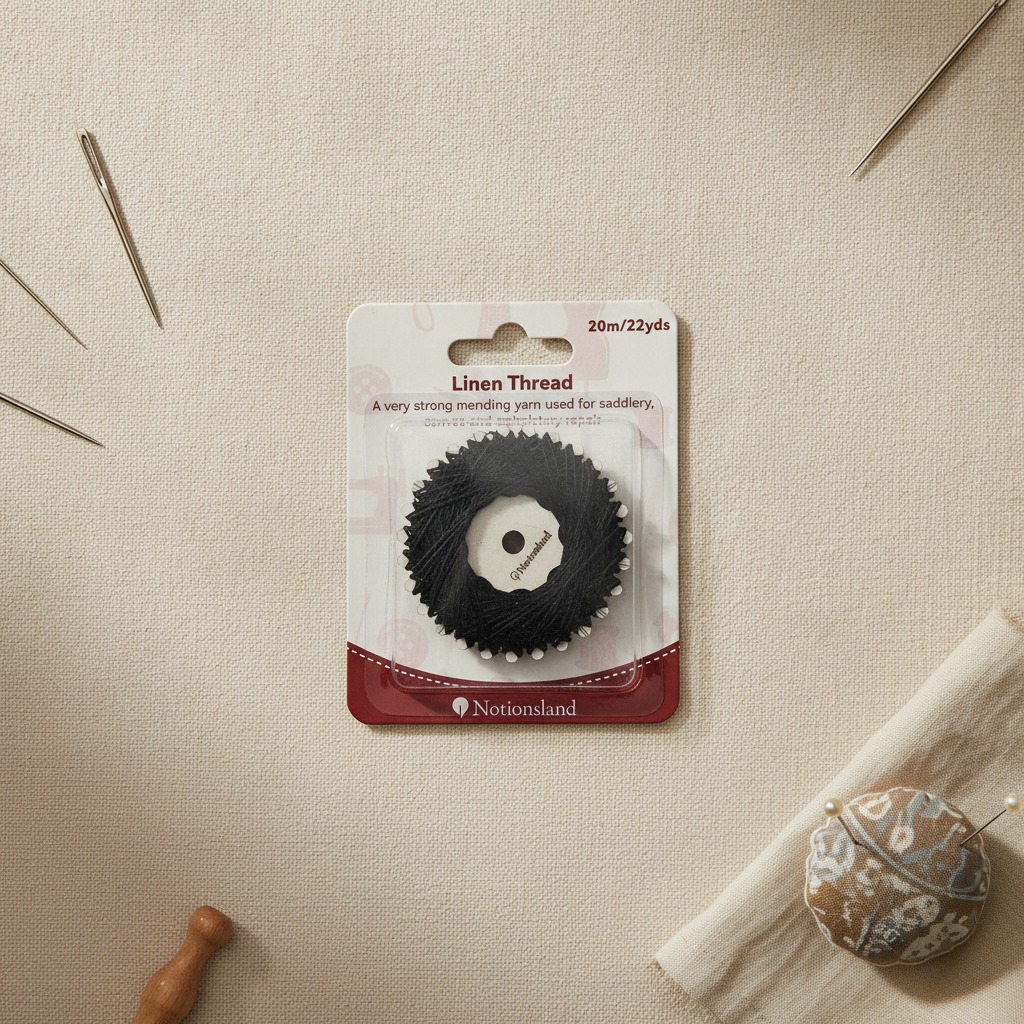
Product Overview
This product is labeled “Linen Thread” and is packaged in a clear blister on a printed card for retail display. The visible packaging shows a black thread coil with the Notionsland brand and a marked length of 20m / 22yds. While the image confirms the product style and retail format, exact fiber blend, ply count, coating, and twist level are not visible and should not be assumed. Based on the packaging language, this is positioned as a strong sewing and mending thread for demanding hand work.
For buyers comparing sewing notions, the value of Natural Linen Twine is not just the material name. It is the combination of strength-oriented use, convenient pack size, and a format that can be stored, displayed, and dispensed easily in a workshop, haberdashery, or craft room.
Key Capabilities and Use Characteristics
Natural Linen Twine is intended for practical stitching tasks where abrasion resistance and dependable handling are important. It is commonly associated with heavy-duty hand sewing and repair work, especially where a thicker or tougher thread is preferable to standard lightweight sewing thread. The package text highlights use in saddlery, canvas, and upholstery repair, which suggests a focus on structural stitching and mending rather than fine garment finishing.
Typical buyer needs it can support
Retailers and end users often look for this type of thread when they need a consumable that can help secure seams, patch worn materials, or reinforce edges. It can also be a useful option for craft and restoration work where a more traditional natural-fiber appearance is desired.
Materials and Finish Options
The product is identified on the package as linen thread, though the image does not verify whether it is pure linen or a linen-type construction. Because the thread is shown in black, it may suit projects where a darker stitched line is preferred for contrast, concealment, or visual coordination with darker fabrics and leatherwork. The visible pack does not provide finish details such as wax treatment or surface coating, so buyers should confirm those points if they are important to the application.
For procurement planning, the main material decision is whether the project needs a natural-fiber look and feel, or whether another thread type would better match a specific machine or finish requirement. If the goal is traditional hand-sewing performance, a linen thread format is often considered a practical choice. In book conservation and archival craft work, similar product families such as Bookbinding Thread may also be reviewed for strength and handling. In textile and craft support work, buyers sometimes compare it with Embroidery Backing Thread when choosing reinforcement materials, although the application intent is different.
Manufacturing and Packaging Format
This is a packaged sewing notion rather than a bulk industrial spool. The thread is wound into a compact round coil and sealed in a clear plastic blister mounted on a printed backing card with a hanging hole. That retail presentation helps protect the thread during storage while also making it easy to merchandise in stores. From a manufacturing standpoint, the product belongs to the textile consumable category used for sewing, mending, and craft supply distribution.
Because the visual data does not reveal the exact production method, it is best to describe this item conservatively as a packaged linen thread product made for hand use and repair applications.
Application Scenarios
Natural Linen Twine is a sensible option for saddlery repair where seams and reinforcements need a sturdy hand-sewing thread. It is also relevant in canvas repair, upholstery touch-ups, and workshop mending tasks where the thread may be exposed to friction or repeated handling. Crafters may choose it for restoration projects, bag repair, leather detailing, or other sewing jobs where a tough natural thread is preferred.
The 20m / 22yds length makes it suitable for small-to-medium repair jobs, sample work, or retail resale as an individual notion pack.
Quality Control and Buyer Considerations
When selecting a thread like this, buyers should verify the points that matter most to their process: actual fiber composition, thickness, ply structure, finishing treatment, and compatibility with the intended material. If a project requires exact tensile performance or special surface treatment, those details should be confirmed with the supplier rather than inferred from packaging alone. The visible product claim of being “very strong” is useful as a positioning statement, but it should be treated as packaging language unless independently tested.
For purchasing teams, packaging integrity, length marking, and consistent presentation are also relevant, especially for retail shelves or kit assembly. The product’s compact blister format helps with inventory handling and customer presentation.
Customization and Sourcing Guidance
If you are sourcing Natural Linen Twine for a product line, clarify whether you need a specific color, a different length, private-label packaging, or alternate spool formats. For commercial use, confirm minimum order details, fiber specification, and any required labeling before committing to a program. Buyers in restoration, upholstery, and craft supply channels often benefit from asking for sample packs so they can test hand feel, stitch control, and abrasion behavior on real materials.
Why This Product Deserves a Place in Your Supply Range
Strong repair work depends on the thread as much as the fabric. A thread that is easy to handle, clearly packaged, and suited to heavier hand-sewing tasks saves time at the workbench and reduces failed repairs. Natural Linen Twine offers a straightforward answer for buyers who need a reliable mending thread for traditional, durable applications.
Request product details, confirm your material requirements, and choose the packaging format that fits your retail or workshop workflow.