Natural Linen Twine for Hand Sewing and Heavy-Duty Repair
Natural Linen Twine is a practical choice when the job calls for a strong, reliable hand-sewing thread that can stand up to abrasion and repeated tension. For buyers repairing leather, canvas, upholstery, or saddlery items, the main problem is simple: ordinary thread can fray, snap, or wear out too quickly. This linen thread is packaged as a compact 20 m / 22 yds spool, making it suitable for workshop use, small repairs, and kit-based applications where dependable hand stitching matters.
Product Overview
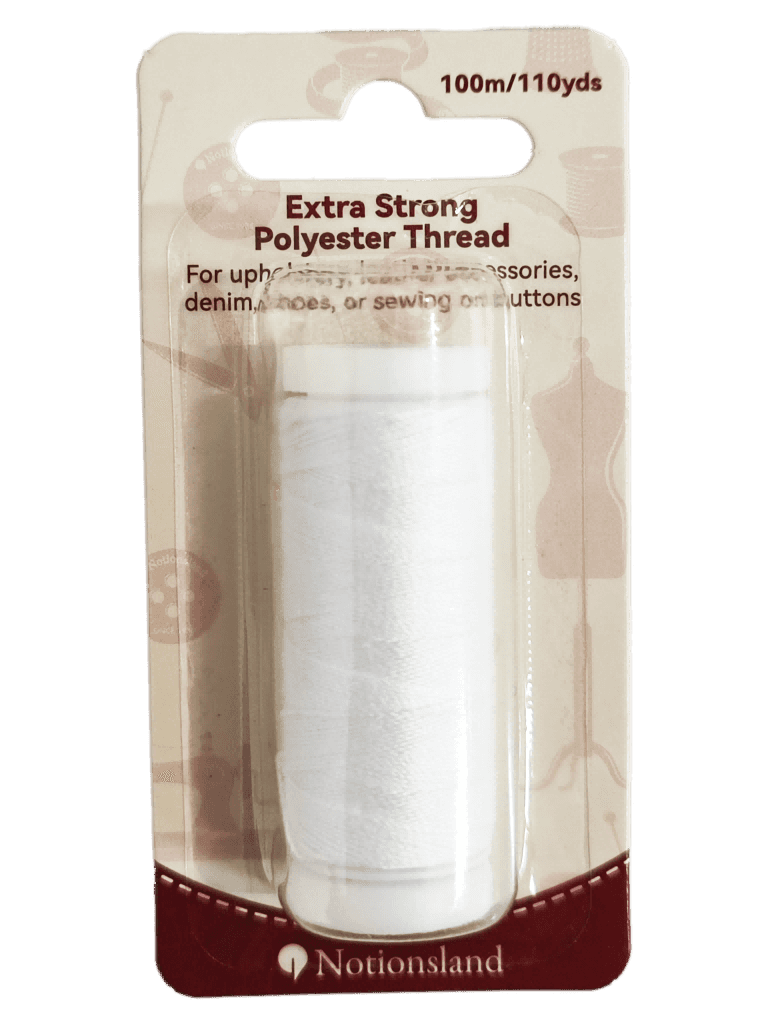
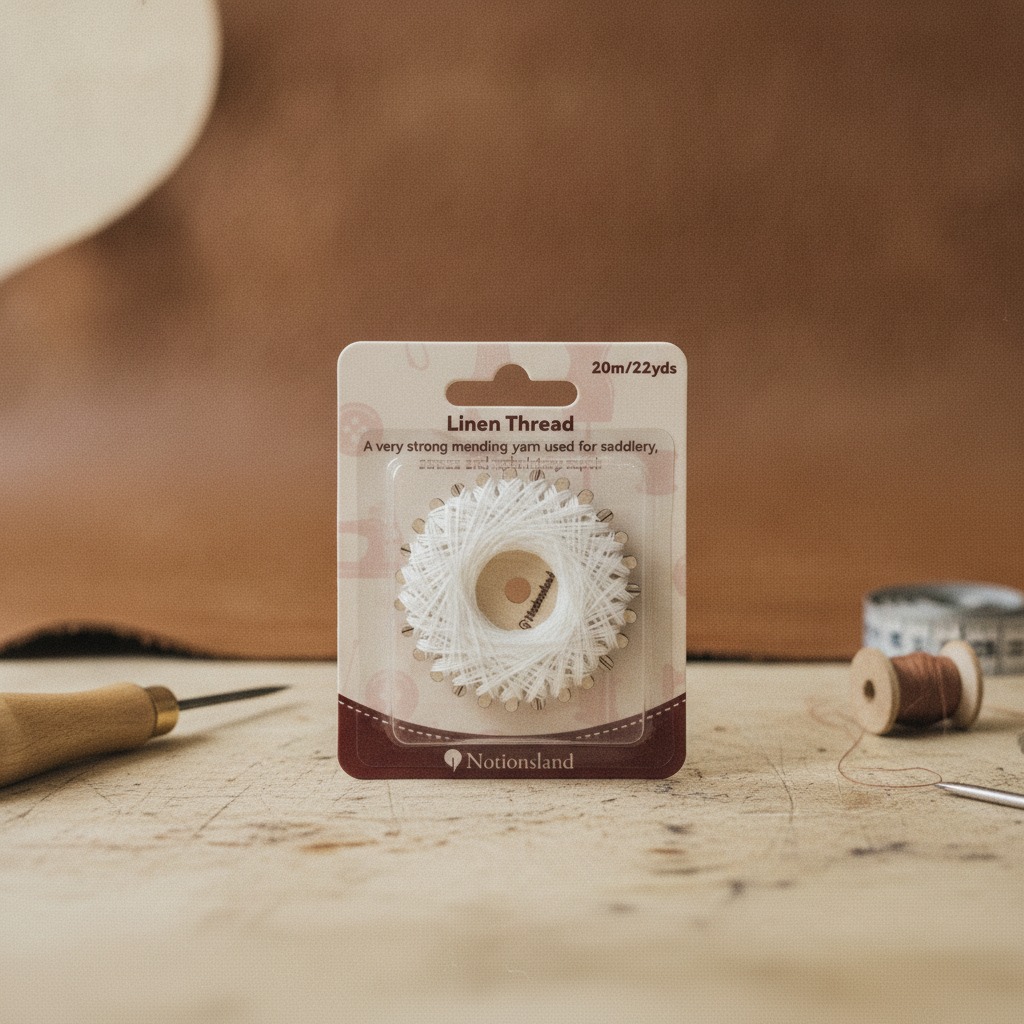
This product is labeled as “Linen Thread” and presented in a small blister package with a centered circular spool on a printed card backing. The thread appears white, tightly wound, and fine in structure. Based on the visible packaging, it is intended for hand-sewing or mending work rather than decorative light-duty use. The listed length of 20 m / 22 yds gives buyers a clear, measurable reference for planning repair tasks and inventory replenishment.
As a general material category, linen thread is widely used where a firmer hand stitch is preferred. It is often selected for leatherwork and craft repair because it can provide a crisp, controlled stitch line and better abrasion handling than many soft utility yarns. This makes it useful for professionals and makers who need consistency across repair jobs.
Key Specifications and Visible Capabilities
Packaging and format
The thread is supplied on a compact spool/card blister package with a hang-tab slot at the top. That format is convenient for retail display, tool-room storage, and pegboard merchandising. It also helps keep the thread organized and protected before use.
Measured length
The pack states a length of 20 m / 22 yds. For buyers, that is an important planning detail because it helps estimate coverage for seams, patches, edge repair, and stitching runs before opening multiple packs.
Intended use
The printed label and visible product cues indicate a strong thread for saddlery, canvas, and upholstery repair. Those use cases share a common requirement: durable stitching that can tolerate rubbing, pulling, and occasional flexing under load.
Material and Finish Considerations
From the visible product information, the thread is described as linen. Exact fiber construction, ply count, wax treatment, and surface finish are not provided and should not be assumed. Even so, linen as a thread material is commonly chosen for hand-sewing because of its handling characteristics and its suitability for durable seams.
The thread appears fine and tightly wound. A tightly wound format is often preferred in repair work because it feeds more cleanly through hand-stitching operations and helps keep the spool compact during storage. If a project requires a specific surface finish, thickness, or wax content, buyers should confirm those details before ordering in volume.
Manufacturing and Product Category Notes
This is a textile thread product rather than a finished sewn component. In practical terms, that means the buyer is sourcing a raw hand-stitching material for workshop use, not a preassembled repair kit. The product sits in the same general family as bookbinding thread and other hand-sewing consumables, though its visible labeling points more directly toward heavy-duty repair applications.
If your operation also works with fine manual stitching, a related selection of thread types may be useful. For example, Bookbinding Thread is often considered when controlled hand stitching and clean seam formation are required in paper, leather, or craft assembly. For softer backing or support tasks in textile work, Embroidery Backing Thread may be relevant, depending on the application and required handling.
Typical Application Scenarios
Natural Linen Twine is well matched to leather repair, saddlery maintenance, canvas mending, and upholstery fixes. These are the kinds of jobs where stitch integrity matters more than speed alone. A hand-sewn repair often needs the thread to pass through dense material, hold tension, and remain stable over time.
It can also be useful in workshops, craft studios, furniture repair services, and maintenance departments that keep hand-sewing supplies on hand for unplanned fixes. Because the pack is compact, it can be stored with needles, awls, punches, and other hand tools without taking much space.
Quality Control and Buyer Decision Factors
When choosing a linen thread for repair work, buyers usually compare length, packaging convenience, intended use, and the visible characteristics of the spool. Here, the clear advantage is straightforward labeling and a defined 20 m / 22 yds length. That makes purchasing easier for teams that need a predictable supply item.
Since several performance details are not visible, buyers should decide based on the actual job requirements. Consider the thickness needed for the seam, the abrasion level the thread will face, and whether the application is strictly for hand sewing. If a project depends on precise ply count, wax content, or color matching, those should be verified with the supplier before purchase.
Why This Thread Makes Sense for Repair-Focused Buyers
For customers who value practical materials over unnecessary complexity, this linen thread offers a simple and useful proposition: a compact, clearly labeled spool of durable hand-sewing thread for repair work. It is especially appropriate for buyers who need a dependable consumable for leather, canvas, or upholstery rather than a specialty decorative product.
If your team needs a manageable supply of Natural Linen Twine for hand repairs, this format is easy to stock, easy to identify, and easy to use in day-to-day maintenance work. For purchasing or customization questions, contact the supplier and confirm the details that matter most to your application before placing a larger order.