
Adjustable Seam Gauge for Sewing, Hemming, and Small-Scale Measuring
An Adjustable seam gauge is a simple tool, but it solves a common problem for sewists and makers: keeping small measurements consistent without guessing. Whether you are marking a hem, checking seam allowance, spacing buttonholes, or repeating a quilting increment, a compact gauge gives you a fast reference right at the worktable. It reduces uneven hems, mismatched seams, and the trial-and-error that often slows down garment alterations and craft projects.
Product Overview
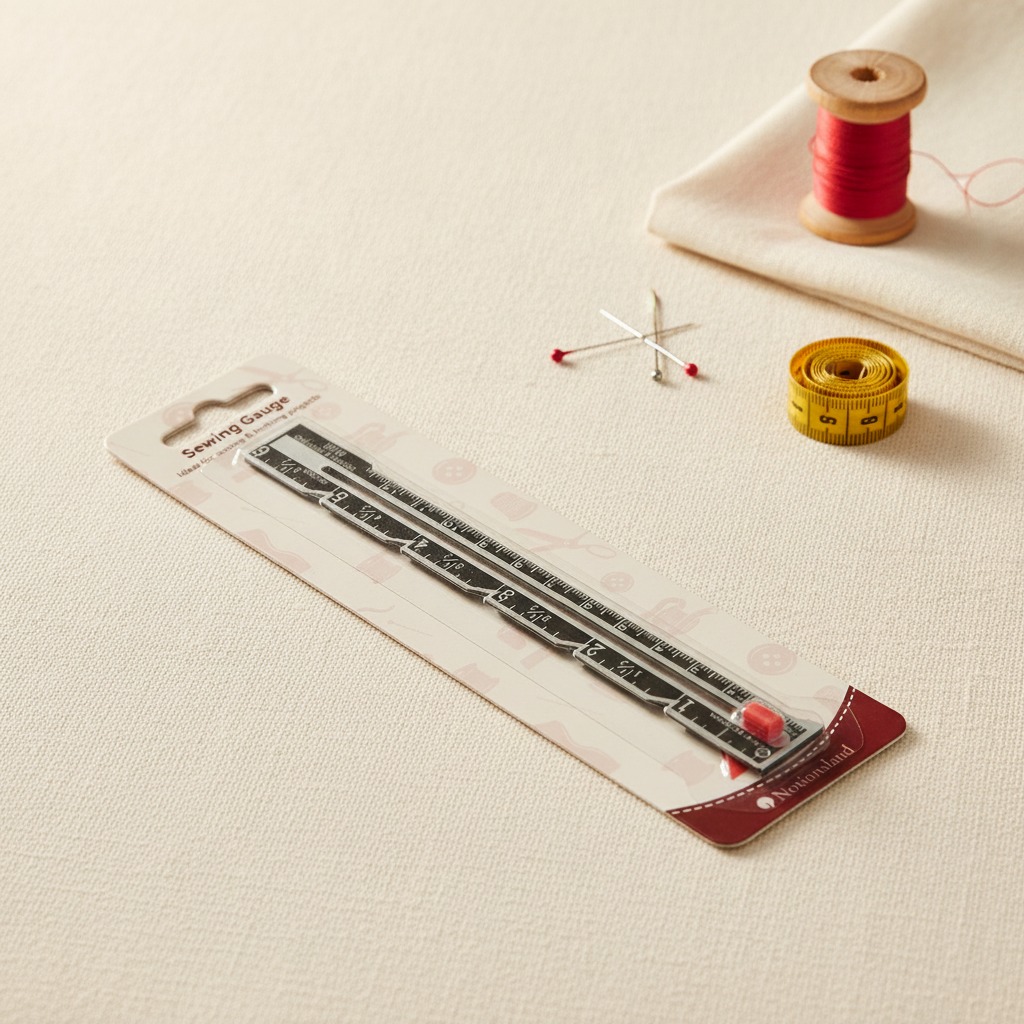
This sewing gauge is designed as a slim, straight measuring accessory for sewing and knitting projects. The visible format shows a narrow ruler-like body with printed graduations and a small movable red indicator piece near the lower end. Packaged for retail sale, it is presented as a practical reference tool rather than a specialty machine part. The compact shape makes it easy to keep beside a sewing machine, in a notions drawer, or inside a travel sewing kit.
For buyers looking for a Sliding sewing ruler, this type of gauge is useful because it focuses on repeatable small measurements instead of long-distance layout work. That makes it especially relevant for hems, seam checks, and small spacing tasks where a larger ruler can feel awkward or slow.
Key Specifications and Measuring Features
Visible scale layout
The product shows inch graduations with fractional divisions, with numbers visible roughly from 1 to 6 inches on one scale. A second finer scale appears to be present as well, likely serving metric-style or detail marking use. The exact full range is not fully readable from the packaging image, so buyers should treat the visible markings as the confirmed reference.
Compact working format
The long, narrow body is suited to close-up measuring rather than general carpentry or large textile layout. That makes it practical for everyday garment work, hemming checks, and short repeat markings. The movable indicator area suggests the gauge may help set or reference a chosen length, although the exact locking behavior is not verifiable from the image.
Materials and Finish Options
The packaging and visible surface suggest a printed measuring strip with clear black-and-white markings. The base material cannot be confirmed from the image and may be plastic or a metal-faced gauge. Because the product is shown in blister packaging, the finish appears intended for retail handling and easy visual reading. For purchasing decisions, the most important point is not the hidden substrate, but the clarity of the printed scale and the durability of the markings under repeated use.
Some buyers prefer a lighter tool for portable sewing kits, while others want the feel of a firmer ruler when working at a table. If your operation values a Hemming guide tool with simple visual readability, the finish and marking contrast will matter more than decorative styling.
Manufacturing and Assembly Considerations
This is the kind of mass-produced measuring accessory typically made with printed scale application, cutting or die-shaping, and retail packaging assembly. In practical terms, buyers should evaluate how cleanly the scale is printed, whether the edges are smooth, and whether the movable part travels consistently. For small tools like this, the quality of the markings often matters more than complex construction.
Typical Applications
The gauge fits a wide range of everyday tasks:
Garment alterations and hem checks
Seam allowance reference during sewing
Button spacing and trim placement
Quilting layout and repeated increments
Knitting and craft measurements
General workshop or DIY measuring tasks where a small ruler is more convenient than a long one
For quilters and makers who need a Quilting measuring device for repetitive short dimensions, this style of gauge is a sensible bench tool because it stays focused on the sizes used most often.
Quality Control Factors Buyers Should Check
Before choosing a seam gauge in volume or for daily use, review a few practical points. First, check the legibility of the numbers and divisions; blurred printing can create avoidable errors. Second, inspect the straightness of the body and the smoothness of the edges, since a warped tool is harder to trust. Third, test the moving indicator if present to see whether it slides in a controlled way. Finally, confirm that the scale units match the work standard used in your sewing room, whether inch-based, metric-based, or both.
Customization and Buyer Decision Guidance
If you are sourcing tools for retail, training kits, or sewing classrooms, think about the user environment. Home sewists may prioritize low cost and easy readability. Alteration shops may want a gauge that supports quick marking and frequent handling. Quilting users may prefer clear fractional divisions and a compact form that sits flat on the cutting table. When comparing options, focus on visible scale clarity, user comfort, and consistency across units rather than extra features that are not needed for daily measuring work.
Why This Tool Belongs in a Sewing Kit
A small gauge may look basic, but it saves time every time a measurement must be repeated accurately. That is why an Adjustable seam gauge remains a dependable choice for sewing and knitting projects. It helps reduce marking mistakes, supports cleaner finishing, and keeps short measurements under control without constant ruler swapping.
Request More Product Details
If you are evaluating this sewing gauge for your shop, classroom, or production kit, request the exact scale range, material confirmation, and packaging details before ordering. A small tool with the right markings can improve workflow more than a larger tool that is awkward to use. Contact us to review the product specification for your application.