
1. Fabric Marker Wholesale for Temporary Textile Marking
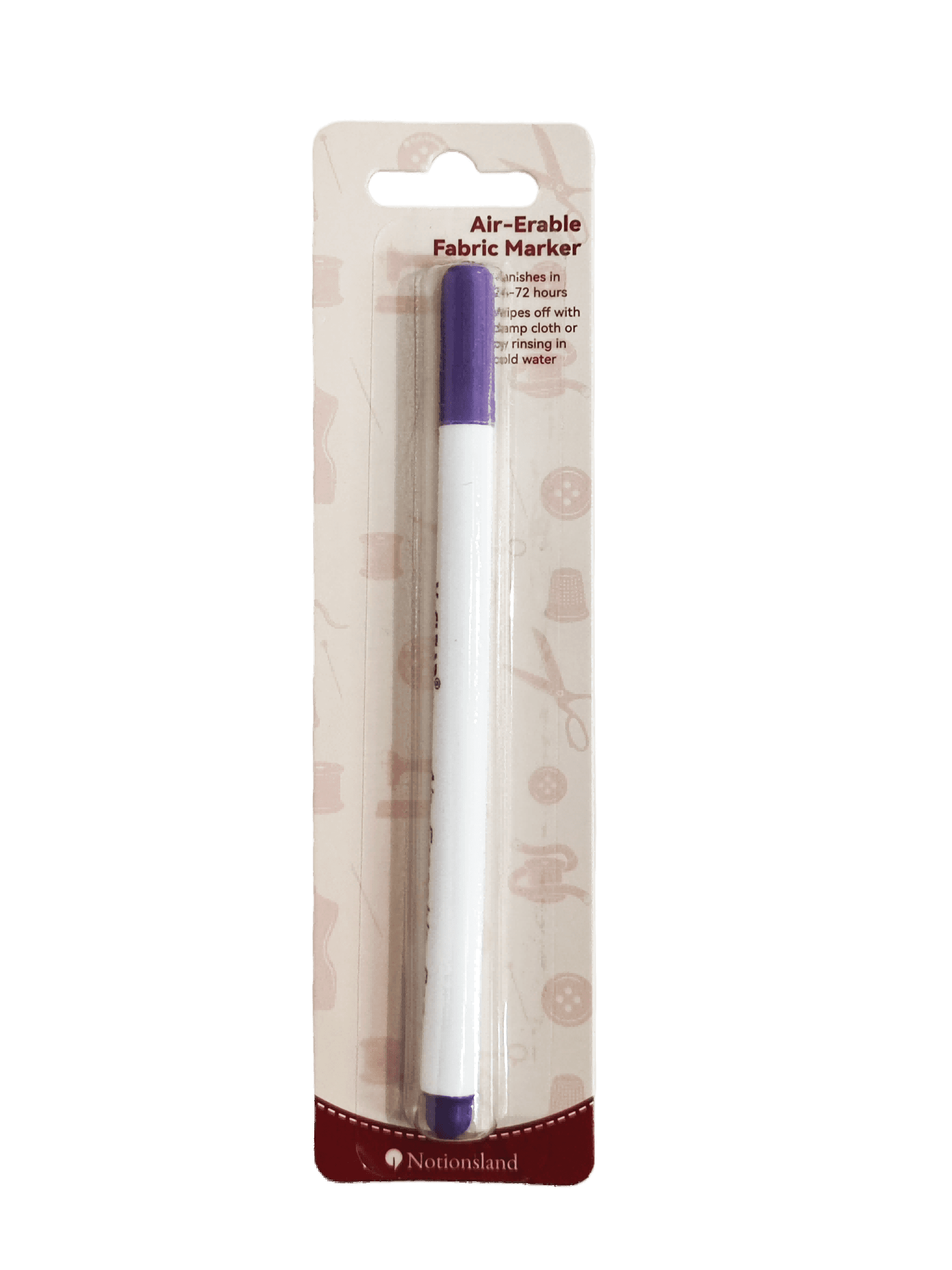
When sewing teams need a line that guides cutting, darts, hems, seam placement, or embroidery positioning, but cannot stay on the cloth forever, Fabric Marker Wholesale is a practical sourcing choice. This wipe-off fabric marker pen solves a common production problem: how to place a clear, visible mark on textiles and then remove it without leaving a permanent trace. The visible pack information shows a fine line design and a blue mark that can be wiped away with a damp cloth or rinsed out in cold water, which makes it useful for many temporary marking tasks in garment and craft workflows.
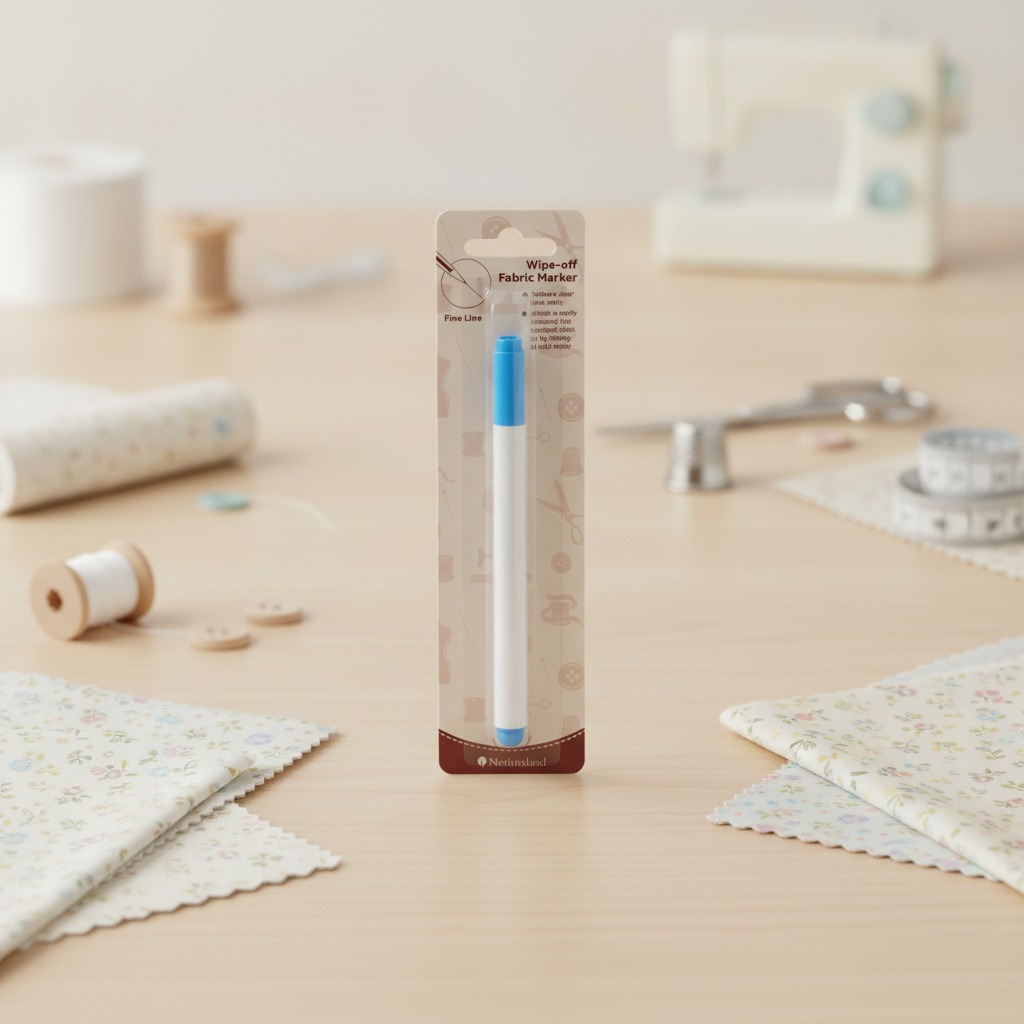
2. Product Overview: What This Wipe-Off Fabric Marker Does
This product is a pen-style textile marker designed for short-term use on fabric surfaces. It appears to have a slim white plastic body with a blue cap or end cap, and it is sold in a clear blister package mounted on printed cardboard backing. The packaging indicates a Fine Line format, which is helpful when accuracy matters more than bold coverage. For buyers looking for Wipe-Off Fabric Marker Bulk options, this type of marker fits shop floors, alteration rooms, classrooms, and sewing supply assortments where repeated temporary marking is needed.
In practical terms, the marker supports clean layout work without forcing the operator to switch between chalk, pencils, and other marking tools. That can simplify production steps, especially when the same marker is used for pattern tracing and detail placement.
3. Key Capabilities Buyers Usually Look For
1) Fine line marking
The package highlights a fine line tip, which is useful for narrow seam allowances, small pattern notes, and precise stitch placement. A finer mark helps reduce confusion at the cutting table and can be easier to hide after sewing.
2) Blue visible color
The visible mark is blue. That color is easy to see on many light and medium textiles, especially when workers need a clear contrast against fabric weave or printed pattern paper.
3) Removable marking
The package states that the mark can be removed with a damp cloth or by rinsing in cold water. That makes this marker suitable for temporary instructions, sample development, and work-in-progress sewing operations.
4) Pen-style handling
The slim pen body is familiar to most operators. It can be easier to control than bulky tools when tracing curves, marking darts, or working close to edges and seams.
4. Materials and Finish Options Buyers May Evaluate
Based on visible construction, the body is likely injection-molded plastic, but the exact polymer is not provided. The finish appears simple and functional rather than decorative, which is typical for sewing notions intended for routine use. The package does not reveal the ink formula, tip material, refill structure, or whether the marker is meant for all textiles, so those points should be confirmed before purchase if your application is sensitive.
For procurement teams comparing a Fine Line Fabric Marker Supplier, the important visible attributes are the white-and-blue color scheme, compact pen shape, and retail-ready blister packaging. If you need private label or bulk packing formats, those options would need to be discussed separately with the supplier.
5. Manufacturing and Packaging Snapshot
From the product appearance, the marker likely follows a standard pen assembly process: plastic body molding, tip installation, ink filling, sealing, capping, and card-backed blister packing. That is a common manufacturing route for consumer sewing tools because it keeps the marker protected during transport and easy to display in retail channels.
The packaged format also helps buyers verify the product’s main promise at a glance. In this case, the visible claim is straightforward: fine line, blue mark, and wipe-off removal with damp cloth or cold water. That clarity matters in wholesale purchasing because it reduces confusion at receiving and stocking.
6. Typical Application Scenarios
1) Garment sewing and tailoring
Use the marker for hems, darts, seam allowances, and alteration notes where temporary marks are preferred over permanent ink.
2) Quilting and patchwork
Quilters often need short-term reference lines for alignment, stitching paths, or block placement. A removable mark can help keep the finished surface clean.
3) Pattern layout and sample making
During sample development, teams may revise lines several times. A wipe-off tool reduces the need to re-cut patterns or cover unwanted marks.
4) Embroidery positioning
Placement marks for motifs, initials, or logos need to be visible long enough to guide setup, then removed after the work is complete.
7. Quality Control Points to Ask About Before Ordering
When sourcing Fabric Marker Wholesale quantities, buyers should confirm the obvious operational details rather than relying on assumptions. Ask how the mark behaves on your target fabric types, whether the line stays visible long enough for your workflow, and how easily it removes after use. Since exact tip width and ink chemistry are not visible here, those points should be checked in samples rather than inferred from the package.
A practical incoming inspection can include line consistency, cap fit, packaging condition, and wipe-off behavior with a damp cloth or cold water. If your operation uses delicate or specialty textiles, test first on a hidden area before moving into production.
8. Customization and Sourcing Guidance
For bulk purchasing, the most useful customization topics are packaging format, carton quantity, labeling, and branding. If you need Wipe-Off Fabric Marker Bulk supply for a shop chain, classroom program, or export order, it is worth clarifying whether the seller offers carton packing suitable for warehouse handling and shelf display. Buyers should also confirm whether the marker is intended for all common textile surfaces or only for certain fabric categories.
Decision factors usually come down to three things: visibility, removability, and handling comfort. A marker that draws a clear fine line but cleans off reliably will save time for tailors, cutters, and sewing technicians. If the pen body is comfortable and the cap seals well, it will also be easier to use repeatedly during long work sessions.
9. Why This Marker Fits Wholesale Sewing Supply Programs
This product is simple, functional, and easy to explain to end users. It addresses a real shop-floor problem: temporary marking without long-term residue. That makes it a strong fit for distributors, sewing notion catalogs, and merchants looking for a dependable everyday marking tool rather than a specialty accessory.
If you are comparing options for your next order, request sample units, confirm fabric compatibility, and review the packaging presentation. For buyers building a broader textile-tool lineup, this Fine Line Fabric Marker Supplier category can sit naturally beside chalks, rulers, seam gauges, and other layout tools.
10. Request Wholesale Availability
If you need a practical marking tool for sewing, tailoring, quilting, or sample preparation, this wipe-off marker is worth considering for your next sourcing list. Contact your supplier to confirm bulk packaging, sample availability, and the best order format for your market. For teams searching Fabric Marker Wholesale supplies, the key is to match the marker’s removable blue line performance with your fabric and workflow requirements before placing a larger order.