
Fray check for clean, durable fabric edges
Fray check is a practical solution for anyone who needs to stop cut fabric edges from unraveling before a seam fails or a handmade project starts looking unfinished. Whether you are hemming clothing, finishing ribbon ends, or reinforcing small repair areas, this type of anti-fraying liquid helps bind raw textile edges so they stay neat and workable during sewing, wearing, and care.
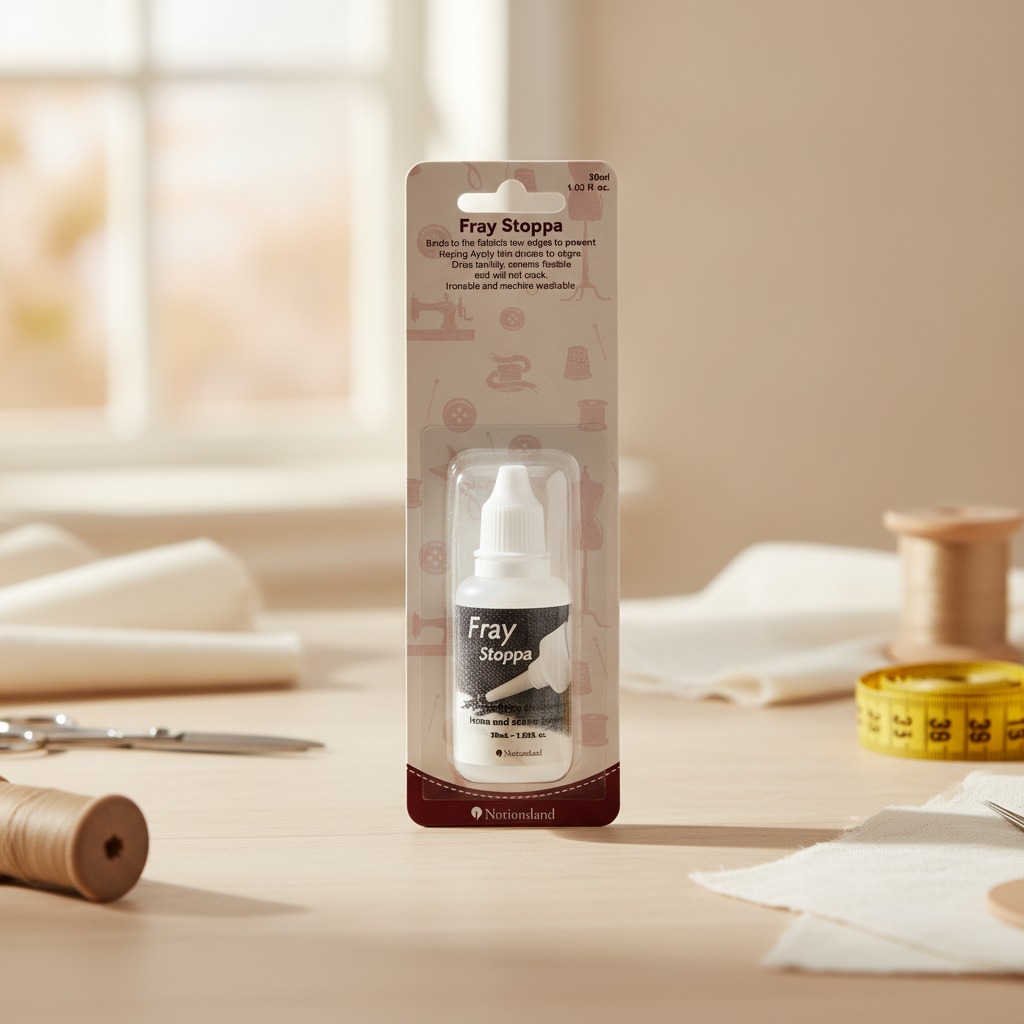
Product overview
The product shown is Fray Stoppa, a sewing and crafting liquid treatment packaged in a small squeeze/dropper bottle with a pointed applicator tip. The bottle size shown is 30 mL / 1.02 fl. oz., which makes it suitable for workshop use, sample production, and routine repair jobs. The packaging clearly indicates that it is designed to bind to a fabric’s raw edges to prevent fraying, which is the core problem many buyers want to solve before a cut edge begins to unravel further.
As an edge treatment, it is intended for use on cut edges, hems, and seam allowances where loose fibers can spread quickly. For buyers comparing options, this kind of edge sealer for fabric offers a straightforward way to control unraveling without changing the sewing workflow dramatically.
What it helps with
Common textile problems
Cut woven fabrics tend to shed threads. In garments, accessories, home sewing, and craft work, that fraying can create rough edges, weaken seams, and reduce the finished appearance. An anti-fraying liquid addresses those issues by forming a treated edge that helps hold fibers together.
For manufacturers, small studios, and repair-focused buyers, that matters because edge cleanup is often a finishing step that takes time but does not add visible value. A targeted treatment can reduce rework, protect delicate cuts, and improve consistency across batches.
Visible specifications and use characteristics
The package information shown provides several useful performance cues:
- Applied in a thin stream to fabric edges
- Dries rapidly
- Remains flexible and will not crack
- Ironable
- Machine washable
These claims make the product relevant for users who need edge protection that can handle normal garment finishing steps. Flexibility is especially important because a brittle coating can break when fabric bends, while washability and ironability support everyday sewing workflows.
Materials and finish considerations
The bottle contains a transparent liquid, though the exact formulation is not disclosed on the provided information. Based on the product category, it is likely a textile finishing or edge-sealing compound intended to bond lightly with fibers rather than create a heavy surface coating. Buyers should treat it as a specialized fabric treatment, not a general-purpose adhesive.
The container itself uses a clear plastic bottle with a white ribbed screw cap and pointed tip, which supports controlled application. That is useful when the goal is to place the liquid only where fraying begins, especially on narrow seam allowances, corners, curves, or small craft pieces.
How it is typically manufactured and used
Products in this category are usually produced as liquid textile treatments and filled into precision applicator bottles for easy dispensing. The packaging format shown suggests an emphasis on small-area application rather than bulk spraying or immersion.
In use, the buyer would generally:
- Trim the fabric edge cleanly.
- Apply a thin line of the liquid along the raw edge.
- Allow it to dry before heavy handling.
- Proceed with sewing, pressing, or finishing as needed.
The package wording supports this simple workflow, making it suitable for both home sewers and production environments where speed and edge control matter.
Application scenarios
Fray check is useful in many textile and craft settings:
- Hemming garments and avoiding loose threads at cut edges
- Reinforcing seams in repairs
- Finishing ribbon, trim, and decorative textiles
- Protecting small craft components after cutting
- Reducing unraveling on sample pieces and prototypes
For anyone who works with fabric regularly, a compact edge treatment can save time and reduce the need for repeated trimming or resewing.
Customization and buyer decision factors
When choosing a fray control product, buyers should consider the fabric type, the size of the treated area, and whether the edge needs to stay flexible after washing or pressing. Application control also matters: a pointed tip is preferable for small areas, while broader production work may need a different dispensing method.
Because the exact chemistry is not provided, buyers should test first on an offcut, especially on specialty textiles, coated materials, or visible garment areas. That is the most reliable way to confirm appearance, hand feel, and compatibility before full use.
Quality control and practical expectations
The most useful quality checks for a buyer are visual and functional: even application, no excess buildup, secure edge binding, and a dry finish that does not interfere with sewing. Since the package does not provide exact formulation data or quantified lab results, it is best to rely on the stated handling features and perform in-house testing for critical jobs.
Request this product for your fabric finishing needs
If your workflow involves raw fabric edges, hem cleanup, or small textile repairs, this Fray check style treatment offers a focused way to keep edges from unraveling and improve the look of the finished piece. For buyers who need a compact, controlled, sewing-friendly Edge sealer for fabric, it is a practical option worth adding to the worktable. Contact your supplier to confirm packaging, application guidance, and suitability for your target materials before ordering in volume.