
Acrylic Tapestry Yarn Wholesale for Practical Textile Repair
Acrylic Tapestry Yarn Wholesale is a practical sourcing option for buyers who need repair yarn for everyday textile maintenance. It helps solve a common problem in garment care: small holes, worn heels, thinning cuffs, and damaged knitted areas that do not justify replacing the whole item. For retailers, repair-kit assemblers, and craft suppliers, this type of yarn supports a simple value proposition—provide a tidy, usable yarn package for darning and mending projects.
Product Overview
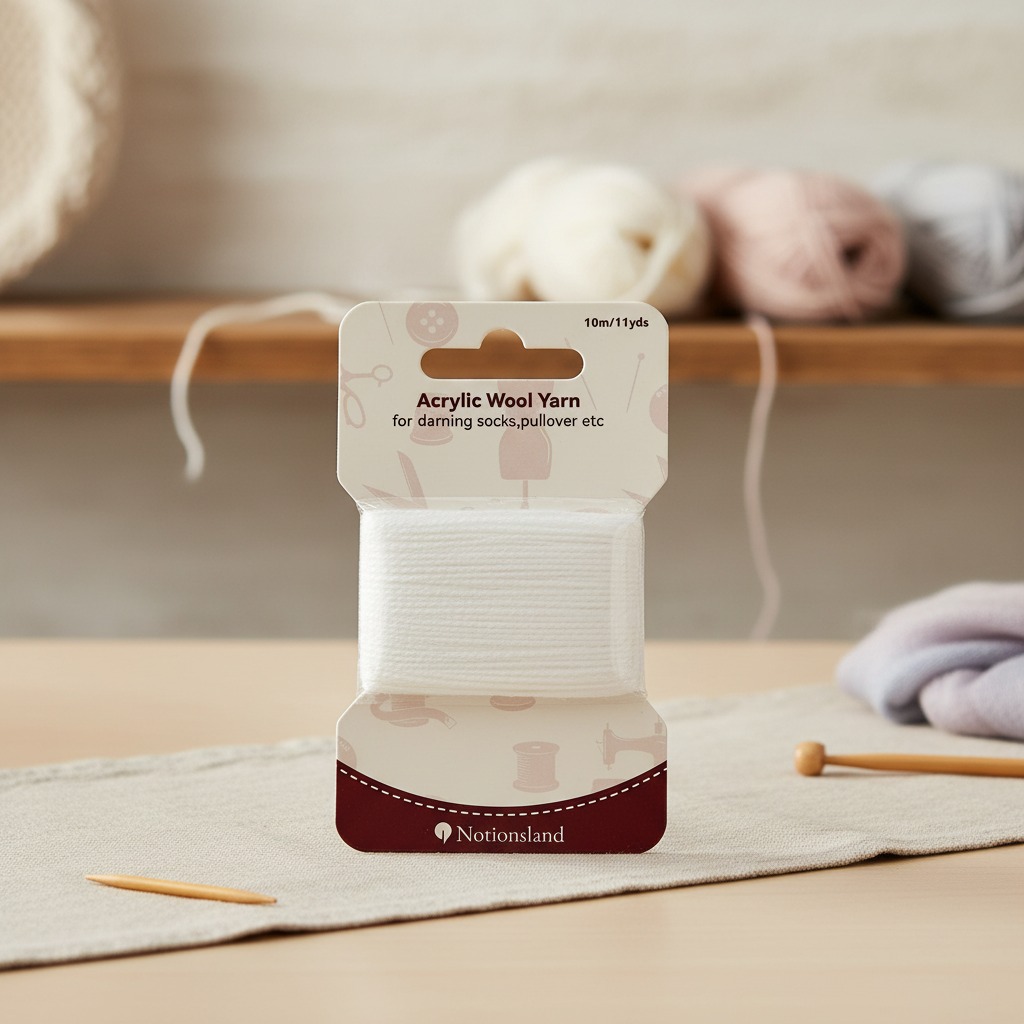
This product is presented as an acrylic wool yarn / darning yarn on a retail card. The visible packaging shows a white or ivory fibrous yarn with a soft, slightly fuzzy surface and a light twist. It is labeled for darning socks, pullovers, and similar garments, making it suitable for hand repair of knitted or woven textiles. The card format also makes it convenient for hanging display in stores or for inclusion in sewing and repair kits.
One clearly visible quantity marker is the length: 10 m / 11 yds. That makes the item easy to evaluate for retail planning and bundle design, especially where buyers want consistent pack contents for resale.
Key Specifications and Capabilities
Visible product facts
The available information supports only a limited set of verifiable details. The yarn appears to be white/ivory, soft in texture, and wound onto a flat cardboard hanger card with a punched display slot. The pack is labeled for mending socks, pullovers, and related garments. Because the image-based information does not confirm the exact fiber ratio, the material should be treated as acrylic wool yarn or acrylic yarn marketed for wool repair rather than assumed to be a pure blend.
What this yarn is used for
Typical use cases include patching holes, reinforcing worn zones, mending cuffs and heels, and repairing small damaged areas in knitted garments. It can also be useful in basic craft or needlework repair sets where a neutral repair yarn is preferred.
Materials and Finish Options
The visible yarn has a soft, fuzzy finish, which is helpful for blending into knitwear during repairs. White and ivory tones are practical because they work across a wide range of light-colored garments and can be easier to dye or match in some repair workflows. Since exact composition is not confirmed, buyers should request material details if they need a specific acrylic/wool blend, pure acrylic, or other construction for their own product line.
For wholesale planning, the most relevant finish question is how the yarn behaves in a repair context: whether the surface is more matte, more plush, or more tightly spun. That detail can affect how well the repaired area blends with the surrounding fabric.
Manufacturing and Packaging Process
From the supplied data, the manufacturing category is textile yarn winding and retail packaging. The yarn is likely wound into a compact retail format and attached to a cardboard display card for shelf presentation. This packaging style is common in haberdashery and repair accessories because it protects the yarn from tangling while keeping the item easy to scan, hang, and inventory.
Exact fiber processing, spinning method, and ply count are not visible and should not be assumed. Buyers who need specifications for technical documentation should confirm those points before order placement.
Application Scenarios
This product fits several sales channels and end-use scenarios. In retail, it can sit in sewing accessory aisles next to buttons, needles, and small repair kits. In wholesale supply, it works well for brands assembling home mending kits, garment care kits, or seasonal repair packs. Tailors, small alteration shops, and craft stores may also use it as a low-volume consumable for common repairs.
Because the item is labeled for socks and pullovers, it is especially relevant for knitwear maintenance where small repairs need a yarn that is easy to handle and visually unobtrusive.
Quality Control Considerations
When evaluating a supplier for Acrylic Wool Yarn Supplier needs, buyers should look at practical consistency rather than making assumptions about hidden performance. Important checks include winding stability, card presentation, label accuracy, color uniformity across batches, and whether the yarn length per pack remains consistent at 10 m / 11 yds. If the yarn will be resold, packaging quality matters because damaged cards or loose winding can reduce shelf appeal.
If a buyer needs lot traceability, fiber confirmation, or standardized shade control, those requirements should be requested in advance.
Customization Guidance for Wholesale Buyers
Wholesale programs often depend on packaging and assortment choices. Buyers may want to request alternative card designs, private labeling, carton quantities, or color grouping if multiple repair shades are needed. White Tapestry Yarn Bulk sourcing is especially useful for sellers building neutral repair assortments, because white and ivory tones are common in household textile maintenance and can be stocked alongside other repair colors.
Before committing to volume, it is sensible to confirm whether the supplier can support consistent reorders, custom printing, and carton packing that matches your distribution channel.
Buyer Decision Factors
For this category, the most important purchasing factors are clarity of material description, visible pack length, retail-ready presentation, and suitability for garment mending. Buyers should also consider how the yarn will be used: a repair kit for consumers may prioritize ease of use and neat packaging, while a reseller may prioritize display value and low handling damage.
Since exact fiber blend and thickness are not fully verifiable from the available image data, it is best to treat this as a repair-oriented yarn product and verify technical details directly with the supplier before large-scale procurement.
Request Wholesale Supply
If you are sourcing Acrylic Tapestry Yarn Wholesale for retail resale, garment repair kits, or general mending supply, this product format offers a straightforward, display-friendly solution. Share your target quantity, packaging preference, and color requirements to confirm the best supply option for your market.