
1. What Fabric Marker Wholesale Buyers Are Actually Solving
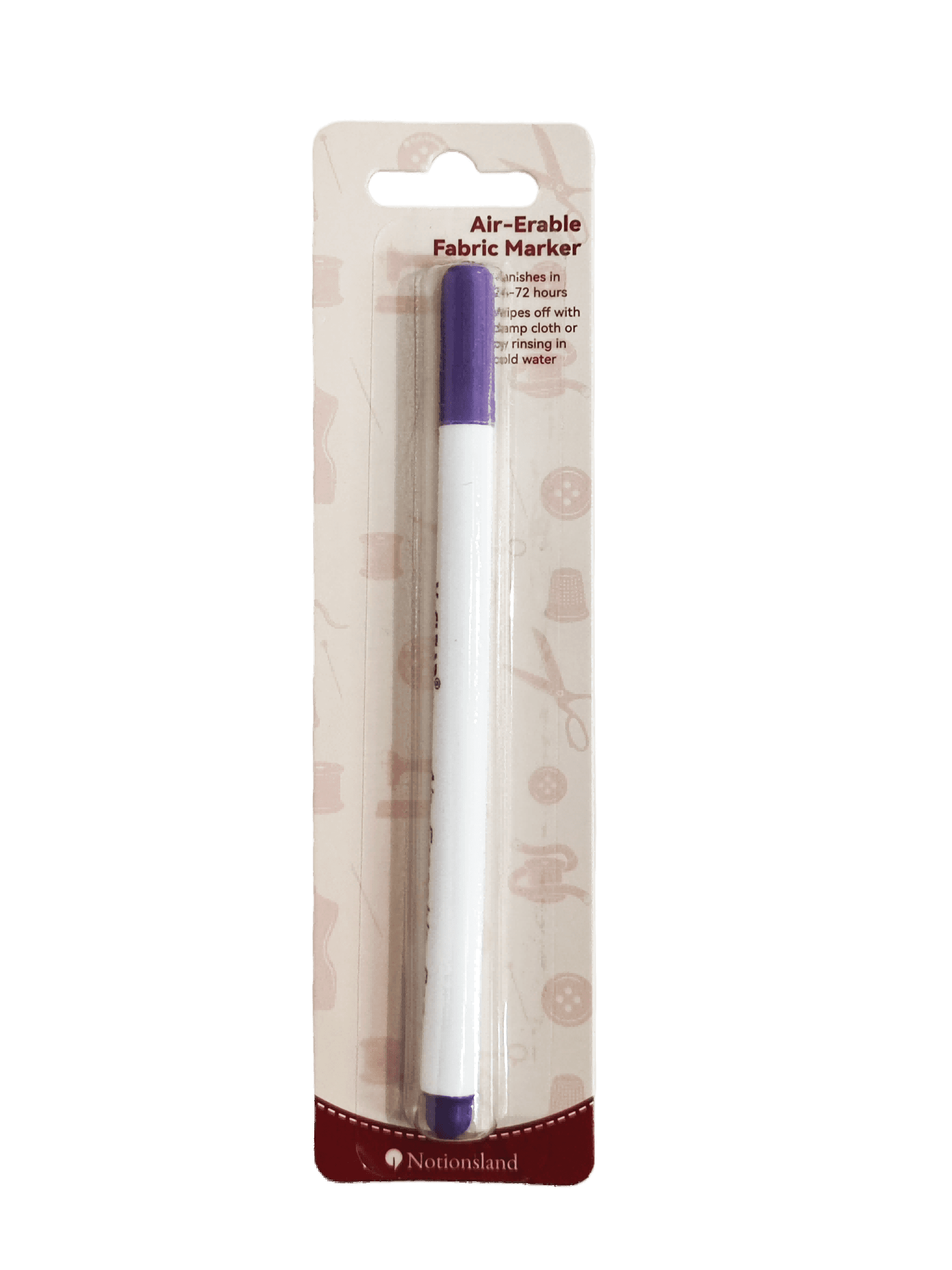
Fabric Marker Wholesale is for shops, distributors, and production teams that need temporary, visible marks on textiles without leaving a permanent trace. In sewing and garment work, the main problem is simple: pattern lines, seam guides, placement points, and cutting marks must be clear during work, but they should not stay on the finished piece. This air-erasable fabric marker is designed for that job, with packaging claims that the mark fades in about 24–72 hours and can also be removed with a damp cloth or by rinsing in cold water.
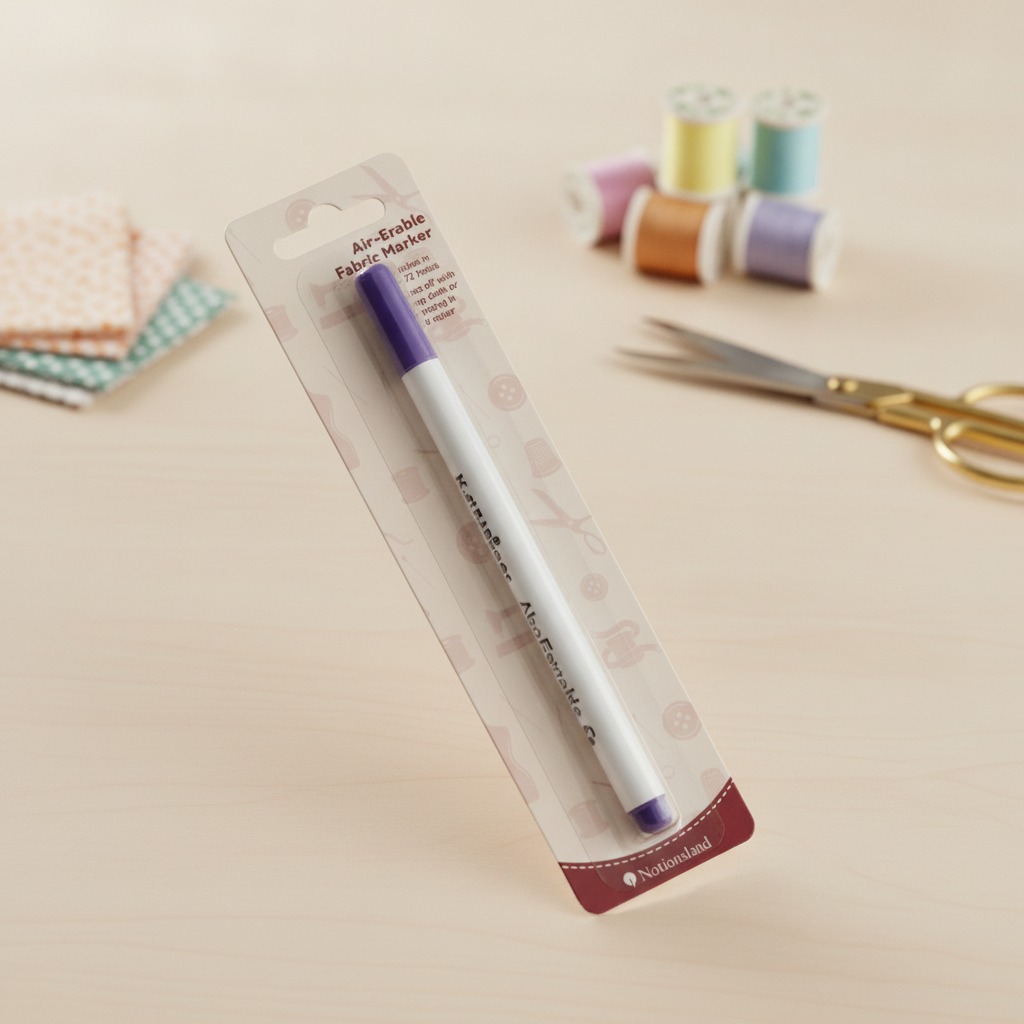
2. Product Snapshot: What You Can Verify Before Ordering
2.1 Temporary marking function
This is a pen-style marker made for textile marking. It is intended for drawing short-term lines and reference marks on fabric surfaces used in sewing, quilting, tailoring, embroidery, sample making, and general crafts.
2.2 Visible design details
The unit shown is a single marker in a clear blister pack with printed cardboard backing. The barrel is white, with a purple cap and a purple end piece. The geometry is slim and straight. The tip is not visible in the provided product view, so tip size and tip style should be confirmed before purchase if that matters to your workflow.
2.3 Pack-level selling points
From the packaging, the strongest confirmed claims are temporary mark behavior, fade-out within roughly 24–72 hours, and removable marks using a damp cloth or cold-water rinsing. Those details make the marker suitable for operations where marks are needed only during layout and stitching.
3. Typical Use Cases in Garment and Craft Work
3.1 Sewing and pattern transfer
Seam lines, notches, darts, pocket placement, and hem references are the kind of marks many teams need on fabric before sewing. A temporary fabric marker helps keep these lines visible while the operator works, then disappears later.
3.2 Quilting and layout work
Quilters often need repeated placement marks across multiple layers or blocks. A wipe-off fabric marker bulk order can help reduce interruptions when the marking tool is used frequently across a production table or classroom setting.
3.3 Tailoring, embroidery, and sample rooms
In tailoring and embroidery, small placement marks matter. The marker is useful for marking motif centers, stitch boundaries, and temporary guide points on test pieces or garment samples.
4. Materials, Ink Type, and Finish Notes
4.1 What is visible and what is not
The visible packaging shows a plastic blister and printed backing card. The barrel appears to be a smooth cylindrical plastic body, although the exact polymer is not specified. The ink chemistry is also not shown in detail; based on the product description, it is likely an air-dissipating textile marking ink, but that should be treated as a product category rather than a lab-confirmed formula.
4.2 Finish and branding considerations
For wholesale buyers, the most common finish decisions are less about the marker itself and more about packaging format, cap color, and whether the product is sold as a single unit or in larger lots. If you are comparing a Fabric Marker Supplier, ask what packaging options are available for your channel: retail blister, carton pack, or bulk carton.
5. How the Marker Is Typically Manufactured and Packed
5.1 Core assembly steps
Like most pen-style markers, this type of product is generally assembled from a barrel, cap, end plug, internal ink system, and tip component. The tip is not shown here, so the exact nib construction cannot be confirmed from the image alone.
5.2 Packaging workflow
Retail presentation usually matters in this category. A clear blister pack protects the marker, keeps it visible to buyers, and communicates the fade/removal claims printed on the backing card. For wholesale, the packaging format can also influence shelf appeal and shipping efficiency.
6. Quality Control Points Buyers Should Ask About
6.1 Mark visibility and fade behavior
The most important performance question is how clearly the mark shows on common fabric types and how predictably it fades. Since the packaging indicates a 24–72 hour fade window, buyers should confirm whether that timing changes across cotton, blends, synthetics, or tightly woven textiles.
6.2 Removal method
Because the marker can be removed with a damp cloth or cold-water rinse, it is wise to verify the process on your target materials before using it in a production setting. Testing prevents surprises on dyed fabrics, delicate textiles, or layered assemblies.
6.3 Tip behavior and line control
Line thickness, ink flow, and tip wear are practical control points. These details are not visible in the product image, so a sample request is a sensible step if your team needs narrow guide lines or precise placement marks.
7. Customization and Procurement Guidance
7.1 What to confirm with your order
If you are buying Fabric Marker Wholesale quantities, confirm the count per carton, packaging style, ink color on fabric, shipping configuration, and any private-label possibilities. Since only a single marker is shown, ask whether larger packs are available for your channel.
7.2 Matching the marker to the job
Choose this type of product when you need temporary marks that will not interfere with final finishing. If your process involves long holding times before sewing, the 24–72 hour fade claim is especially relevant. If marks must stay longer, a different marking system may be a better fit.
8. Buying Decision Checklist
8.1 Before placing a bulk order
Check whether your fabrics respond well to temporary marking, whether cold-water removal fits your process, and whether the pack format matches retail or workshop use. Also consider how visible the mark must be under production lighting.
8.2 When a better fit may exist
If your workflow requires permanent identification, this is not the right tool. If you need a marker that can survive washing or repeated handling, a temporary fabric marker will not meet that need. On the other hand, if your team wants clean layout lines that disappear after use, this product is aligned with that purpose.
9. Requesting Supply Support
For sourcing, sample evaluation, or channel planning, work with a Fabric Marker Supplier that can confirm packaging, quantity, and marking behavior on your target textiles. If you need a wipe-off fabric marker bulk program for sewing rooms, retail shelves, or craft distribution, start with a sample test and compare performance on the exact fabrics you use most often.
Send your target fabric list, packaging preference, and order volume to begin the next step.