Fabric Marker for Temporary Textile Marking
A fabric marker is a practical solution when you need clean, visible marks on cloth without leaving a permanent trace. For sewing, tailoring, quilting, and garment alterations, the main problem is simple: you need guide lines that stay readable long enough to cut, stitch, or adjust, then disappear when the work is done. This wipe-off fabric marker is designed for that exact workflow, helping makers avoid chalk smudging, permanent pen stains, and inaccurate pattern transfer.
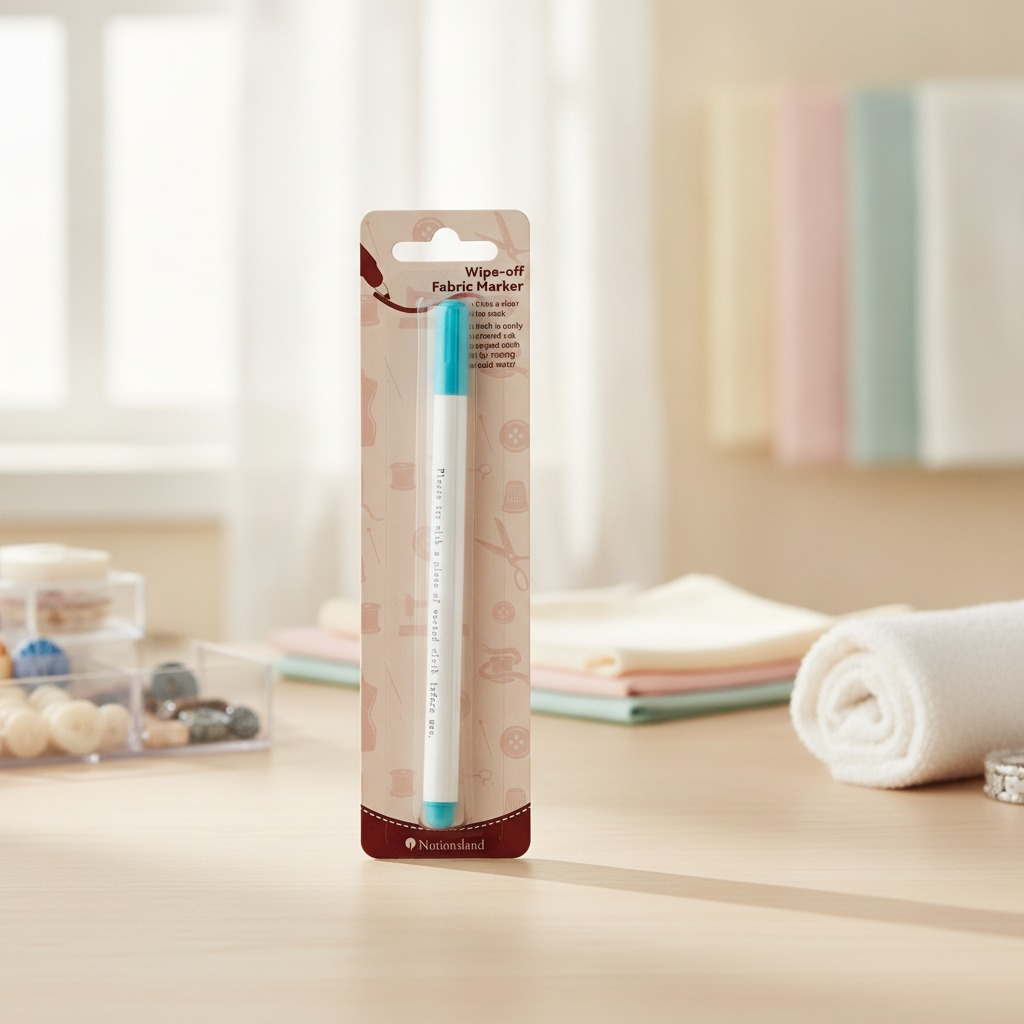
Product Overview
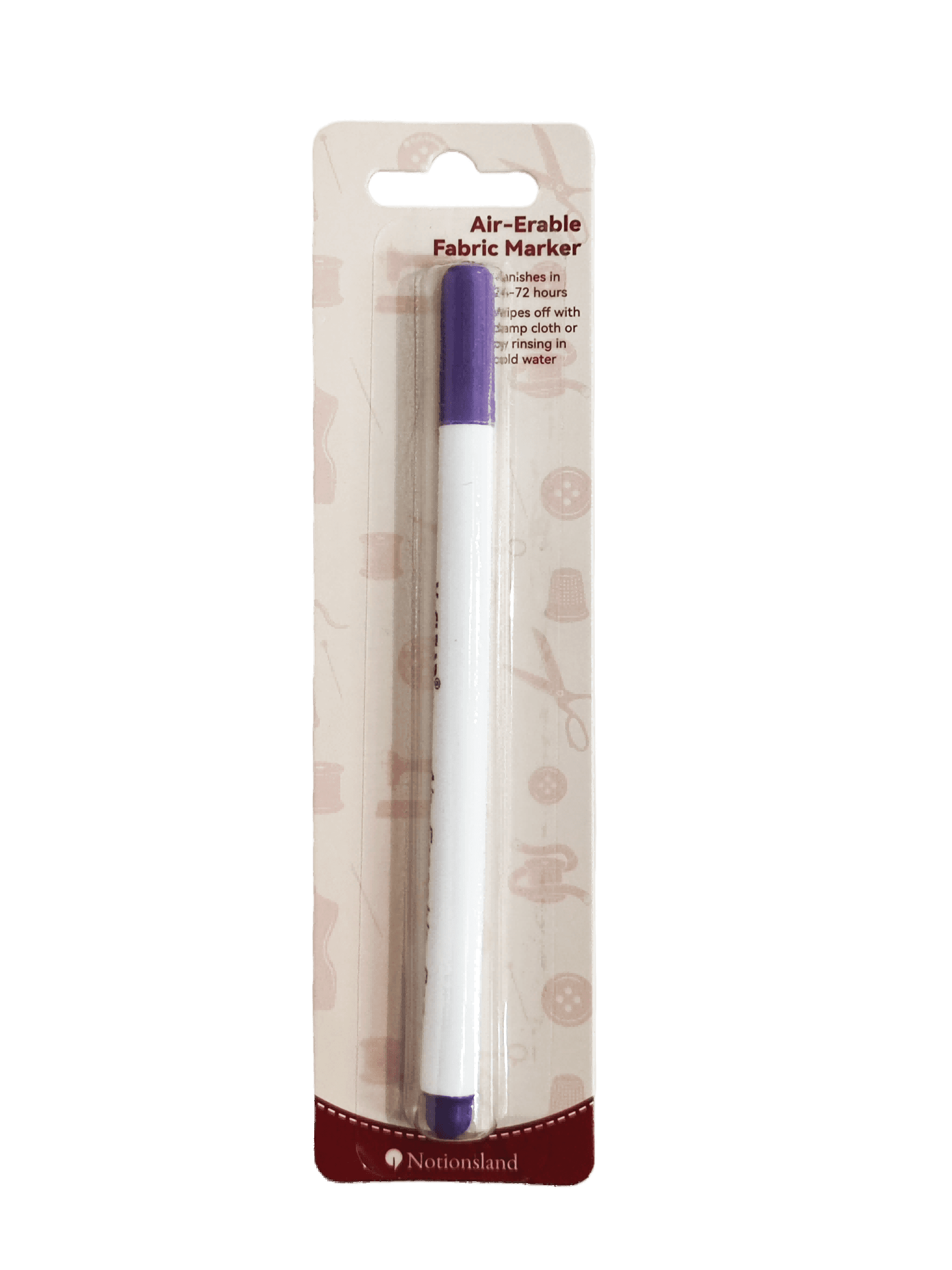
This marker is a pen-style textile marking tool labeled for wipe-off use. Based on the visible package information, it is intended to make temporary marks on fabric that can be removed by wiping with a damp cloth or rinsing in cold water. The marker comes in a smooth, glossy plastic body with a white barrel and turquoise-blue cap ends, packaged as a single piece in retail blister packaging under the Notionsland brand.
For buyers who need a straightforward sewing tool / quilling pen for everyday workshop use, this format is familiar and easy to handle. It is the kind of accessory that fits into a sewing kit, pattern room, alteration station, or craft supply shelf without requiring special setup.
Key Capabilities
Temporary marking for fabric work
The visible packaging indicates that marks are temporary and removable. That makes the marker suitable for jobs where accuracy matters more than long-term visibility, such as seam lines, darts, hems, cutting lines, placement points, and alteration notes.
Simple removal after use
According to the printed instructions, the marks can be removed with a damp cloth or by rinsing in cold water. That gives the user a practical clean-up path once the garment or project has been sewn and checked.
Designed for sewing and craft workflows
This tool is well matched to sewing, quilting, garment making, and general fabric crafts. It supports the common need to transfer measurements from pattern to cloth without depending on permanent inks or messy powdered chalk.
Materials and Construction
The marker appears to use a plastic-looking barrel and cap with a smooth, glossy finish. The pen-style structure suggests easy storage, quick handling, and controlled marking compared with loose chalk sticks or bulky tools. The exact tip type, ink color, line width, and refill structure are not visible, so buyers should treat those as unspecified rather than assumed.
Manufacturing and Product Category
As a sewing accessory, this product belongs to the textile marking tool category. The most likely functional design is a water-removable or wipe-removable marking formulation, but the exact ink chemistry is not stated on the visible package. For procurement teams or private-label buyers, that means the key purchase focus should stay on intended use, removal method, and packaging presentation rather than on unverified technical claims.
Typical Applications
- Marking seam allowances and stitch paths
- Tracing darts, pleats, and hem lines
- Indicating cutting lines on fabric panels
- Noting button, pocket, or trim placement
- Supporting alteration work in tailoring shops
- Assisting quilting layout and fabric craft prep
In each of these cases, the value is the same: the mark helps the maker work accurately, then clears away when no longer needed.
Quality Control and Safe Use Guidance
The package instructions advise testing on waste cloth before use. That is an important quality-control step for any fabric marker because different textiles, dye loads, and surface finishes can react differently. A test swatch helps confirm mark visibility and removal behavior before the tool is applied to the finished piece.
Buyers should also consider the fabric type, project timeline, and exposure to moisture before choosing a temporary textile marker. If the mark must stay visible for a long production cycle, or if the fabric will be handled with water before completion, a different marking method may be more suitable.
Customization and Buyer Considerations
When sourcing a fabric marker for retail or workshop use, it helps to evaluate packaging, branding space, and instruction clarity. This blister-card presentation is useful for shelf display and point-of-sale merchandising. If you are buying for sewing kits, teaching programs, or private-label craft supply lines, the main questions are whether you need the same temporary removal behavior, preferred barrel style, and a package that communicates usage clearly to end users.
Because the visible data does not confirm tip size, ink color, or fabric compatibility beyond the printed directions, the safest approach is to request samples and verify performance on your actual materials.
Why This Fabric Marker Is a Smart Choice
For a buyer who wants a dependable temporary marking solution, this product offers a clear and familiar function: mark fabric accurately, then remove the lines with a damp cloth or cold-water rinse. That makes it a practical addition to sewing benches, tailoring operations, and quilting workstations where clean finishing matters as much as precise layout.
Request Availability
If you are sourcing a fabric marker for sewing, quilting, or garment production, contact us to discuss packaging options, order quantities, and suitability for your fabric workflow. Share your intended application, and we can help you evaluate whether this wipe-off style marker fits your needs.