
Fabric Marker Wholesale: A Practical Guide for Temporary Textile Marking
When buyers search for Fabric Marker Wholesale, they are usually trying to solve a simple production problem: how to mark cloth clearly during sewing or pattern work without leaving a permanent trace. This wipe-off fabric marker is designed for that exact need. It creates a visible blue mark for layout, seam guidance, and tracing, then removes with a damp cloth or by rinsing in cold water, which makes it useful in workflows where accuracy matters but final cleanup must stay quick.
1. What this product is used for
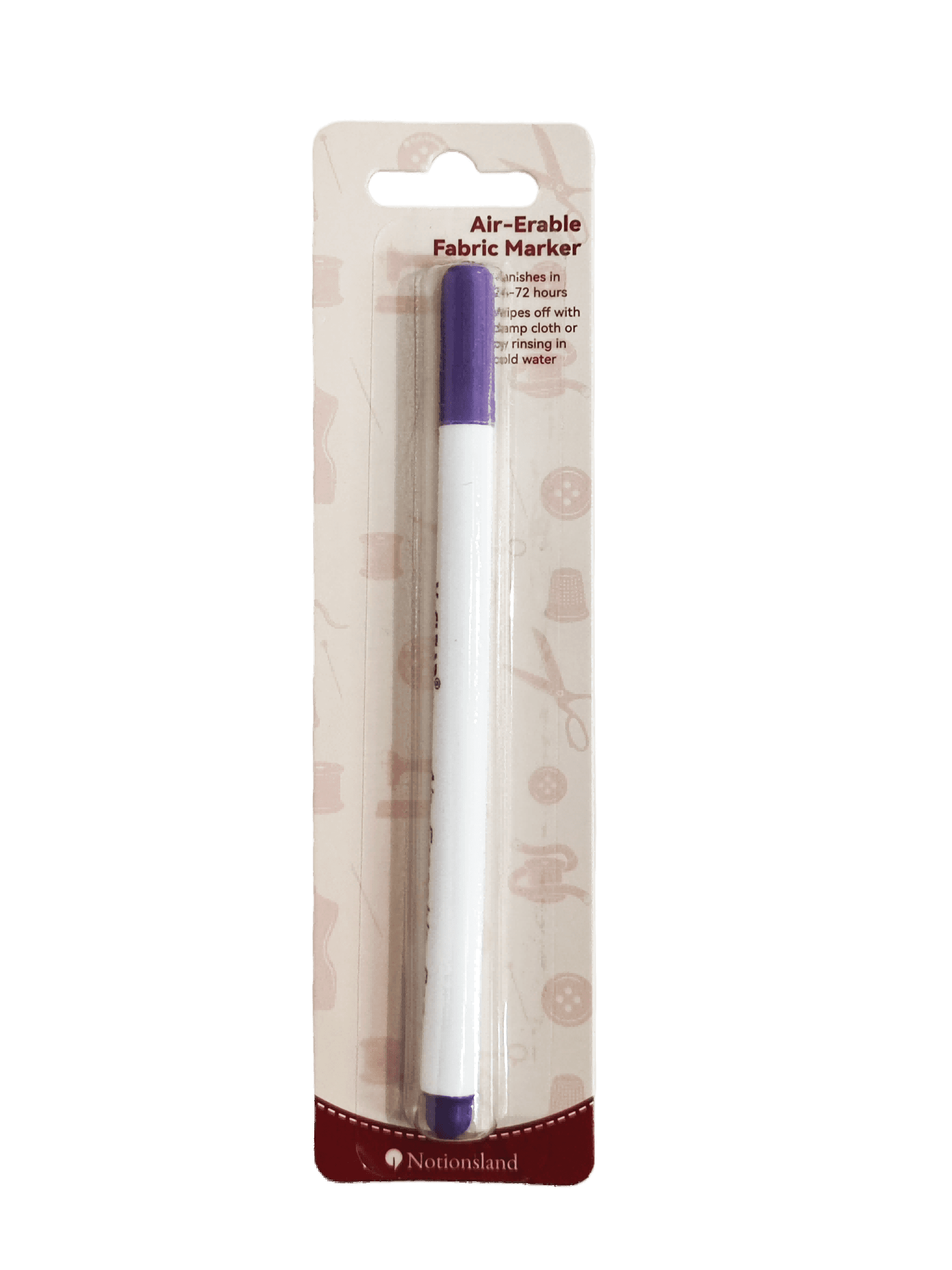
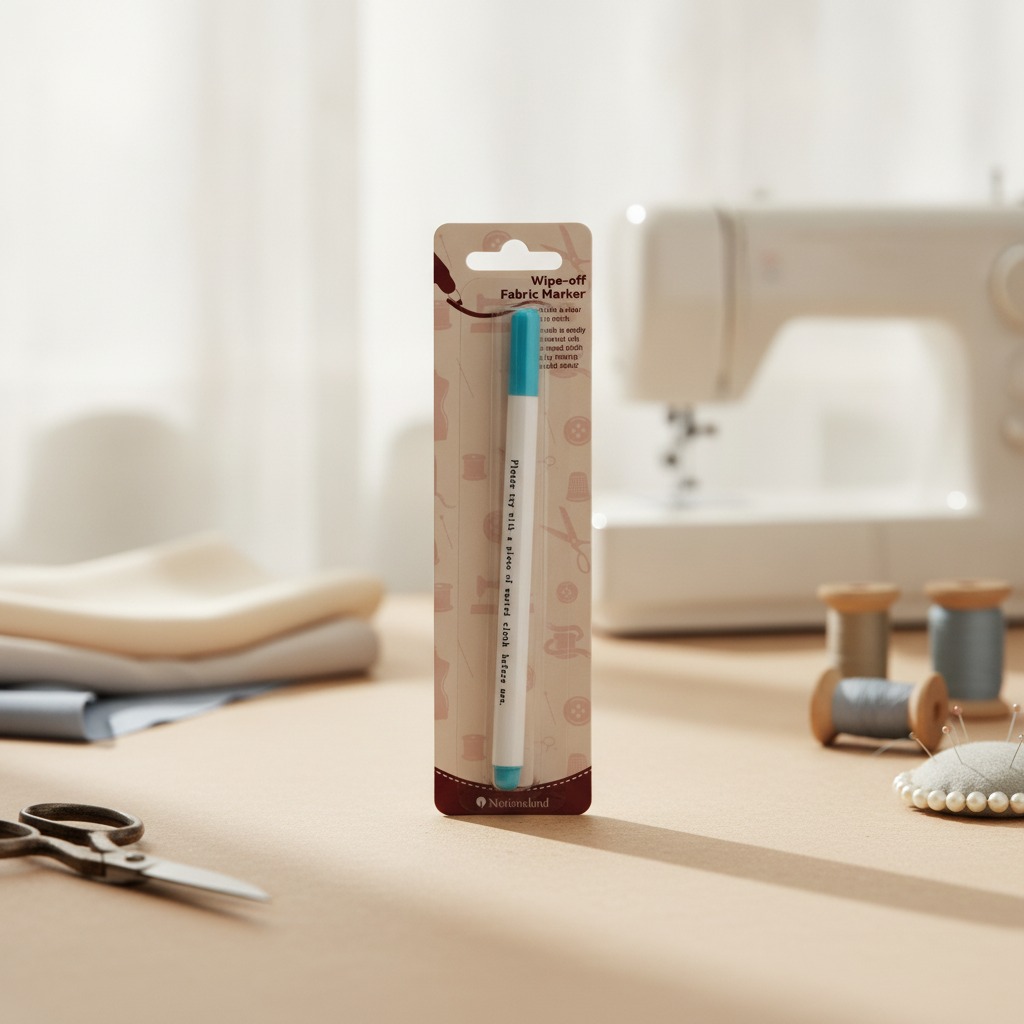
This is a pen-style temporary marking tool for textile operations. The marker appears to have a cylindrical white plastic barrel with turquoise or blue cap ends, and it is sold in a clear blister package with a hang tab. That presentation fits retail and trade supply channels for sewing tools, but the core value is functional: make a mark, complete the task, then remove the mark without leaving a permanent line behind.
For buyers sourcing sewing accessories, this kind of marker can support pattern making, quilting, tailoring, alteration work, and general garment assembly. It is intended for cloth surfaces where temporary visibility is needed during cutting, stitching, or fitting.
2. Key features buyers usually care about
Clear temporary marking
The packaging text indicates a blue mark that is easy to see during work. That matters when the operator needs a line that stands out on fabric without reaching for chalk or a permanent pen.
Simple removal
The mark is described as removable with a damp cloth or by rinsing in cold water. For many sewing and textile teams, that is the main purchasing reason: less cleanup time and less risk of leftover visible lines on the finished item.
Single-marker format
This product is shown as one handheld marker per package. That makes it suitable for sample orders, retail shelving, and smaller workshop replenishment, especially when buyers want to test how a temporary marking tool fits into their production process.
3. Materials and visible construction
Marker body
The body appears to be molded plastic with a smooth, glossy finish. The visible shape suggests a standard handheld marker format, which is familiar to sewing operators and easy to store in tool drawers or sewing kits.
Packaging
The marker is shown inside plastic blister packaging mounted on a printed cardboard backing. That type of package supports hanging display and also helps protect the marker during transport and handling.
What is not confirmed
The exact tip type, line width, ink chemistry, refillability, and fabric compatibility range are not visible from the provided information. Buyers should treat those details as unknown unless they are confirmed by the supplier or tested on the target textile.
4. Manufacturing and product category overview
Typical production logic
As a textile marking accessory, this product likely follows a standard pen assembly process: molded plastic parts, ink filling, closure, and packaging. The key function depends on a water-removable marking formulation, but the exact chemistry is not provided and should not be assumed beyond the removable claim on the packaging.
Why this matters in procurement
For a Wipe-Off Fabric Marker Bulk purchase, consistency is important. Buyers normally check whether the marker writes smoothly, whether the line is visible on the intended fabric color, and whether removal remains reliable after normal handling during production.
5. Common application scenarios
Pattern making and tracing
Temporary marks help teams trace pattern outlines, notch positions, and reference points before cutting or stitching.
Tailoring and alterations
Tailors often need short-lived marks for hem lines, dart placement, and adjustment notes. A wipe-off marker can be easier to manage than chalk in some working conditions.
Quilting and sewing workshops
Quilters and sewing teams may use the marker for alignment cues, stitching guides, and quick internal notes on fabric pieces.
6. Quality control checks to ask before ordering
Mark visibility
Ask whether the blue line is easily readable on light and medium fabric colors. Visibility is a practical test, not a marketing promise.
Removal performance
Because the packaging states removal with a damp cloth or cold water, buyers should confirm that those methods work on the fabrics they use most often.
Packaging durability
For wholesale or distribution use, inspect whether the blister card and hang tab hold up during transit, shelving, and re-handling.
7. Customization and sourcing guidance
What can usually be customized
In textile accessory sourcing, customers often request packaging language, card design, barcode labeling, or carton configuration. If those options matter, they should be discussed early with the supplier.
What should be tested first
Before placing a larger order, test the marker on representative fabrics from your own process. Surface texture, weave density, and fiber content can change how a temporary mark appears and how easily it is removed.
8. How to choose the right supplier
If you are comparing a Wipe-Off Fabric Marker Bulk Fabric Marker Supplier against other options, focus on practical points rather than broad claims. Look at product consistency, packaging quality, responsiveness to sample requests, and whether the supplier can provide clear information on use conditions and removal methods. For buying teams, those details are often more useful than generic product descriptions.
9. Buying decision factors for wholesale orders
Workflow fit
Choose a marker that matches the pace of your sewing line, sampling room, or craft retail assortment.
Removal method
If your users prefer damp cloth cleanup, the product should support that routine. If cold-water rinse is more practical, confirm that the fabrics and process allow it.
Display and storage
The hang-tab blister format may be useful for retail presentation, but workshop buyers may care more about carton packing and shelf organization.
10. Requesting a quote or sample
For fabric supply buyers, this marker is a straightforward temporary marking option with a visible blue line and simple wipe-off removal. If you are sourcing for tailoring, quilting, or garment production, ask for a sample, test it on your own materials, and confirm the result before committing to a larger Fabric Marker Wholesale order. A small trial can save time later and help you avoid mismatches between the marker and your fabric mix.