
Dressmaking Scissors Wholesale for Fabric Cutting, Pattern Work, and Seam Trimming
Dressmaking Scissors Wholesale buyers usually need one thing above all: a cutting tool that behaves consistently on fabric, patterns, and seams without forcing workers to fight frayed edges or awkward hand fatigue. Compared with generic household shears, this type of sewing scissor is designed for garment tasks where clean control matters more than multi-purpose use. The version described here is a handheld manual tool with stainless steel blades, a 235 mm / 9 1/16 in overall length, and the familiar two-handle scissor layout used in sewing, tailoring, costume making, alterations, and craft work.
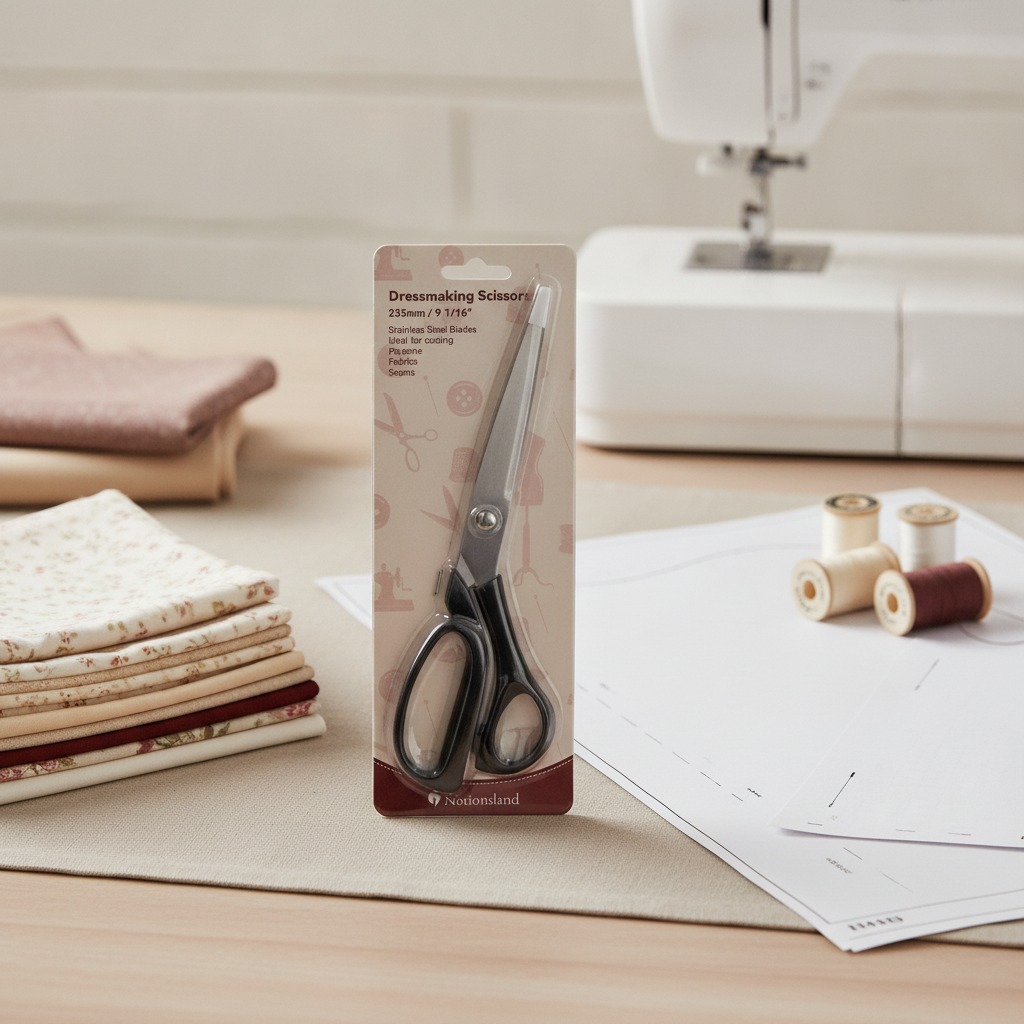
Product Overview: Sewing Tool or General Utility Shear?
At first glance, a dressmaking scissor may resemble an ordinary pair of scissors. The difference appears in how the tool is intended to be used. A general utility scissor is often selected for paper, tape, light packaging, or mixed office tasks. A dressmaking scissor is selected for cutting sewing patterns, slicing through fabric layers, and trimming seams with more deliberate control.
This product belongs in the sewing notion category rather than the office supply aisle. Its long straight blades and large finger loops are practical for repeated cutting motions, especially when working through pattern paper or garment material. The visible center pivot screw or rivet indicates a simple mechanical structure that is easy to understand and easy to store in production environments.
Comparison: Dressmaking Scissors vs. Household Scissors
Household scissors tend to be chosen because they are available, not because they are optimized for garment work. They may cut paper well enough, yet they often become a compromise when used on cloth. In contrast, dressmaking scissors are selected for a clearer job definition: cutting fabric, trimming seams, and following sewing patterns with less distraction.
The difference is especially important in workshop settings. When the same tool is used for paper, tape, and fabric, blade wear and cutting behavior can become inconsistent. For that reason, sewing teams often keep dedicated sewing scissors bulk stock separate from mixed-use shop tools. The goal is not novelty; it is discipline in tool use.
Size and Structure: What the 235 mm Format Means
The visible packaging information lists the size as 235 mm / 9 1/16 in. That places the product in a practical mid-to-long scissor range for tailoring work. Longer blades can be useful when cutting longer fabric runs or making smoother continuous cuts across pattern lines. At the same time, the large finger loops support a hand-held grip that suits routine shop use.
The blade shape is straight, which is appropriate for general sewing and pattern cutting. The package identifies stainless steel blades, and the blades show a brushed or satin metallic finish. The handle appears black and glossy; however, the exact handle material is not confirmed from the image, so it should not be assumed.
Materials and Finish Options
From the supplied product details, the confirmed material callout is stainless steel blades. That is the key specification buyers can rely on. Stainless steel is commonly chosen in cutting tools because it is a familiar blade material for everyday workshop use. Beyond that, blade thickness, edge treatment, and hardness level are not provided, so they should not be inferred.
The handle design appears to contrast visually with the metallic blades. That black finish may support easy identification in a sewing kit or production drawer, but the exact composition remains unverified. For procurement teams, that means the visible information is enough to classify the product, but not enough to promise advanced ergonomic features or special surface treatments.
Manufacturing and Assembly: Simple Tool Construction
Based on the visible structure, this product is likely a cut or stamped stainless-steel blade assembly with a central pivot joint and attached handle components. That is an informed inference rather than a confirmed manufacturing statement. Still, it aligns with how many standard sewing scissors are built: two blades joined at a pivot, then paired with molded or coated handles for manual use.
For buyers comparing suppliers, this matters because a straightforward construction usually supports practical sourcing. It is easier to evaluate a simple scissor geometry than a multi-part mechanism with hidden moving parts. A 230mm Sewing Scissors Supplier may present the item in a similar way, focusing on length, blade material, and intended use rather than complex mechanical claims.
Where This Product Fits Best
Dressmaking scissors are most useful in environments where cloth is cut regularly and the tool should remain dedicated to sewing tasks. Common use scenarios include home sewing rooms, tailoring shops, garment alteration counters, costume workshops, and craft benches. They are also suitable for cutting paper sewing patterns, which often requires a clean, steady stroke rather than aggressive cutting force.
Compared with a paper-only scissor, this product offers broader sewing utility. Compared with a heavy fabric shear used in industrial cutting rooms, it is more compact and closer to the everyday needs of small workshops or retail sewing stations. That contrast helps buyers place the item correctly in their inventory.
Quality Control and Buyer Decision Factors
When reviewing Dressmaking Scissors Wholesale options, buyers usually focus on a few practical points. First is blade size and whether the length suits the intended cutting task. Second is blade material, since stainless steel blades are a clear and useful specification. Third is handle comfort and fit, especially for repeated manual use. Fourth is the reliability of the pivot joint, because a centered rivet affects cutting feel and long-term consistency.
It is also sensible to separate confirmed facts from assumptions. In this case, the confirmed facts are the 235 mm size, stainless steel blades, and intended use for patterns, fabrics, and seams. Claims about left-handed design, weight, sharpness grade, locking features, or special rust resistance are not supported by the provided data and should be checked separately before ordering.
Customization and Bulk Purchasing Guidance
For wholesale sourcing, buyers often want packaging consistency, carton packing suitable for distribution, and product labeling that matches the sewing channel. If you are comparing Sewing Scissors Bulk options, focus on whether the supplier can keep the same size, blade specification, and visual presentation across repeated orders. That is especially important for distributors, sewing kit assemblers, and retail programs that need a stable catalog line.
Customization can also matter at the presentation level. Hanging blister card packaging, for example, is convenient for retail display and makes the product easy to hang in store environments. If your market needs a different package format, that should be discussed at the sourcing stage rather than assumed.
Final Buying Note
If your project calls for a standard sewing scissor with straightforward construction, visible stainless steel blades, and a useful 235 mm length, this product is a practical reference point. It sits between household scissors and specialized industrial cutters, giving buyers a focused tool for pattern cutting, seam trimming, and garment-making work. For sourcing teams, the next step is to confirm packaging requirements, order quantity, and any handle or labeling preferences before placing a wholesale request.