
Sewing Scissors Wholesale: what this product solves for buyers
Sewing Scissors Wholesale buyers usually need one thing: a dependable cutting tool that can handle fabric, sewing patterns, seams, paper, and light craft work without forcing the customer to switch between different tools. This 203mm / 8 in sewing scissor format is designed for that middle ground. It is larger and more versatile than embroidery scissors, yet more sewing-focused than a basic office pair. For workshops, retail packs, and Sewing Scissors Bulk sourcing, that balance matters because it reduces tool duplication and makes the product easier to position across home sewing, tailoring, and general craft channels.
In comparison with small precision scissors, this model is built for broader cutting tasks. In comparison with heavy utility shears, it is more suitable for everyday textile work and lighter materials. That contrast helps buyers choose the right product tier: a practical all-purpose scissor for routine sewing use rather than a specialty cutter for one narrow job.
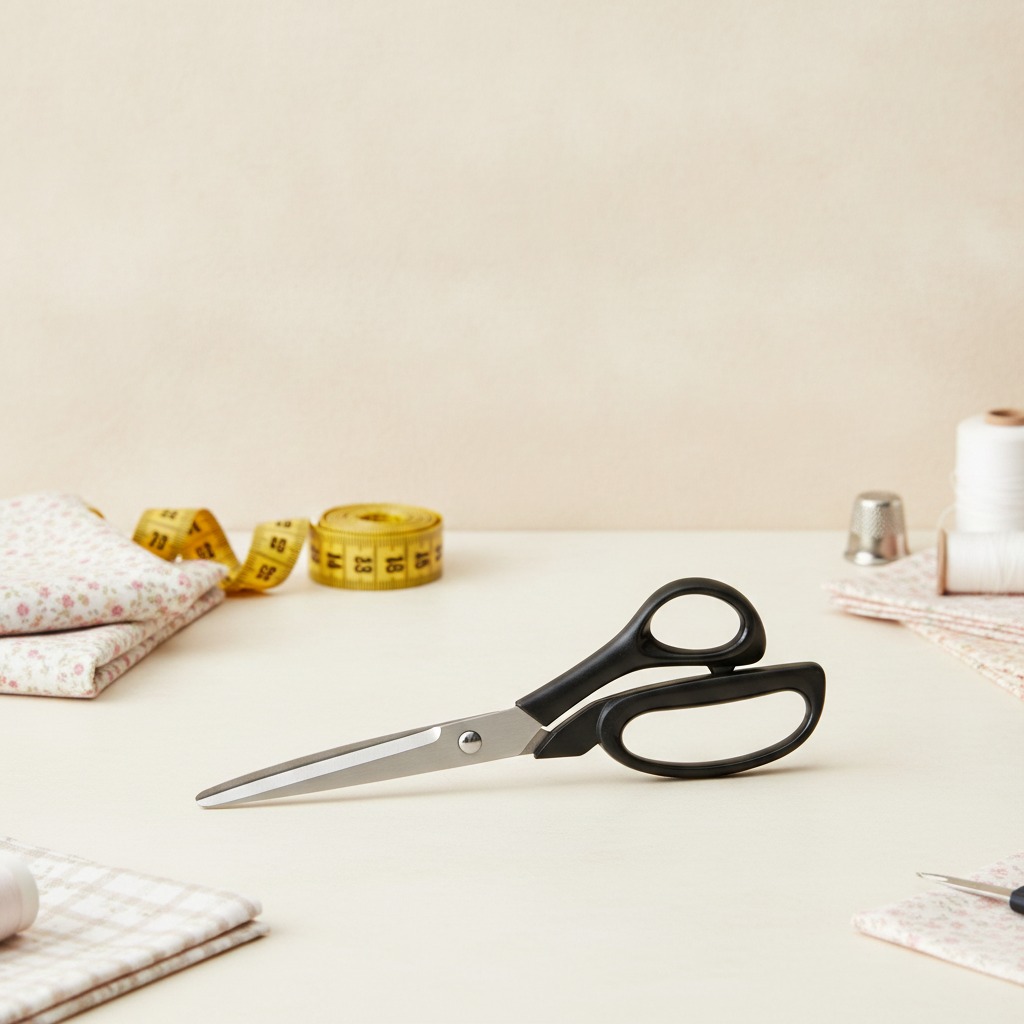
Product overview and size reference
The visible product information identifies a 203mm / 8 in scissor labeled for all purpose cutting. The packaging text states use cases such as patterns, fabrics, seams, and paper. That combination signals a general-purpose sewing and craft scissor rather than a niche tool. The shape also supports that reading: two metal blades, a central rivet pivot, straight cutting edges, and black molded-style finger loops with a rounded ergonomic outline.
For sourcing teams, the 203mm length is an important reference point. It places the tool in a common household and sewing range that is easier for end users to grip than very small scissors, while still remaining manageable for pattern work at a worktable. A 203mm Sewing Scissors Supplier can use that dimension as a basic catalog anchor when comparing alternate handle styles, packaging formats, or bundle plans.
How it compares with other cutting tools
Compared with embroidery scissors
Embroidery scissors are usually smaller and more precise, making them useful for thread trimming and close-detail work. This sewing scissor trades that pinpoint control for longer blade travel and broader cutting reach. Buyers who need one tool for fabrics and patterns will generally prefer the 203mm format over tiny embroidery shears.
Compared with household scissors
Household scissors may cut paper and light materials, but they are not always presented as sewing-focused tools. Sewing Scissors Wholesale listings can stand apart by emphasizing textile and pattern use. That matters to retailers because it helps shoppers understand the intended workflow: cutting soft materials in sewing, alterations, and craft kits instead of general desk tasks only.
Compared with craft knives
Craft knives can make very clean straight cuts on some materials, but they require a cutting mat and careful technique. These scissors are simpler for quick tabletop use and are easier for many users to control on fabric edges, seams, and paper templates. For buyers building a mixed cutting assortment, scissors often fill the everyday-use role while knives serve specialized precision tasks.
Visible construction, materials, and finish
The visible construction shows silver metallic blades and black finger loops. The blades appear smooth and straight, with a standard pointed scissor profile. The handles look like molded plastic or plastic-coated loops sized for finger and thumb placement. Those visible features suggest a straightforward utility design aimed at comfort and repeat use.
The exact blade alloy, hardness, or surface treatment is not confirmed from the image, so those details should not be claimed in a catalog without supplier documentation. What can be stated safely is that the product uses a metal blade structure with a riveted pivot and a handle system designed for general sewing and craft handling. If your assortment strategy depends on finish variety, packaging artwork, handle color, or logo placement, those are the areas to discuss with the factory before launch.
Likely manufacturing approach
Based on the visible construction, the blades are likely produced from stamped or forged steel and joined with a riveted pivot, while the handles are likely injection-molded plastic or plastic overmold. That is an inference rather than a confirmed process, so it should be treated as a sourcing hypothesis, not a specification. For buyers, the practical question is whether the assembled tool cuts consistently, aligns cleanly at the pivot, and maintains smooth movement through repeated opening and closing.
In a wholesale program, the manufacturing story matters less than the outcome: stable blade alignment, consistent handle fit, and a cutting action that suits sewing and light craft use. A well-controlled assembly process will usually show up in fewer returns and more predictable performance across batches.
Applications and buyer scenarios
This scissor is suited to fabric trimming, pattern cutting, seam snipping, and paper cutting for templates or craft work. That makes it useful in home sewing rooms, tailoring shops, alteration counters, school craft kits, and general hobby assortments. For a retailer, the product can bridge different customer needs without becoming too specialized.
Compared with narrow-purpose tools, the all-purpose format broadens shelf appeal. Compared with larger shears, it is easier to present as an everyday hand tool. That is why Sewing Scissors Bulk purchases often work well in mixed merchandise programs where the customer expects one reliable cutter for several soft materials.
Quality control and selection factors
When evaluating a 203mm Sewing Scissors Supplier, buyers should focus on practical inspection points: blade alignment, pivot firmness, smooth opening action, even cutting edges, and consistent handle molding. If the scissor is intended for fabric and paper, the edge should feel stable rather than loose, and the blades should meet cleanly along the cutting line.
Other decision factors include packaging clarity, retail presentation, and whether the product description matches the actual use case. Since this model is labeled for patterns, fabrics, seams, and paper, the marketing should stay aligned with those visible claims. Avoid overpromising performance details that are not confirmed, such as blade hardness, left-handed geometry, or special coatings.
Customization guidance for wholesale programs
For private-label or channel-specific programs, the most common customization discussions usually involve handle color, packaging language, carton quantity, and branding placement. If your buying plan includes Sewing Scissors Wholesale for a retail chain or promotional kit, confirm which elements the supplier can adjust before ordering. Small presentation changes can make the same tool feel like a different product tier in the market.
When comparing options, ask whether the scissors are intended for sewing-first positioning or broader household use. That decision affects not only the product page copy but also the bundle strategy, shelf placement, and customer expectations.
Next step for sourcing
If you are comparing alternatives for Sewing Scissors Bulk orders, start with the basics: size, material use range, handle comfort, and visible build quality. Then request samples or a detailed quotation so you can compare this 203mm model against other cutting tools in your assortment. For buyers building a dependable sewing category, a straightforward all-purpose scissor often offers the clearest value proposition.