Webbing slider rings for adjustable straps, ties, and bag hardware
Webbing slider rings are a practical hardware choice when a project needs a clean way to create adjustable tension without bulky mechanisms. For sewing, bag making, garment work, or repairs, this kind of D-ring hardware helps solve a common problem: keeping straps, belts, and tie systems adjustable while maintaining a neat, reliable finish. The 32 mm size makes it suitable for a wide range of medium-width webbing and fabric strap designs, and the 2-set package is convenient for small production runs, sample making, or DIY repairs.
Product overview
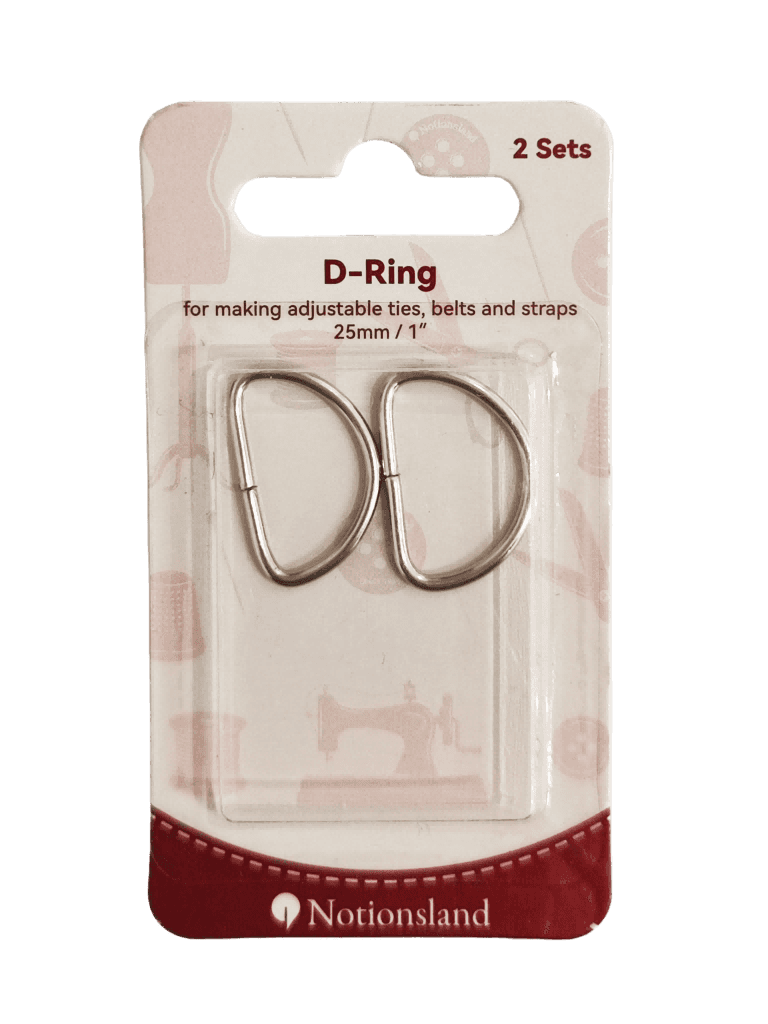
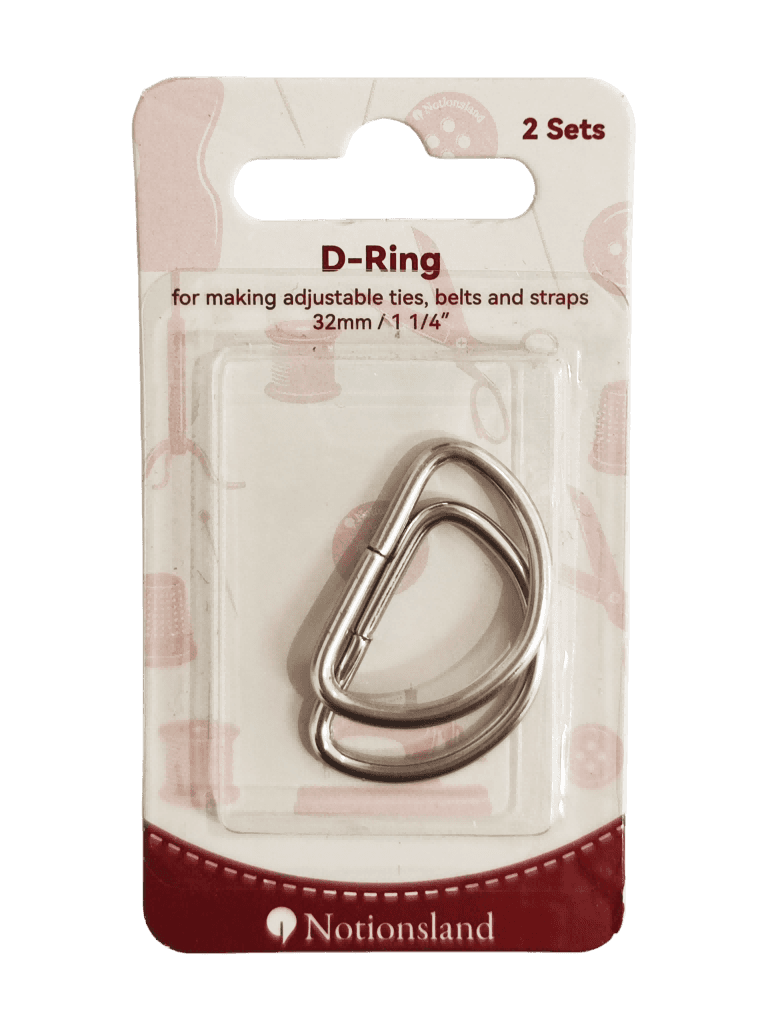
This product is a metal D-ring hardware set intended for adjustable ties, belts, and straps. The visible form is a standard D-ring with one straight side and one curved side, a shape widely used in functional sewing and accessory construction. Based on the packaging and appearance, the surface looks polished with a silver or chrome-like finish. The item is presented on a blister card and marked 32 mm / 1 1/4", which gives buyers a clear sizing reference before cutting material or planning assembly.
For makers who need dependable strap management, webbing slider rings offer a simple construction method: feed the strap through the ring, fold, stitch, and adjust as needed. That makes them useful when a design needs flexibility but does not call for buckles, snaps, or more complex closures.
Key specifications and practical capabilities
Visible details
The following details are visible or supplied in the product data: 32 mm / 1 1/4" size, 2 sets per package, metal construction, and a polished silver-toned finish. The hardware is intended for adjustable ties, belts, and straps.
What this hardware is suited for
This type of ring hardware is commonly selected for projects that need controlled adjustment rather than permanent fastening. It can support strap routing, fabric loops, and connector points in apparel and accessories. If you are comparing strap adjuster loops or other slider components, the D-ring format is especially useful when the goal is a low-profile, easy-to-sew solution.
Material and finish options
From the visible information, the rings appear to be made from metal, likely steel or a plated alloy, with a polished surface. The exact base metal and coating are not confirmed, so it is best to verify material details directly if your application has strict requirements for corrosion resistance, appearance matching, or contact with harsh environments.
In general, buyers choose finishes like polished silver-toned hardware because they pair well with a wide range of fabrics, webbing colors, and accessory styles. The clean metallic look also works well for visible components on bags, belts, and garment accessories. For branded collections or coordinated product lines, matching the ring finish to other hardware can improve the overall presentation.
Manufacturing process and construction notes
This category of hardware is typically produced by forming or bending metal into a D shape, followed by surface finishing such as plating or polishing. The exact process for this item is not confirmed from the image. Buyers should not assume welded construction, seamless construction, or any specific strength rating unless those details are provided by the supplier.
For production planning, the important point is fit. A 32 mm ring should be matched to the intended webbing width, seam allowance, and stitch pattern. Poor sizing can create slippage, distortion, or unnecessary stress on the fabric.
Application scenarios
These rings are suitable for sewing and craft projects, garment making, bag and strap making, and repairs to adjustable closures or tie systems. They are commonly used in products such as belts, apron ties, tote and shoulder strap assemblies, costume components, and DIY accessory builds.
They can also be considered for DIY purse handles connector use when a project needs a simple looped attachment point. In bag construction, a Canvas bag shoulder ring may be used to join straps, handle sections, or adjustable hardware without adding visual bulk. For makers who need strap adjuster loops that are straightforward to install and easy to source, this type of ring is a practical option.
Quality control and buyer checks
Because the product data does not include exact load ratings or compliance claims, buyers should evaluate the hardware according to their own use case. Check ring shape consistency, surface smoothness, plating appearance, and whether the ring dimensions match your pattern allowance. For stitched assemblies, confirm that the metal edge profile will not damage webbing or thin fabric during use.
If the ring is for customer-facing products, it is wise to test the full strap system, not only the ring itself. The real performance depends on the combination of ring size, webbing thickness, stitching method, and intended user handling.
Customization guidance and selection factors
When choosing webbing slider rings, start with strap width, desired adjustment range, appearance, and end-use environment. If your product line includes multiple fabric weights, it may help to standardize on one ring size for simplified sourcing. For custom projects, ask whether alternative sizes, finishes, or packaging formats are available.
Important buyer decision factors include compatibility with your webbing, visual style, expected usage frequency, and whether the hardware will be hidden or exposed. If the ring will be part of a premium bag or garment, finish consistency matters. If it will be used in a repair kit or workshop supply, ease of sourcing and general versatility may be more important.
Why this hardware fits practical production needs
Simple hardware often delivers the best results. A well-sized D-ring can reduce assembly complexity, keep patterns clean, and provide reliable adjustability without extra parts. That is why webbing slider rings remain a common choice across sewing, accessory making, and small-scale manufacturing. They give designers a compact connector that supports function without distracting from the final product.
Request the right hardware for your project
If you are sourcing rings for straps, belts, or bags, confirm the 32 mm size against your pattern and material stack-up before ordering in quantity. Share your application details, target webbing width, and finish preference so the supplier can help you match the right hardware to the job. For adjustable closures, repairs, or custom bag builds, this 2-set D-ring package is a straightforward place to start.