Cover Buttons for Custom Fabric Finishes
Cover Buttons solve a common problem in garment making and repair: when a standard plastic or sewn-through button clashes with the fabric, the finish, or the overall design. These small metal button blanks let you create a coordinated look by covering the button with the same material used on the garment, accessory, or craft project. The result is a cleaner visual match for dresses, jackets, costumes, cushions, and handmade items where a standard off-the-shelf button would look out of place.
Product Overview
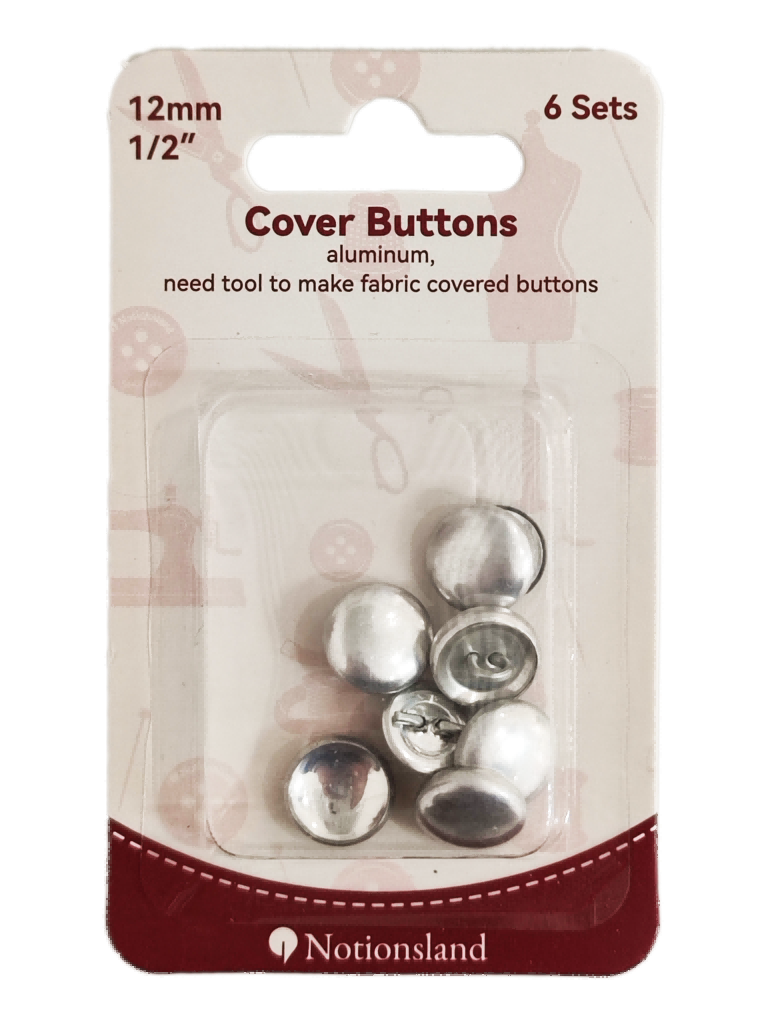
This product is a fabric-covered button blank made from aluminum with a smooth silver-colored finish. The pack is marked as 12 mm, or 1/2 inch, and contains 6 sets. Each set is designed to be assembled with fabric using a button-covering tool, allowing the user to create a custom-covered button surface. Because the visible parts are small, round, and domed, they are suited to lightweight decorative fastening and matching trim work in sewing and craft applications.
What buyers get from this format
Instead of searching for a ready-made button in the exact color or texture, makers can choose their own fabric and build a matched finish. That gives more control over the final appearance and can help keep repairs consistent when replacing a missing button on an existing garment.
Key Specifications and Visible Capabilities
The visible pack information provides a few practical points for buyers:
- Material: aluminum
- Size: 12 mm / 1/2"
- Pack quantity: 6 sets
- Structure: round metal button components with domed caps and backing parts
- Use method: requires a tool to make fabric-covered buttons
For procurement and project planning, the 12 mm size is especially useful for smaller garments, finer trims, and craft work where a compact button is preferred. The small format also helps when the design calls for a subtle fastening point rather than a large decorative closure.
Materials and Finish Options
The visible metal appears smooth and reflective, which is typical of a clean aluminum finish. Since the product is meant to be covered with fabric, the exposed metal is mainly relevant during assembly rather than in the final look. In practice, the fabric selection becomes the main finish choice: cotton, polyester blends, woven suiting, lightweight decorative fabric, or other compatible textiles may be used depending on the project.
Buyers should match fabric weight to the button size and the intended use. Very thick fabrics may be harder to wrap neatly, while very thin fabrics may show texture or stretch during assembly. For best presentation, fabric should be cut and centered carefully so the finished surface sits evenly over the dome.
Manufacturing and Assembly Process
Cover Buttons are typically assembled manually with a button-covering tool. The process is straightforward: the fabric is positioned over the metal cap, the edges are drawn around the dome, and the backing piece is pressed into place to hold the fabric. This method keeps the visible face consistent and allows fabric selection to define the final design.
For production teams and home sewers alike, this is a practical workflow because it avoids dye-matching problems and reduces dependence on store-bought buttons in fixed colors. It also supports small-batch customization, which is valuable for independent apparel labels, costume studios, and repair services.
Application Scenarios
These cover buttons are suitable for many sewing and craft tasks:
- Garment repair and button replacement
- Dressmaking and custom apparel
- Costume work for stage or performance clothing
- Home sewing projects and handmade accessories
- Decorative craft projects that need matched fabric details
They are especially useful when the visual identity of the item matters as much as the fastening function. For example, a matching button on a tailored garment can look more intentional than a mismatched stock button.
Quality Control Considerations
When sourcing Cover Buttons, buyers often evaluate consistency in size, shape, and fit during assembly. Since the final appearance depends on the fit between the fabric and the metal components, uniform dome shape and clean edges matter. The aluminum body should be handled carefully during covering to avoid visible distortion. Because exact durability specifications are not provided here, buyers should test the product in their own application before large-scale use.
Customization Guidance
Customization is the main advantage of this product. Choose a fabric that matches the garment color, pattern, and weight. Consider whether the button should blend in or stand out. Solid colors create a restrained look, while prints, stripes, or textured fabrics can turn the button into a design detail. For teams producing multiple items, keep fabric cutting consistent so each button presents the same visual alignment.
Buyer Decision Factors
Before ordering, confirm the required button size, the expected number of buttons per project, and whether you already have the proper tool for assembly. Buyers should also consider the fabric type they plan to use, the garment style, and the visual result they want. If the goal is a clean, coordinated finish, fabric-covered button blanks are often the most flexible option.
Request the Right Fit for Your Project
If you need a compact button solution that can be matched to your fabric, Cover Buttons offer a practical path from plain hardware to a custom finished detail. For garment repairs, dressmaking, and craft production, they help turn a small functional part into a deliberate design element. Contact us to discuss suitability for your sewing workflow and to confirm the size and format needed for your application.