Cover Buttons for Custom Garment and Craft Projects
Cover Buttons solve a common problem in sewing and product finishing: when a project needs a button that matches the fabric instead of standing out in a standard plastic or metal style. These 15 mm Cover Buttons are designed as small metal button shells that can be wrapped with fabric to create a coordinated look for garments, accessories, upholstery accents, and handmade items. The pack indicates aluminum construction and requires a separate tool to make fabric covered buttons, so the buyer can plan for a simple but specific assembly workflow rather than expecting a ready-to-sew finished button.
Product Overview
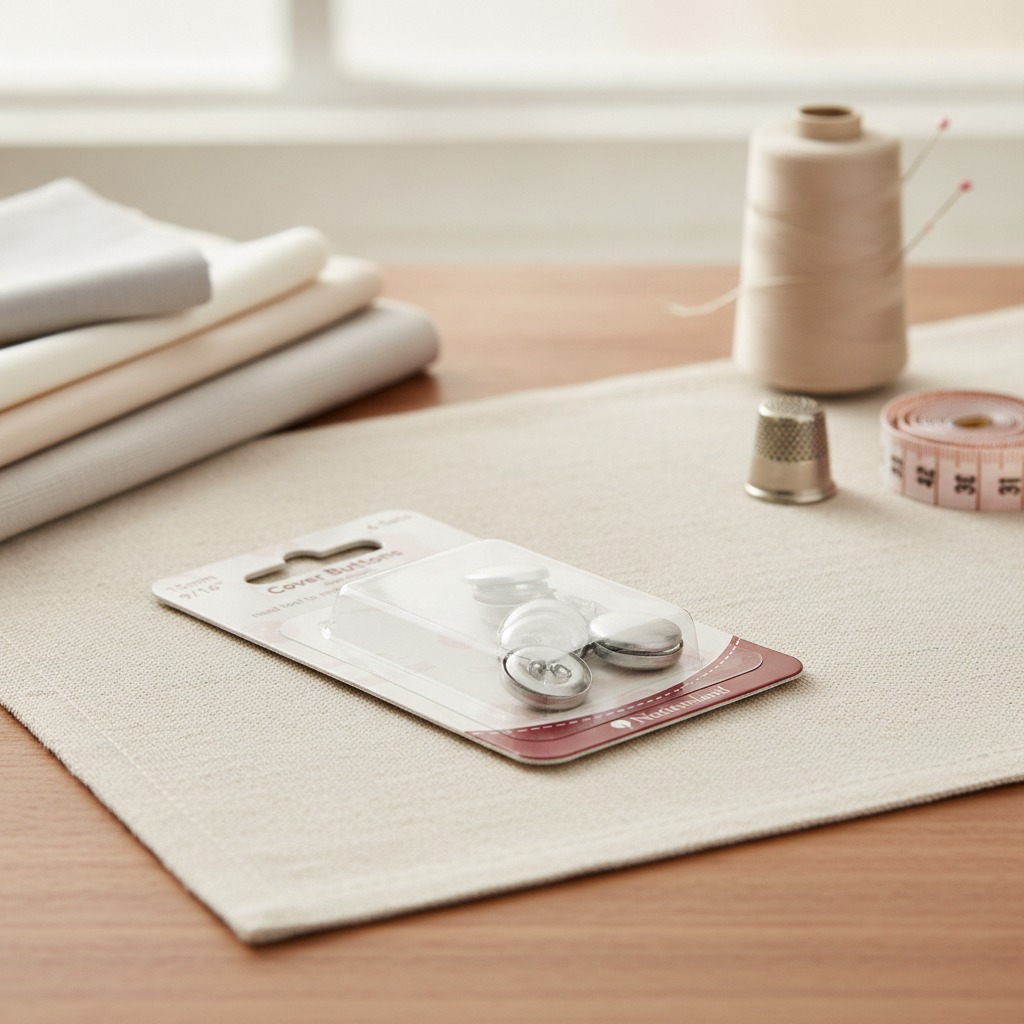
This package contains 6 sets of round button components in a 15 mm / 9/16 in size. The visible parts appear to be silver-colored metal with a smooth, reflective finish. Each piece has a shallow domed top and a flat-backed form, which is typical of button shells intended for fabric covering. The parts are nested in a clear blister on a printed card, making them easy to inspect before use.
Because the tool is not included, the main buyer consideration is whether you already have the correct button-covering tool or plan to source one separately. That detail matters for production efficiency, especially for studios, tailoring shops, costume makers, and hobby sewists who want repeatable results across multiple pieces.
Key Specifications and Capabilities
Visible product facts
Size: 15 mm / 9/16 in
Quantity: 6 sets
Material stated on pack: aluminum
Finish appearance: silver-colored, smooth, reflective
Assembly note: a separate tool is needed to make fabric covered buttons
What this size works for
A 15 mm button is a practical small-to-medium size for apparel closures and decorative trims. It can suit shirts, blouses, children’s wear, light jackets, craft projects, and home décor details where a compact button profile is preferred. The size also helps when the button should blend into the fabric surface instead of drawing attention away from the textile design.
Materials and Finish Options
The pack text identifies aluminum, and the visible surface is a clean silver tone. Aluminum is commonly used in garment accessory manufacturing because it is lightweight and easy to form into consistent button shells. In covered-button applications, the metal shell acts as the structure beneath the fabric layer, so the visible final look depends largely on the chosen textile.
The finish shown here appears smooth rather than textured. That can be useful when the goal is a neat fabric wrap and a uniform hand-feel after assembly. Since exact surface treatment is not specified, buyers should avoid assuming special coatings or hidden performance properties.
Manufacturing and Assembly Use
These are not presented as ready-made decorative buttons. Instead, they function as button blanks or shells for a covering process. The exact manufacturing method is not shown, but the geometry suggests stamped or formed metal parts made for garment trimming use. In practice, the fabric is cut, pressed over the shell with a tool, and secured to form a covered button with a custom face.
That workflow is important for manufacturers and small workshops because it lets them match buttons to seasonal fabrics, branded textiles, or one-off design projects without searching for a prefinished button in the exact right color.
Applications Across Sewing and Design Work
Cover Buttons are useful wherever a project benefits from a coordinated fastener or accent. Common uses include dressmaking, tailoring, costume construction, craft products, cushions, soft furnishings, and upholstery details. They are also a strong choice for repair work when a garment needs a replacement button that blends with the original fabric.
For home sewing, they can make a plain fabric look more finished. For commercial garment production, they support visual consistency across a small run or sample set. For costume and theatrical work, they allow fast styling adjustments using the same base hardware and different fabrics.
Quality Control and Buyer Considerations
When choosing Cover Buttons, the most practical questions are fit, tool compatibility, and fabric selection. The pack clearly states the size and quantity, which helps with planning and sample making. Buyers should check whether their fabric weight suits the button-covering method they intend to use, and whether their existing tool is designed for this exact size.
Since the product information does not provide exact thickness, corrosion resistance, or detailed construction, it is best to treat these as standard garment accessory components rather than specialized performance parts. For production use, inspect alignment, shell consistency, and the final wrap quality during a small test run before committing to a full batch.
Customization Guidance
The main form of customization here is the fabric itself. Different prints, colors, textures, and weights can completely change the final appearance. Light cottons, fashion fabrics, or upholstery textiles can all create different results, but the best choice depends on the tool, the shell shape, and the intended use. If a project needs a subtle effect, use fabric close to the garment color. If the button should stand out, choose contrast or pattern.
For teams making multiple items, it helps to standardize fabric cutting, pressing pressure, and installation steps so every covered button looks consistent.
Why Buy This Format
These Cover Buttons offer a practical route to custom finishing without forcing a compromise on color or style. Instead of searching through limited ready-made options, the buyer gets a reusable button-making format built around the chosen fabric. That makes them especially valuable for designers and makers who want control over the final look and a cleaner match between hardware and textile.
Request Supply for Your Project
If you need compact 15 mm Cover Buttons for garment production, crafts, or upholstery detailing, this 6-set aluminum package is a straightforward starting point. Review your tool setup, confirm the fabric you plan to use, and source enough sets for sample testing plus production allowance. If you are planning a sewing supply order or need support selecting the right accessory format, contact us with your project requirements and intended fabric type.