
A wall of crochet tools can look impressive to an experienced maker and completely confusing to everyone else. A beginner sees hooks in unfamiliar sizes, small plastic rings, metal needles, gauges, counters, scissors, cases, and dozens of pieces whose purpose is not obvious.
That is the opportunity in crochet accessories wholesale. Retailers do not have to sell a pile of equipment. They can turn the same tools into clear sets for a first project, a weekend away, a workshop, or a thoughtful gift.
The strongest set answers one simple sentence: “This is for the person who wants to...” Once that sentence is clear, the contents, case, price point, photography, and package copy become much easier to decide.
1. The first-project pouch
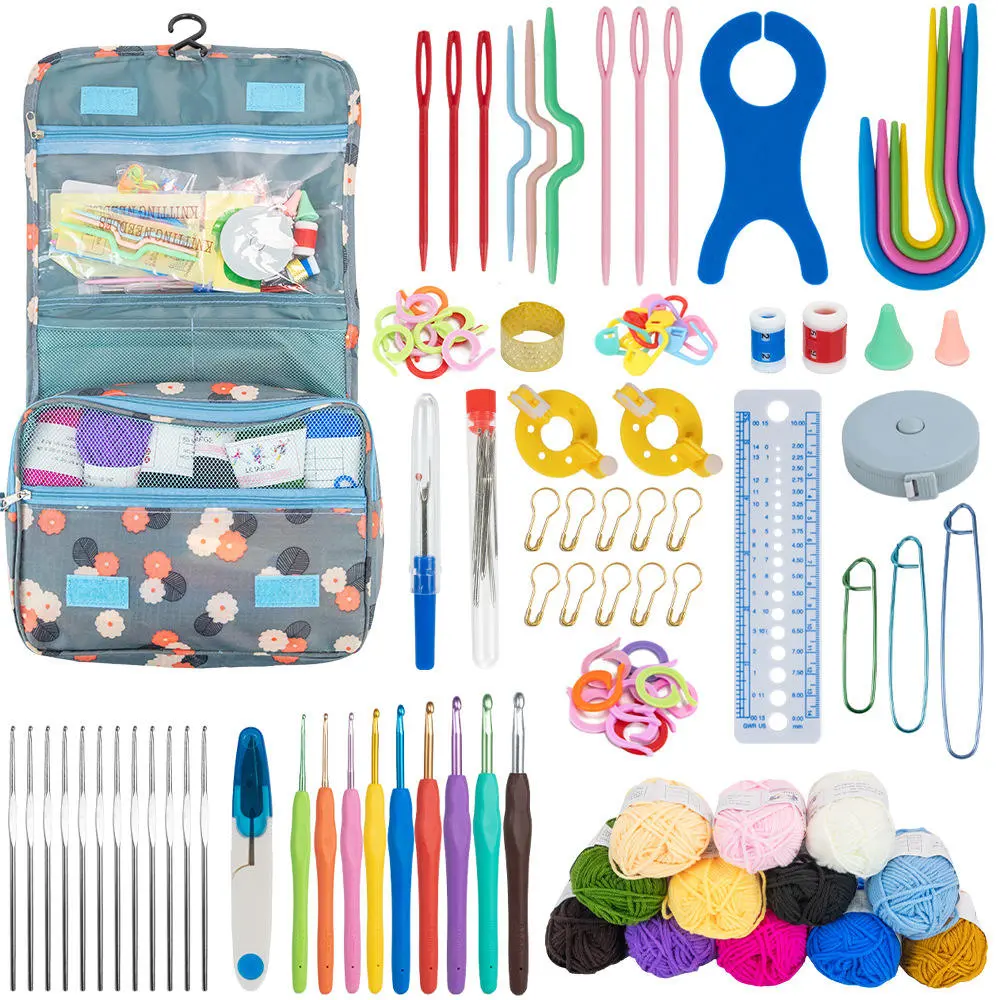
A beginner does not need every hook size on day one. They need enough to start without discovering halfway through that the yarn needle or stitch marker is missing. A compact pouch can include two or three useful hooks, locking markers, a yarn needle, small scissors, and a measuring tape.
The packaging should show a believable first project, such as a coaster, flower, granny square, or simple charm. That image gives meaning to the tools. A short card explaining what each item does is more helpful than advertising an enormous piece count.
Retail angle: place the pouch beside beginner yarn, small project kits, or an introductory class. It becomes the practical next step rather than an isolated tool product.
2. The amigurumi finishing set
Amigurumi makers often need a different mix from someone crocheting blankets. They use locking markers, yarn needles, pins, stuffing tools, small scissors, row counters, and containers for tiny parts. A finishing set can solve the untidy last stage of a character project.
Make the purpose visible. A photograph of a character being assembled communicates more than a flat picture of ten loose notions. Small divided storage also matters because eyes, markers, and needles disappear easily in a general pouch.
Retail angle: pair the set with character kits or finished-amigurumi inspiration. It gives experienced beginners a reason to buy after their first project.
3. The travel crochet roll
Many makers crochet on trains, during holidays, or while waiting for appointments. A travel roll should stay quiet, compact, and organized when it is opened on a small table. Secure hook loops, a zipped pocket, a covered needle section, and a place for small scissors are more valuable than decorative bulk.
A removable notions pouch adds flexibility. The customer can take a full roll on a trip or lift out only the tools needed for one project. Soft washable fabric and a closure that does not catch yarn make the product feel considered.
Retail angle: lifestyle photography can show the roll beside one ball of yarn and a half-finished project in a café or train-seat setting.
4. The ergonomic hook trial set
A full premium hook range can be a large first purchase. A trial set lets customers compare two or three common sizes with comfortable handles before committing to a bigger collection.
Handle shape, surface feel, printed size markings, and the transition between handle and shaft all influence the experience. Avoid claiming that one shape is perfect for every hand. Present the set as a way to explore a different grip and decide what feels comfortable.
Retail angle: a trial set creates a natural upgrade path. If customers like the feel, the store can carry the complete size range or a larger gift case.
5. The color-work organizer
Projects with several yarn colors become messy quickly. A color-work set might include yarn guides, bobbins, locking markers, clips, a row counter, and a small project card for noting color changes.
The set does not need to look technical. Use a bright sample motif and show how the tools keep strands separated. A reusable card or simple magnetic chart board can give the range a distinctive feature without making the project itself more difficult.
Retail angle: merchandise it with granny-square, tapestry-crochet, and character projects where several small colors are used.
6. The workshop table pack
An instructor has different needs from an individual customer. They want tools that are easy to count, distribute, collect, and replace. A table pack can contain matching beginner hooks, blunt needles, markers, measuring tapes, and a few spare pieces in one divided outer case.
Color coding helps. Each place setting can have the same contents in a different color, making it easier to see what belongs where. A teacher card with a quick inventory saves time before and after the class.
Retail angle: sell to craft cafés, schools, community groups, and stores that run events. A workshop can also introduce customers to the normal retail version.
7. The giftable hook case
Some customers are shopping for a crocheter but do not know which yarn or project to choose. A neatly organized hook case feels safer because it is useful across many future projects.
The gift version should look complete when opened. Consistent hook colors, clear size order, fitted pockets, and a restrained selection of useful notions matter more than squeezing in dozens of filler pieces. Add a blank gift card or a small project journal to make the item feel ready to give.
Retail angle: offer one core color year-round, then introduce seasonal case colors without changing the tool specification.
8. The refillable notions tin
Markers, needles, counters, and small repair items are easy to lose. A compact tin or rigid box can become a product that customers refill instead of discarding. Use removable dividers or small inner containers so metal and plastic pieces do not become one noisy mixture.
Refill packs create repeat purchases. A store can sell replacement markers, needles, or measuring tools beside the original tin, while a private-label brand can add new colors or limited-edition accessories over time.
Retail angle: the tin works well near checkout, in gift bundles, or as a lower-priced companion to a full hook case.
A balanced first range needs different reasons to buy
A useful crochet accessories wholesale launch does not need eight versions of the same hook set. Begin with four roles:
- Entry: a first-project pouch with a clear beginner promise.
- Specialist: an amigurumi finishing or color-work set.
- Lifestyle: a travel roll or refillable notions tin.
- Gift: an organized hook case with stronger presentation.
These roles create different price points and shopping moments. Keep a shared visual detail across the range, such as the same zipper pull, label shape, handle palette, or illustrated border, so customers recognize that the products belong together.
Check the tools by making something
Before approving a set, use the actual hooks with the intended yarn. Read the size markings in normal light. Open and close every marker. Thread the needles. Cut yarn with the scissors. Pack the case, shake it, reopen it, and check whether the pieces stayed in place.
Then give the set to someone close to the target skill level. An experienced maker may quietly work around a rough hook or confusing layout. A beginner will reveal which part of the product needs a clearer label, a better tool, or a simpler first step.
How Onehourcrafts can support the range
Onehourcrafts supplies crochet tools and accessories, DIY kits, storage solutions, finished crochet products, private-label packaging, and retail display support. Sets can be discussed around the intended customer, tool sizes, colors, contents, case style, artwork, barcode placement, and sales channel.
When requesting a quotation, send the product role and target price point, not only a piece count. A short brief such as “a travel roll for intermediate makers” gives the development team something useful to build around.
Frequently asked questions
What belongs in a beginner crochet accessory set?
Start with a small number of useful hooks, locking stitch markers, a yarn needle, scissors, and a measuring tape. The exact contents should match the first project shown on the package.
Should a retail set include every hook size?
Not necessarily. A compact set can be easier for beginners and more affordable. A complete size range suits customers who already know they want to continue crocheting.
Can hook colors, cases, and packaging be customized?
Common private-label discussions include handle colors, printed markings, tool combinations, fabric cases, inserts, labels, boxes, barcodes, and display formats. Feasibility depends on the product and quantity.
How can a retailer reduce missing pieces in a set?
Use fitted loops, divided pockets, sealed inner bags, a printed contents map, and a final count check. The package should make it obvious where each tool belongs.
Give every set a customer and a moment
The most convincing crochet accessories wholesale range is not the one with the highest piece count. It is the one where a shopper can point to a pouch, roll, case, or tin and immediately understand why it belongs in their next project.
Contact Onehourcrafts with the customer, set idea, preferred contents, quantity, packaging direction, and launch timing to discuss a retail-ready crochet accessories program.