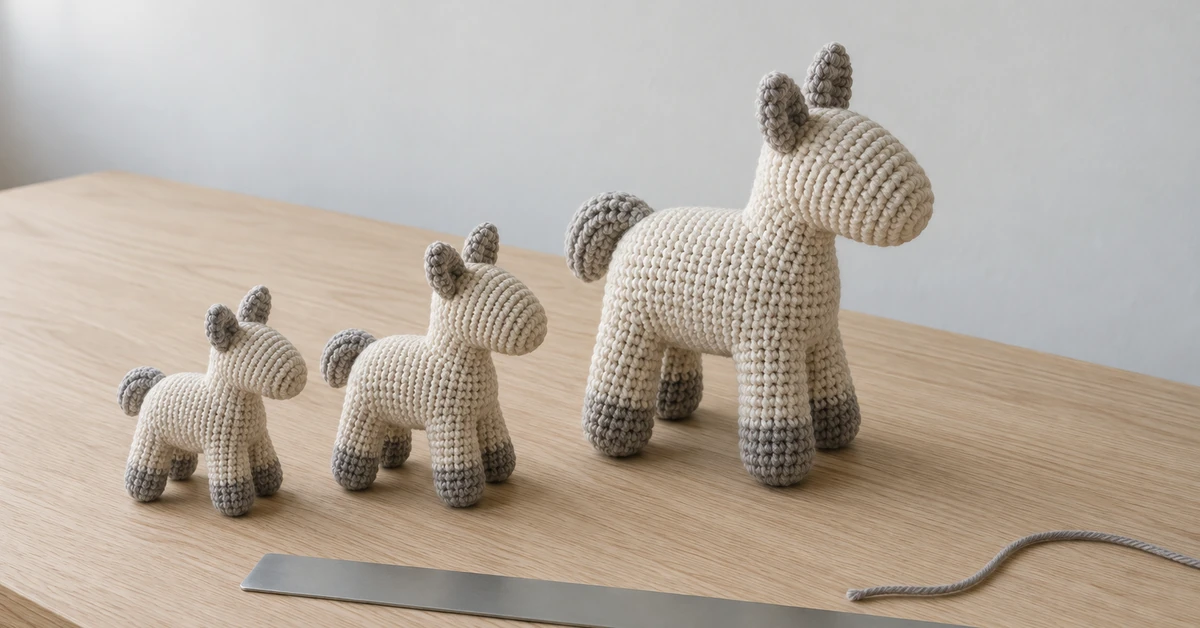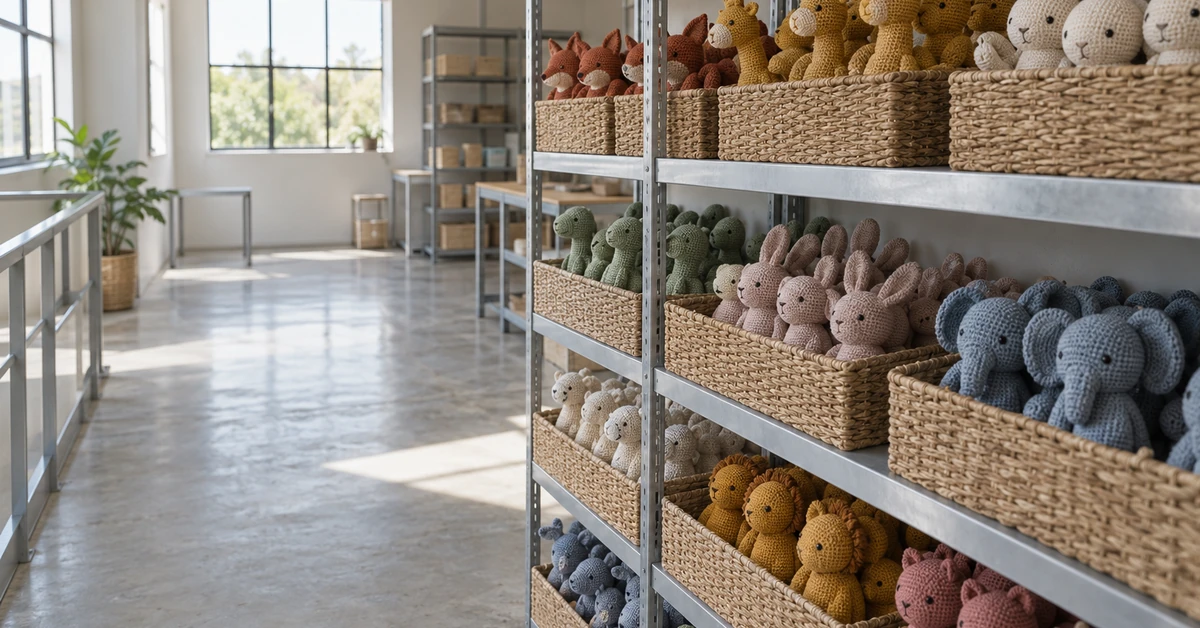

Bristol, Monday, 4,800 finished animals in nine cartons, and every one of them looks exactly like the approved sample until three of them stand side by side. Then the ears start talking. Amigurumi kit wholesale runs rarely fail in a way you can see. The drift is a millimetre of seam at a time, and the buyer discovers it standing in a shop with four thousand more animals in the stockroom.
The first check is not the face, either. It is the stitch count across 10 cm of body, measured on five animals pulled from five different cartons.
What amigurumi kit wholesale lots get checked for first
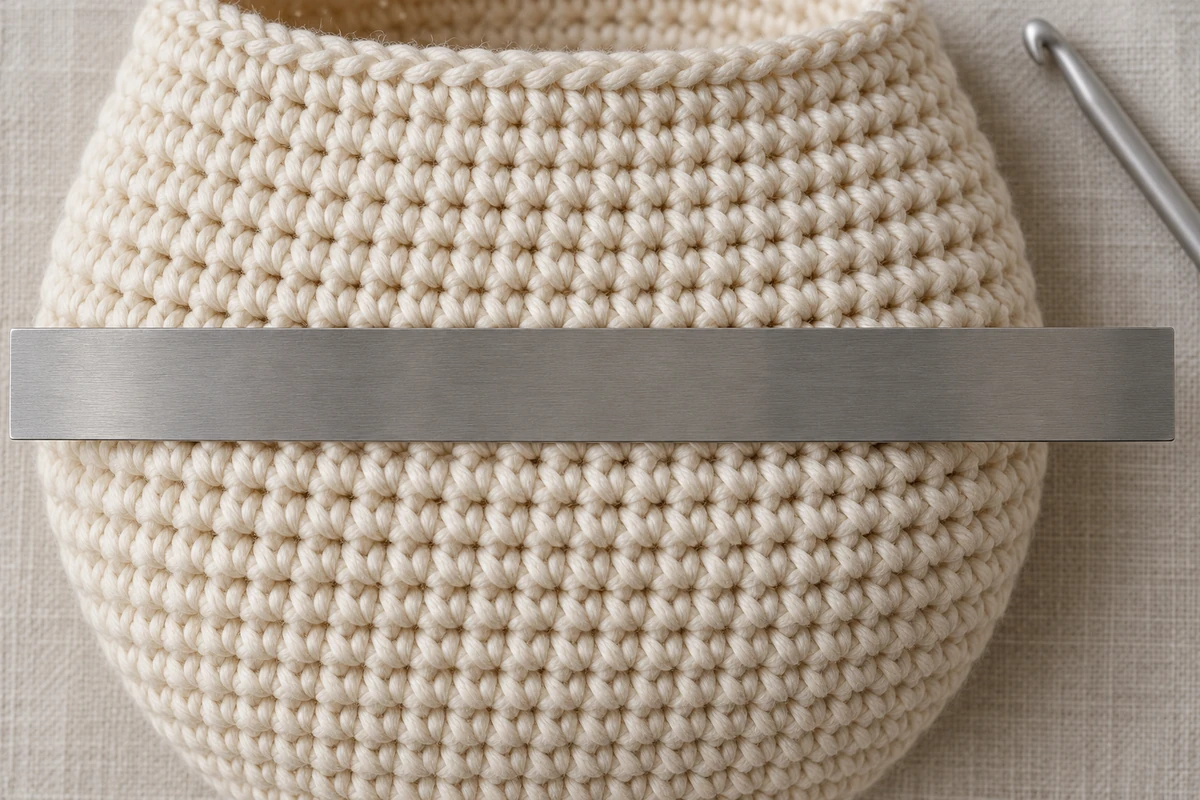
Stitch density, before anything else gets measured. A ruler across 10 cm of the widest round, stitches first and rows after, on five animals pulled from five cartons.
One reading, five animals. A magnifier and a single toy for an hour tells you less. Whatever changed, a new maker, a different hook, a yarn delivery weighing a touch less than the last one, the density moves before anything else does. The sag, the seams, the ears at different heights, all of that follows.
A sample approved at 22 stitches and 24 rows across 10 cm, checked on a lot that reads 20 and 21, is not a cosmetic difference. That is a smaller animal with the same label on it.
What density tells you about the rest of the lot
| What the count reads | What is probably going on |
|---|---|
| Two stitches above the sample | A smaller hook, or a maker pulling harder than the sample maker |
| Below the sample | Looser tension, and the filling will show through the surface |
| Correct stitches, wrong rows | The gauge moved in one direction only, which stretches the body |
| A drop between cartons | Two makers, or two shifts, on one order |
The last line of that table is the one worth watching across a whole run. One maker drifting slightly can be corrected. Two makers on one order cannot, and by the time it shows up there are 4,000 units between you and a clean answer.
The four checks that run before any measurement
Four items, in this order. Eyes. Closing seam. Filling. Colour. The order is deliberate. Any of the four can take an animal out of the lot before the next one is worth looking at.
Tug the eye. If it comes free, the unit is out, and no density reading rescues it. Then run a thumb along the closing seam. Neat over-sewing over a gap still fails. The gap is under the thread. Third, squeeze the body. A crunch where a spring should be means the filling bag sat open too long. Then hold it against the retained swatch. A shade off is a fail even when the yarn reference number matches perfectly, because the reference and the dye lot are not the same thing.
Four checks, and not one of them is a matter of taste. All four can be written down as pass or fail before a carton is even opened.
Sampling a lot without opening all nine cartons
- Number every carton before unpacking, with the packing list on the table next to you.
- Take one carton in six. Nine cartons on a small order means two, chosen in advance rather than by eye.
- Five units per carton, and at least two of those from the bottom layer.
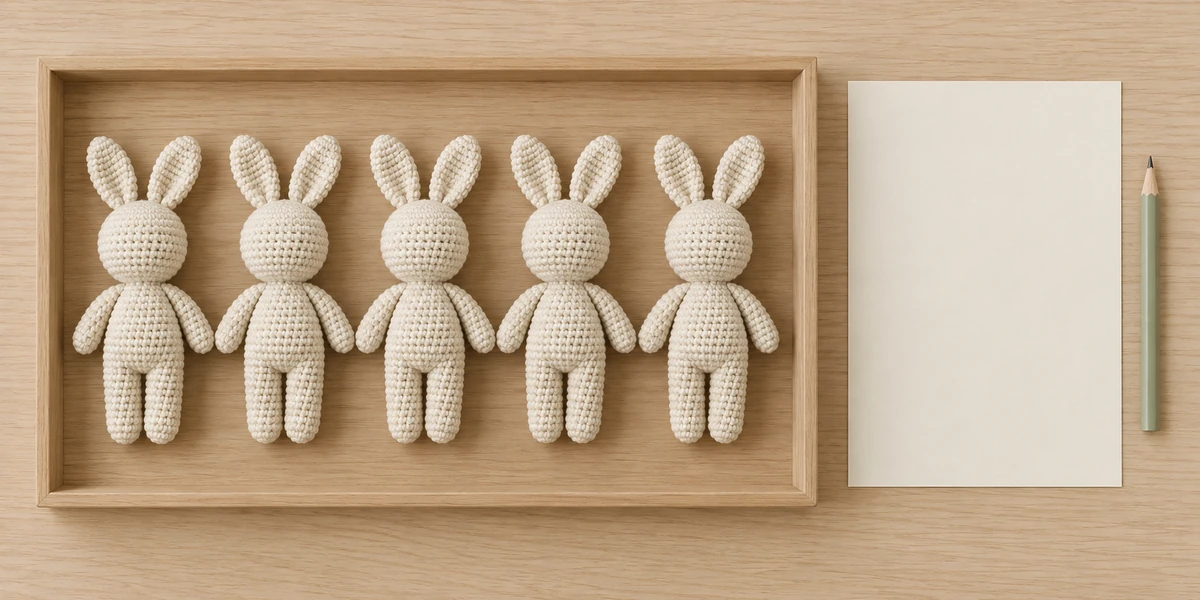
- One plain surface, all of them laid out, photographed before the ruler appears.
- Measure all five. The worst reading is the one that goes on the sheet.
- Reseal each opened carton and mark it, so the next person can see which ones have been through.
The bottom layer is the one nobody photographs, and the one that matters. Cartons settle in transit. The units underneath carry the weight, and that is where shape and packing give way first.
How Onehourcrafts records these checks
Onehourcrafts builds crocheted animals and the tools that finish them, and every lot gets one page, filled in with the cartons still open.
Six readings and a photograph live on that page. Density, eye pull, seam pass, filling weight, colour against the approved swatch, and the carton numbers that were opened. Twenty minutes on the floor, no more, and it is the only reason order two can be held up against order one.
Most amigurumi wholesale orders arrive with an approved sample that was signed off in another room, on another day, by someone who has since moved on. The page exists to close that gap without anybody guessing.
What the checks cannot catch
Nothing on the page records how an animal feels in a hand. A unit can pass all six readings and still be the stiffest toy in the range, and the sheet will not have said a word about it.
Character is out of reach too. Eye placement can be measured. The expression it produces cannot. Two foxes with identical numbers can read as one cheerful animal and one slightly startled one, and the whole difference sits in the face.
Month seven is invisible to all of this. By then it has survived a nursery, a washing machine and a car boot. The record says the lot matched the sample on the day it was signed off. It promises nothing at all about the year after, and a limit that honest is worth writing down.
Where a wholesale lot drifts from the approved sample
Three places, and nobody involved is being dishonest. The mill alters its blend, and the same reference number turns up a little lighter. A second maker joins the order to hit the date. Or the showroom light changes, and everybody in the room agrees the new batch looks close enough.
The blend change is hardest to catch. The reference number stays identical while the yarn inside the bag does not. Weigh 10 metres from the new delivery against 10 metres of the approved yarn. The difference appears in grams months before it appears in a stitch count.
Two lots that measure the same and feel different
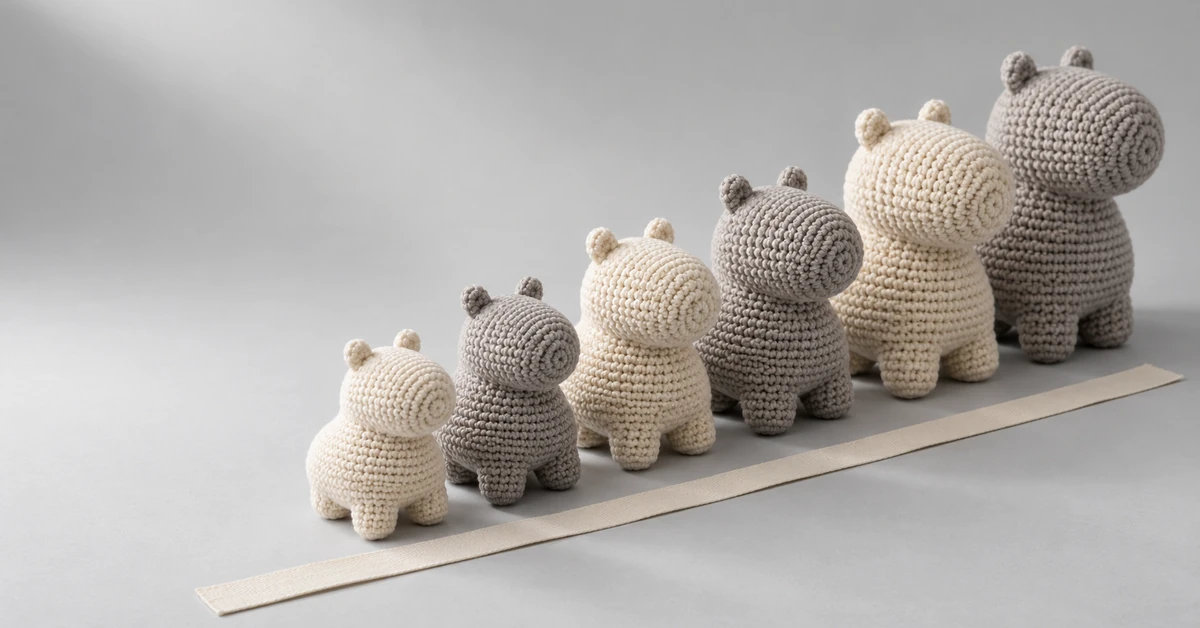
Every figure can match and the two lots can still behave differently in the hand. That is the point where fingers start counting for more than the sheet.
Two animals, both matching the sheet, and then squeeze each one. Tighter twist, and the shape returns at once. The other holds the dent. Both passed density. Both will be sold side by side unless somebody writes down which felt better and why.
So the record gets one extra line, filled in by hand. Firm or soft, and which of the two matched the approved sample. It is not a measurement and it is the line I read first.
Symmetry, seams and the parts buyers miss
| Where to look | What goes wrong quietly |
|---|---|
| Ear height | One ear sits a round higher once the head is filled |
| Eye spacing | Half a stitch off changes the whole expression |
| The closing round | Over-sewn to hide a gap that reopens in transit |
| Limb length | Both shortened together, so each one looks correct alone |
| Stuffing weight | Correct on average, uneven inside one animal |
The symmetry check happens at arm's length. A lamp is the wrong tool. Hold the animal up, look at the ears, turn it over, look again. If you have to hunt for it, it is inside tolerance.
Turning the checks into a one-page record
Lot consistency is not a feeling you develop after ten years. It is one page filled in the same way twice. The sheet has six lines and a photograph, and the same sheet is used for a 500-unit trial and a 12,000-unit reorder. That is deliberate. Change the record between orders and you have nothing left to compare.
Print it. Pen rather than phone, with the cartons open. Then photograph the finished page next to the units. A page photographed on the spot beats a spreadsheet typed up three days later from memory.
What a failed check costs before it leaves the port
Almost nothing, compared to what it costs afterwards. A lot held at the factory is reworked, repacked and postponed by a week. The same lot arriving in a warehouse is freight, duty, two weeks of shop time and a refund that nobody has budgeted for.
That is the whole argument for measuring a sample of cartons rather than opening the shipment at the far end. The check is cheap on the factory floor and expensive at any other point in the journey.
Next step: ask for the lot record with the quote
- Density across 10 cm, stitches and rows, on five units from five cartons.
- Eye pull, as a pass or a fail, before any other reading counts.
- Filling weight in grams per animal, beside the approved figure.
- Colour checked against the retained swatch rather than the reference number.
- The carton numbers that were opened, written down at the time.
- One line in the buyer's own hand: firm or soft, and whether it matched.
Buyers comparing amigurumi kit wholesale lots can ask Onehourcrafts for the lot record at the quotation stage, before the deposit rather than after the cartons arrive. It is the same page used for every reorder, which is what makes two runs comparable in the first place. Earlier notes on crocheted toys wholesale sit in the blog archive, and the wider sourcing checks are gathered in our buying guide.
Two references are worth keeping in the file. The quality vocabulary from ISO gives both sides the same words for consistency across runs, and textile screening along the lines described by OEKO-TEX is the general background a retail buyer will ask about at some point. Category review practice from the National Retail Federation explains, in plain terms, why a drifting lot gets dropped from a range long before anyone measures a stitch.
Frequently asked questions
What gets checked first on a wholesale lot?
Density, across 10 cm of the widest round, on five animals from five different cartons. It moves before anything else does and it explains most of what you notice afterwards.
How is stitch density measured?
A ruler laid across the widest part of the body, stitches counted over 10 cm, then the rows over the same 10 cm. Two people count it once each, and the lower figure goes on the sheet.
How many units does one lot need?
Five per carton and one carton in six, with at least two units pulled from the bottom layer. On a nine-carton order that is ten animals, which is enough to see a drift.
Can stuffing weight shift between batches?
Filling moves before the other figures do, because on most lines it is still measured by hand. Weigh the animal, not the bag, and put the number beside the approved one.
Why do wholesale lots drift from the sample?
Three usual reasons. A different blend in the yarn delivery, a second maker added to the run, or a change of light that makes everyone agree the new batch looks close enough.
Which symmetry faults show up most?
Ear height and eye spacing. Both get set before the filling goes in and both move once the head is stuffed, which is why they are checked last and at arm's length.
Is the lot record available before I order?
Ask for it alongside the quotation. A refusal tells you something too. The page costs twenty minutes on the floor and it is the same page for a trial run and a reorder.
Two lots look the same. How do I separate them?
Density, filling weight, and the yarn weighed in grams per 10 metres. If all three match and they still feel different, twist is the culprit. Write down which one you approved.
What happens if the density check fails?
Stop the run while it is still on the floor. Held at the factory it costs a week. Found in a warehouse it costs freight, duty, shop time and a refund.
How do these checks become repeatable?
One printed page, filled in by hand with the cartons open. Type it up three days later from memory and it becomes a different record.