
Coventry, Wednesday, a fox that has to finish at 18 cm in three colourways, and a brief that currently says medium. I have been sent worse. A crochet animal kit supplier can work from a photo and a mood, but what comes back is a guess with a bow on it, and the second sample will be a different guess.
One number fixes most of that. Not the height. The stitch count around the middle.
One figure a crochet animal kit supplier cannot quote without
Stitches around the widest part of the body, counted flat and counted once, before a gram of filling goes in. Every other figure in the brief sits underneath it. Fill the toy and the height grows. Sit it on a shelf for a month and the width relaxes. The stitch count around the middle does neither, so it goes on the page first.
The fox on my desk arrived at eighteen stitches around the middle, a 3.5 mm hook, light worsted cotton, and it finishes at 9 cm across by 18 cm tall. Put those same eighteen stitches on a 5 mm hook and you are holding something twice as big and half as tidy. Two different products out of one number, and only one of them matches the drawing on the box.
Where that number comes from
Not from the pattern. From the gauge, and the gauge is built out of three things buyers keep leaving blank. Hook size. Yarn weight. How hard the sample maker pulls.
Send a workshop a sketch with no gauge and you get whatever the sampler had on the desk that morning. Send the same sketch with a gauge swatch taped to it and you get the animal in the drawing. The difference costs one small swatch and about ten minutes.
Then measure the swatch yourself. Not the finished animal, which hides every error inside the filling. A flat 10 cm square, counted twice by two people, tells you more about the third order than any photograph will.
The first sample round is about shape. The second settles the numbers. The third exists for one reason, to prove that somebody else on the floor can repeat the first two.
Five inputs that move the size
| Input | What it does to the finished animal |
|---|---|
| Hook size | Half a millimetre moves the width by about a centimetre |
| Yarn weight | Heavier yarn reads bigger and coarser at the same stitch count |
| Tension | Two makers on the same pattern differ by a full size |
| Stuffing | Over-filling adds width and takes away the neck |
| Finishing | Blocking, brushing or trimming changes the shape after assembly |
Of those five, only the first two are decided in the quotation. The other three get settled on the floor, by whoever is actually holding the hook that week.
Reading a sample without being fooled by the photo
Product photographs are taken from the flattering side, under a light that flattens the stuffing, by someone who has spent twenty minutes arranging the ears. None of that is dishonest. It is simply not the view a customer gets in a shop.
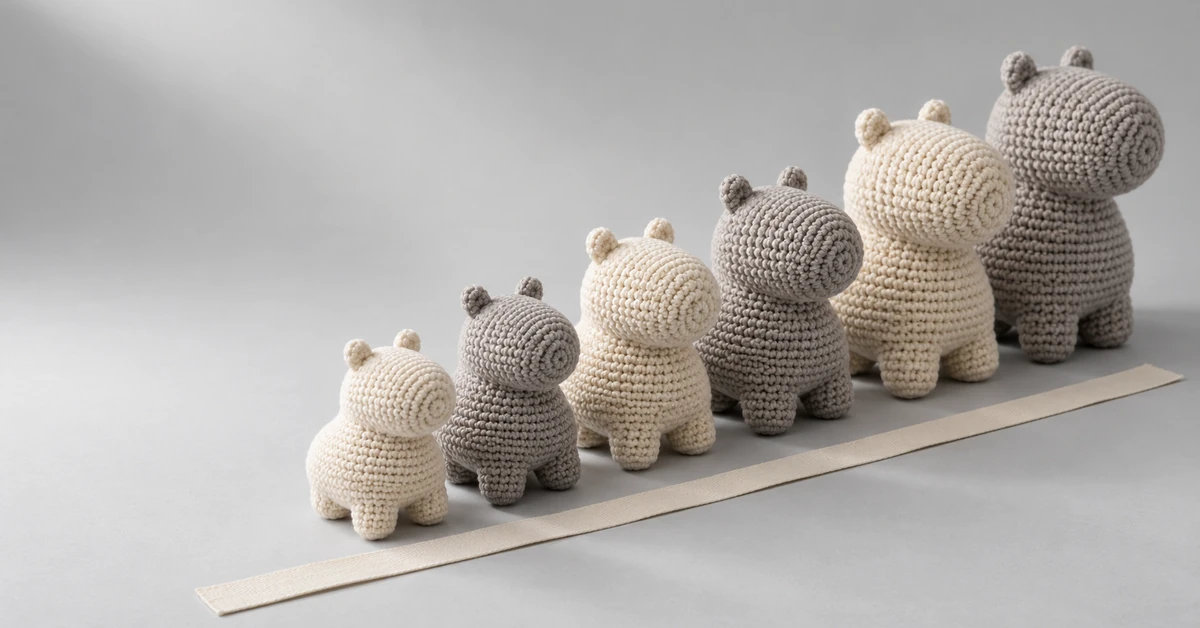
Ask for four more images with the sample. The underside, where the seam and the closing round sit. The back. A side view shot from the same distance as the front, not from further away. And one with a ruler laid along the base. A fox photographed next to a coffee cup could be any size at all.
Push back on the underside shot and you learn where the finishing time went.
Two figures that read the same in an email
A stitch count with a gauge attached, and a stitch count with the gauge left off. Both arrive looking like a specification. One of them is a wish.
I have a folder of quotes that all say twenty-four stitches around the body. Worked on a 3 mm hook, that is a keyring. The identical round count on a 6 mm hook becomes a cushion. Half the instruction is the number. The other half is the gauge, and the gauge is what goes missing.
How Onehourcrafts writes each input down
Onehourcrafts produces crocheted animals and the kits built around them, and each input gets its own line before sampling starts: hook, yarn, gauge, stuffing weight, closing method, chart revision.
Six lines on one page, filled in before a sample exists. On an animal crochet kit, one wrong round lands on the face, which is why the page stays short. A workshop holding that page can quote without writing back, and the price lands two days earlier.
The things a number cannot tell you
No figure will tell you whether the animal is likeable. Likeable is what actually sells a soft toy. Every figure here can be perfect while the fox looks faintly worried and the range gathers dust.
They say nothing either about how the maker feels about the pattern. A workshop that finds a design fussy quietly simplifies it, and the ears show it before anything else does.
And they say nothing about how the animal ages in a child's hands. A well-filled fox that has been through a washing machine twice is a different object from the one that left the factory, and only a second sample in month four will show it. That is a hard limit of the whole method, and no spreadsheet removes it.
Shape, scale and proportion as a written brief
- The widest round, in stitches, with the hook and yarn spelled out beside it.
- Height and width in centimetres, each with a tolerance attached.
- Head against body as a ratio, written as figures.
- The limb length in rounds, not in centimetres, because limbs stretch least.
- Which parts are one piece and which are sewn on afterwards.
- The closing method for the final round, named.
Six lines cover it. A brief that fills two pages usually repeats the same two instructions in different words and leaves the tolerance out.
Stuffing, and the density figure nobody asks for
Nobody argues about stuffing density. It still decides whether the animal stands up on a shelf or slides down inside the box.
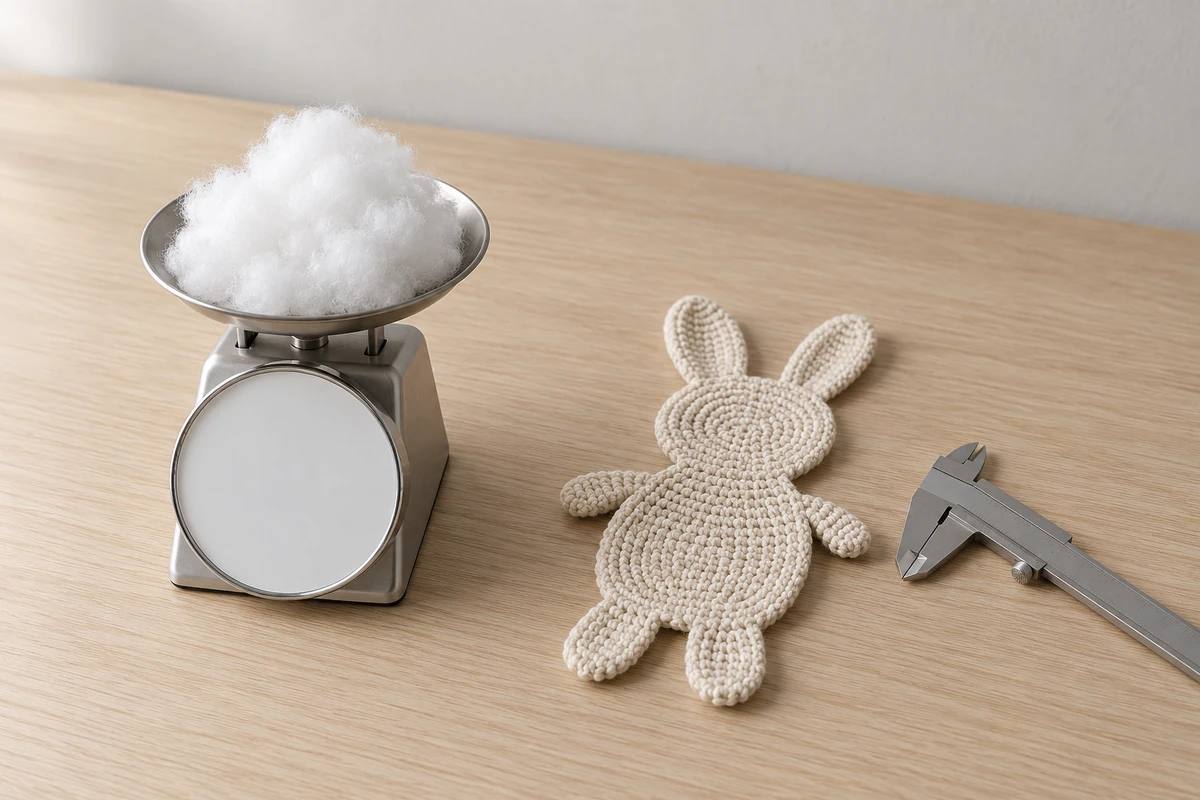
Grams per animal. Not firmly or softly, which mean whatever the reader wants them to mean. Four grams in a 12 cm body is firm. The same four grams in an 18 cm body is under-filled, and it looks tired by the time it reaches the customer. I have watched a range of 6,000 toys change character entirely on a two-gram adjustment.
Get the stuffing weight of the approved sample onto the sample record, beside the date. Fourth shipment feels wrong? Read that line first.
Chart symbols and stitch counts you have to freeze
| What to freeze | Why it matters six months later |
|---|---|
| The symbol set | A new operator reads a new chart, and one substituted symbol changes a full round |
| The round count | One missing round shortens every animal in the run |
| The increase positions | Even spacing keeps the shape; eyeballed spacing makes a lopsided head |
| The colour changes | Where a change lands decides where the eye ends up on the face |
Freezing the chart matters more for an animal than for a flat panel, because every shape in the toy is built out of increases and decreases at specific rounds. Add a single round and the fox grows a longer snout. Put one chart symbol in the wrong round and the snout leans.
Every mark on the chart gets drawn, named and keyed before the first run, and the key travels with the file. A mark that means something else on the next run is a suggestion, not a chart.
Two outside documents are useful when a workshop pushes back. The quality vocabulary from ISO gives both sides one set of words for consistency between runs. The identification rules from GS1 sit alongside whatever the carton must carry. Neither one straightens a lopsided head. Both cut the argument short.
Photographing the sample without changing it
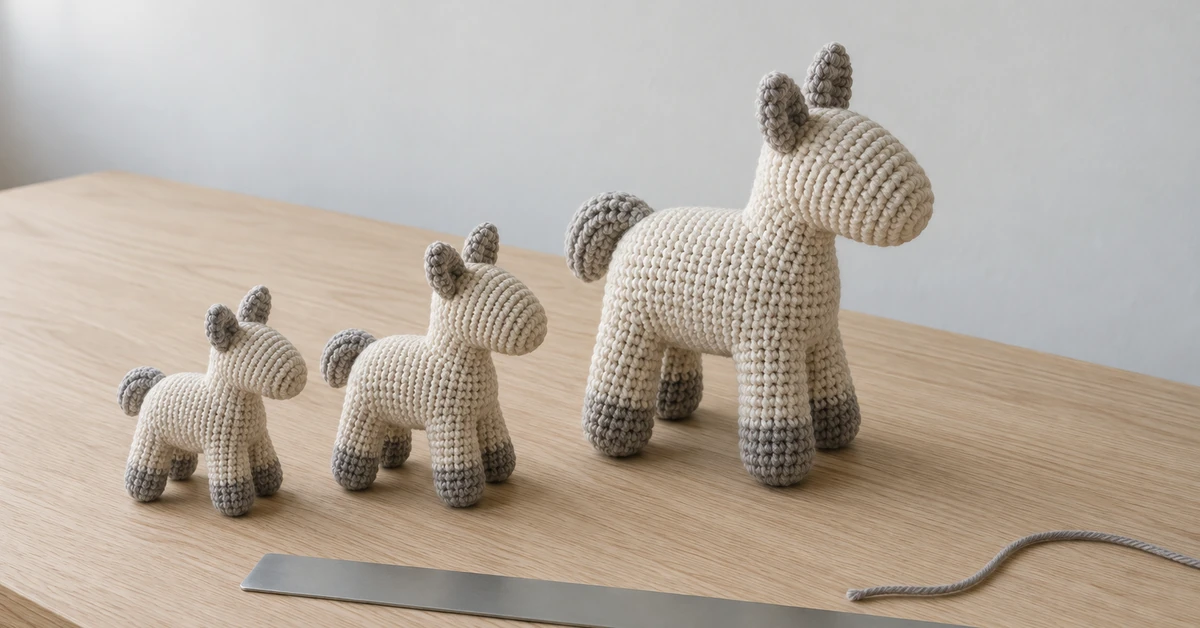
Photograph the sample before anyone tidies it. The approved toy has to be the one that comes off the line, and the toy on the packaging has to be the one that was approved.
Lay a ruler along the base in every shot and note the reference number of the chart beside the photograph. Six months from now, the only thing standing between you and a silently revised ear is your own filing.
Next step: send the shape brief before the camera
- The widest round in stitches, with hook and yarn named.
- Height and width with a tolerance, in centimetres.
- Head-to-body ratio as a figure.
- Stuffing weight, in grams per animal.
- The chart revision you are approving.
- The market, if the label line changes with it.
Buyers choosing a crochet animal kit supplier can send the outline to Onehourcrafts and get the widest round, the gauge and the stuffing weight back on one page, ready to quote from. Older notes on amigurumi kit wholesale runs sit in the blog archive, and the rest of the sourcing checks sit in our buying guide.
Frequently asked questions
What has to be in a brief before samples start?
The widest round in stitches, the gauge, the finished size with a tolerance, the stuffing weight and the chart revision. One page. Anything missing from that page comes back as a guess.
How do I give a crocheted animal a size?
Two figures, height and width, and a tolerance of roughly half a centimetre on each. Height on its own is not a size. A taller animal is usually a narrower one.
Does stuffing density change with size?
Yes, and it is the figure most often copied across sizes by mistake. The same weight in a 12 cm body and an 18 cm body gives you two different toys, so both get their own line on the record.
How many sample rounds does an animal need?
Three, in my experience. The first shows you the shape. The second fixes the proportions. The third proves that another maker can hold them.
Why do proportions drift once the photo is signed off?
Because approval normally ends at the picture. The chart revision, the round count and the stuffing weight never get frozen, so the next run is a fresh interpretation.
Should a chart use standard symbols or custom ones?
Either, as long as the set is drawn, named and frozen before the first run. A custom symbol with no key is worse than no chart.
How do proportions hold across three sizes?
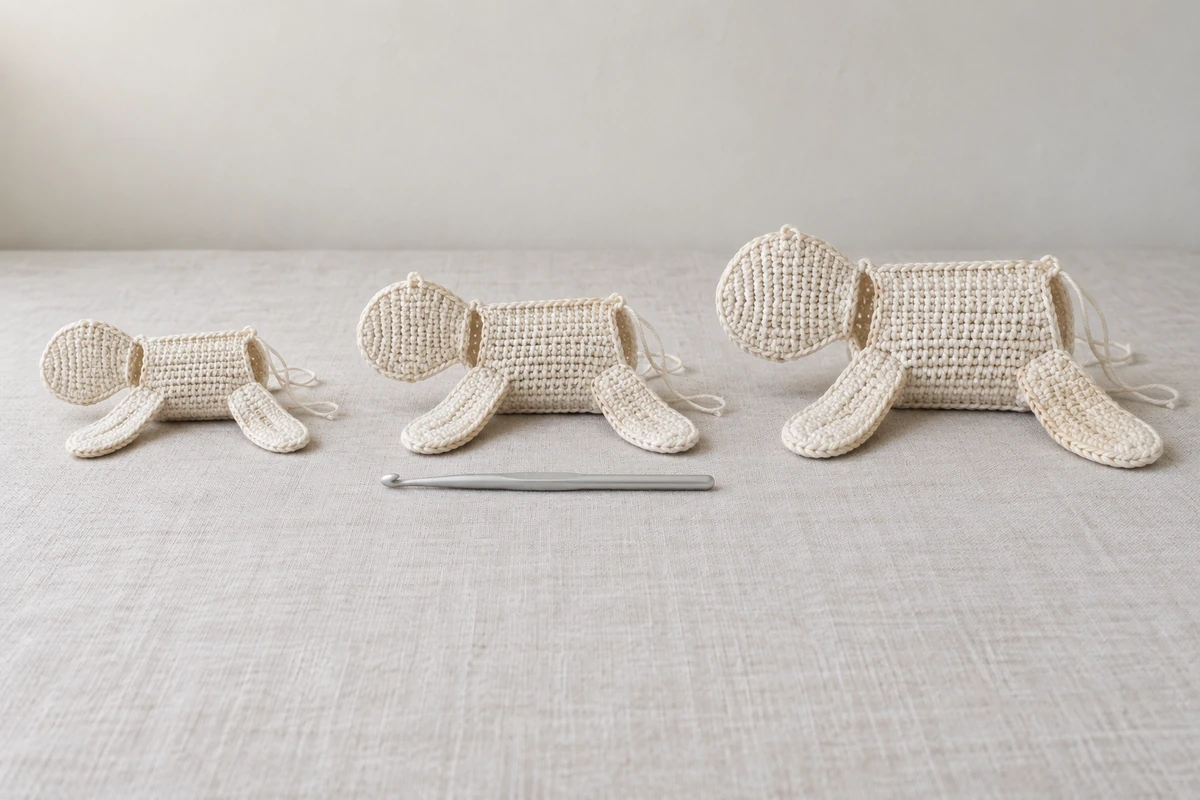
Hold the ratios. The round counts are free to change. A head at two thirds of the body stays at two thirds in every size, even where the rounds refuse to divide.
Which part of an animal is hardest to repeat?
The face. Eyes, snout and ears carry the character. They are also the last things anyone specifies and the first things substituted.
Can one animal become three kit sizes?
Yes, when the gauge is scaled on purpose and the smallest version is sampled first. Scale down from a large sample and the pieces stop fitting.
What goes to the supplier first?
The outline, the widest round, the gauge, the tolerance, and the market. One page, specific enough that a workshop can quote without writing back.