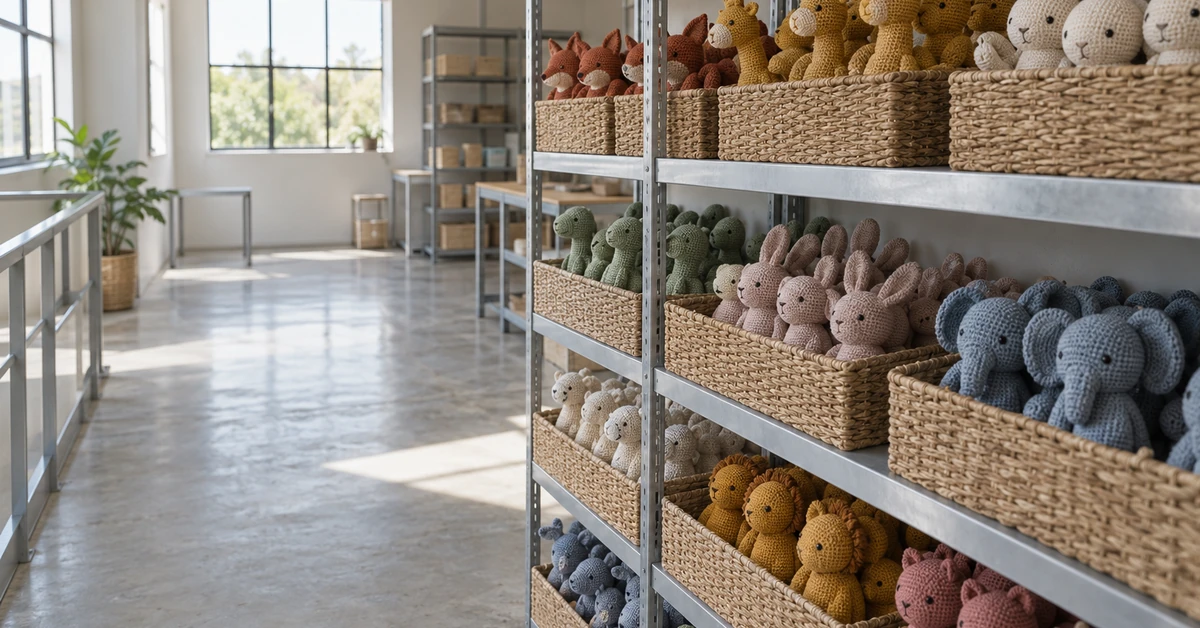

Leeds, Tuesday morning, 4,000 kids kits in the cart and a buyer with one real worry. Will a six-year-old finish it. I ask something else. Who holds the hook for the first ten minutes, and has anybody actually watched that happen. She has never seen a child open the kit. Neither has the workshop. Crochet kits for kids wholesale is often sold on a hypothesis nobody has tested.
Thirty minutes decides the whole range. I have watched nine of these launches now, and every one that fell over fell over inside that same half hour. On the day it never looked like much.
Different kit, same story. A range I looked at in February came back from a chain in the Midlands with 340 units on the return pallet, and the reason field on almost every one of them said the same thing in different words. It would not start. Nobody in that workshop is six, and nobody there had tried it.
Why crochet kits for kids wholesale lives or dies in thirty minutes
Twice is one time too many for a six-year-old. If the first stitch has not happened in half an hour, the hook goes down and so does the interest. The adult buys something else in March. The return reason arrives in a spreadsheet as too hard, and nobody at the workshop ever hears the rest of it.
It works the other way round as well. Get the first thirty minutes right and the range largely sells itself, because a parent who saw it work once will buy the next age band up without being talked into it again.
I have run this test with four groups, thirty-one children in total, and the results were not close. Twelve finished a chain of six stitches unassisted. Nineteen needed a hand placed over theirs at least once. The nineteen were the same children who would have returned the kit.
Numbers help here. Across the four groups, a child who got the first chain inside twenty minutes went on to finish the whole motif in three sessions out of four. A child who did not went on to finish it once in seven. Same kit, same yarn, same afternoon.
Stage one. Whose hand is on the hook
Not the yarn weight. Not the box size. Start with the hand. Adult, older sibling, or the child alone.
One child on the hook and two hands on the hook are not the same product. Shorter hook. Fatter yarn. Three colours instead of nine. A first motif you can see from across the table. It is a genuine trade-off, not a marketing one. A shared kit sells to two people in one transaction. A solo kit sells to one, and most of the ranges I see have made that choice by accident.
Answer it out loud before you answer anything else. One 12,000-unit order changed shape in a single call. All it took was a buyer saying out loud that the adult in the room is usually a grandparent. Grandparents buy, sit down, and hand the hook back after four minutes. That is a different kit from the one a patient parent needs.
Write down the person in charge of the first ten minutes. If there is no name, there is no plan.
Stage two. Set the hook, then set the yarn
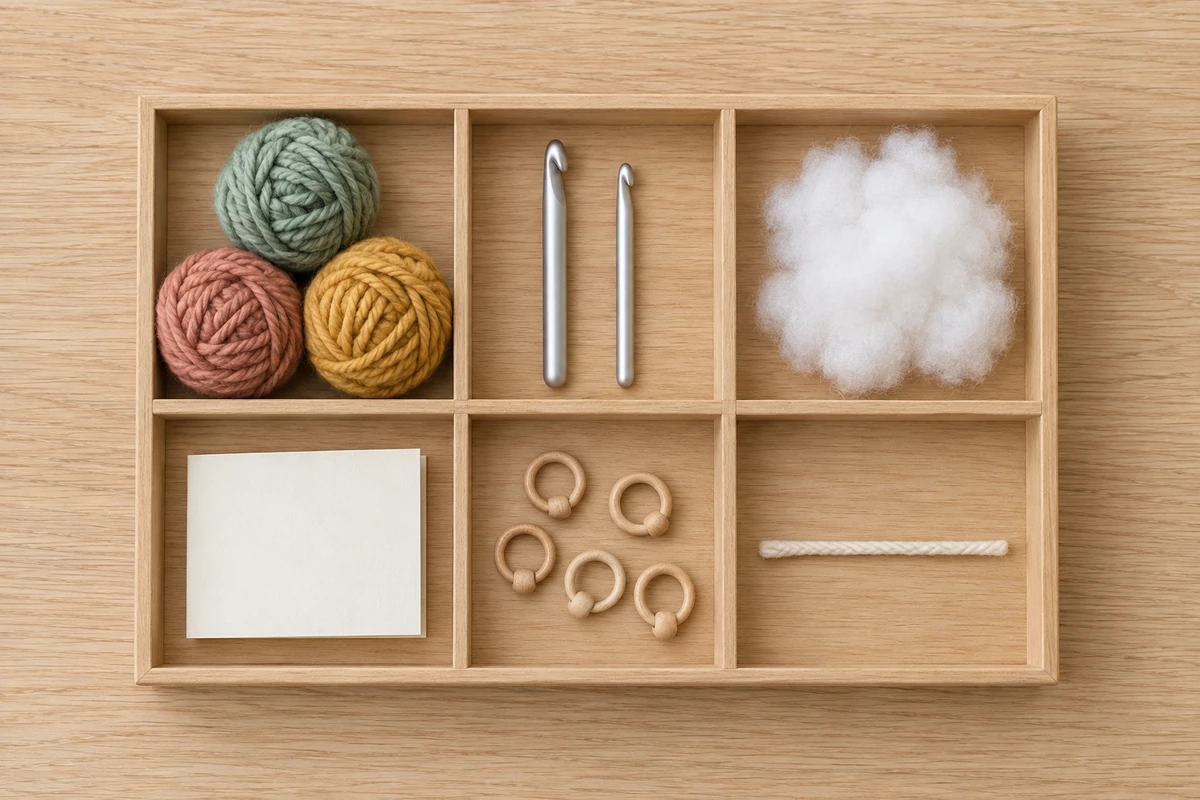
Blunt aluminium, 4 mm to 5 mm, and yarn that refuses to split under a beginner's tension. That is the entire conversation about needles. It takes less time than most buyers budget for it.
Needle safety here comes down to two measurements, how long it is and how round the tip is. A 12 cm hook with a rounded head will not go through anything it should not. A 15 cm pointed steel hook will. The gap costs a few cents a unit and decides whether the kit clears a retail buyer's first pass.
The last sample I turned down had a 16 cm lace hook sitting in the box. Lovely object, wrong hand, and every one of those kits would have come back.
Then the yarn. Fine dark cotton hides every hole from everyone, and nobody aged six is going to find one. Light yarn at high contrast keeps the next stitch visible from 40 cm. The sheet points at the hole with a drawing, not a paragraph.
Take a sample home afterwards. Try it in a dim kitchen at eight in the evening. That is the room the kit will really be used in.
Stage three. Thirty minutes, four children, one floor
A supervised session with four to six children is enough. Not a focus group, not a survey. Sitting on a floor with real six-year-olds for half an hour.
What I watch for, in order. Can they hold it without being repositioned every stitch. Do they find the first hole without being pointed at it. Do they finish something small enough to hold up. That last one matters more than it sounds. A finished object at minute twenty-five is the difference between a kit that gets used and a kit that gets shelved.
Two adults take notes. One helps. The other watches only, and writes down every question a child asks and every time an adult's hand comes in. That second list is the instruction sheet. Everything else is decoration.
The room does not have to be quiet. It has to be a room where a dropped stitch is not a crisis, and where nobody is filming.
One seven-year-old, halfway through, told me the hole kept moving. That sentence went into the revised sheet word for word, and it fixed a third of the children who had needed hands on theirs.
Stage four. The name on the label, before the artwork
This is where a nice idea becomes a legal object, and the label changes with the destination.
Material safety testing is not one test. Fibre content, dyes and trims each get their own line. In several markets a soft toy and a craft kit do not share one document. The toy-safety frameworks from ASTM, and the textile screening OEKO-TEX describes, are where I usually start. That is not a replacement for one email to your importer asking which line applies to you.
Then decide the age band honestly. Two kits can both say six and up and fail for opposite reasons. One bores a nine-year-old. The other defeats a six-year-old. Both end up on the same returns pallet and they need opposite fixes.
The same kit can carry two different age lines in two different markets, and the importer is the one person who knows which. Ask before the artwork is drawn, because redrawing it is where the money goes.
Stage five. Approve on numbers you can repeat
Approve the sample on what can be measured. Stitches in the first motif. Minutes to first completion. Length of the finished piece. Number of colours. Hook size. Yarn length per kit.
A sentence like lovely to work with is not an approval. Six stitches, twenty-two minutes, ten metres, two colours. That sentence a second workshop can repeat in November.
Six of them, and not one needs explaining. Stitches, minutes, centimetres, colours, hook, yarn length. If it has no unit attached, it is an opinion. Opinions do not survive a change of workshop.
What each stage has to produce
| Stage | What it leaves behind |
|---|---|
| 1 | A named person who holds the hook |
| 2 | Hook size, tip style, and a visible-stitch rule |
| 3 | The list of every question the children asked |
| 4 | The market, the age band and the label line |
| 5 | Six numbers written into the purchase order |
Six things the sample has to survive
- Thirty minutes on a floor with four children.
- One adult who is not paying attention.
- A car journey loose in the box.
- The third use, once the novelty has worn off.
- A sibling who borrows it and loses one piece.
- A return into the original packaging.
The list is short on purpose. Every item on it is something that happens in a real house in the first month, and none of them happen in a meeting room.
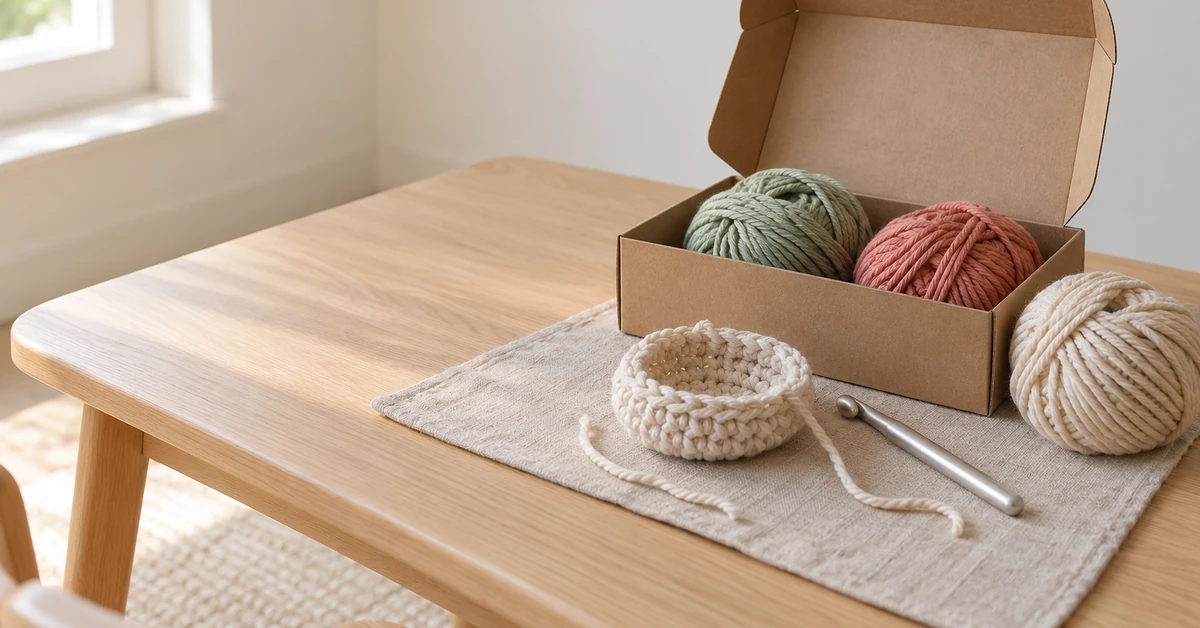
How Onehourcrafts runs this sequence
Onehourcrafts builds crochet DIY kits and the tools and accessories that go with them, and the five stages above are the sequence a buyer is asked to agree to before a sample is cut.
The session notes come back attached to the sample, and the six numbers go into the specification before anything is quoted. Nobody has to remember what a six-year-old said in week four, because it is written down in week four. The rest of the range checks sit in our buying guide.
Where the sequence breaks down
A session in a bright office with four confident children is not a nursery at four in the afternoon. If the sample is tested by the two children of the person running the test, the data is worth almost nothing.
The stages also cannot test hand strength, and a kit that suits a confident six-year-old may still be unusable for a child with weaker grip. Those children exist in every class, and they buy the same kits.
And none of it replaces the destination market's own rules. Everything here sits on top of the label requirements, not instead of them.
One more limit. The session tells you about the first half hour and nothing at all about the sixth. A kit can pass on a Tuesday and be boring by the following weekend, which is why the third-use test is not optional.
A realistic calendar for a first kids range
| Week | What happens |
|---|---|
| 1 | Brief, age band and market agreed |
| 2-3 | First sample and a draft instruction sheet |
| 4 | Supervised session, notes collected |
| 5 | Revision and a second set of numbers |
| 6 | Label artwork checked against the market |
| 7-8 | Pilot run of 500 kits before the full order |
Seven weeks is not slow. It is one sample, one session, one revision and a pilot. A range that skips the session does not save three weeks. It spends them on returns in month three.
What to send with the first brief
- The age band you want to sell to, and the one you will not.
- What the child holds up at minute twenty-five.
- Whether an adult is expected to sit in.
- Your market, because the label follows it.
- The hook size you will not go below.
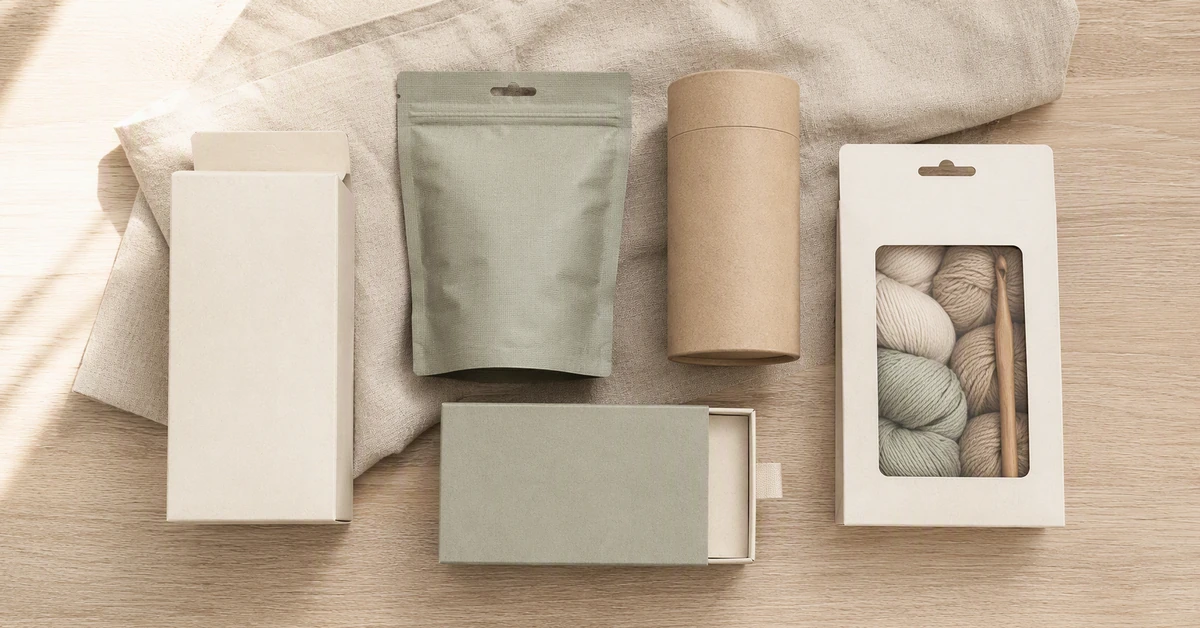
- Whether this ships as retail ready crochet kits in a printed box or in a plain poly bag.
Next step: book the session before the deposit
Put the session in the same email as the sample. Not in a later one. Ask for the sample and the notes in one parcel, and for the six numbers they expect you to measure. If nobody there has watched a child use the kit, that is the answer you needed, and you have not spent a deposit yet.
Buyers scoping crochet kits for kids wholesale with Onehourcrafts get the session notes with the sample, and the six numbers written into the quotation rather than into a covering letter.
Frequently asked questions
What age band suits a first kids crochet kit?
Six and up, if the child works alone. Below that you are selling a shared kit whether you say so or not. I have watched three four-year-olds try a solo kit, and not one of them got past the first stitch without an adult's hand over theirs. A children's crochet kit for that age should say shared on the front, in the same size type as everything else.
Which testing does a children's kit actually need?
It depends on the market, and on whether the finished piece is classified as a toy. Those are two different documents, and your importer is the one person who knows which applies. Ask in week one. Fifteen minutes of email. It has saved a container before now.
Is a blunt needle compulsory on every kids kit?
Every one I would put on a shelf. A blunt 4 mm aluminium hook costs roughly what a pointed one costs, so it is not really a budget decision. It is the cheapest saving you will ever regret making.
Any way to test a kit without children in the room?
Borrow some. A nursery will say yes for a box of biscuits. So will a school club, or a Saturday craft class. Twenty minutes with four six-year-olds beats a month of internal opinion, and the questions come home written down.
If a child gets hurt, who carries it?
Shared, and the label is where it starts. An honest age band and a blunt hook will do more than three paragraphs of legal text. Nobody on a shop floor reads those.
Should the packaging be child resistant?
For yarn, almost never. What matters is a box that keeps its parts together in a car boot, and survives an eight-year-old in a hurry on a wet Saturday.
How much supervision should the sheet assume?
Nearby for ten minutes, gone after that. Write for constant supervision and you get a kit nobody finishes, then a buyer who never reorders.
Can I reuse an adult kit design for a kids range?
The chart, sometimes. The yarn, the hook and the sheet do not transfer. Those three decide whether a child finishes or a box comes back.
How long does a kids kit take, realistically?
Seven to nine weeks to a pilot, if the session lands in week four. Skip the session and you do not save three weeks. You spend them on returns in month three instead.
What should the first brief include?
The age band, the object the child holds up at minute twenty-five, the hook floor, the market and the box format. One page, and specific enough that a workshop can cut a sample from it without writing back with four questions.