
Crochet kits for gift shops are handled by at least five people before the first stitch: the merchant buyer, store associate, gift giver, recipient, and new maker. Each person asks a different question. A retail program works when the box answers all five without becoming crowded, fragile, or expensive. Follow the handoffs in order and test the evidence at each one.
Hand one belongs to the merchant buyer
The buyer needs a commercially legible item, not only an appealing project. The first sample review should cover price architecture, case pack, lead time, replenishment, pack dimensions, barcode location, seasonal relevance, and the finished result. If those facts arrive in separate messages, the product is not yet ready for a line review.
Place the sample beside the shop's actual assortment. The box should signal what is different: technique, motif, color, experience level, occasion, or finished use. A product that needs a long verbal introduction will struggle when the buyer is comparing dozens of gift candidates.
| Buyer question | Evidence needed | Failure signal |
|---|---|---|
| Where does it fit? | Dimensions, fixture, category and neighboring items | No defined shelf or gifting role |
| What is the margin story? | Unit, case, freight and expected price range | Price depends on hidden exclusions |
| Can it repeat? | Lead-time range and material continuity | Critical yarn cannot be replenished |
| Why this design? | Clear recipient and occasion | Generic project with decorative packaging only |
Make the line review pass in thirty seconds
Create a one-page sell sheet that mirrors the physical unit. Show the front, back, finished dimensions, included and additional items, estimated skill level, case pack, and ordering code. A buyer should not discover after approval that the photographed hook, frame, stuffing, or finishing tool is not included.
- Place the sealed unit at normal viewing distance.
- Give the reviewer thirty seconds without explanation.
- Ask who the gift is for and what they will make.
- Ask what else the recipient must own.
- Record every answer that depended on guesswork.
Hand two belongs to the store associate
Associates need a short, accurate explanation that survives shift changes. Build a five-line product card: finished object, technique, experience level, completion commitment, and what is included. Add one comparison line explaining how this kit differs from the adjacent option.
Do not turn associates into technical support staff. Packaging and instructions should carry the operational detail. Store training is for selection confidence, not for repairing unclear charts, missing quantities, or misleading photographs.
Give the shelf a recognizable gift signal
Gift presentation does not require ribbons printed on every surface. It requires a coherent front, an intact pack, a finished result worth giving, and a clean way to carry or wrap the unit. Test whether price stickers, security labels, and shelf tags cover essential information.
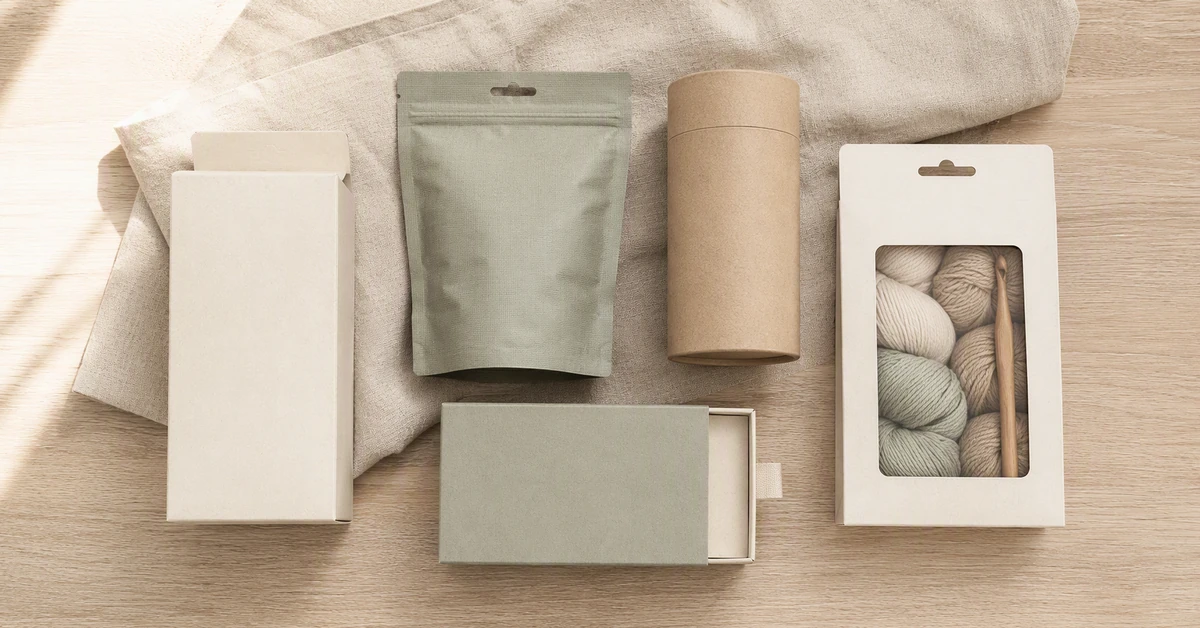
The retail packaging ideas for craft kits guide helps connect protection with communication. For custom packaging crochet kits, approve a production-equivalent pack with final components; a flat artwork proof cannot reveal bulging yarn, strained seals, or a crushed presentation surface.
Hand three belongs to the gift giver
The giver may not crochet. The box needs to let that person choose without knowing hook sizes, stitch names, or yarn weights. Replace insider language with an observable promise: approximate finished size, likely time commitment, experience expectation, and the kind of result the recipient can display or use.
- Show the complete finished project at a believable scale.
- State whether the recipient must already know basic stitches.
- List additional equipment in a visible location.
- Use an occasion cue only when the design supports it.
- Provide a gift receipt or product identification path where the retailer supports it.
Test the carry from shop to celebration
Simulate a realistic journey: remove the unit from a crowded shelf, carry it in a shopping bag with other goods, wrap it, transport it again, and open it later. Inspect corners, window film, closure, inserts, loose components, and surface scuffing. The gift moment magnifies small packaging defects.
Record whether the recipient can tell if the pack has been opened. Tamper evidence may be appropriate for some constructions, but it should not make opening destructive or dangerous. Choose the protection level according to channel, product, and market requirements.
Hand four belongs to the recipient
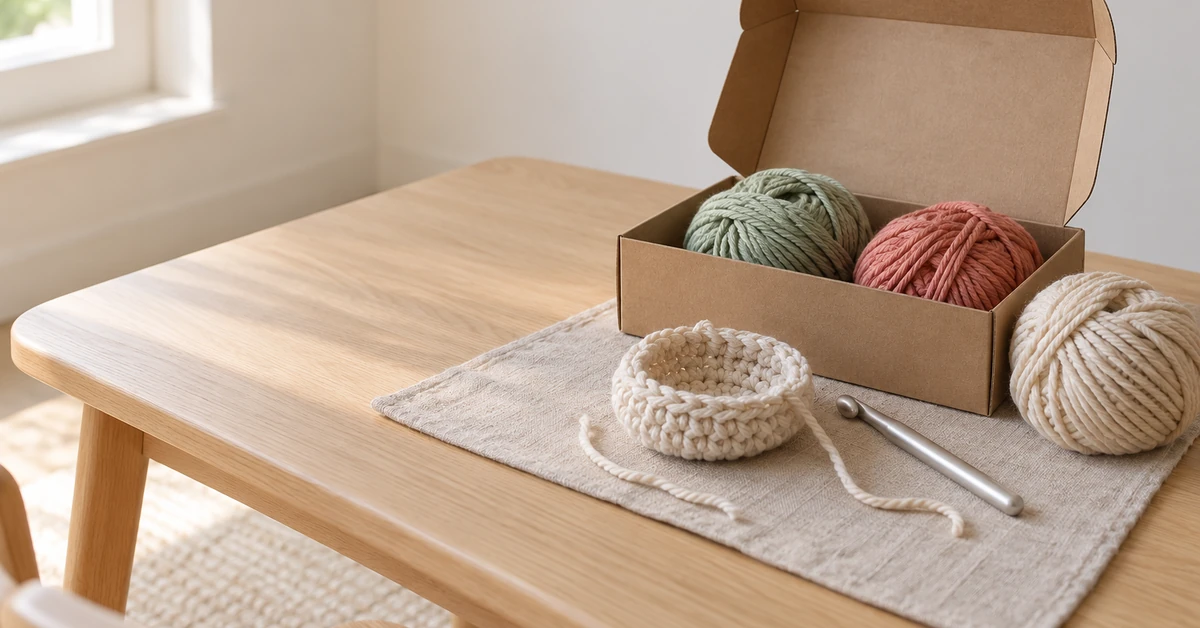
The first reaction is emotional and practical. Does the box look complete? Are colors as expected? Can the recipient identify the project and decide whether to begin now? Arrange contents so the first opening confirms the promise rather than revealing an unstructured bundle.
| Opening moment | Desired response | Design control |
|---|---|---|
| Seal breaks | Contents remain controlled | Internal tray, bands or mapped compartments |
| Instructions appear | Next action is obvious | Start panel and inventory list |
| Yarn is lifted | Colors remain identified | Labels or organizer mapping |
| Tool is found | Size and role are clear | Retained, marked position |
Make the inventory feel generous but exact
A gift kit should not look sparse, yet filler components create cost and confusion. Map every item to a project step. Portion yarn through repeated completion trials, include justified allowances, and specify accessory counts. The crochet kit yarn quantity calculation explains how to replace visual estimates with measured consumption.
For retail ready crochet kits, inspect component identity as well as count. The wrong hook size or an unmapped yarn shade can be more damaging than a visibly missing decorative extra.
Hand five belongs to the new maker
The maker converts a gift into an experience. Observe the first session without coaching: inventory, yarn identification, hook selection, starting loop, first row or round, error recognition, and pause. Record time and confusion points. The goal is not to prove that an expert can finish; it is to learn whether the supplied system teaches the intended customer.
The crochet kit video instruction guide shows how print and video can share roles. A video can demonstrate motion, but the physical pack still needs durable identifiers, essential safety information, and enough instruction for the customer promise.
Price the gift as a complete decision
Compare the kit against gifts of similar spend and occasion, not only against loose yarn. A lower component cost can be offset by assembly, branded packaging, inspection, freight volume, replacements, and retailer handling. Build a price ladder with meaningful differences.
| Tier | Value change | Avoid |
|---|---|---|
| Entry | Small project and simple presentation | Removing essential guidance |
| Core | Broader motif choice or richer materials | Unexplained price gap |
| Premium | Distinct finish, reusable storage or gifting detail | Decorative cost without user benefit |
| Seasonal | Time-relevant design or sleeve | Dated core stock with no exit plan |
Build the assortment around recipients
A wall of similar motifs is not an assortment. Assign each SKU a recipient, occasion, visual style, skill requirement, price tier, and likely completion commitment. Remove items that duplicate the same job without earning their space.
- First-time maker seeking a low-risk start
- Experienced hobbyist wanting a compact project
- Friend or colleague receiving a thoughtful activity
- Traveler or student needing portable storage
- Seasonal shopper looking for a themed result
When planning crochet kits for retailers, keep enough common structure for easy staff learning while varying the project promise. Stable pack dimensions can also improve display and case planning.
Plan replenishment before the first gift season
Gift shops may order narrowly and reorder quickly when an item proves itself. Identify long-lead yarn shades, printed components, special tools, and handmade subassemblies. Set the latest reorder date that still supports the selling window.
Use stable finished-goods and component codes. If a color or tool changes, decide whether the replacement is visually and functionally acceptable, then update artwork and reference samples. Do not let a silent substitution create two versions under one barcode.
Separate gift language from compliance evidence
Packaging may imply age, recipient, or use even without a formal age claim. Review the actual product, intended market, tools, small parts, materials, labels, and warnings with qualified specialists. The CPSC provides an official art and craft safety guide and information about children's products.
These resources are starting points, not blanket approval. Avoid unsupported claims such as safe for all ages, nontoxic, hypoallergenic, washable, or complete. Keep evidence connected to the exact finished kit and destination.
Use a handoff scorecard at approval
Give each handoff a minimum pass. A beautiful recipient opening should not hide weak commercial data, and excellent shelf information should not excuse a failed first session. Require evidence for buyer, associate, giver, recipient, and maker.
- Buyer can place, price, and reorder the item.
- Associate can describe it accurately in five lines.
- Giver can choose without craft expertise.
- Recipient sees an intact and coherent gift.
- Maker can begin and pause using supplied guidance.
How Onehourcrafts can connect the five hands
Onehourcrafts can align project specification, component control, gift presentation, line-review data, first-session testing, and reorder planning. A useful crochet kits for gift shops inquiry includes recipient profiles, occasions, price tiers, pack dimensions, quantities, markets, timing, artwork needs, inspection expectations, and which tools must be included.
Frequently asked questions
What makes a crochet kit suitable for a gift shop?
It needs a clear recipient and occasion, credible project promise, attractive intact presentation, understandable contents, workable first session, and commercial data that supports display and reorder.
Should gift kits always use premium packaging?
No. Packaging should protect the contents and support the gift moment at the target price. Reusable or premium structures need a real customer benefit.
How can a non-crocheter choose the right kit?
Show finished size, experience expectation, completion commitment, included tools, and additional needs in plain language. Avoid relying on technical yarn or stitch terms.
How many SKUs should a gift-shop range include?
Use enough SKUs to cover distinct recipients, prices, aesthetics, and difficulty levels without repeating the same commercial job.
Can a QR code replace printed instructions?
A QR code can add demonstrations and updates, but required information and the essential customer path should remain usable for the product and market.
What should a retailer inspect on arrival?
Check case count, finished codes, pack damage, seals, barcode scan, visible color, component movement, and a defined sample of contents.
How should completion time be described?
Use representative user trials and present an approximate range with context. Avoid a precise promise based only on an expert maker.
What causes the most gift-kit complaints?
Common preventable causes include misleading images, missing or wrong tools, insufficient materials, unclear starts, damaged packs, and undisclosed additional needs.
Should seasonal gift kits be replenishable?
Only when the reorder can arrive with useful selling time remaining. Set decision dates and an exit plan before launch.
What belongs in a supplier brief?
Include project, user, price, quantity, timing, materials, colors, tools, pack construction, markets, languages, testing, inspection, case pack, and reorder expectations.
Approve the chain, not just the box
Choose crochet kits for gift shops when every handoff preserves the same honest promise: the buyer understands the business case, the associate can place it, the giver can choose it, the recipient enjoys opening it, and the maker can start with controlled materials and clear guidance.