
Picture two boxes on the same shelf. One says “53-piece crochet set.” The other says “Make Milo the Mini Frog Tonight.” A complete beginner may not know what 53 tools are for, but they understand the frog immediately.
That difference matters. The first box sells contents. The second sells a result.
When buyers compare crochet kits wholesale, it is tempting to begin with piece count, box size and unit price. Those details matter later. First, the product has to earn a few seconds of attention from someone who may never have held a crochet hook.
The clearest kits answer three questions without making the shopper work: What will I make? Is this suitable for me? Would I enjoy giving or keeping the finished piece?
With those questions in mind, here are seven directions that can give a retail range a stronger reason to exist.
1. One small amigurumi character, not an overwhelming project
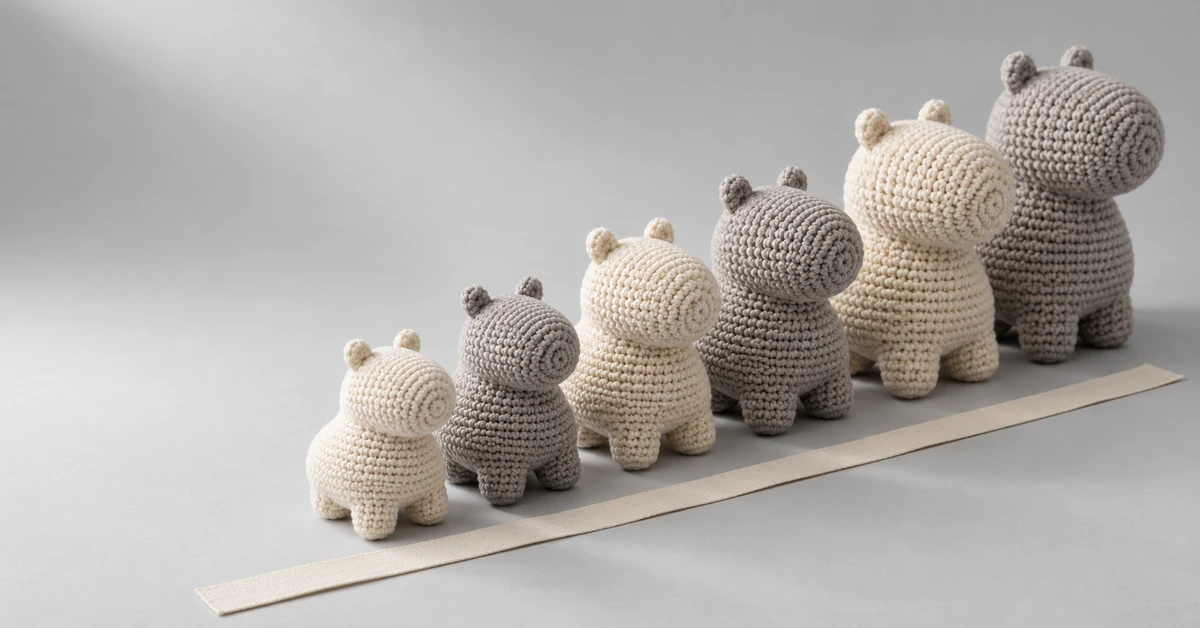
A fox, frog, bear or dinosaur gives a beginner something to care about before the first stitch is made. The finished object has a face, a name and a place on a desk or shelf. That emotional reward is one reason character kits make such an approachable introduction to crochet.
Keep the first project compact. Too many colors, tiny sewn parts or unfamiliar stitches can turn a friendly-looking box into a frustrating evening. A short character story on the package can add charm, but the front still needs to show the finished figure clearly.
Retail angle: easy to merchandise as a character family, a gift under a set price point, or a beginner collection with new designs added over time.
2. A mini keychain kit for the customer who is not ready for a weekend project
Some shoppers are curious about crochet but do not want to commit to a large doll or bag. A small flower, fruit, cloud or animal charm feels less risky. It can be finished sooner and used straight away.
Mini kits also give retailers more freedom. They take up little display space, suit checkout areas, and can join stationery, bags or small-gift displays. Three or four coordinated designs are more compelling than one isolated charm because the customer gets to choose a favorite.
Retail angle: a low-commitment first purchase that can lead naturally to larger project kits.
3. A message-card kit that already knows who the gift is for
Put a tiny bee beside a card that reads “You've got this,” and the shopper can already picture giving it to a nervous student or a friend starting a new job. That little bit of context does more than decorate the box. It gives the crochet project an occasion.
The card is doing real work here, so it needs the same care as the figure. A playful frog paired with formal typography would feel off. A soft color palette, friendly wording and a matching illustration make the gift feel complete before it is wrapped.
Retail angle: these kits are not tied to Christmas or Valentine's Day. A shop can carry reasons to buy all year, from exam luck and friendship to a small “thinking of you” gift.
4. Crochet flowers and home pieces for shoppers who are not looking for toys
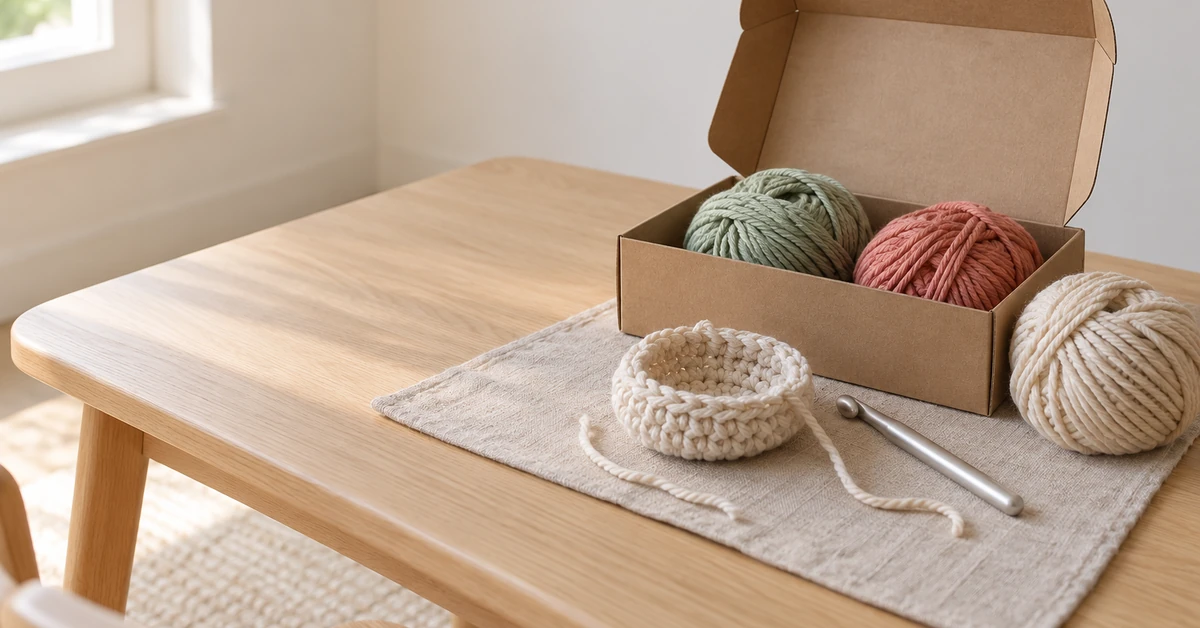
Not everyone wants to make another soft toy. A customer furnishing a first apartment may be far more interested in coasters, a small basket or a flower that will not wilt. These projects open the category to shoppers whose taste leans toward useful or decorative pieces.
Flowers are unusually flexible. Sell one stem as a quick first project, then group several colors into a bouquet kit. The same basic construction can move from a bright spring display to muted wedding shades without asking the customer to learn a completely different project.
Lifestyle photography matters here. Put the coasters under two coffee cups. Clip the sunflower to a canvas tote. Set the bouquet on a bedside table. The use becomes obvious before anyone reads the product description.
5. A proper starter bag for someone who wants crochet to become a hobby
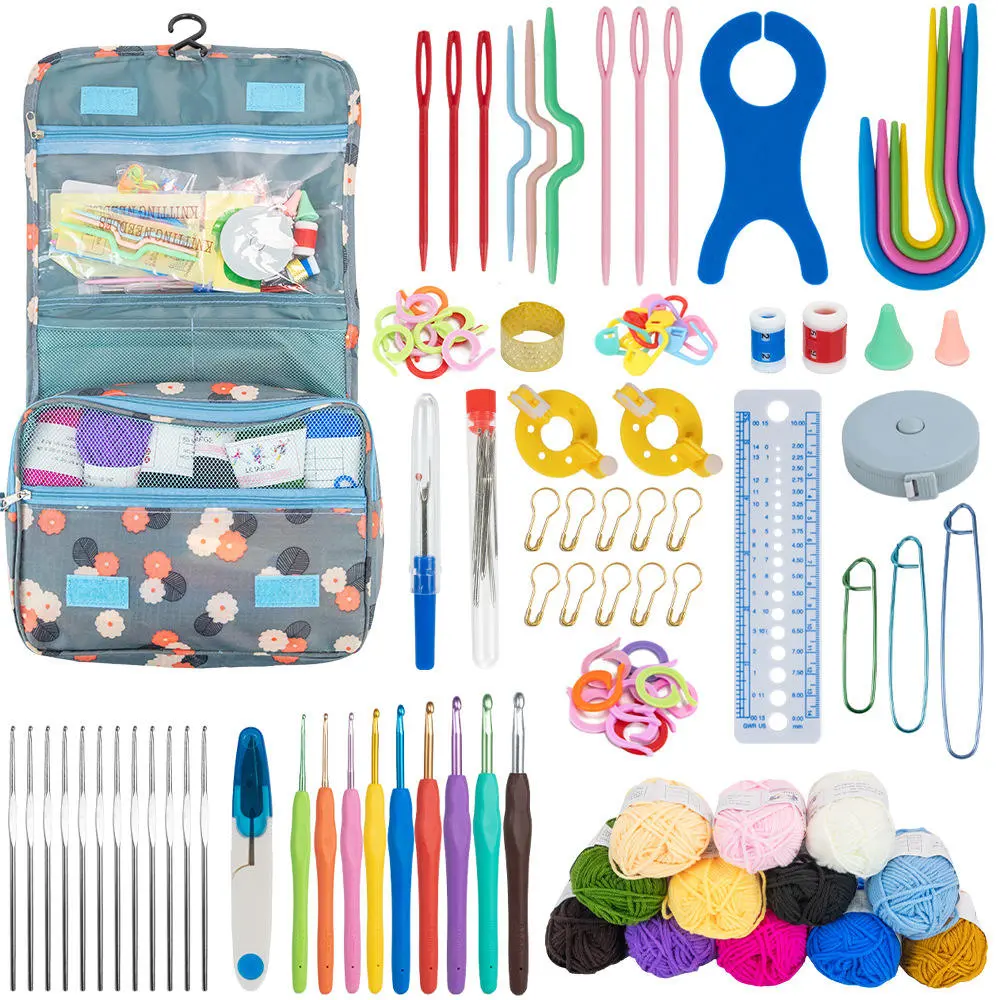
A project kit says, “Make this.” A starter bag says, “Keep going.” It suits the customer who has tried a class or tutorial and now wants the hooks, markers, needles, measuring tools and yarn needed for more than one project.
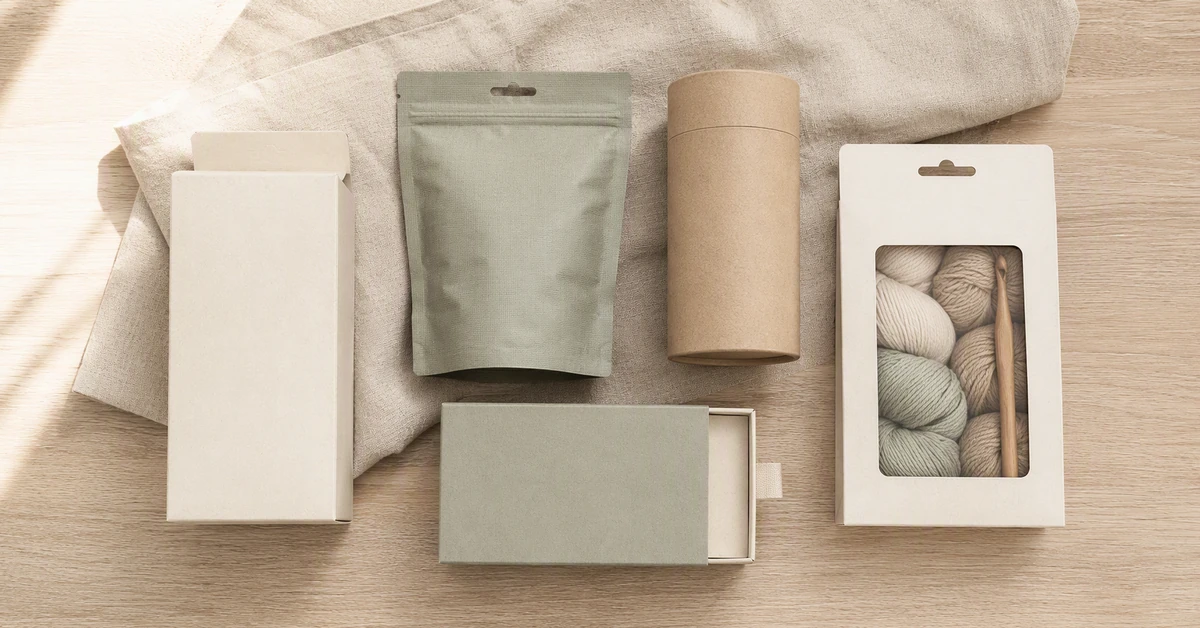
Here, organization is part of the value. A bag with sensible compartments can feel more useful than a higher piece count packed loosely into a box. Branded hook colors, a printed quick-start guide or a well-designed storage case also give a private-label range a recognizable look.
Retail angle: a step-up gift beside smaller kits, rather than a direct replacement for them.
6. Workshop packs designed for a table full of beginners
A craft café, school or in-store class does not need twelve individual gift boxes. It needs materials that are quick to hand out, consistent from seat to seat and easy for one instructor to explain.
A useful workshop pack might contain individually portioned yarn and project parts inside one outer carton, plus a teacher sheet and a small reserve of frequently lost items. Keep a few normal retail versions beside the class table. Someone who finishes the first character may want to take home a second one in another color.
Retail angle: one product idea can support an event, repeat visits and normal shelf sales.
7. A small seasonal family instead of one lonely novelty design
One crocheted snowman is a product. A snowman, reindeer and gingerbread character in the same yarn palette become a display. The same principle works for spring flowers, Halloween charms or summer fruit.
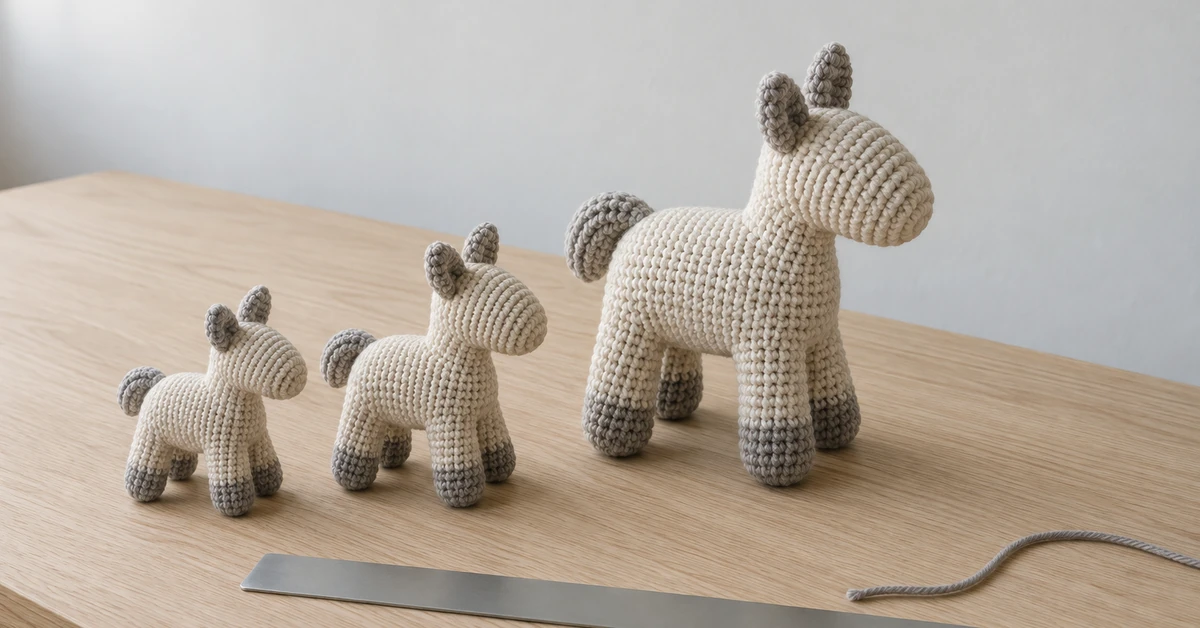
A collection of three to six designs is often enough. Shared packaging and colors hold the range together, while different characters give the customer a choice. Group photography becomes easier too, which helps with gift guides, social posts and marketplace listings.
The only unglamorous rule is timing: sampling, photography and production have to finish before the selling window begins.
A simple six-SKU range to test first
The strongest crochet kits wholesale ranges do not begin with twenty unrelated boxes. Six carefully chosen products can reveal which shopping moment has the most potential.
- 2 small kitsA keychain and a simple flower or coaster for curious beginners.
- 2 gift kitsAn amigurumi character and a message-card project with stronger packaging.
- 1 step-up kitAn organized starter bag for customers who want to continue the hobby.
- 1 timely kitA seasonal design or workshop pack that gives the range something new to talk about.
This mix covers impulse, gifting, hobby development and a reason to revisit the collection. It should not look as though six boxes came from six different catalogues. One recognizable detail, perhaps the same illustrated border or the same warm color family, is enough to hold the group together.
Do not let a great concept fail inside the box
A charming project can still disappoint if the yarn runs short, the opening step is unclear or the hook does not suit the material. Before approval, give the actual sample to someone close to the advertised skill level. Experienced crocheters quietly correct weak instructions; beginners show you exactly where the product stops being enjoyable.
Ask the tester where they paused, what they had to search online, and whether the finished piece matched the package image. Those answers are more useful than simply asking whether they “liked the kit.”
What to send a supplier before requesting a quote
Do not begin with “Please quote a beginner crochet kit.” Send a one-page idea instead: the project, intended customer, skill level, sales channel, preferred packaging, market, approximate quantity and any private-label elements.
The supplier can then discuss yarn, hook size, material allowance, instructions, branded cards, storage, labels, barcode placement and carton packing around a real product concept. Quotations become easier to compare because everyone is pricing the same idea.
From a product idea to a retail-ready kit
Onehourcrafts supports crochet DIY kit development, tools and accessories, finished crocheted products, private-label inserts and retail packaging.
If you are exploring crochet kits wholesale, send us the customer and the project you have in mind, not just a target piece count. We can help shape the materials, contents and presentation around the way the product will actually be sold.
Questions retail buyers often ask
Which kit will make the most sense to a first-time crocheter?
Choose a compact project with a recognizable result, limited stitches and a realistic completion time. Small characters, flowers, charms and coasters are easier to picture than a general box of tools with no first project.
Should retailers sell project kits or general starter sets?
They serve different moments. Project kits make the first purchase easier because customers can see what they will make. Starter sets suit people who have already decided to continue crocheting. Put the project box first and the broader tool set beside it as the next step.
How far can a private-label version be changed?
That depends on the product and quantity. Buyers commonly discuss yarn colors, hooks, printed instructions, character cards, labels and packaging. Storage bags, barcode positions and carton packing can also be planned around the sales channel.