
Crochet stitch markers wholesale samples should be tested as pattern-control tools, not counted as decorative plastic pieces. One weak closure can fall from a round, move a repeat boundary or leave a customer unable to identify the next step, so buyers need to connect marker construction with the project decisions it protects.
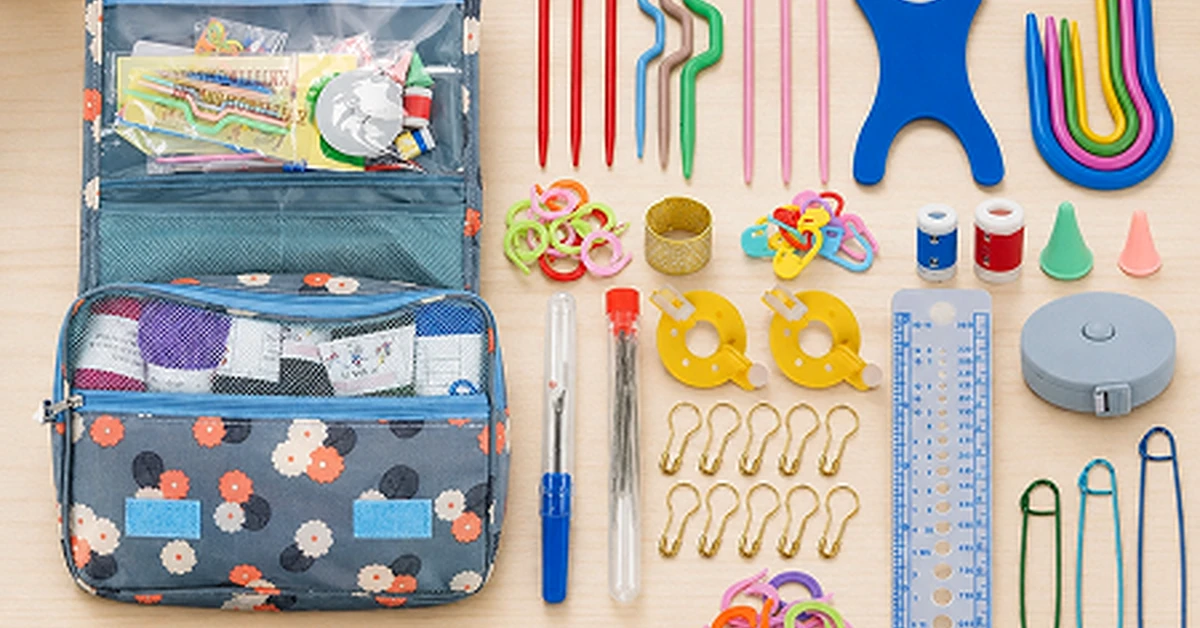
Start with the stitch that must survive
Choose the marker only after defining its job. A marker placed in a spiral amigurumi round is opened repeatedly. A boundary marker may stay closed for several rows. A progress marker may hang from fabric rather than sit on a working loop. Write the actual use beside each proposed style, then reject a mixed assortment that cannot perform the hardest promised task.
The test project should include the yarn weights, stitch textures and handling positions expected in the range. A marker that feels secure on smooth cotton may snag a fuzzy yarn or disappear visually inside a dark, dense fabric.
Map the dependency chain
| Marker event | Pattern consequence | Retail consequence |
|---|---|---|
| Closure opens unexpectedly | Round start is lost | User reports an incorrect pattern |
| Tip catches yarn | Plies split or loop stretches | Tool is blamed for visible damage |
| Color cannot be distinguished | Different checkpoints are confused | Instruction promise becomes unclear |
| Pack count is short | Repeat system cannot be completed | Set appears incomplete |
This map changes inspection priorities. A small color variation may be cosmetic when every marker has the same role, but it becomes functional when the instructions assign colors to different actions.
Choose an opening mechanism by use cycle
Locking stitch markers can use hinged, spiral, safety-pin or clip-like constructions. Record how the user opens the marker, where force is applied and whether the closure gives a clear tactile or visual signal. Run repeated cycles using the approved sample, then inspect alignment, whitening, cracks and reduced retention. The number of cycles should represent the stated reuse rather than an arbitrary laboratory figure.
- Photograph the marker closed and measure critical dimensions.
- Open and close it through a defined cycle sequence.
- Attach it to the intended yarn or stitch position.
- Move and compress the project as a user would during storage.
- Recheck closure, surface and yarn condition.
Run the snag path in both directions
Pass the point and closure edge into and out of representative stitches. Test from more than one angle because a smooth entry can still catch on removal. Inspect split plies, pulled fibers and distorted loops under consistent lighting. Include a loosely plied yarn and the finest yarn claimed for the pack; those materials often reveal edges that a firm sample hides.
Compare observations with the crochet kit yarn selection guide, which explains why yarn construction changes tool behavior.
Make color carry one controlled meaning
Color can separate round starts, repeats, increase points or project sections, but only when the instructions, pack and replacements share the same system. Define an approved palette, minimum visual separation and substitution rule. Do not rely on color alone when the distinction is safety-critical or when accessibility needs suggest adding shape, number or position cues.
- Colors remain distinguishable in warm and cool lighting
- Instruction swatches match the production marker family
- Replacement packs preserve the same role assignment
- Transparent and pale markers remain visible on light yarn
- Dark markers remain readable on dense, dark projects
Decide whether numbers help or decorate
Numbered markers can indicate rounds, hook sizes or sequence positions. State one purpose and test legibility after handling. Verify print registration, orientation, rub resistance and the full number series. If molded numbers are used, inspect fill, flash and contrast. A number that survives but cannot be read inside the project does not add useful control.
Set a fit window, not one sample size
Measure closed length, opening width, internal clearance and point thickness across cavities and lots. Then relate those dimensions to yarn and stitch size. Oversized markers may stretch a fine loop; undersized markers may be difficult to place through a bulky stitch. A mixed-size pack should explain which styles suit which tasks instead of treating variety as self-explanatory.
| Use position | Fit question | Trial evidence |
|---|---|---|
| Working loop | Does the marker alter loop size? | Before-and-after loop measurement |
| Fabric stitch | Can it pass without splitting yarn? | Repeated entry and removal |
| Round start | Does it stay closed during rotation? | Timed project handling |
| Stored project | Does compression release the closure? | Pouch and movement trial |
Count the pack at three stations
Count accuracy should be designed into loading, not added only at final inspection. Reconcile bulk issue, position each marker in a visible tray or card, and verify the sealed pack. If colors have different quantities, use a layout that makes the sequence obvious. Bulk crochet accessories are especially vulnerable to substitution and mixed work in process because several small parts can share one line.
Use the principles in the missing-parts control plan to connect line clearance, first-piece approval and final counting.
Test storage as part of the tool
A ring, tin, divided box or pouch changes how markers are counted and lost. Fill the storage format with the approved quantity, shake it through a defined handling sequence and reopen it on a small surface. Check whether markers tangle, escape into seams or become difficult to inventory. Packaging that becomes useful storage can justify a step-up offer, but only when the open project still fits the workflow.
Separate adult notions from children's positioning
Small removable pieces require deliberate audience and market review. The U.S. Consumer Product Safety Commission explains the role of intended use and marketing in its children's products guidance, and its small-parts guidance addresses toys and products intended for children. A warning is not a substitute for correct classification, design and applicable testing.
For European consumer products, the EU General Product Safety Regulation summary highlights product characteristics, presentation, warnings and user categories in safety assessment. Confirm requirements for the actual product, market and claims with qualified specialists.
Build the assortment around roles
An entry pack may offer one dependable locking style in high-contrast colors. A pattern pack may add numbered checkpoints. A project organizer may combine markers with a counter and storage. Private label crochet tools need clear role language, consistent color references and artwork linked to the correct component version.
| Range role | Marker configuration | Approval emphasis |
|---|---|---|
| Starter | Simple locking set | Opening clarity and visible colors |
| Amigurumi | Compact round markers | Repeated cycles and secure closure |
| Pattern control | Numbered or coded set | Sequence accuracy and legibility |
| Travel | Marker set with storage | Retention after movement |
Turn defects into a sampling plan
Define critical, major and minor defects before production. Uncontrolled sharp edges, material failure or a serious classification issue may require a different response from color shade variation. Spread samples across molding cavities, colors, packing time and cartons. Record the cavity or batch identity when possible so repeated closure failures lead to a process investigation.
Keep an approved limit sample for borderline surface marks, color variation and closure alignment. Inspectors can then compare production against a physical reference instead of interpreting adjectives differently across shifts. When the design or resin changes, retire the old reference and repeat the functional trials before accepting the new limit sample.
What Onehourcrafts would attach to the inquiry
For crochet stitch markers wholesale development, Onehourcrafts can organize requirements around marker role, mechanism, dimensions, colors, numbering, quantity, storage, audience, market and inspection. Buyers can connect the marker to the crochet pattern verification checklist so tool colors and positions match the instructions they are meant to protect.
Frequently asked questions
Are locking markers better than closed rings?
They serve different jobs. Locking styles can enter a completed stitch, while closed rings usually travel on the working tool or loop.
How many markers belong in a pack?
Base the count on the intended project roles, repeat structure, replacement allowance and retail price point.
Should every color have the same quantity?
Not necessarily. Unequal counts are acceptable when the role is explained and the packing method controls the sequence.
What causes a marker to snag yarn?
Sharp points, flash, rough seams, misaligned closures and unsuitable dimensions can catch or split fibers.
Can one yarn validate the marker?
No. Test representative constructions and weight extremes because twist, fuzz and stitch density change contact.
How should closure durability be checked?
Use a defined open-close cycle and project-handling trial, then inspect alignment, cracks and retention.
Are numbered markers always useful?
Only when the numbering supports a clear pattern action and stays legible during realistic use.
Can markers be sold for children?
That decision requires product classification, age positioning, design and market-specific compliance review.
What should a golden sample include?
Retain the full sealed pack, component specifications, color references, count layout, artwork and acceptance criteria.
What belongs in a supplier inquiry?
State use roles, yarn range, mechanism, dimensions, colors, count, storage, market, audience and inspection needs.
Close the loop before the marker closes
A reliable crochet stitch markers wholesale program begins with the pattern event the tool must preserve. Trace closure, surface, color, size, count and storage forward to the customer outcome, then inspect production against that chain. The marker is tiny; the decision it protects is not.