
Evaluate a custom crochet kit manufacturer by asking whether the approved sample survives the carton. The maker experiences the kit through artwork, yarn identity, tool access, instructions and the first stitch; the warehouse experiences it through labels, inner packs, protection and receiving checks. Onehourcrafts joins those views so customization does not end at the sample photograph.
Freeze the approved experience in plain language
Write what the buyer approved: project, finished form, yarn roles, hook size, instruction route, pack promise and intended user. Avoid relying on a file name or a mood-board image as the specification.
A concise experience sentence gives production and receiving teams something they can recognize. It also makes a later change visible instead of allowing a similar-looking kit to pass as the same release.
- Name the project
- Name the maker promise
- Name the included boundary
- Name the proof state
Separate design freedom from release control
Custom work needs creative room, but not every change should travel silently into production. Mark which fields are exploratory and which are frozen for the approved sample.
For custom crochet kit design, distinguish yarn shade inspiration from the released color reference, and a concept illustration from the final print file. This protects the buyer without pretending creative development is static.
| Field | Can explore | Freeze at release |
|---|---|---|
| Artwork | Layout and tone | File revision and copy |
| Yarn | Palette direction | Role, shade reference and quantity |
| Hook | Handle ideas | Size, identity and pack position |
| Instruction | Teaching approach | Steps, photos and language |
Make component identity visible
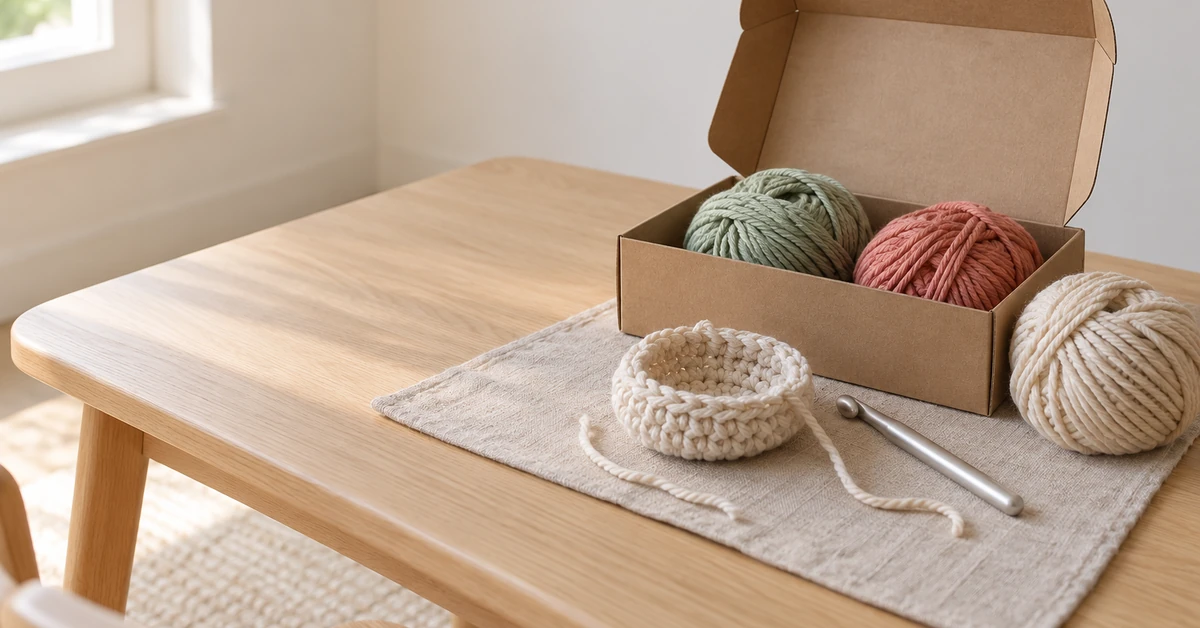
Place the component list beside the opened sample. Each yarn bundle, hook, needle, marker and instruction should have a name or role that survives unpacking.
Identity is a practical support tool. When a beginner asks about a color or tool, the answer should come from the released configuration rather than the memory of the designer who approved it.
A custom kit may include a substitute during development. Mark that substitute clearly and do not let it become an accidental production promise.
Run a sample-to-file reconciliation
Open the approved sample and compare it with the artwork, bill of materials, pack copy and quotation. Record every mismatch, including a count that is technically close but changes the maker decision.
Use a photographed reference with simple callouts. It is faster to resolve a visible disagreement before packing than to debate whether a later carton “looks about right.”
Do not treat a clean reconciliation as proof that every future colorway is approved. Each variant needs the same identity discipline at the level that changed.
Pack the maker promise, not just the parts
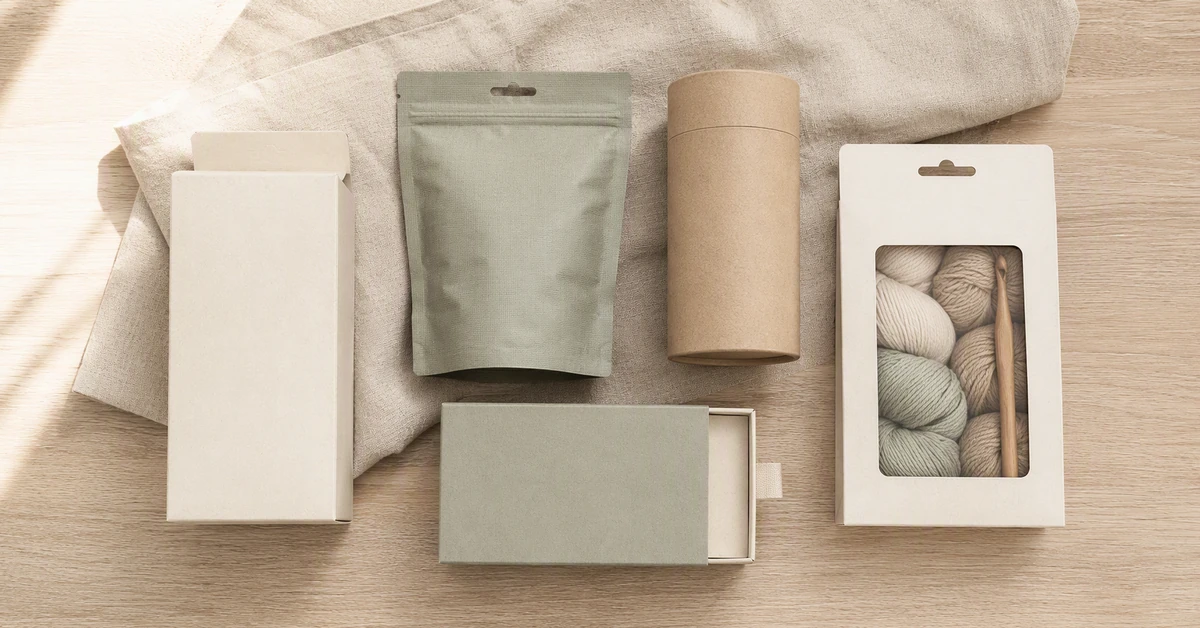
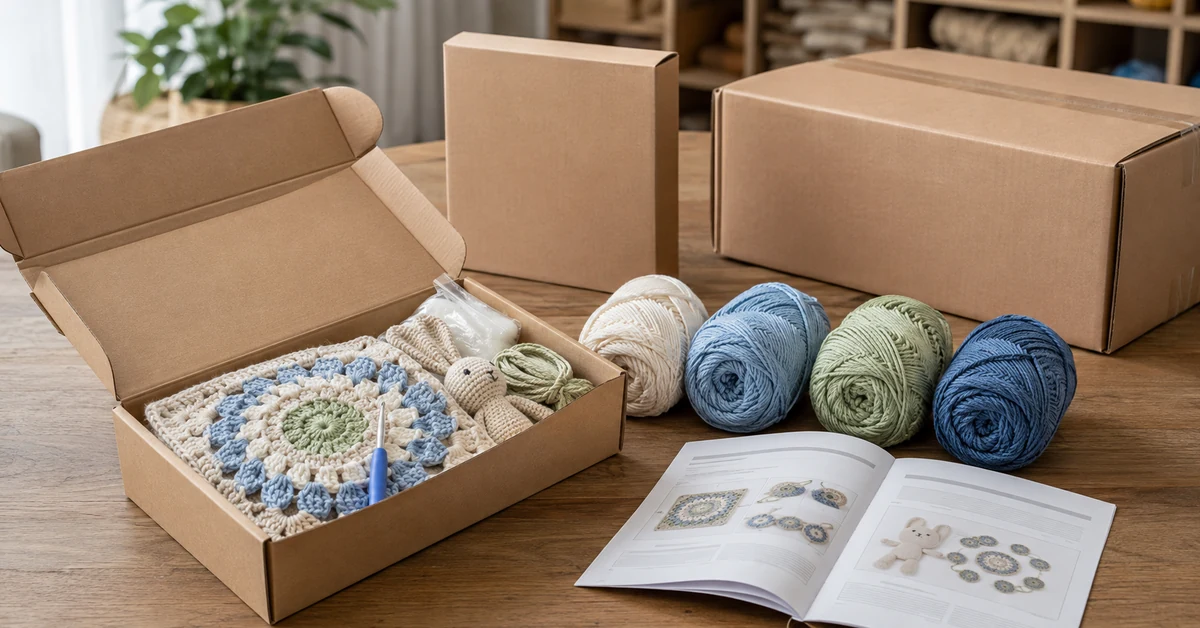
Observe how the kit is packed in unit, inner and master carton. Check whether the first visible layer answers what the project is, what is included and what the maker should do next.
For private label crochet kits, confirm that the brand surface, instruction language and component order point to the same promise. A branded box cannot repair a confusing opened state.
Review protection and presentation together. A rigid insert may protect a hook while hiding the yarn roles; a loose bag may reveal the contents while damaging the intended first impression.
Ask the carton to carry identity
Trace the product name, variant, revision and quantity from unit to inner to master carton. If identity disappears at a handoff, the next team must guess what it received.
Use the crochet kit factory China conversation to ask about the exact packed sample and carton marks, not about a broad capability claim. Document the destination assumptions separately from the supplier statement.
| Handoff | Check | Evidence |
|---|---|---|
| Unit | Name and variant visible | Front and reverse photos |
| Inner | Count and mix reconcile | Opened inner record |
| Master | Marks survive handling | Carton image and tally |
| Receiving | Revision is searchable | Inspection line item |
Move one packed sample through handling
Carry the packed sample, rotate it, place it on a shelf, remove it from a stack and open it at the receiving position. A custom crochet kit manufacturer should be able to connect every observation to the exact packed reference. Notice what shifts, crushes, hides or becomes unreadable.
This is a controlled rehearsal, not a universal transport claim. Keep the route and handling assumptions with the evidence so a different carton or destination receives a fresh review.
The sample should be reopened by someone who did not pack it. Their first question reveals whether the information hierarchy survived the movement.
Let instructions meet the actual contents
Follow the first steps with the released yarn, hook and accessory arrangement. Record where the instruction says “included” while the hand cannot find the component.
An instruction can be accurate and still be poorly sequenced. Note whether the maker needs to open every pouch before the first action or can begin with the intended setup.
Avoid claiming universal ease or completion time. Describe the observed route and the user boundary the buyer actually intends to support.
Check variant swaps deliberately
Create one controlled variant swap, such as a different yarn shade or label, and see whether the carton, artwork, instruction and receiving record all change together.
A swap rehearsal makes change ownership visible. It can show that a color update needs an artwork revision, a new photo and a new barcode review rather than a casual note in a chat.
Record what stayed invariant. The frozen part is as important as the changed part because it prevents unnecessary reapproval.
Use quality questions as process questions
The ISO quality management principles can frame who reviews, records and closes a change, while the GS1 barcode standards overview can help frame identity questions. Neither certifies this kit or replaces the buyer’s inspection plan.
Ask how the approved reference is stored, who can release a substitute and where the final evidence is attached. The answer should be specific enough for a new team member to follow.
Keep product performance, safety and destination requirements within the qualified review they need. A process principle is not a legal conclusion.
Keep a carton exception card
Write three or four ordinary exceptions: mixed variant, missing insert, crushed inner, unreadable mark. For each, state what to photograph, where to hold the unit and who decides the next step.
A small card prevents an exception from becoming an improvised argument. It also shows the manufacturer what evidence the buyer needs before release.
Use a decision window agreed for the order. Do not invent a universal response time or imply that one supplier handles every market identically.
Review brand touchpoints after opening
Once the unit is opened, ask whether the brand promise still feels coherent. Check paper stock, tone, component naming, instruction voice and the moment the maker sees the finished-project reference.
A custom kit can use a restrained brand treatment and still feel intentional. The goal is recognition across the handoff, not decorative density.
Compare the opened state with the retail packaging ideas for craft kits, the crochet kit range and the project inquiry page as internal context, then return to the exact approved configuration.
Write the RFQ around the handoff
State the experience sentence, frozen fields, variant rules, unit/inner/master requirements, carton handling, inspection evidence and exception ownership. A creative brief alone cannot carry the order.
Ask for one production-intent sample and one packed sample before release. Keep the two states linked so the buyer can see what the carton changed.
- Freeze the maker promise
- Reconcile sample and files
- Pack and handle one reference
- Assign exception owners
- Release only the matched carton
How Onehourcrafts protects the approved sample
Onehourcrafts can align custom design, component identity, private-label presentation and carton evidence in a single release record. The manufacturer conversation stays creative while the handoff becomes observable.
Before approving a custom crochet kit manufacturer, ask every owner to identify the same kit from sample, unit, inner, master carton and receiving record. Keep the photo set with the quotation so the next variant starts from a known boundary.
- Experience sentence
- Frozen-field list
- Packed-sample photo
- Exception card
Frequently asked questions
What should a custom crochet kit sample prove?
It should show the intended maker experience, included boundary, component roles, instruction route and the exact configuration under review.
Which fields should be frozen before production?
Freeze the fields that change the customer promise, identity, quantity, instruction or receiving decision. Mark exploratory fields separately.
Why reconcile the sample with the files?
The reconciliation catches count, color, copy and substitution differences before they become production or receiving disputes.
What is a production-intent packed sample?
It is a sample packed like the released unit, inner and carton so handling, visibility, marks and opening can be reviewed.
How should private-label packaging be checked?
Check the brand surface, copy, component naming and opened sequence together. A branded exterior is not enough.
Can a variant swap be approved by chat?
Use the agreed change process and attach the revised evidence. A casual note may not update artwork, identity, instruction and inspection records.
What should an exception card include?
Name the visible issue, required photo, hold location, owner and decision route for release, correction or rejection.
Does ISO approve a custom kit?
No. ISO principles can frame process ownership and improvement questions, but they do not approve a specific kit or supplier.
Why open a packed sample twice?
A second opening by an uninvolved reviewer shows whether the information hierarchy works without the original packer’s memory.
What belongs in a custom crochet kit RFQ?
Include the maker promise, frozen fields, variants, component list, private-label packaging, packed sample, carton marks, inspection and exceptions.