Buyers talk about samples as though they were deliveries, and then wonder why the third one costs more than the first two together. Working with a custom crochet products manufacturer is really a sequence of decisions: each round should close one question, freeze what that answer settles, and leave the next question visible. Everything that stays open too long gets more expensive to move.
A sample is a decision with a photograph attached
Crochet product development rarely fails at the stitch. It fails at the handover between rounds, when a change that would have been free in the first sample has become structural by the third.
That is why the useful question is not how many samples a supplier will send, but which question each one is answering. A round without a question turns into a courier trip with a photograph at the end, and the buyer learns nothing they can act on.
Round one: does the shape read from across a table
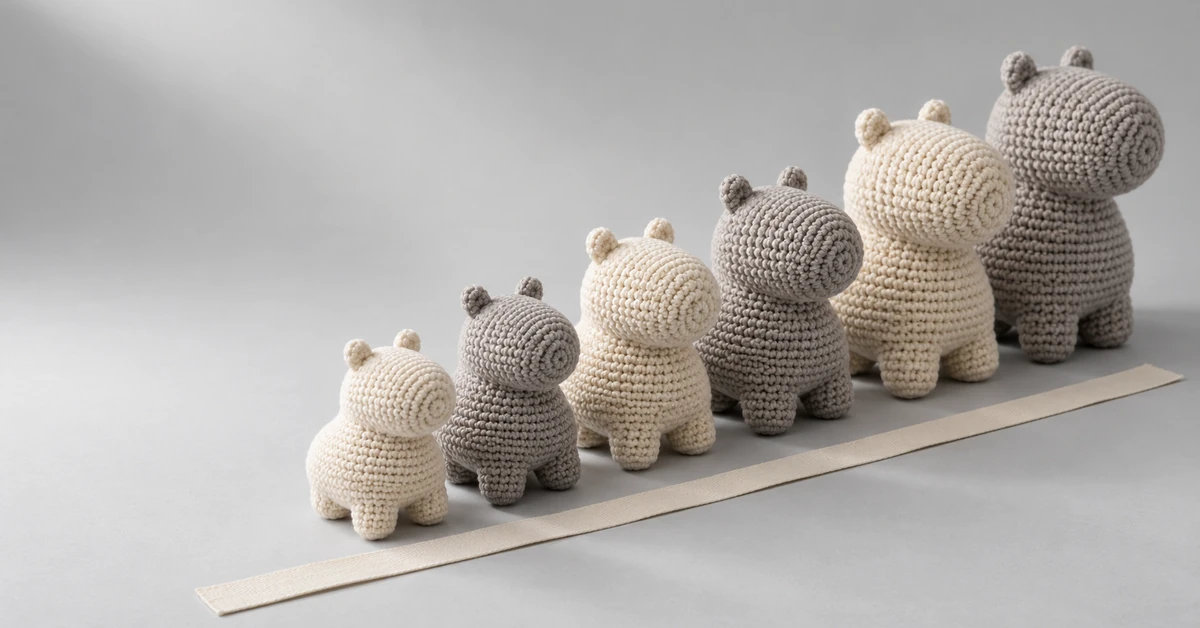
The first round is about silhouette. Put the sample on a table, walk three paces back and look at it. If the proportions do not read at that distance, no amount of finishing will rescue the piece, and the fix is cheap now and impossible later.
- Overall outline and the balance between head, body and base on a standing piece.
- Whether small features such as limbs, ears or handles are big enough to survive the yarn weight.
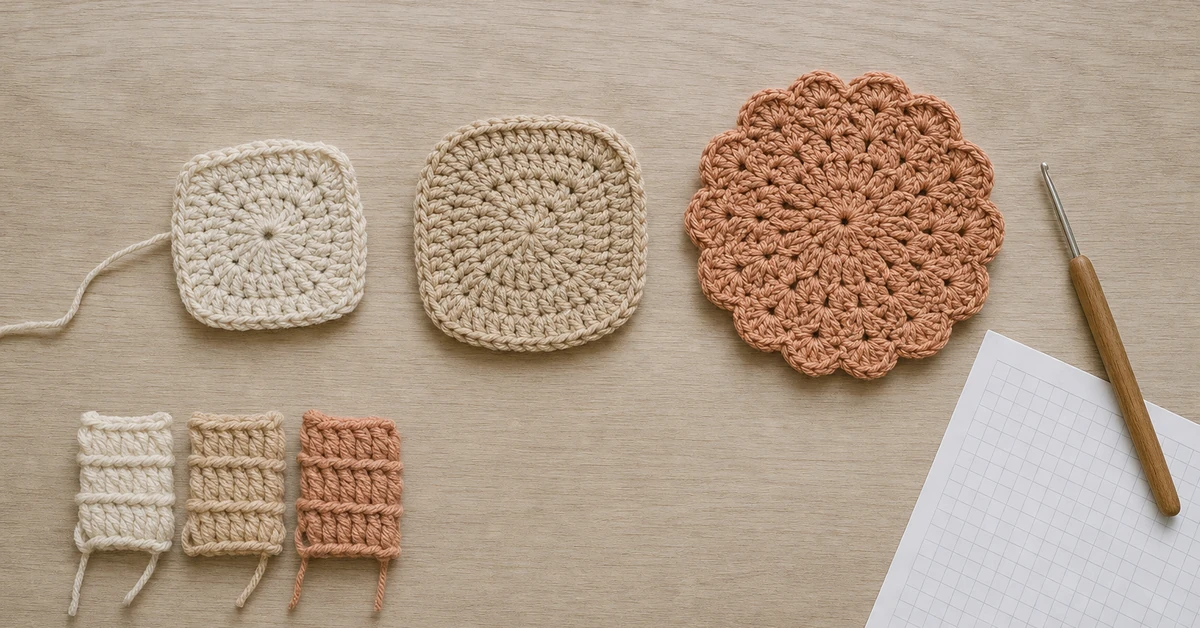
- The colour blocking, tested as flat swatches rather than as finished stitching where possible.
- A first look at how the piece behaves when it is held rather than displayed.
Round one samples are quick by design. A maker working from a clear reference can produce a first shape in a fraction of the time a production-quality piece takes, and that is exactly what makes early feedback affordable.
Round two: does the construction survive a week of use
The second round moves from how the piece looks to how it holds together. Tension, joins, attachment points and the way the filling behaves after a few days of handling all belong here, and none of them can be judged from a photograph.
This is the round where custom crochet products stop being a design exercise. Ask the maker to keep the sample in use for a week: squeeze it, hang it, pack it in a bag, and then look at the joins and the shape again.
Round three: can the workshop repeat it on an ordinary day
The third round is not about the sample at all. It is about the production line that will make the hundredth piece on a Thursday afternoon without the designer standing nearby.
Ask for a production-intent sample made by the people who will actually make the run, at the pace they will actually work. If the result differs from round two, the difference is the answer to the round-three question, and it is more useful than any assurance about capability.
Write the freeze list before the first round
A freeze list is a short document naming what may not move once a round is approved. It is not a contract; it is a way of stopping settled questions from reopening every time a new sample arrives.
| Stage | Already frozen when it starts | Still open by design |
|---|---|---|
| Round one | The intended use and the retail size band | Shape, proportions, colour direction |
| Round two | Shape and proportions | Stitch density, joins, filling, finishing |
| Round three | Everything above, on paper | Production method and inspection points |
| Pilot | The approved production method | Only the quantity and the packing mix |
Keep the list to one page and date it. Undated freeze lists are how a range ends up with three approved versions and no way to say which one is real.
What is cheap early and expensive late
Crochet product sampling cost is not linear. The same change costs wildly different amounts depending on the round it arrives in, and the pattern is worth knowing before the first brief is written.
| Change | In round one | In round three |
|---|---|---|
| Proportion or outline | A redraw and a remake | Every chart, count and photograph rebuilt |
| Stitch or tension | A quiet adjustment | Time per piece changes, so pricing changes with it |
| Yarn substitution | A swap of the working bundle | A colour and tension question across the whole range |
| Finished size | Still free | Packing, carton counts and retail claims all follow |
| Packaging or header card | A note for later | A printing and artwork cost that cannot be absorbed |
Read the table as a rule rather than a warning: changes that touch the shape are cheap while the shape is being decided, and changes that touch the method are expensive whenever they arrive.
Judging a custom crochet products manufacturer by how many samples arrive is the most common mistake at this stage. Two rounds that each close a question are worth more than five rounds that produce photographs and postpone the decision.
One question per round, written down
A crochet sampling process stays readable when each sheet carries a single question at the top and a single answer at the bottom. Three rounds then produce three answers rather than twenty comments, and the trail can be handed to someone else without a briefing.
Write the question before the sample is dispatched, not after it arrives. A question composed in hindsight tends to describe the sample that turned up rather than the decision you needed to make.
The yarn and hook record travels with the sample
A sample without a yarn record is a photograph with weight. It cannot be repeated, and a second maker cannot reproduce it even if the first one explains it carefully.
- Yarn reference and lot, because a shade match between lots is not automatic.
- Hook size in millimetres, and the material of the hook where grip affects tension.
- The tension square result, recorded rather than assumed.
- Maker hours for the sample, which is the earliest honest signal about the finished cost.
- The date the sample was made, so revision order is never in doubt.
Ask for the same five fields on every round. A record that changes shape between rounds is harder to read than no record at all.
Measure and photograph every round the same way
Photographs are compared, so they have to be comparable. The same backdrop, the same light and the same camera position turn three rounds into one visual argument; changing any of them turns three rounds into three opinions.
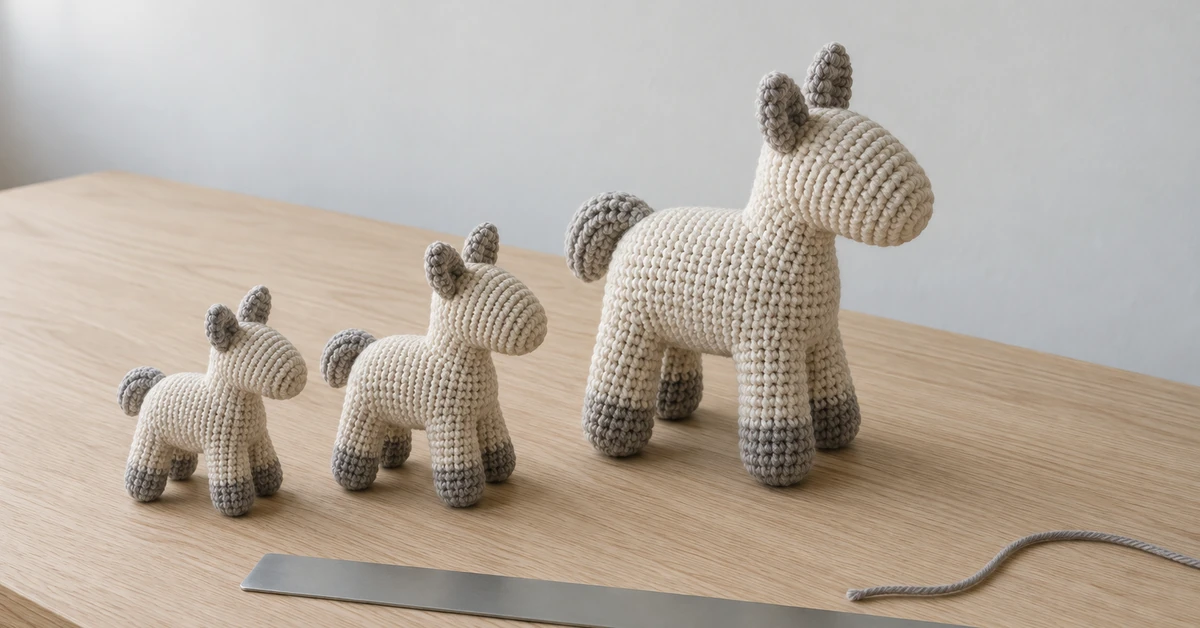
Include a scale marker in every frame and photograph the reverse as carefully as the front. The reverse is where joins, yarn ends and filling show up first, and it is the side most buyers forget to ask for.
Who signs off, and at which round
| Round | Who decides | What they are deciding |
|---|---|---|
| Round one | Design or merchandising | Whether the piece is worth developing at all |
| Round two | Buyer and quality | Whether the construction and finish are acceptable |
| Round three | Buyer with production | Whether the range can be made and inspected repeatably |
| Pilot | Buyer with operations | Whether the carton, packing and label work in practice |
One named person per round is enough. A sign-off shared between four colleagues usually means the question was never sharp enough to have a single owner.
Sign-off is the part of a custom crochet products manufacturer brief that buyers most often leave vague, and it is the part that decides whether the second round is a review or a repeat.
Time the rounds against a retail date
Working backwards from a retail date is the only schedule that survives contact with a factory calendar. Start from the date the range must be on a shelf, then subtract shipping, production, packing and one contingency week.
- Retail date, minus the week the range is meant to be merchandised.
- Production and packing, at the quantity the pilot suggested.
- Round three, with the production-intent sample and its review.
- Round two, allowing for a remake if the construction changes.
- Round one, plus the days the brief needs to be written properly.
Rounds compress badly at the end. Time saved by collapsing round one reappears as a remake in round three, and remakes land in the weeks when the calendar has no slack.
Where sampling goes wrong
The most common failure is a sample made by a specialist rather than by the line. It is beautiful, it is not reproducible, and the difference only becomes visible when the bulk order is unpacked.
The second is approval by photograph. A picture can confirm colour direction and roughly confirm proportions, but it cannot confirm weight, drape or the feel of a join. The third is a sample approved without a record, which leaves the range with an approved object and no approved instructions. Treat any marketing claim attached to the sample, particularly about age suitability, in the same careful way and verify it for the destination market with qualified advice.
It helps to write the limit down at the start: two change windows after the freeze list is signed, with anything beyond them discussed as a new decision rather than treated as an adjustment. That one sentence removes most of the risk from a late change, because it turns a disagreement about entitlement into a question about cost.
The sample file worth keeping
Private label crochet products live or die on the file behind them. When a reorder arrives a year later, the file is the only thing standing between a faithful repeat and a new product that happens to share a name.
- The approved sample itself, labelled with the round it belongs to.
- The signed and dated freeze list.
- Yarn reference, lot and the tension square.
- Photographs with a scale marker, front and reverse.
- Revision notes naming what changed and why.
- The packing reference, even when packing is still undecided.
Pack-level identity is worth fixing at the same moment; GS1 barcode guidance sets out the general rules a retail pack has to satisfy, while the assignment of a buyer's own codes stays with the buyer.
Compare two suppliers on the same three rounds
Comparing quotations from two crochet products manufacturers is unfair unless both walk the same three rounds. Otherwise one is pricing a licence to develop and the other is pricing a photograph to copy, and the numbers are not comparable at all.
Hand both suppliers the same questions, the same yarn record format and the same photography guide, then compare how each round moved. The supplier whose second round is closer to its third is usually the one that understands its own production line, and buyers who have only ordered stock goods often find ODM crochet products harder to compare, because the first round is doing design work rather than confirming a specification.
Incoterms are worth settling alongside the development plan rather than after it, so that the current Incoterms rules can be applied to a specification that is already agreed rather than to a draft that keeps moving.
How Onehourcrafts runs the rounds
At Onehourcrafts a development brief opens with the question each round has to answer, then the freeze list, then the sample itself. The order matters, because a brief written after the sample exists tends to describe what arrived instead of what was wanted.
Each round returns with its yarn record, tension square, measurements and photographs, both sides. That file travels with the range into production and into the reorder, which is usually the moment its value becomes obvious. Sampling cost is quoted round by round as well, so a buyer can see what each decision adds.
Buyers with a shape and a retail date can start a first round from a short brief, and the buying guides cover the packaging and quantity decisions that follow.
Frequently asked questions
How many sample rounds does a crochet product need?
Three is a practical default: shape, construction and production intent. Simple pieces sometimes close in two; anything with a new construction usually needs the third.
Which round should be approved for production?
The production-intent sample from round three, made by the people who will make the run. Earlier rounds are useful evidence, but they are not the production reference.
Why is a late change so much more expensive?
Because it lands on finished decisions. A shape change in round one is a redraw; the same change in round three rebuilds charts, counts, photographs and packing.
What belongs in a freeze list?
Only what has been settled, with the date it was settled. Keep it to one page and refuse to reopen a frozen item without a written reason.
Do I need a tension square from each round?
Yes. Tension decides the finished size, the yarn consumption and the time per piece, so a sample without one cannot be priced honestly.
Can I approve a sample from a photograph?
Only for colour direction and rough proportions. Weight, drape, filling behaviour and joins need the object in hand.
Should the sample be made by the production team?
From round three onwards, yes. A sample made by a specialist proves what is possible, not what is repeatable.
How do I compare two sampling quotations?
Give both suppliers the same questions, the same record format and the same photography guide, then compare how each round developed rather than the final price alone.
What should I keep after the range is approved?
The approved sample, the freeze list, the yarn record with lot, photographs with a scale marker, revision notes and the packing reference.
Does sampling time count towards production lead time?
It sits in front of it, so build both into the retail date. Collapsing the sampling rounds usually moves the delay into production rather than removing it.