
A custom crochet promotional gifts project rarely fails at the stitch. It fails when a fixed event date is treated as a shipping detail rather than the first design instruction. Onehourcrafts starts with the date the gift must be in a recipient's hand, then works backward through format, logo placement, colour approval, packing and carton identity. That sequence turns taste into a decision trail: each choice is made against a named handoff, and late surprises become visible while there is still time to solve them.
The event date is the brief, not an attachment
Write the recipient handoff date at the top of the product brief. It may be a conference welcome desk, a staff award table, a retail launch or a client parcel collection. Each scene has a different cut-off because the gift is not useful once the moment has passed.
Then name every handoff between that date and production release. A date without an owner is only a hope. The date gains force when the brand approver, sample courier, packing team and receiving contact are all attached to it.
| Handoff | Question to settle | Record to keep |
|---|---|---|
| Recipient use | When and where is it handed over? | Scene note |
| Brand approval | Who can stop the order? | Named approver |
| Sample release | Which version is approved? | Approved reference |
| Final receipt | Who checks the cartons? | Site contact |
Separate the brand team's success from recipient use
The brand team asks whether the item carries the message clearly. The recipient asks whether it survives the journey home, fits a bag and feels worth keeping. Those are related questions, but they should not be answered by the same mock-up.
Test one with the marketing owner and the other with somebody who has no stake in the campaign. Put the item in a jacket pocket, attach it to a tote or place it on a desk. Record what the tester does with it before asking for an opinion.
- Message visible at the handoff
- Item easy to carry
- Surface clean after handling
- Packaging not immediately discarded
Choose the crochet format before the logo
Format decides whether promotional crochet items belong at the event at all. A keychain travels on a bag; a small flower may live on a desk; a pouch has to earn space in a drawer. The object should have a reason to remain after the campaign ends.
For custom crochet keychains, check the attachment point before discussing decoration. For corporate crochet gifts that will sit on a desk, check whether the base is stable and the front stays readable from a normal viewing angle.
| Format | Useful when | First physical check |
|---|---|---|
| Keychain | The gift travels with a bag | Attachment path |
| Desk object | The gift remains visible | Stable base |
| Pouch | The gift has a practical role | Opening and closure |
| Display piece | The campaign has a long life | Dust and handling |
Map where a logo can honestly live on crochet
Crochet is textured, stretchy and made from loops. A fine logo that looks crisp on paper can distort when it is applied to that surface. Start with the smallest readable version of the mark, not the largest version the artwork file allows.
A crochet gift with logo can carry the identity on a woven label, a printed hang tag, a charm or a patch. Each route has a different relationship to the handmade surface, which is why branded crochet products rarely hold a clean line when the mark is stitched straight into the loops. The buyer should see the chosen route on the actual sample rather than approve it from a flat digital preview.
- Place the mark on the sample
- Read it at arm's length
- Turn the item in the hand
- Check it under ordinary light
Approve yarn colour under the intended light
A brand colour is not a single colour file. It becomes a yarn shade, a label colour and a background inside a photograph. Those three versions can separate once the gift leaves the design screen.
Compare the yarn with the approved brand reference in daylight and in the room where the handoff will happen. Keep the rejected comparison too. It shows later reviewers which difference mattered, especially when two shades are close.
| Comparison | What it reveals | Decision |
|---|---|---|
| Yarn to brand chip | Base shade drift | Accept or remake |
| Label to yarn | Visual harmony | Swap label colour |
| Sample to photo | Sales expectation | Retake image |
Treat dye lot and remake risk as one decision
A replacement is not automatically an exact copy. Yarn lots can differ, and a remake may sit beside items from an earlier run. Ask how continuity will be checked before a shortfall forces the question.
Where the item is highly colour-sensitive, keep an approved physical reference with the production record. A photograph can communicate shape, but it is a weak tool for judging a small shade difference on textured yarn.
- Approved yarn reference
- Named shade and lot record
- Remake comparison rule
- Buyer sign-off owner
Build quantity tiers around drop points, not round numbers
An order is often quoted as one quantity even though it has two different jobs: enough for the main event and a reserve for replacements, VIP requests or a second location. Rounding the number without mapping those jobs hides where a shortage will hurt.
Set the quantities around actual drop points. Keep the core event allocation separate from the reserve, then state who can release that reserve and when. This makes the trade-off visible if the budget or schedule changes.
| Quantity block | Purpose | Release owner |
|---|---|---|
| Main event | Primary handoff | Campaign lead |
| Reserve | Damage or late request | Operations |
| Second site | Separate receiving point | Regional owner |
| Archive | Future sample reference | Brand team |
Put every late change on a cost clock
Late changes are not free simply because the change itself is small. Approving a new shade may reopen material, sampling, packing and carton work. The buyer needs to see which clock is restarted before accepting the revision.
Use a written change note that names the old decision, the new decision and every record affected by it. If the change is accepted, remove the superseded version from the working folder so production cannot read two truths.
- Describe the requested change
- List affected records
- Name the new approval owner
- Withdraw the superseded version
Design packing so the recipient keeps the gift
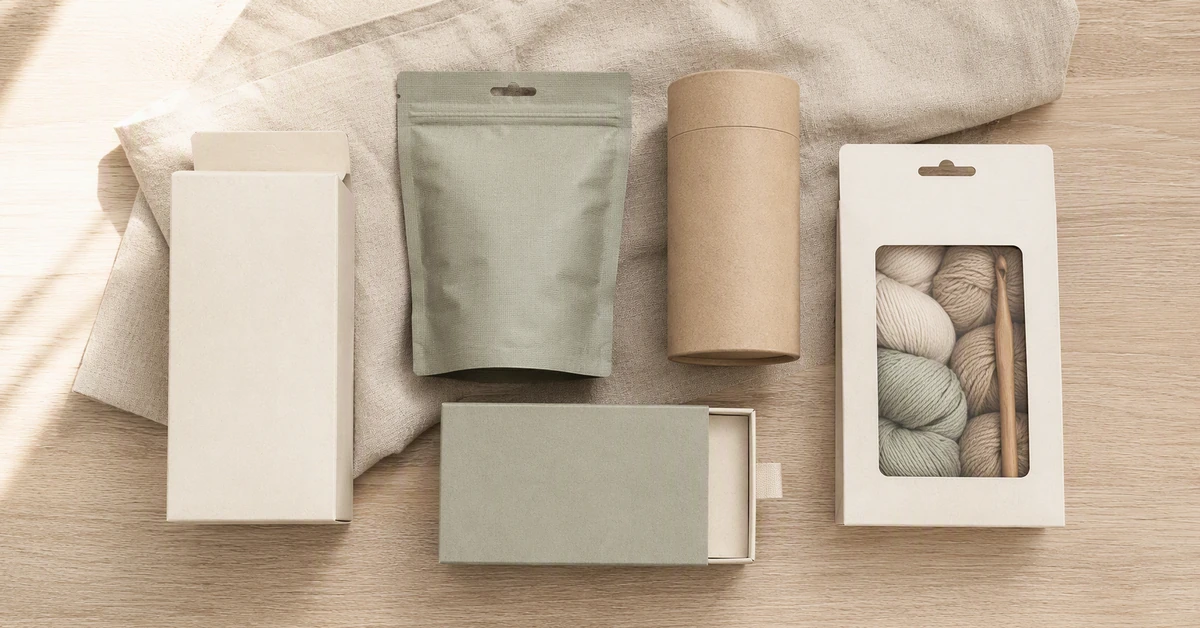
Promotional packaging can protect the item and still make it feel disposable. A tight sleeve that creases the crochet, or a bag that makes the object look like loose stock, weakens the handoff.
Let the recipient see the object without fighting the pack. Use the hang tag for concise care or identity information, and keep a clear distinction between the retail-facing surface and the shipping carton. The first is part of the gift; the second is part of the logistics record.
- Visible object in the pack
- No pressure mark on the shape
- Hang tag easy to read
- Shipping carton clearly separate
Turn the RFQ into a dated evidence request
A strong custom crochet promotional gifts RFQ does more than list a product and quantity. It identifies the event date, the recipient scene, the approved format, the logo route, the colour references and the evidence required before production.
Ask for a packed sample, a label proof, a carton mark draft and a written revision record. The buying-guide library can help frame the decision, while the crocheted products collection shows the related product family. Use GS1 barcode guidance when scannable pack identity is part of the brief, and the ICC Incoterms 2020 rules when delivery responsibilities need a common trade-language reference.
| RFQ field | Required answer | Evidence |
|---|---|---|
| Event handoff | Date, place and owner | Written date |
| Product | Format and intended use | Physical sample |
| Identity | Logo and colour route | Approved proof |
| Packing | Recipient and carton formats | Packed sample |
Use four approval gates before production
A single sample approval is too broad for a promotional project because it blends design, colour, packing and carton identity into one yes. Separate the gates so a later problem can be traced to the decision that created it.
| Gate | What is approved | What remains open |
|---|---|---|
| Shape | Size and construction | Colour and identity |
| Identity | Mark and placement | Packing |
| Packing | Tag and recipient pack | Carton marks |
| Carton | Identity and receiving logic | Release to ship |
Keep the approved artifact for each gate. A written yes on a chat thread is not enough when a factory file, a printer proof and a carton template are all moving at once.
Make carton identity survive the final handoff
The carton may be handled by people who never saw the product brief. Its marks should identify the campaign, quantity block, destination and handling notes without relying on memory.
Test the label at the receiving door, not only in the file. Check whether the mark can be read when the carton is stacked, whether the right site is obvious and whether mixed quantities can be separated without opening every box.
- Campaign identity
- Quantity block
- Destination site
- Handling note
Plan shortfalls, leftovers and returns before shipment
Promotional gift sourcing often creates three leftovers: damaged units, unused reserve stock and samples retained by the brand team. Decide what happens to each before the cartons leave, because the answer may change how the reserve is packed.
Record who can authorise a replacement, whether an unused reserve stays sealed and where the reference sample is stored. The policy does not need to be complicated, but it does need to be visible to the people who will manage the event.
| After-event stock | Decision | Owner |
|---|---|---|
| Damaged unit | Replace or write off | Event lead |
| Unused reserve | Hold or return | Operations |
| Reference sample | Retain for reorder | Brand team |
| Carton and insert | Recycle or archive | Receiving site |
Ask these supplier questions before sampling
Good questions narrow the sampling brief before money and calendar days are spent on the wrong interpretation. Ask for answers in writing and connect each answer to the evidence that will be reviewed later.
- Which crochet format best fits the handoff?
- Where can the logo remain legible?
- Which colour reference will be compared?
- What exact sample will be approved?
- How will packing protect the object?
- What carton identity will be tested?
How Onehourcrafts turns the date into a decision trail
The date should remain visible in every working file: format, logo route, colour reference, packing proof and carton mark. That is the practical value of working backward. It prevents a beautiful sample from becoming a gift that arrives after the audience has gone home.
For Onehourcrafts, a successful custom crochet promotional gifts order ends with one clear approval chain and no hidden assumptions about timing, identity or handoff. The company home is the place to continue that commercial conversation when the event date, product format and evidence request are ready.
Frequently asked questions
When should planning begin for an event-dated crochet gift?
Begin when the handoff date is known, not after the artwork is finished. The date determines which approval gates can happen in sequence and which choices need a faster decision owner.
Should the logo always be crocheted into the item?
No. Crochet texture can distort fine detail. A label, tag, charm or patch may carry the identity more reliably, so approve the actual route on a physical sample.
How many samples should a promotional crochet order approve?
Use four separate gates where applicable: shape, identity, packing and carton. The number matters less than keeping each approval tied to one clear artifact.
How should yarn colour be compared with a brand colour?
Compare the yarn, label and approved brand reference under daylight and in the handoff room. Keep the rejected comparison so the meaning of a close match remains visible later.
Can a promotional crochet order be split across several drops?
Yes, when each drop has its own quantity block, receiving owner and carton identity. Splitting quantities without those records makes a shortfall difficult to trace.
What should a custom crochet gift RFQ include?
Include the event date, recipient scene, format, quantity blocks, logo route, colour references, packing requirements, carton marks and the evidence needed before production.
How can buyers prepare for a possible shortfall?
Name the reserve quantity and its release owner before production. Keep the reserve separable in the carton so the event team can use it without disturbing the main allocation.
What should carton marks communicate?
They should identify the campaign, quantity block, destination site and essential handling note. Test their readability when the carton is stacked at the receiving door.
What happens to unused promotional crochet gifts?
Decide before shipment whether the reserve stays sealed, returns to storage or becomes a sample. Record the owner so the decision does not depend on memory after the event.
What is the most important approval record to keep?
Keep the physical approved sample together with the written notes for shape, identity, packing and carton marks. A later change can then be compared with the original decision.