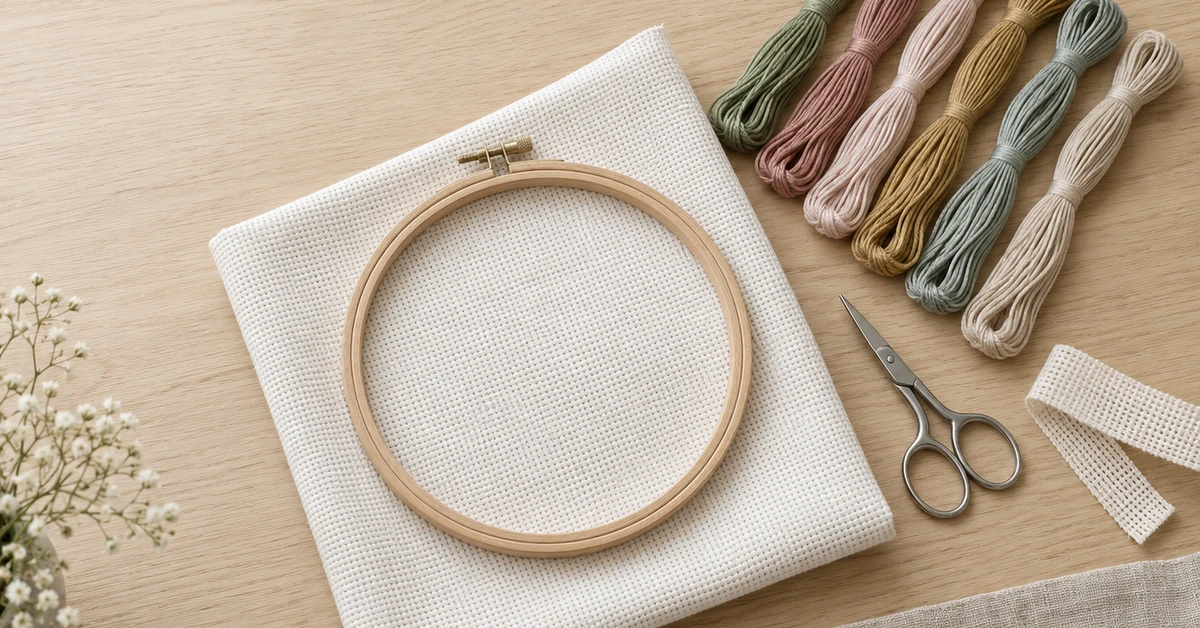
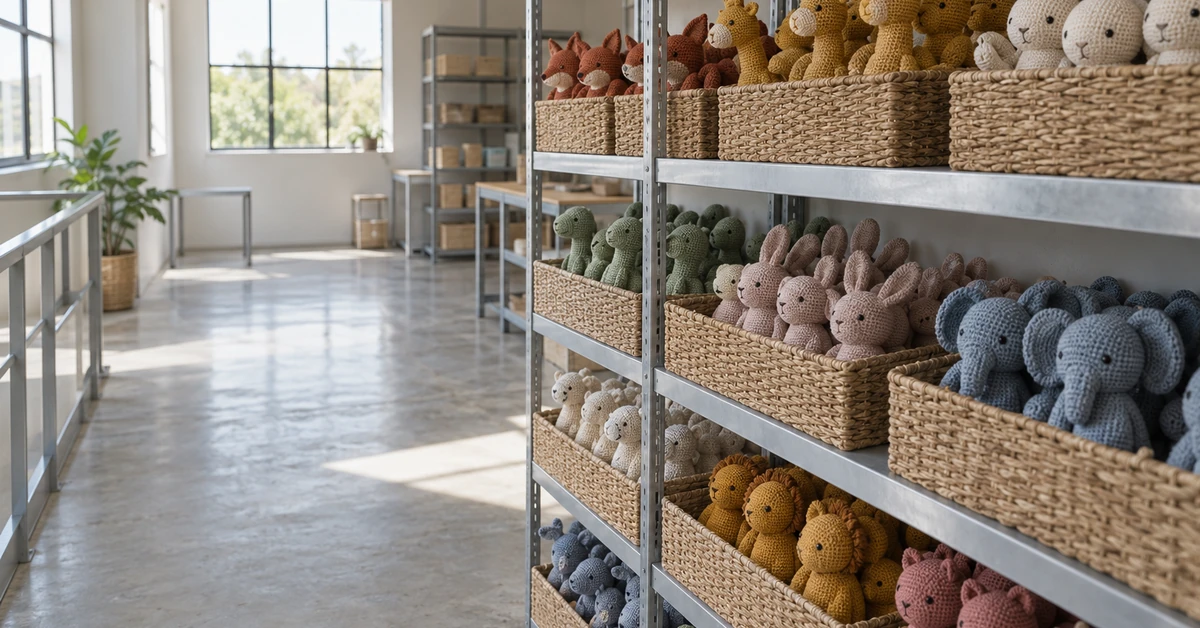
A DIY craft kit manufacturer can be evaluated from the far end of the customer journey: the first support question. Instead of treating that question as an isolated complaint, Onehourcrafts uses it to reveal where the product promise, component identity, instruction sequence or retail presentation lost clarity. The result is a reverse brief grounded in an observable moment, not a vague request to make the next kit easier.
Begin with one believable question
Choose a question a real buyer or maker could ask without inventing a dramatic failure. Examples include which thread starts first, whether two similar pieces have different jobs, or what to do after missing a step. A narrow question is more useful than a general statement that the kit was confusing.
Record the wording, the product version and the moment at which the question appeared. The same sentence can point to packaging when asked before opening, or to sequencing when asked halfway through the project. Context keeps the team from editing the wrong surface.
- Exact question
- Moment asked
- Kit revision
- Visible materials
Trace the question backward
Move backward from the support moment through the instruction, component layout, pack copy, sample approval and original brief. At each step, ask what information was present and what assumption the next person had to supply. The objective is not to find a culprit; it is to find an unowned decision.
A missing component name might begin as a design omission, become invisible in the bill of materials, and finally appear as a customer question. Mark the earliest point where the ambiguity could have been resolved without adding noise to every later stage.
- Support moment
- Maker action
- Opened pack
- Released artwork
- Approved brief
Classify the work the answer must do
Not every answer belongs in the instruction booklet. Some questions need a label beside the component, some need a clearer product promise on the front, and some need a change in how parts are arranged. Decide which surface can answer at the moment of need.
A capable craft kit manufacturer should be able to connect that surface to the released sample and production record. If the proposed answer exists only in a customer-service script, the physical product may keep generating the same uncertainty.
| Question type | Likely surface | Proof |
|---|---|---|
| Identity | Component label | Opened-pack photo |
| Sequence | Instruction step | Observed attempt |
| Boundary | Front or side copy | Pack review |
| Recovery | Troubleshooting cue | Restart test |
Watch the maker before explaining
Give the released kit to a reviewer who has not seen the development file. Let the person reach the relevant moment before offering help. Note what is touched, turned over, grouped or ignored. Behavior often identifies the missing cue more precisely than a retrospective opinion.
Do not turn one observation into a universal usability claim. Describe the reviewer, setup and task, then repeat only when the question matters to the intended customer promise. A small test is evidence for a product decision, not proof about every maker.
- First object touched
- Pause point
- Self-correction
- Question asked
Separate a support fix from a product fix
A support reply can solve today’s case quickly. A product fix must survive printing, packing, language changes, substitutions and retail handling. Write both responses side by side so the team does not mistake an excellent email for a corrected kit.
If the immediate answer says where a hidden needle is located, the next product action might be a contrasting pouch, a component map or a different pack order. Each option changes cost and customer experience differently, so keep the commercial tradeoff visible.
| Response | Purpose | Owner |
|---|---|---|
| Reply | Resolve current question | Support |
| Artwork edit | Prevent repeat ambiguity | Brand |
| Pack change | Expose component | Factory |
| Instruction test | Verify sequence | Product |
Keep variants inside the answer
A useful resolution names the variant being discussed. Color, size, language, project style and accessory count can change what the maker sees. Avoid publishing a blanket answer that is correct for one version and misleading for another.
For OEM craft kits, request a variant table that shows which instruction panels, component labels and pack images remain shared. When a field changes, identify the evidence that must change with it rather than relying on a familiar base SKU.
- Shared fields
- Changed fields
- New proof needed
- Approval owner
Measure silence, not only complaints
Support volume is an incomplete signal because many customers work around confusion without contacting the brand. Add evidence from returns, workshop observation, retailer questions and unfinished samples where available. Keep each source distinct so absence of tickets is not mistaken for absence of friction.
The useful measure is whether the proposed product cue reduces the need for an unsupported guess at the chosen moment. A short observed pause may matter more than a broad satisfaction score when it points directly to an editable decision.
- Collect the signal
- Locate the guess
- Change one cue
- Observe again
Give retailers an answer they can see
A store team should not need access to the factory brief to answer an ordinary product question. Place one opened reference beside the sellable unit and ask a staff member to explain the project, included boundary and first action in plain language.
Connect this review with the retail handoff guide. The goal is not to script every conversation. It is to ensure the pack and the staff are describing the same released experience.
- Project
- Included items
- First action
- Help route
Protect the answer during substitutions
A substitution can reopen a question that seemed solved. A different pouch may hide a tool; a new yarn winding method may make two roles look identical. Add the resolved support question to the change review so the team checks whether the new component preserves the answer.
Use the ISO quality management principles to frame ownership and change questions without presenting them as certification of a kit. Ask who records the change, who checks the affected cue and who closes the evidence.
| Change | Question reopened | Review view |
|---|---|---|
| Pouch | Can the tool be found? | Opened unit |
| Yarn | Can roles be separated? | First setup |
| Is the next step legible? | Instruction proof |
Turn recurring questions into a release gate
When the same type of question appears across products, make it a named release question rather than adding more generic text. For example: can an uninvolved reviewer identify every component role before step one? The gate should be answerable from a production-intent sample.
Keep the gate small enough to run on every relevant version. A long questionnaire that nobody completes is weaker than one precise observation attached to the sample, artwork and decision owner.
- Name the recurring uncertainty
- Choose the physical moment
- Assign the proof
- Record the result
Write the RFQ from the solved case
Summarize the product promise, customer question, observed context, required cue, affected variants and acceptance view. This gives the supplier a concrete problem to solve while leaving room to propose a practical construction or packing method.
For private label craft kits, include brand voice and escalation boundaries without hiding the physical requirement. The wording may belong to the brand, but component identity and pack sequence must still be reproducible at the manufacturing handoff.
- Question and context
- Required customer cue
- Variant boundary
- Production proof
Build a small evidence packet
Keep the original question, one photograph of the confusing moment, the approved correction and a short recheck note together. A DIY craft kit manufacturer can then quote against a visible requirement rather than a memory of a meeting. The packet should identify the exact SKU and date so an obsolete answer is not quietly reused.
Compare the packet with the production-evidence guide and the buying-guide library. For broader customer-communication principles, the FTC business guidance library is a useful orientation point, though product, market and claim decisions still need their own qualified review.
- Dated question
- Matched SKU
- Approved correction
- Observed recheck
How Onehourcrafts closes the loop
Onehourcrafts can connect a support signal with the brief, production-intent sample, artwork revision and retailer handoff. That lets the product team correct a visible decision instead of adding broad instructions that burden every customer.
Before choosing a DIY craft kit manufacturer, ask the team to reverse one realistic support ticket all the way to the approval file. The exercise shows whether questions can become controlled product learning and whether the next order will preserve the answer.
- Support record
- Reverse trace
- Changed cue
- Recheck evidence
Frequently asked questions
Why start a manufacturer review with a support ticket?
It exposes a specific moment where the product required an unsupported assumption and gives the team something observable to improve.
Does every question require an instruction change?
No. The best surface may be component labeling, pack layout, front-panel scope or a retailer reference.
How many users should review a proposed fix?
Use enough relevant reviewers to test the decision and describe the limits; do not claim universality from a small observation.
What is a reverse brief?
It traces a customer question backward through the product, files and approvals to locate the earliest unowned decision.
Should support volume determine priority?
Not alone. Combine it with returns, retailer questions, observed pauses and the importance of the affected promise.
How should variants be handled?
Name the exact version and identify which answer surfaces and evidence change with color, size, language or contents.
Can a customer-service reply count as a product fix?
It resolves the current case, but a product fix must survive production, packing and later use.
What belongs in the RFQ?
Include the question, context, required cue, affected variants, acceptance view and ownership.
How can retailers help?
Ask staff to explain an opened reference and record where the physical pack does or does not support the answer.
What should be kept after the review?
Keep the support record, reverse trace, approved change and evidence from the production-intent sample.