

Learn how to import craft supplies from China by starting at the receiving dock and walking backward to the quotation. Buyers often begin with a supplier conversation, then discover that carton identity, document ownership, packing assumptions and inspection evidence were never connected. Onehourcrafts uses a receiving-first map to make each handoff explicit without inventing universal freight, tax or customs promises.
Describe the receiving decision first
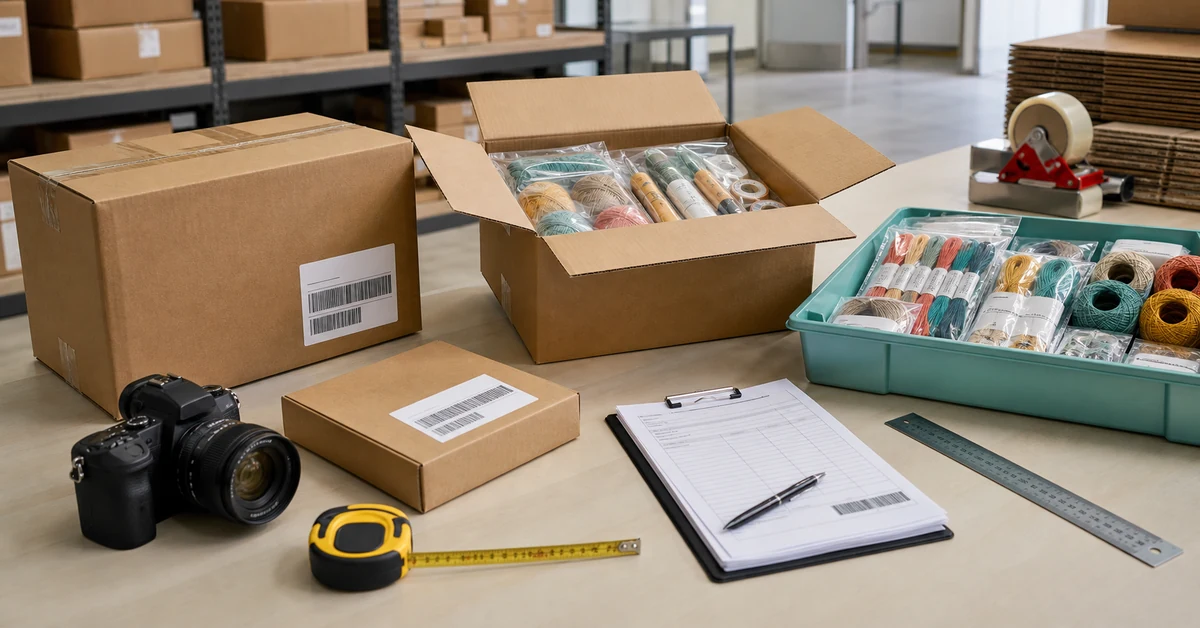
Write what the warehouse must decide when a carton arrives: receive, hold, inspect, count, photograph, quarantine or escalate. Name the person who owns each decision. This gives the import plan a practical endpoint before route language and commercial shorthand enter the brief. The team can then explain how to import craft supplies from China as a chain of receiving decisions rather than a vague buying task.
A receiving decision is not a customs ruling or a guarantee of release. It is an internal control that helps a buyer identify which evidence is missing when a shipment or document does not match the approved configuration. A craft supply receiving process should also state which photos and counts close the decision.
- Receive against identity
- Count against documents
- Hold exceptions
- Release with evidence
Build one identity sentence for the product
Combine product family, variant, pack count, artwork revision, destination and buyer reference in one controlled sentence. Use it on the quotation review, sample, carton record and receiving sheet. A short identity line prevents a familiar product name from hiding a meaningful change.
For China craft supply sourcing, keep the sentence readable to design, purchasing, logistics and warehouse teams. Do not rely on an internal nickname that a supplier, forwarder or receiving clerk cannot interpret.
Separate commercial from physical evidence
List documents that explain the transaction and evidence that proves the physical pack: quotation, purchase order, commercial invoice, packing list, carton marks, photos, sample, instructions and inspection notes. Each has a different owner and failure mode.
| Layer | Question | Example evidence |
|---|---|---|
| Identity | Is this the approved SKU? | Sample and carton reference |
| Quantity | What should arrive? | Packing list and count sheet |
| Route | Who hands it to whom? | Agreed trade-term record |
| Condition | What should receiving inspect? | Photos and check plan |
Use trade terms as a conversation starter
Review the named delivery term, risk handoff and document responsibilities with the commercial team. The ICC Incoterms 2020 resource can frame that conversation; it does not decide the correct term for a specific shipment or replace broker advice.
Record what the team believes each handoff means, then reconcile that view with the actual order and destination. Ambiguity is cheaper to resolve in the brief than after a carton is moving.
Walk the carton backward to the pack line
Start with the receiving label and trace it to master carton, inner pack, unit, artwork and product specification. Check where quantities, variants and revision codes are written. If a mark disappears between unit and carton, the warehouse cannot prove what it received.
Use production-intent photos and one physical carton. A spreadsheet can list fields, but only the pack shows whether a label is visible, protected, duplicated or blocked by the packing method.
Make the import document checklist owned
Create a checklist with a named owner, due point and evidence location for every expected document. Include commercial, packing, transport, origin or destination questions only as applicable to the shipment and market. Avoid copying a previous file without checking the new configuration.
A strong import document checklist has an exception column. It tells the team what to do when a document arrives late, names a different product, or cannot be reconciled to the approved pack.
Sample the packing before the booking
Ask for a production-intent packed sample showing unit, inner, carton, protection, voids, marks and the way the carton opens at receiving. Move it through a small handling route and record what shifts or becomes unreadable.
Packing evidence is not a promise about every transport condition. It is a basis for agreeing checks, improvement requests and the boundary between supplier packing work and buyer-side handling.
Define the inspection gate
Set a receiving sample plan that names identity, count, visible condition, instruction revision, label and photo requirements. Risk should decide depth. A simple accessory pack and a mixed seasonal assortment do not need identical checks.
Keep the gate connected to the released sample and purchase record. An inspection sheet that cannot identify the approved revision may produce a neat count with no useful decision.
Give exceptions a route and a clock
For a missing carton, mixed label, quantity variance or damaged inner pack, specify who photographs, who holds, who contacts the supplier and who can release or reject. Use an agreed review window rather than an invented universal response time.
This route protects commercial relationships because the team can describe the evidence before assigning blame. It also prevents a warehouse from quietly consuming a questionable unit because no quarantine location was named.
Reconcile route assumptions with the buyer
Write the handoffs among supplier, forwarder, broker, carrier, warehouse and internal buyer in plain language. Include where documents travel, where cartons are counted and where responsibility changes. Keep the map tied to one shipment scenario.
The route is a planning aid, not legal advice. Destination requirements, classification, taxes and permits need qualified review for the actual goods and market.
Use identity standards without outsourcing judgment
The GS1 barcode standards overview can frame product and logistics identity questions. Implementation, allocation and destination rules remain the buyer’s responsibility.
A barcode or reference helps only when it is synchronized with the physical unit, carton, documents and receiving record. Test the scan or visual mark in the actual light and placement used by the warehouse.
Keep a reversible first shipment file
For a first order, retain quotation, approved sample, final artwork, pack photos, document set, route map, inspection plan and exception contacts together. A reversible file lets the team explain what it expected without reconstructing the decision from scattered messages.
Do not treat one smooth shipment as proof of every future configuration. Use the file to identify what can be reused, what must be rechecked and which assumptions belong only to that destination or route.
Write the RFQ from receiving backward
State product identity, pack, carton, quantity scenarios, destination, documents, route assumptions, inspection, exception path and evidence. The ISO quality management principles can support process questions without approving a shipment.
Use the last-row production checkpoint and the replenishment planning guide together with the buying-guide library to connect sourcing notes to the receiving file.
- Define the receiving decision
- Freeze product and carton identity
- Assign documents and handoffs
- Sample packing and inspection
- Release the route with exceptions
How Onehourcrafts makes the first shipment teachable
Onehourcrafts can align product identity, packing evidence, document ownership, route assumptions, receiving checks and exception contacts in one file. The goal is a shipment the next team can understand, not a heroic one-off managed from memory.
Before approving how to import craft supplies from China, ask every owner to explain the carton’s path from approved sample to receiving decision. Keep the map with the order so the next variant starts with evidence instead of inherited guesswork. Add a short pre-booking review for document gaps, carton marks, photo angles, expected count, warehouse capacity and the person authorized to stop release when the evidence conflicts.
- Identity sentence
- Document owner list
- Packed-carton reference
- Receiving exception route
Frequently asked questions
Why start an import plan at receiving?
Receiving reveals the identity, quantity, condition and document decisions the rest of the import process must support.
What belongs in a product identity sentence?
Include family, variant, pack count, artwork revision, destination and buyer reference in language every handoff owner can read.
Are trade terms enough to plan a shipment?
No. They frame responsibilities, but the actual order, destination, route and qualified commercial advice still need review.
What is a production-intent packed sample?
It is a sample packed like the released order, showing unit, inner, carton, marks, protection and opening conditions used at receiving.
How deep should receiving inspection be?
Let risk, product configuration, destination and prior evidence determine the checks. Do not copy a universal checklist blindly.
What should happen when labels do not match?
Photograph, hold and route the exception to named owners with an agreed decision path before units are released or mixed into stock.
Can one smooth shipment prove the route works?
It proves one scenario was handled. Future products, destinations, packaging or quantities may introduce new evidence needs.
Who owns the import document checklist?
Assign each document to a named commercial, logistics, supplier or receiving owner and record where the evidence is stored.
Do barcodes solve receiving identity?
They can support identity, but only when unit, carton, documents and receiving records are synchronized and correctly implemented.
What belongs in a China craft-supply RFQ?
Include product identity, pack, carton, destination, quantities, documents, route, inspection, exceptions, samples and evidence ownership.