
A needle is a piece of wire with barbs cut into it, and barbs only grip fibre that can catch. That one sentence explains why buying needle felting kits wholesale is a pairing decision rather than a shopping list. Wool and wire have to suit each other. When they do not, the kit still looks complete in the box, and it still fails in the customer's hand.
Kits get judged by their contents, and that is exactly where a mismatch hides. Good needles plus good wool plus tidy packaging can still add up to a product nobody enjoys using, because the two halves were chosen by different people, at different times, for different reasons.
Why a needle number means nothing on its own
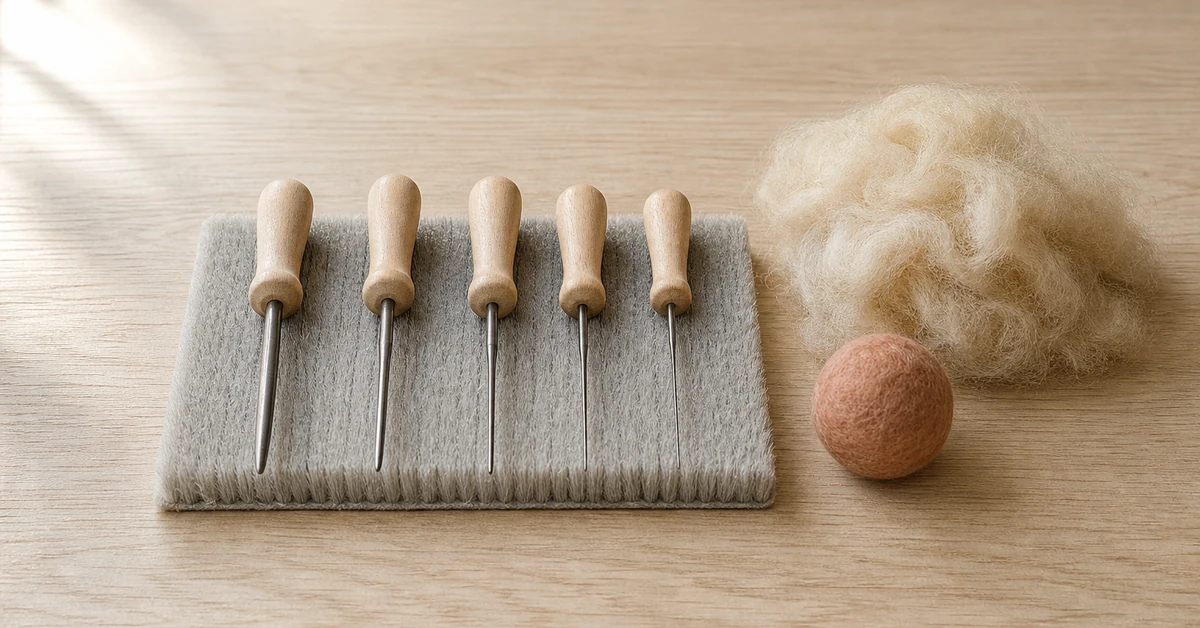
Gauge numbers run backwards from intuition: a size forty is finer than a size thirty-six. Suppliers list the number as though it settled the argument, and it does not. All it tells you is the diameter of the wire.
Barb geometry, working depth and the spring of the wire do the rest of the work. Two needles of the same gauge, made in two different workshops, can push fibre at visibly different speeds. A kit specified by size alone is a specification with a hole in it.
Match the gauge to the fibre
Think in two directions at once: speed, then finish. Coarse fibre moves quickly under a heavy needle and leaves a surface full of holes. Fine fibre needs patience and a light needle, and rewards it with a clean face. A kit that feels good to use usually needs both gauges in the same pack, one to build the shape and one to finish it.
| Fibre type | Working gauge | Why | What goes wrong if it is mismatched |
|---|---|---|---|
| Coarse carded wool | Heavy, around size 36 | Open crimp catches quickly | A fine needle bends and snaps before the shape forms |
| Medium carded wool | Mid, around size 38 | The general-purpose middle | Either slow progress or a fuzzy surface, depending on the error |
| Fine merino tops | Light, around size 40 | Tight crimp needs a gentle barb | A heavy needle punches through and leaves visible holes |
| Blended wool and plant fibre | Mid to light | Mixed behaviour across the blend | One component felts while the other stays loose |
| Synthetic craft fibre | Heavy, and expect wear | Low natural crimp resists needling | Needles wear flat and the surface never tightens |
| Surface detail work | Fine, around size 42 | Small areas need control | A heavy needle drags the surrounding surface out of shape |
Treat that table as a starting point, not a rule. The same breed, carded two different ways, behaves like two different materials. Which is the reason a sample tells you more than a specification sheet ever will.
Coarse wool, fast results and visible holes
Coarse wool is kind to beginners because it answers back straight away. A shape starts holding within minutes and the maker can see something happening. For a kit sold to someone who has never felted in their life, that matters more than almost anything else.
The cost is surface. A heavy needle pushes fibre through instead of meshing it, and the finished piece can stay slightly open. Fair bargain on a first project. Poor one on a small figure whose face is the entire point.
Fine merino and the needles that respect it
Merino tops give the dense, soft surface that sells felted animals and small figures. They also take longer, and they record every mistake: tight crimp holds the mark a heavy needle leaves, and no amount of needling takes it out again.
A kit aimed at this market needs light needles, a surface that holds the work without dragging, and fibre to spare. Skimping on fibre is the commonest false economy in a fine-felting kit, and the first thing a customer notices.
Foam, mats and the surface under the work
What the maker works on decides how much fibre is lost and how long the needles survive. Foam blocks are cheap, they hold a piece still, and they hollow out in the busiest spot within a handful of evenings. Brush mats cost more and let fibre pass between the bristles instead of driving it in.
Neither surface is wrong, and the choice still belongs in the specification, because it changes the experience. Thin foam plus a light needle produces a beginner who concludes that felting is difficult. The same wool on a firmer pad produces one who comes back for a second kit.
How many needles should a kit ship with
One needle is not a kit. It is a single point of failure. Needles break, beginners break more of them, and pressure applied at an angle is the fastest way known to snap a barbed wire. A pack with no spare turns a small accident into a lost customer.
Ship a spare of every gauge the design uses, and add a holder wherever two needles are worked together. Holders cost very little, they change how a long evening feels in the hand, and they are one of the few upgrades buyers bring up on their own.
Breakage rates tell a buyer more than any catalogue
Ask what share of needles breaks in normal use, and expect a range rather than a figure. Above roughly one needle per ten packs, the cause is usually mismatch rather than bad manufacture: pressure driven into the wrong fibre.
Reports cluster, and the cluster is the useful part. Beginners only? The fibre is too coarse for the gauge, or the pad is too soft. Experienced makers as well? Then look at the needle batch, because that conversation is about heat treatment rather than design.
Testing a kit without a workshop
- Build the sample with the needles exactly as they ship, and note where the fibre stops tightening.
- Build it a second time on a brush mat, and compare the surface and the clock.
- Weigh the fibre before and after, so what the pad swallows becomes a number.
- Hand it to three people who have never felted and write down the complaints verbatim.
- Leave one finished sample on a windowsill for a month and see what the dye does.
A week of that answers questions no photograph can. On a first order it is the cheapest insurance going.
What a sample budget should cover
A felting sample is never one piece. It is one piece per gauge combination you are considering, plus fibre for over-felting, plus a finished piece kept aside as the standard. Approve one sample and you have approved a product you have not seen.
Fund three identical samples and keep them apart: one at the works, one with you, and one with a shop or a customer for an opinion that has not passed through the buying decision first.
Five questions to ask before the first order
Five questions separate a considered kit from an assembled one, and a needle felting kit manufacturer should answer all five without reaching for a catalogue, because the answers come from builds rather than from a stock list.
- Which fibres were tested with the needles in this pack, and at what working depth?
- How much fibre was consumed building the finished sample, before any margin?
- What proportion of needles is expected to break in normal beginner use?
- Which working surface was used for the sample, and would another change the result?
- What is shipped as a spare, and can a holder be added to the pack?
Material claims get easier to check when a supplier works to a published standard. The screening described by OEKO-TEX covers what the wool has been tested for. The quality principles published by ISO describe the discipline that keeps one batch like the next.
How Onehourcrafts matches a needle to a fibre
Onehourcrafts writes wool and needles into one specification, tests each combination on a finished sample before it is offered, and ships a spare of every gauge in the pack. Fibre weight comes from a real build rather than from a target price, because a kit that runs short gets no second chance.
The felted range is listed on the felting product page with the kits collected under wool felting DIY kits, and the sourcing notes behind the pairing are set out in the buying guide.
Red flags in a wholesale felting kit listing
A few patterns are worth treating as questions rather than verdicts. One on its own is normal. All five together usually means a supplier is assembling kits from a stock list instead of designing them from the fibre up.
- A gauge quoted with no fibre description, or a fibre described with no gauge.
- One needle in a beginner kit, no spare and no holder.
- Fibre weight given in a unit that makes comparison across packs impossible.
- Photographs of a finished piece that plainly were not made from the fibre in the pack.
- No mention of a working surface, the part customers replace first.
Private label and the parts a buyer chooses
For needle felting kits wholesale buyers, private label felting kits give control over the fibre, the gauge, the working surface, the instructions and the packaging, in roughly that order of importance. Most briefs work backwards through that list. They specify the box and leave the pairing to the works.
Beginner felting kits wholesale is where the pairing matters most. A new maker has no experience to compensate for a needle that fights the wool. Advanced kits forgive more, because an experienced hand adjusts pressure without noticing that it is doing so.
How felting supplies fit a wider craft range
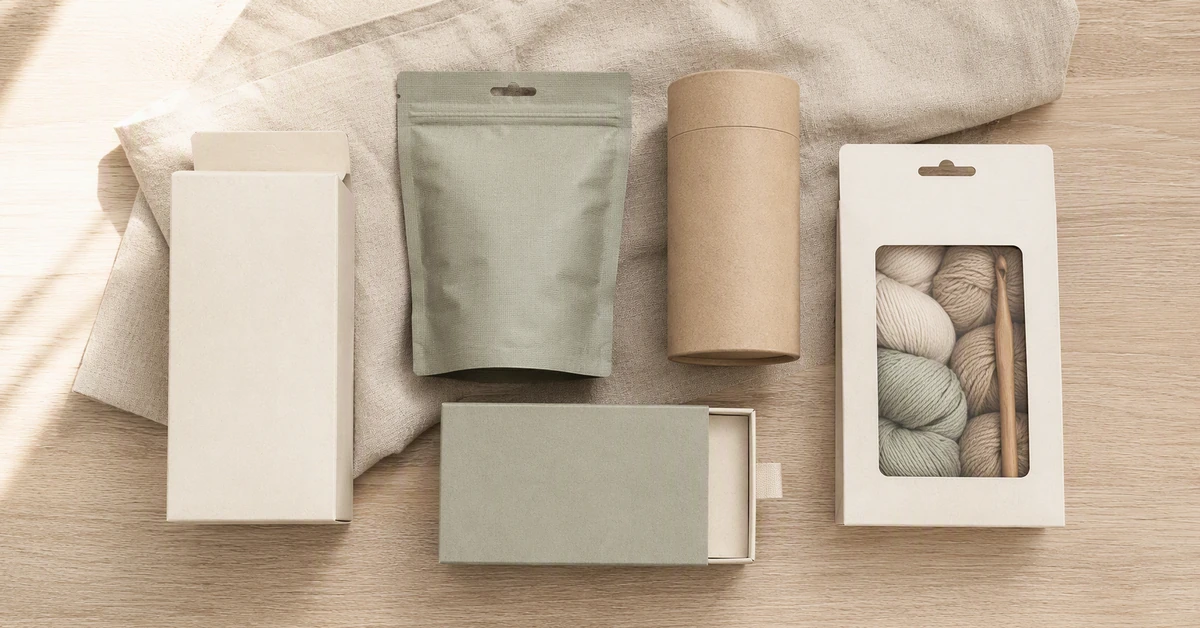
Retail ready felting kits usually sit next to yarn, needles and general craft supplies, which means a pack has to survive a shop display and a customer's hand at the same time. That practical detail decides the packaging format more reliably than any aesthetic argument.
Needle felting supplies wholesale orders work better with one shared fibre palette across several designs, so a shop can show a family that visibly belongs together and a reorder becomes one decision instead of five. Planning needle felting kits wholesale that way keeps the shelf coherent. Send the range you have in mind and the reply will set out the gauge and fibre pairing for each kit rather than a single line price. More notes appear on the blog.
Frequently asked questions
What needle sizes should a beginner felting kit include?
A mid gauge such as a size 38 for building the shape, a finer gauge such as size 40 for finishing the surface, and a spare of each. One needle with no spare turns a broken tip into a lost sale.
Why do needles break so quickly in some kits?
Usually because a light needle is being pushed into coarse fibre, or because the working surface is too soft to hold the piece still. Breakage is more often a mismatch than a manufacturing fault.
Is coarse wool or fine merino better for a first project?
Coarse wool is better for a first project because it holds a shape quickly. Fine merino gives a smoother finish and takes longer, so it suits a second or third kit.
How much fibre should a kit contain?
Enough for the project plus a margin for over-felting, which beginners do. The figure should come from a real build rather than from a target price point.
Does the working surface really matter?
It changes both the surface quality and the number of needles a maker breaks. Foam is cheap and compresses; brush mats last longer and let fibre pass through.
What is the difference between carded wool and tops?
Carded wool has fibres aligned loosely in many directions and felts quickly. Tops are combed into parallel strands, which gives a cleaner finish and needs a lighter needle.
How should a buyer test a felting kit before ordering?
Build the sample as shipped, then again on a different surface, weigh the fibre used, and ask people new to felting to complete it. One week of testing answers more than any catalogue.
Can felting kits be private labelled?
Yes, and the choices worth controlling are the fibre, the needle gauge, the working surface and the instructions. Packaging is usually the least important of those five.
Why do felted samples fade in a shop window?
Dyed wool is sensitive to light over months, and open displays expose fibre directly. Closed packaging slows the change, which matters for retail ready felting kits.
How many kits should a first wholesale order include?
Enough to cover a full shelf display plus a small replacement stock, so the shop can see the range as a family rather than as isolated products.