
The right OEM crochet kit packaging options depends on the buyer's shelf, opening sequence, component mix and route—not on whether a box looks premium in a studio photo. Onehourcrafts compares packaging as a system: what the shopper sees first, how parts stay together, what the label must communicate, and how the finished unit survives handling. Packaging should be selected with the product brief and RFQ, not after them.
Write the promise the pack must deliver
State whether the kit is a gift, a first project, a workshop seat, a refill, a seasonal item or a premium project. The promise controls the information hierarchy, photography, instruction access, component visibility and tolerance for opening friction. A package cannot solve a vague product position; it can only make the position easier or harder to understand.
Map the opening sequence
- Recognize the project and intended user.
- Confirm the contents and skill expectation.
- Open without losing small components.
- Find the first action and the instruction path.
- Store or reseal unfinished work.
Document the sequence with a real assembled sample. If the first action requires opening several nested bags or searching for a tool, the packaging is adding instruction burden before the craft begins.
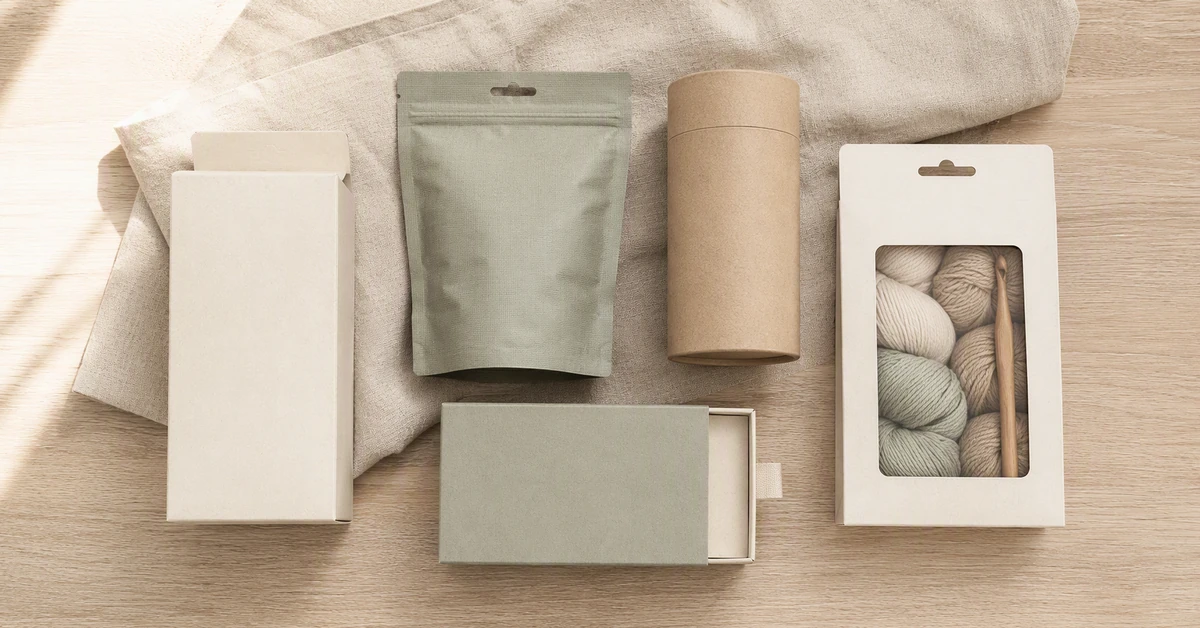
Compare four common architecture families
| Format | Strength | Watch point | Best question |
|---|---|---|---|
| Pouch or bag | Lightweight and flexible | Weak shelf blocking or component visibility | Can the unit stand, hang and reseal reliably? |
| Rigid box | Strong protection and gift presence | Higher cube and possible dead space | Does the insert stop movement without crushing yarn? |
| Sleeve plus inner pack | Good brand layer with modular refill | Inner unit may look unfinished | Which layer carries the barcode and full contents? |
| Display-ready carton | Fast setup for retail or workshops | More print and structure decisions | Can the shipper become the shelf display without rework? |
Keep components in their own custody zones
Separate yarn, hook, needle, notions, instruction and decorative extras according to the risk of loss, tangling, puncture or confusion. Small parts should not be allowed to migrate into the yarn area during normal handling. Ask the supplier for a component map and a pack-out photo, not only a dieline.
Build an information hierarchy for the front panel
Account for the second life of the package
A strong packaging architecture also considers what happens after the first opening. Add the crochet DIY kit category, the display planning guide and the OEM handoff example to the packaging brief so the team can discuss shelf, workshop and home storage behavior together. Compare crochet kit packaging design, retail ready crochet kits and craft kit packaging materials as separate decisions rather than one visual preference.
Ask whether the package can be resealed, whether the instruction remains visible after partial use, and whether loose yarn or tools can be returned to an assigned zone. A package that supports the second session can reduce customer confusion and make a workshop leader's cleanup easier, but those benefits should be checked with an assembled sample rather than promised from a drawing.
Record the information that must survive every packaging revision: product name, variant, contents, skill boundary, barcode, instruction version, brand marks and any market-specific wording. When a format changes from pouch to box or from sleeve to display carton, reconcile the full register instead of copying the old artwork forward.
- Front panel remains legible at the intended viewing distance.
- The first-use cue survives opening and resealing.
- Pack-out remains countable after a workshop or fulfillment move.
- Artwork and physical contents share one revision reference.
Use the packaging gate to decide whether an OEM crochet kit packaging options is merely attractive, or genuinely ready for the shelf and route it must serve.
The front should answer what the project is, who it suits, what result is expected and why the buyer should pick it up. Move detailed contents, dimensions, care notes and caution language to the sides or back where they can be read without crowding the promise. The GS1 barcode guidance offers general identification context; it does not determine your artwork or destination-market labeling requirements.
Protect the first-use moment
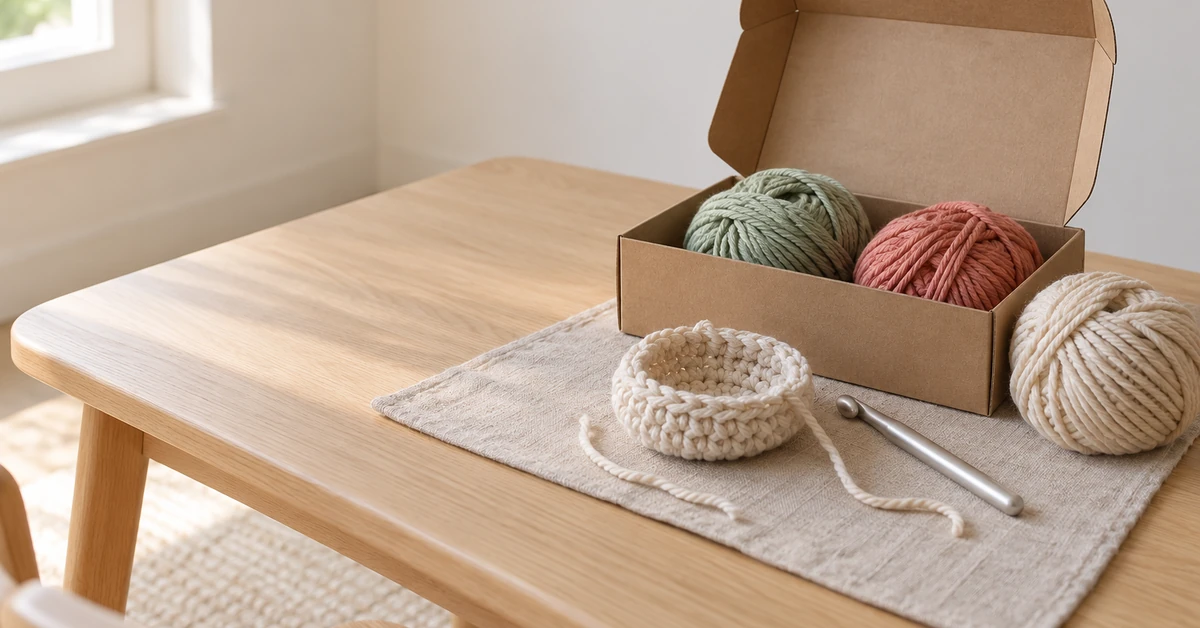
A kit can be technically complete yet feel incomplete when yarn is flattened, tools are loose, or the instruction sheet arrives folded across the project. Test the actual first-use moment with a sample that has the intended insert, label, bags and seals. Record the time to locate the first action and any point where a component can disappear.
Treat the instruction as a packaging component
Decide whether instructions live on paper, a folded card, a QR-linked page, a video pathway or a combination. Keep the first step visible even when the kit is unopened. If a QR code is used, test scanability through the final print, lighting and phone conditions. A link is not a substitute for clear physical orientation.
Choose materials by route and handling
List the handling events the sellable unit will experience: packing, carton loading, courier movement, shelf replenishment, workshop transport and customer opening. Then check scuffing, corner crush, seal failure, puncture, moisture exposure and component movement. Packaging that survives a photo shoot may still fail on a mixed carton route.
Calculate cube and pack efficiency
Compare the sellable unit, inner pack and shipper dimensions, not just material cost. Record units per inner, inners per carton, void percentage, pallet or shelf orientation and the space required for display setup. Use the shelf-engineering example to frame the same questions for a crochet program.
Keep private-label identity consistent
Freeze logo use, color references, product name, variant naming, barcode status, legal line, instruction version and image rights in one artwork register. Mark every file with revision and approval owner. The FTC advertising guidance is a general reminder to keep marketing representations supportable; buyers must still review the rules relevant to their market and product.
Test display and fulfillment together
Place the packaged unit on the intended shelf or peg, then pull it through a representative fulfillment or workshop tote. Look for label visibility, hanging strength, carton opening, reseal behavior and missing components. Retail readiness is a combined shelf-and-handling state, not a visual adjective.
Use a packaging decision matrix
| Decision lens | Pass evidence | Escalate when |
|---|---|---|
| Shopper clarity | A first-time viewer can identify project, result and skill level | The front panel needs staff explanation |
| Component control | Every part stays in its assigned zone through handling | Small parts migrate or disappear |
| Route durability | Sample survives representative handling without harmful movement | Seal, corner or insert failure appears |
| Pack efficiency | Units, inners and cartons are countable and space-aware | Dead space or repacking becomes routine |
| Artwork control | One approved file set matches the physical pack | Names, codes or claims conflict |
Send a packaging-ready RFQ
Include the intended shelf, channel, unit dimensions, component map, information hierarchy, artwork ownership, barcode status, material options, pack-out photos, carton targets, route, sample stages and change rules. Ask the supplier to quote each packaging architecture on the same sellable-unit basis so a cheap-looking format cannot hide handling work or lost shelf capacity.
Release the package through three gates
- Architecture gate: format, promise, opening sequence and component zones are approved.
- Pack-out gate: production-intent components, labels, inserts and seals pass handling checks.
- Route gate: the assembled unit remains countable, legible and protected through representative movement.
How Onehourcrafts supports packaging decisions
Onehourcrafts can align kit contents, artwork revisions, packaging samples, display tests and route evidence before the buyer locks an OEM program. The best OEM crochet kit packaging options is the one that makes the project understandable, controllable and shippable at the same time.
Frequently asked questions
Which package format is best for every crochet kit?
There is no universal winner. Compare shopper promise, component mix, display orientation, route handling, cube and the required opening sequence.
Should all components be visible through the pack?
Only when visibility helps the buying decision without increasing loss, tangling, puncture or information clutter. Use a component map to decide what needs to be seen.
What should the front panel communicate?
Identify the project, expected result, intended user or skill level, and the main reason the kit belongs in that channel.
How can a buyer test packaging before production?
Use production-intent components and the intended inserts, seals, labels and carton. Test opening, component custody, display and representative handling.
Is a QR code enough for instructions?
Not by itself. Keep the first physical action clear and test the QR path through final print, lighting and phone conditions.
How should packaging MOQ be compared?
Ask whether minimums apply to artwork, box size, color, insert, label, inner pack or carton, then model the practical opening commitment.
What is display-ready packaging?
It is a pack that can move from shipping or receiving into its intended shelf or workshop presentation with limited rework. Verify this with a real sample.
What often causes route damage?
Uncontrolled movement, weak seals, crush-sensitive corners, exposed components, overfilled cartons and dead space that lets units collide.
When should artwork be frozen?
Freeze after the product contents, variant identity, labels, barcode status, instruction version and physical pack-out have been reconciled.
What belongs in a packaging RFQ?
Include channel, shelf, component map, information hierarchy, materials, artwork scope, pack-out, carton targets, route, sample gates and change rules.