A handle feels fine for the first ten minutes and questionable after the first two evenings. That gap is why OEM crochet tools have to be specified against a time budget rather than a grip photograph: the handle either holds up across a real working week or it becomes a return, and the only way to know which is to decide how many hours it must survive before anyone talks about shape.
Start with the hours behind the handle
A crocheter who works twenty minutes on a Sunday asks something completely different from one who works three evenings a week on commission pieces. Before choosing a shape, write down the weekly hours the handle has to carry and the longest single session inside that week. The second number is usually the one that breaks a handle: a short total spread over many days is easier on the hand than the same total in one sitting.
That measurement turns a vague request for comfort into a number a factory can work with. It also tells you how many handles belong in the range. A programme that only publishes a full set ignores the buyer who needs one mid-size hook for a long evening.
Name the failure you are buying against
There is no single comfort problem, so there is no single handle. Four failures cover most of what a maker reports, and each one points at a different part of the tool.
| What the maker reports | Where the problem usually sits | What the specification has to answer |
|---|---|---|
| The hand cramps in the palm | Handle diameter and grip surface | Diameter through the middle, and how far the surface resists slipping once the hand warms |
| The thumb joint aches | Handle length and where the thumb rests | Whether the handle gives the thumb a rest, or keeps it floating above the shaft |
| The yarn hand tires before the hook hand | Shaft length and throat | How much yarn the throat can hold per stitch, and how many stitches fit in one motion |
| The stitch line drifts late in a session | Head shape and point | Whether the head lets the maker place a stitch without looking away from the fabric |
Ask the maker which of the four they notice first. The answer usually identifies the handle, not the brand.
Turn the hours into handle geometry
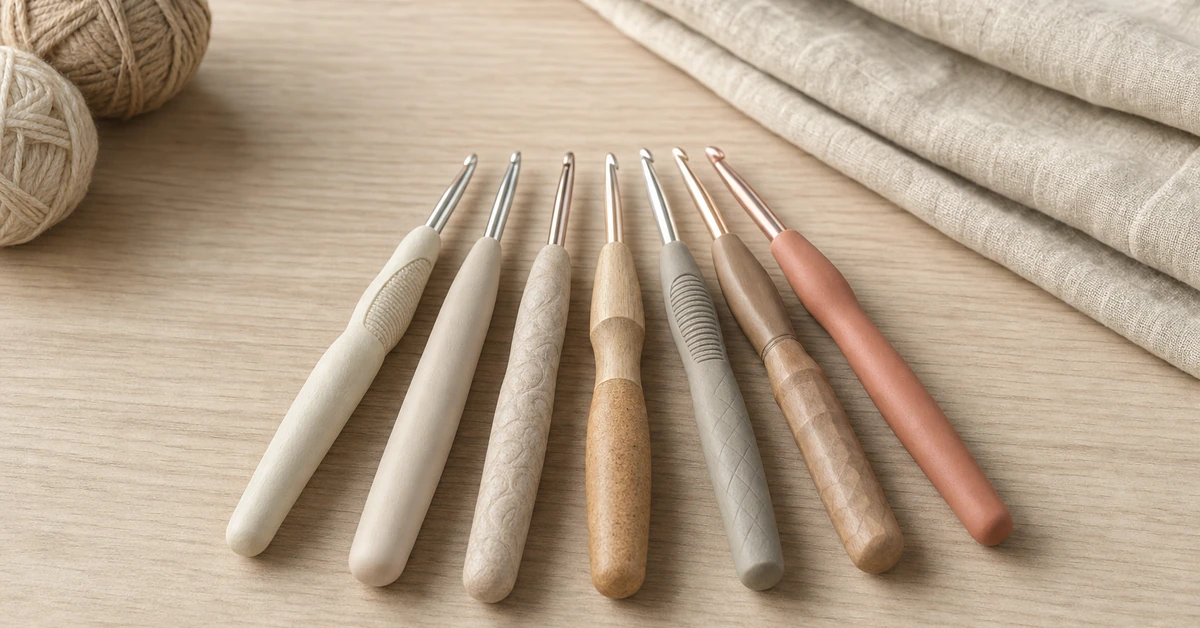
Once you know the hours and the failure, geometry stops being a matter of taste. A long session pushes the handle diameter up and the grip surface softer; a short session tolerates a slimmer handle and a firmer finish. A maker with a light grip needs less diameter than one who grips hard, because the hard grip has already closed the hand.
| Session profile | Handle direction | Why it holds up |
|---|---|---|
| Under 30 minutes, most days | Slimmer handle, firm matte finish | The hand never fatigues enough to need cushioning, and a firm surface keeps control |
| 1 to 2 hours, three or four days | Mid diameter, slightly soft grip | The middle of the range absorbs the repeated pressure without deadening the feel |
| Over 3 hours in one sitting | Larger diameter, contoured grip, longer handle | The larger body spreads pressure and the longer handle gives the thumb somewhere to rest |
| Mixed, with fine thread work | Small head, short shaft, full-size handle | The head stays precise while the handle carries the load |
Shaft and throat decide how much work fits in a motion
Handle comfort gets the attention, but the shaft and throat set how many motions a row costs. A shallow throat forces the maker to reposition yarn more often, which is a different kind of fatigue and one that shows up as uneven tension rather than a sore hand.
- Measure the throat in millimetres, not in descriptive words, and compare across sizes.
- Check that the throat holds the working yarn at the same depth whether the head faces up or sideways.
- Confirm the shaft is long enough for the maker to keep three or four stitches on the tool.
- Look at whether the handle-to-shaft transition catches yarn; a visible ridge is the usual cause.
On the crochet tools and accessories range the shaft and throat measurements sit beside the handle profile so a buyer can compare sizes on one line rather than across four pages.
Throat depth is the measurement most often missing from the paperwork, and it is the one that decides how a long session feels. When OEM crochet tools are bought across a ladder of sizes, ask for throat depth in millimetres at every size, measured the same way, because a range that tapers unevenly is what pushes makers onto the wrong hook.
A maker panel beats a materials datasheet
A factory can report hardness, weight and finish. None of those tell you whether a handle survives an evening. The useful test is a small panel of makers who use the hooks for the hours the product claims to serve, then report against the four failure types rather than a score out of ten.
- Recruit makers whose weekly hours match the range you are buying, including at least two who work long single sessions.
- Send bare samples with size marked but nothing else, so the current favourite cannot anchor the result.
- Ask each maker to work a real project, not a swatch; swatches hide tension drift.
- Collect the first failure each maker noticed and the hour it appeared at, then compare that to the hours you specified.
- Repeat the panel with the modified handle before you approve a bulk run.
Keep the paperwork light but dated. A short note per maker is enough to defend the choice when the next order comes around.
A panel is also the cheapest way to test a wholesale crochet hooks range before the full ladder is ordered. Send the two sizes you are least confident about, keep everything else off the table, and let the panel say whether the profile still holds as the sizes grow.
Materials say more about the finish than the shape
Most handles in this category are metal, wood, plastic or a plastic sleeve over a metal core, and the material choice decides how the surface behaves once hands are warm and slightly damp.
| Handle material | What the maker feels | What the buyer should watch |
|---|---|---|
| Bare aluminium | Light, cool, controlled | Slipperiness late in a session, and whether a knurled section rubs |
| Lacquered wood | Warm, tactile, light grip | Finish wear at the thumb rest, and colour variation between batches |
| Moulded plastic over metal | Softer grip, more diameter | Whether the sleeve moves on the core after repeated use |
| Silicone sleeve | Softest contact, largest diameter | How the sleeve ages, and whether it traps fibre |
None of these is automatically better. A light grip often prefers bare metal; a hard grip often needs a sleeve. The mistake is buying one material for the whole range.
Size gaps are a comfort decision too
If two sizes are missing, makers substitute the nearest hook and change their grip to compensate. That grip change is invisible in a catalogue and very visible in a review, so a range with an uneven size ladder quietly pushes work onto the wrong tool.
Line up the hooks you intend to publish against the thread and yarn counts the range actually serves, then check that every size a maker needs for those counts exists. Gaps are cheaper to close before a production run than after.
Where the risk really sits
The main risk is not that a handle is uncomfortable for one maker. It is that a comfort claim gets printed on the pack with nothing behind it, and the range then has to be withdrawn after the first season. A comfort claim is a performance claim, and it needs the same evidence a strength claim would need.
The second risk is narrowing too far. A range built around one grip style sells well to the makers who match it and poorly to everyone else, which is a hard position to recover from once a retailer has allocated shelf space.
The third risk is the quiet one: a buyer specifies OEM crochet tools from a photograph, receives something that matches the photograph exactly, and still ends up with a return, because nothing about weekly hours, grip surface or throat depth was ever written down.
What to put in the evidence pack
A buyer comparing suppliers does not need a long document. They need enough to compare two offers on the same terms.
- Handle diameter, grip length and shaft length per size, in millimetres.
- Throat depth per size, measured the same way across the range.
- Head shape and point type, with a close photograph rather than a render.
- Material and finish with the tolerance the factory works to.
- Panel notes with the hours tested and the first failure reported.
Ask for the same set from every supplier. Differences that looked like branding usually turn out to be measurable.
Send the list to whoever owns the specification rather than to a sales inbox. A crochet hook manufacturer that replies in numbers is easier to work with than one that replies in adjectives, and the difference is usually visible long before the first carton is packed.
Packing a handle range for a shelf
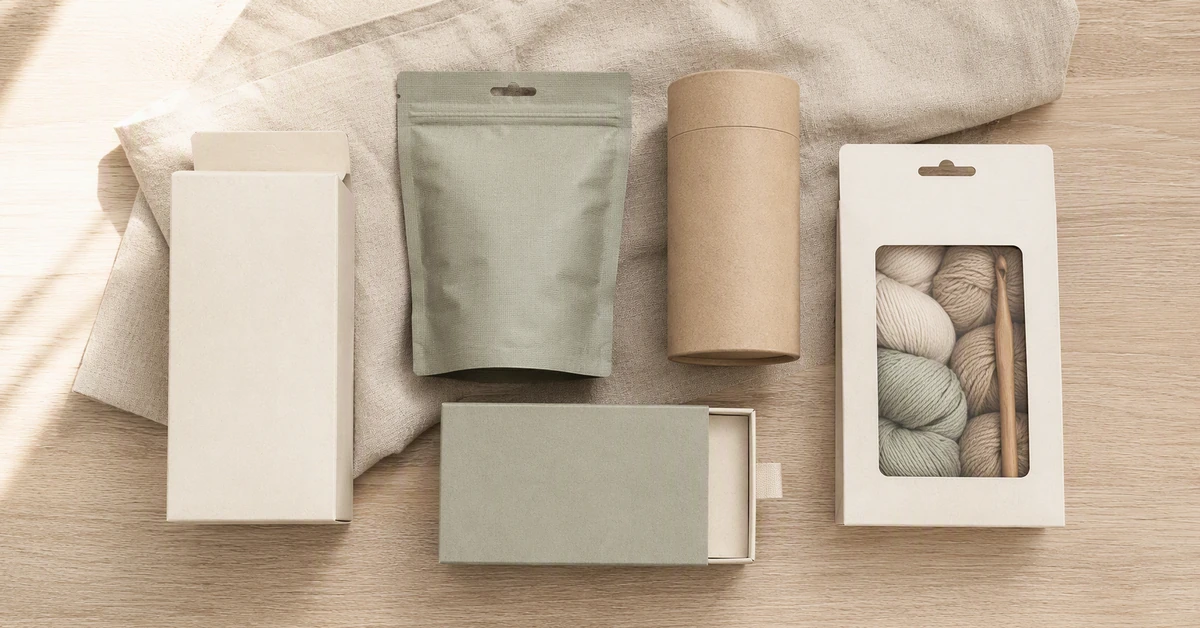
Hooks are small, light and easy to lose, which makes presentation a real part of the product. A range that hangs on a peg needs a card that survives handling; a range that sits in a tray needs a case the maker keeps.
| Presentation route | What it suits | What to settle early |
|---|---|---|
| Peg card per hook | Shops that sell single sizes | Card thickness and the hole position, so the hook hangs straight |
| Roll or wallet set | Gift and beginner buyers | Slot count, and whether the set covers a full size ladder |
| Tray insert | Counters and display furniture | Insert footprint and how it restocks from a carton |
| Bulk bag with a size label | Workshops buying by the dozen | Whether the label survives repeated handling |
Barcode identity is worth fixing at this stage rather than later; GS1 barcode guidance covers the general numbering and symbol rules that a retail pack has to satisfy.
The pack is also where a range earns trust before anyone has touched the hook. Retail ready crochet accessories are judged on the card as much as on the tool, so check how the hook sits under the card, whether the size is readable at arm's length, and whether the card still looks tidy after a week on a peg.
How the quantity ladder usually behaves
Hook ranges are cheap to sample and expensive to under-order, because a missing size strands the rest of the tray. Most programmes move through three steps rather than one jump.
- A sample set of one or two sizes to settle the handle profile.
- A pilot of the full size ladder in modest quantity, enough to cover one season of one retail partner.
- A repeat order that adds sizes or deepens the fastest-moving ones, once the panel notes exist.
Each step answers a different question: whether the handle works, whether the ladder is complete, and whether the demand is where you thought.
The pattern assumes one crochet tools manufacturer and one specification. Where a ladder is split across two suppliers, the sequence has to be run twice, because two profiles rarely meet cleanly at the join and the buyer ends up owning a size gap that nobody planned. Retailers ordering crochet hooks wholesale for the first time usually learn this the hard way, at the size their customers notice first.
Questions worth sending with a request
A short, specific list gets a usable answer. Send it before the sample stage so the reply arrives with the hooks.
- What handle diameter and grip length does each size use, and does the profile change at the larger sizes?
- Which failure does this profile address, and how was that checked?
- Does the sleeve or finish change between production runs?
- Can sizes be mixed within one carton, and what is the minimum per size?
- Which thread and yarn counts is the full ladder intended to cover?
Buyers who want the trade-language side settled at the same time can line these up with Incoterms 2020, so the commercial terms and the specification arrive together.
Where soft goods fit into the same range
A hook rarely travels alone. Stitch markers, cases and yarn needles sit beside it on the shelf, and if they are specified separately the range drifts. Decide once whether the accessory items follow the same colour and finish language as the handles, then keep them consistent.
Most buyers order crochet accessories wholesale in the same season as the hooks, which is why the accessory language is worth settling early rather than as a follow-up. One decision about colour and finish covers both orders, and a reorder six months later arrives consistent instead of nearly consistent.
This matters more for private label than for stock lines. A buyer who reorders the hooks expects the case that goes with them to still match.
How Onehourcrafts builds the sample file
The Onehourcrafts approach starts from the hours the product has to serve, then works back through the failure list to geometry, material and packing. Sample sets are sent with size marked and nothing else so the panel reports on the tool rather than the label.
That order keeps the specification honest: if the panel finds a problem, it is usually cheaper to change a grip profile than to change a retail pack. Buyers who have a size ladder and a weekly hour figure already have enough to open a specification conversation.
A short brief with the hours, the size range and the shelf format is enough to start; the range sits under crochet tools and pairs with the wider buying guides for packaging and quantity questions.
Frequently asked questions
How long should a handle be tested before buying a full run?
Long enough to cross the longest single session the range claims to serve, at least twice. A handle that feels acceptable in a ten-minute swatch test has not been tested at all.
Is a larger handle always more comfortable?
No. A larger diameter spreads pressure, but it also reduces control for makers with a light grip or fine work. Comfort is the match between the handle and the hours, not the size on its own.
Do I need the whole size ladder before a pilot?
You need enough sizes to cover the thread and yarn counts the range serves. A pilot that skips a common size tends to produce a return rate that looks like a product fault.
How many makers should be on a test panel?
Five or six is usually enough to surface the first failure, provided their weekly hours match the range. A panel of makers who all work twenty minutes a week will agree with each other and tell you nothing.
Should the handle material stay the same across all sizes?
Not necessarily. Small sizes are often worked with fine thread and short sessions, which tolerates a firmer, slimmer handle. Matching material to the size's real use is more useful than one uniform finish.
How do I compare two suppliers offering a similar profile?
Ask for the same measurements on the same form: diameter, grip length, shaft length and throat depth per size, plus the panel hours. Identical-looking handles usually differ on at least one of these.
Does the throat matter as much as the handle?
It matters differently. The handle decides how the hand feels at the end of a session; the throat decides how many motions each row costs. Both show up late, in tension rather than in soreness.
What is the usual cause of a sleeve coming loose?
A sleeve bonded to a core that expands at a different rate, or one sized to the nominal core rather than the tolerance range. Ask how the sleeve is fixed, not just what it is made of.
Do comfort claims need evidence?
Treat them as you would any performance claim. If the pack says a handle reduces strain, the panel notes behind that statement should exist and should be dated.
Can I mix sizes in one carton?
Most suppliers allow a mixed carton, but the minimum is often set per size rather than per carton. Confirm this before pricing a pilot, because it changes the useful order quantity.