
Source punch needle supplies wholesale by counting the fiber twice: once as it arrives and once as usable project yield. A full-looking yarn bundle can behave differently after threading, loop formation, trimming and waste. Onehourcrafts keeps those observations separate so buyers can compare yarn, fabric, tools and pack sizes without turning one sample into a universal consumption promise.
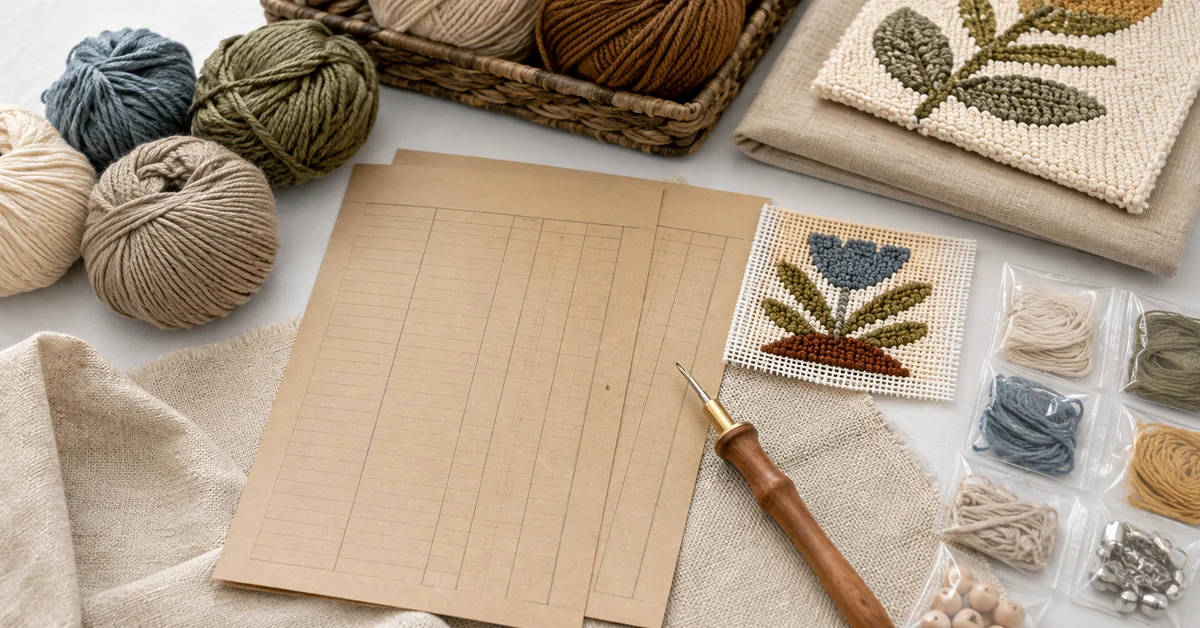
Open two ledgers at the start
Create a visible-quantity ledger for bundle count, labels, color names, tool and fabric. Create a usable-yield ledger for the approved project, fabric, stitch density, waste and leftover boundary.
The two ledgers answer different questions. One protects identity and receiving; the other supports a project-specific buying decision. Combining them too early makes a neat count look like a performance guarantee.
- Arrived quantity
- Usable route
- Waste observed
- Leftover decision
Freeze the fabric before counting yield
Use the actual fabric or a clearly labeled reference. Record weave, stretch, backing and working area because the same fiber can behave differently on another foundation.
For punch needle fabric wholesale, request a swatch and a full-size reference when scale changes the pull or spacing. Do not compare yarn yield on an unapproved substitute and carry the result into the quote as if it were stable.
| Variable | Why it matters | Record |
|---|---|---|
| Weave | Changes insertion and hold | Fabric reference |
| Working area | Changes visible density | Template size |
| Backing | Changes handling | Reverse photo |
| Tool setting | Changes loop or feed | Tool and setting note |
Name the fiber job
Assign each yarn a job: fill, outline, contrast, texture or finishing. The job determines how it is handled and what “enough” means for the approved design.
A color label alone is weak evidence. Keep a role name beside the bundle so a substitute or reorder can be compared at the level the maker actually notices.
If one fiber serves two roles, state where the behavior changes. A shared bundle may simplify packing while making the usable-yield record harder to interpret.
Count one controlled motif
Choose a small motif with a fixed template and stitch route. Record starting bundle weight or length only if the buyer can repeat the measurement consistently, then note the actual waste and remaining usable fiber.
The motif is a comparison device, not a promise about every design. Keep density, tool, fabric and operator notes beside it so the ledger remains honest.
Repeat the motif with a second operator or at a second session. Differences reveal where the method needs a boundary rather than a stronger claim.
Separate feed loss from design waste
Some fiber is lost while threading or trimming; some is intentionally left as a tail or boundary. Mark the difference so a supplier does not quote a single “waste rate” without context.
A buyer can then decide whether to change bundle size, instruction, color split or pack reserve. The correct action depends on where the loss occurs.
Do not imply a fixed leftover amount. Texture, tension, density and finishing choices can move the result.
Let the tool join the ledger
Record the punch needle, setting, grip and adjustment used with the yarn and fabric. A supply quote that names only fiber weight cannot explain a loop-height or feed change.
For a component-compatibility reference, compare the actual tool and foundation together. Use it as internal context, not as evidence that every combination behaves the same.
If the supplier proposes a tool substitute, open a new ledger line. Similar appearance is not proof of identical feed, loop or recovery.
Use pack identity at the worktable
Open the supply pack, move the yarn through the project and then ask a second person to identify the active color and tool. Pack identity should survive partial use, not only the sealed presentation.
For punch needle yarn wholesale, test cards, bands, bags and any color numbering with the actual work state. A loose bundle that looks clear in a catalog may become anonymous beside four open colors.
Keep the approved opened state photographed. It helps customer support and replenishment teams answer a question without guessing which variant was used.
Check the reverse as a yield clue
Turn the working piece over and inspect tails, missed areas, pulled threads and edge behavior. The reverse does not grade the maker; it reveals where the supply system asks for extra handling.
A reverse view can also show whether the fabric is carrying the expected density. Record what the approved buyer wants visible and what remains an internal process note.
Do not convert a single reverse view into a universal durability or safety statement. Keep the observation tied to the material set and use boundary.
Compare reserve logic
Decide whether the pack includes a reserve for repair, color balancing or normal variation. If it does not, say what happens when the project needs more.
Reserve is a commercial decision. A larger pack may reduce interruption while increasing leftover exposure; a tighter pack may reduce stock but require a clearer reorder route.
| Reserve purpose | Buyer question | Possible evidence |
|---|---|---|
| Repair | Can a small mistake be recovered? | Marked reserve bundle |
| Color balance | Can visible blocks stay coherent? | Project reference |
| Variation | What is the approved boundary? | Batch note |
| None | How is a shortage handled? | Exception route |
Make the reorder comparison physical
Place the first supply pack beside a proposed reorder. When reviewing punch needle supplies wholesale, compare color identity, bundle presentation, fabric reference, tool and ledger assumptions. The exercise should show what stayed stable and what needs a new review.
A reorder is not automatically the same product because the label matches. Attach the changed evidence to the purchase record and keep the old reference available for a side-by-side decision.
Use project-specific language instead of universal yield claims. The aim is a repeatable buyer conversation, not a laboratory standard disguised as a catalog line.
Use standards as framing only
The GS1 barcode standards overview can frame unit and variant identity. The ISO quality management principles can frame evidence ownership. Neither approves a yarn, fabric or pack.
Keep the standard references next to the process question they help ask: can the team identify the exact supply and recover the decision later?
Destination requirements and product claims still need the buyer’s qualified review. A reference page does not replace that review.
Give waste an owner
When the ledger shows unexpected loss, name who checks the tool, fabric, instruction, cutting method and pack reserve. Avoid sending the issue to “quality” without a decision path.
Ownership makes the next sample more useful. The supplier can investigate a material or pack question while the buyer can decide whether the commercial boundary changes.
Record whether the issue is a one-off observation or a repeated pattern. One sample deserves attention; it does not automatically justify a broad claim.
Design the supply brief around decisions
State project, fabric, tool, fiber roles, pack identity, reserve, yield method, waste categories, reorder evidence and exceptions. A punch needle supplies supplier should be able to quote the stated scenarios without replacing them with a generic bundle. The brief should make competing responses comparable.
Include one physical motif and one opened pack photo. Text alone cannot show how the supply behaves after the sealed state is gone.
Link the brief to the punch-needle range and the buying-guide library for internal context.
How Onehourcrafts makes yield discussable
Onehourcrafts can combine fiber roles, fabric references, tool settings, visible quantity, usable yield and reserve choices into a clear supply file. Buyers can compare a wholesale pack without pretending one motif predicts every maker.
Before approving punch needle supplies wholesale, ask for two ledgers on one approved motif and one opened pack. Keep the records with the quotation so a reorder starts with a physical comparison.
- Freeze the fabric
- Name the fiber jobs
- Count a controlled motif
- Separate waste types
- Review the physical reorder
Frequently asked questions
Why count punch-needle fiber twice?
Visible quantity protects identity and receiving, while usable yield describes one approved project under stated material and tool conditions.
What should be frozen before a yield check?
Freeze the fabric, working area, tool, setting, motif, operator notes and density used for the comparison.
Is a yield result universal?
No. It is project-specific evidence and should not be presented as a fixed consumption promise for every design.
What is the difference between feed loss and design waste?
Feed loss occurs during handling or threading; design waste is intentionally left for tails, edges or finishing. Track them separately.
Why include the tool in the supply record?
Tool type and setting can change feed, loop behavior and usable yield, so fiber weight alone is incomplete evidence.
How should an opened color pack be identified?
Use stable role and variant cues that remain readable after partial use and are tied to the approved unit identity.
What is reserve logic?
It is the buyer’s decision about extra material for repair, visual balance, variation or no reserve, with a declared exception route.
Can GS1 standards approve a supply pack?
No. They can frame identity questions; implementation and market requirements remain the buyer’s responsibility.
What should happen when waste is higher than expected?
Assign owners to inspect tool, fabric, instruction, handling and reserve assumptions, then decide whether the commercial boundary changes.
What belongs in a punch-needle wholesale RFQ?
Include fiber roles, fabric, tool, motif, pack identity, reserve, yield method, waste categories, reorder evidence and exception ownership.