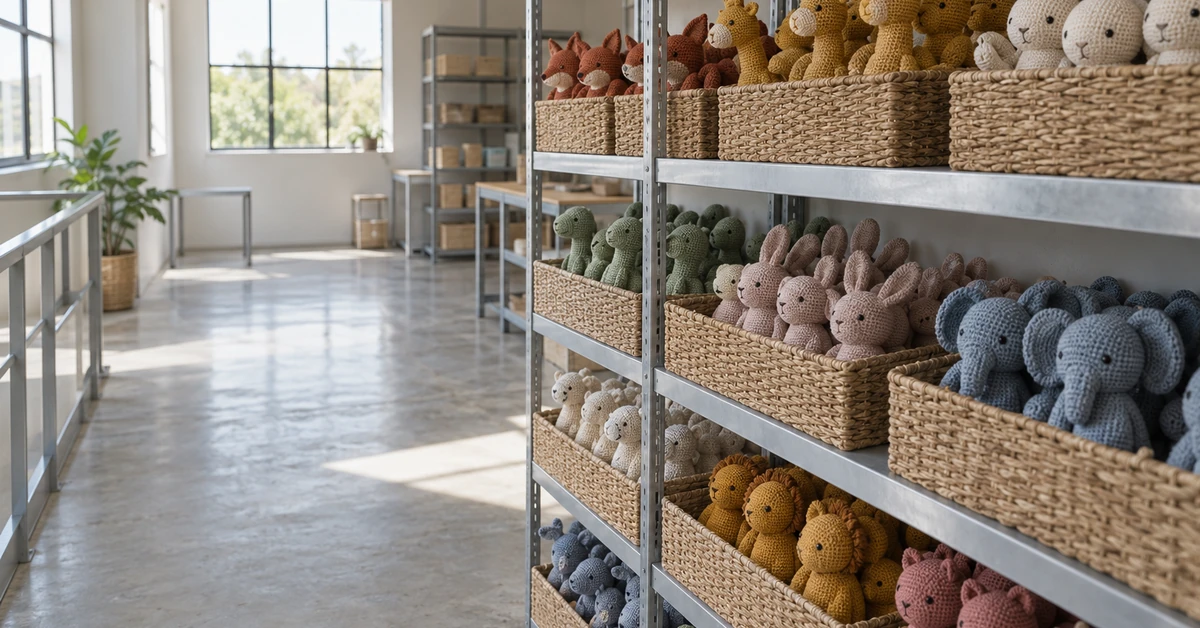

Two quotations for the same notions can look almost identical and still describe two different products. That is the reason a sewing supplies manufacturer conversation should always end in the same place: one physical sample on the bench, one quotation open beside it, and a buyer reading the lines in order rather than trusting the total at the bottom.
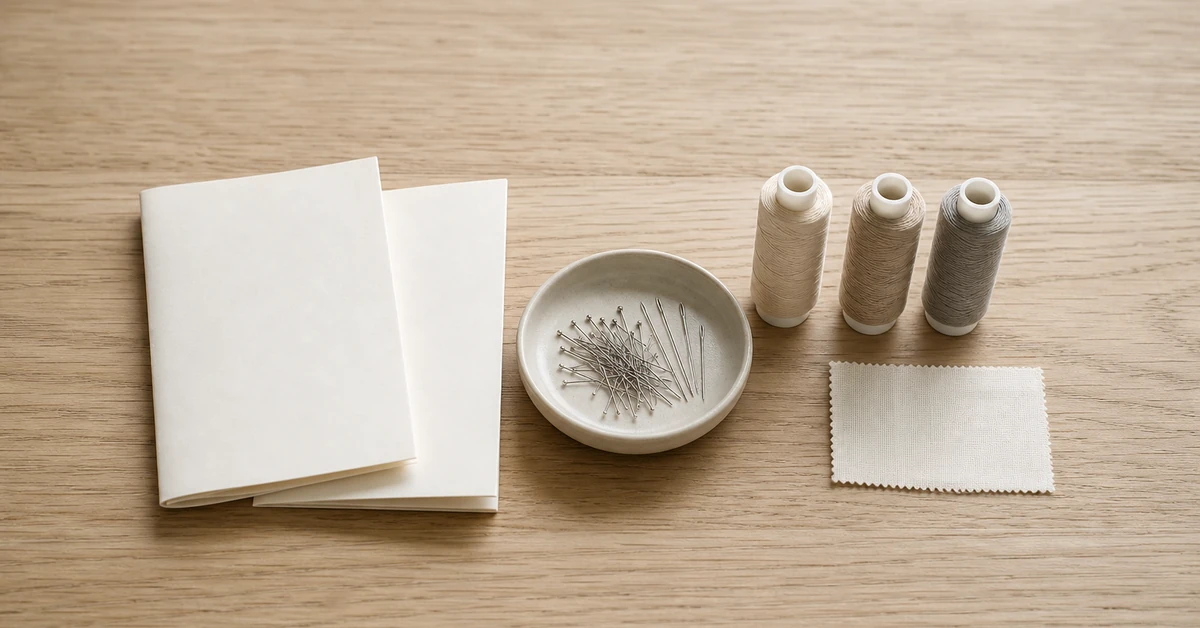
Why one sample beats two beautiful catalogues
Photographs flatter small metal and plastic items. A card of needles looks generous in a render and sparse in the hand, and the difference is exactly the thing a quotation cannot show.
Reconciliation is a simple habit: take the better of the two quotations, ask for a sample of the specific line items you care about, and then read each line against the object in front of you. Where the object agrees with the line, the offer is what it says it is.
Read the quotation as a list of promises
Every line in a quotation makes a small promise. Material, dimensions, count per pack, finish, packing and marking are the six that matter most for notions, and each one can be checked in a minute with the right sample on the bench.
| Quotation line | What it promises | How a sample confirms or contradicts it |
|---|---|---|
| Material wording | A named substrate or grade | Finger the item, weigh it, and ask which grade the sample was actually cut from |
| Count per pack | A number of pieces or a length | Open the pack and count it rather than counting the outer label |
| Dimensions | A stated size with a tolerance | Measure three pieces, not one, because the average hides the spread |
| Finish | Smooth, matte, polished or coated | Compare under one light source instead of two different rooms |
| Packing | A retail unit a shopper can carry | Check that the pack closes and reopens without tearing |
| Marking | A code, a size or a country line | Read the smallest printed element on the physical card |
Reading in order is what keeps the exercise honest. Buyers who start at the total end up arguing about price, which is the one line the sample cannot settle.
Hold the item, then read the line
There is a physical order that works: pick up the item, form a first impression, then read the line that describes it. Reading first anchors the eye, and an anchored reader tends to see the description rather than the object.
Note anything that needs a second opinion as you go instead of trying to hold it all in mind. Three or four notes per line item is plenty; a long list usually means the item was never shown to the person who will sell it.
Choosing a sewing supplies manufacturer on the strength of a catalogue is a decision about photographs. Choosing one on the strength of a sample is a decision about a product, and only the second kind survives the first reorder.
Units, counts and the arithmetic that hides
The most expensive misunderstandings in wholesale sewing supplies are arithmetic. Item, card, inner and carton are four different counting layers, and a quotation that names only one of them invites a comparison between two unlike numbers.
| Layer | What it usually contains | Why the layer matters |
|---|---|---|
| Item | One needle, pin, clip or fastener | Sets the smallest unit a shopper handles |
| Retail pack | The set a customer buys | Decides the shelf price and the printed count |
| Inner | Retail packs grouped for handling | Decides receiving splits and stock counts |
| Carton | Inners packed for shipment | Drives freight, storage and the order minimum |
Ask both suppliers to state all four layers on the same sheet. Half of the apparent price gap between two offers disappears once the layers line up, and the remainder is usually a real difference in what is being bought.
Buyers comparing bulk sewing notions offers often spot a gap of a few per cent that turns out to be a different counting layer rather than a different price. Checking the layer first saves an argument about the number.
Material words need a number beside them
Words such as heavy, fine, hardened or plated describe a direction rather than a value. Pair every one of them with a visible reference: a thickness, a gauge, a grade or a photograph of a cut section.
This is where an OEM sewing notions partner with a clear specification is worth more than a cheaper one with a persuasive catalogue. If a line cannot be turned into a number or a reference, it cannot be inspected either, and an uninspectable line is a line that will be disputed later.
Cards, headers and the retail unit
Sewing notions reach a shelf on a card, in a sleeve or in a small box, and that packaging is part of the product rather than an afterthought. Ask what happens to a card after ten customers have picked it up.
Check the hole position if the range hangs, the fold if it stands, and whether the printed size stays legible after handling. Retail ready sewing notions earn their name at this point, not in the photograph.
Colour and finish under one light
Colour comparisons fail when the two objects are seen in different rooms. Put both samples under the same light, at the same angle, and look at them from two metres as well as at arm's length.
Ask how the finish will look after storage. A coated item that scuffs in a warehouse reads as a fault on a shelf, and the cost of that appearance lands with the retailer rather than the factory.
The pack hierarchy from unit to carton
Once the retail unit is settled, the hierarchy above it can be chosen deliberately. A carton that mixes too many variants is convenient to order and slower to receive; a carton that mixes too few leaves stock sitting in the wrong place.
- Decide the retail unit and the count printed on it.
- Group the retail units into inners that a store can split.
- Set the carton to a weight a person can move without equipment.
- Agree how a mixed carton is labelled so receiving can read it quickly.
- Confirm how a partial carton is handled when a line sells faster than the rest.
Identity rules sit underneath all of this; GS1 barcode guidance covers the general numbering and symbol framework, while the assignment of a buyer's own codes remains the buyer's decision.
What the manufacturer controls and what you control
A clear split shortens every later conversation. The sewing accessories manufacturer controls the making, the tolerances it works to and the packing method. The buyer controls the retail unit, the artwork, the codes and the market the range is sold into.
Write the split down on the reconciliation sheet. Most disputes credited to quality turn out to be two reasonable people assuming different ownership of the same line.
Sampling charges and tooling as separate lines
Sample fees, artwork preparation and any dedicated tooling should appear as separate lines rather than being folded into the unit price. Burying them makes two quotations impossible to compare and hides what a subsequent change will cost.
Ask what happens to each line if the specification changes. A tooling charge that reappears after every revision is a different offer from one that carries a modest change allowance, and the difference rarely shows up in the total.
Change windows and how revisions are recorded
Every quotation has a period when change is cheap. Artwork before plates, colours before dyeing, counts before printing: after each of those points, the same change costs more and delays more.
Ask for revisions to be numbered and dated, and keep the version that was actually approved. A specification without a version number is a specification that will be quietly replaced by whichever copy is nearest.
Where a line-by-line read saves money
The savings rarely come from the unit price. They come from catching a count, a layer or a finish before it is printed on ten thousand cards, and from discovering that the cheaper quotation was cheaper because something was missing.
The other saving is time. A buyer who can point at a numbered line and a physical sample resolves a question in one message, where a buyer working from memory needs three rounds of photographs.
Where the read still cannot help
A sample proves the object in front of you. It does not prove what the next batch will look like, and it does not prove that a factory will hold a tolerance across a year of production runs.
That part is a question about process rather than product. Quality management principles are a reasonable frame for asking who owns a decision, what evidence exists and how a deviation is closed, without certifying any supplier or item; the same care applies to any compliance statement, which belongs with qualified advice for the destination market.
The reconciliation file worth keeping
The file that protects a reorder is short and boring. It holds the approved sample, the quotation version that matches it, the measurements taken from it and the photographs that show the details a specification struggles to describe.
- The signed quotation version, dated, with the revision number visible.
- Measurements taken from the physical sample rather than copied from the sheet.
- Photographs of the item, the retail card and the reverse of both.
- The pack hierarchy with counts at every layer.
- A note of anything still open, with the person responsible for closing it.
Keep it beside the sample rather than in a folder somewhere else. The file is only useful when it can be opened at the moment a question arrives.
Questions that separate two similar quotations
A handful of questions cut through a comparison quickly. Ask which grade the sample was cut from, what the tolerance is on the stated dimensions, whether the printed count refers to items or sets, and how a short-shipment is handled.
- Which layer does the stated price refer to, and what is the minimum at that layer?
- What changes between the sample and the bulk run, and who decides acceptable variation?
- How are mixed cartons labelled, and can receiving read them without a lookup?
- What is the revision process after artwork approval, and who signs the version?
- Which parts of the range are made in-house and which are bought in?
Trade terms belong on the same sheet; the current Incoterms 2020 rules describe how responsibilities are divided, and getting them alongside the specification avoids a second negotiation later.
How Onehourcrafts answers a line-by-line review
The Onehourcrafts answer to a comparison is to send the sample first and the numbers beside it, so that a buyer can reconcile a quotation line by line without asking twice for the same photograph.
Notions ranges are quoted with all four counting layers visible, along with the measurements taken from the sample itself and a note on which parts of the process sit in-house. Where a change window applies to artwork, printing or tooling, it is stated on the sheet rather than saved for a later conversation. A buyer who has already shortlisted a sewing notions supplier can compare two offers on the same page, which is the point at which a sewing supplies manufacturer becomes genuinely comparable rather than merely cheaper, and the range itself sits under sewing notions.
A buyer comparing two offers can start from a short brief with the retail unit already decided, and the buying guides cover the packaging and quantity decisions that follow.
Frequently asked questions
Should I compare quotations before or after seeing a sample?
After. The total is only meaningful once at least one line item has been checked in the hand, because that is where the differences are.
How many line items should a first sample cover?
Three or four that carry most of the retail value. A sample of everything spends time; a sample of the important lines answers the comparison.
What if the two suppliers quote different layers?
Ask both to restate the price at the item, retail pack, inner and carton. Half the apparent gap usually disappears at that point.
How do I check a count without opening a sealed retail pack?
Ask for an open pack alongside the sealed one. Comparing sealed stock across two suppliers is how count disputes begin.
Does the cheapest quotation usually win?
Only if the two offers contain the same things. Once counts, layers and finish match, the cheaper offer is the cheaper offer; before that it is an unfinished comparison.
How should sample and tooling charges appear?
As separate lines. Folding them into the unit price makes comparisons impossible and hides the cost of the next change.
What is a change window?
The period in which a revision is still inexpensive, such as before artwork is printed or before colours are set. Ask when each window closes.
Can a sample prove batch-to-batch consistency?
No. It proves one item. Consistency is a process question, answered by asking who owns a decision and how deviations are closed.
Why keep the quotation version next to the sample?
Because a reorder needs to know what was approved. A sample without its matching version invites a re-negotiation of something already agreed.
What should the buyer decide before approaching a supplier?
The retail unit, the intended shelf price band and the market it sells into. Those three answers make every later quotation comparable.