
A supplier can answer every question politely and still leave the buyer with an unclear product. “Yes, we can customize” does not explain which parts are custom, who develops the pattern, whether the hook size matches the yarn, or what happens when a production kit is missing one essential component.
If you are deciding what to ask a crochet kit supplier, do not send one long generic questionnaire. Use three focused conversations: first confirm capability, then test development control, and finally lock the commercial and production assumptions. The 18 questions below are designed to reveal how the supplier thinks, not simply whether the salesperson says yes.
Conversation 1: Can this supplier build the right customer experience?
1. Which crochet kit formats do you make regularly?
Ask for examples close to your intended product: beginner amigurumi, tool sets, project kits, gift sets, workshop packs, or children’s craft formats. A strong answer explains recent experience, typical contents, difficulty levels, and production methods. A folder of unrelated crochet images proves less than two relevant examples the team can discuss in detail.
2. Who is the intended user of the recommended kit?
Listen for a customer-based answer rather than a catalogue category. The supplier should be able to discuss skill level, finished result, number of techniques, project duration, instruction style, and likely points of confusion. “Suitable for everyone” usually means the user has not been defined.
3. What is included, and what must the customer provide?
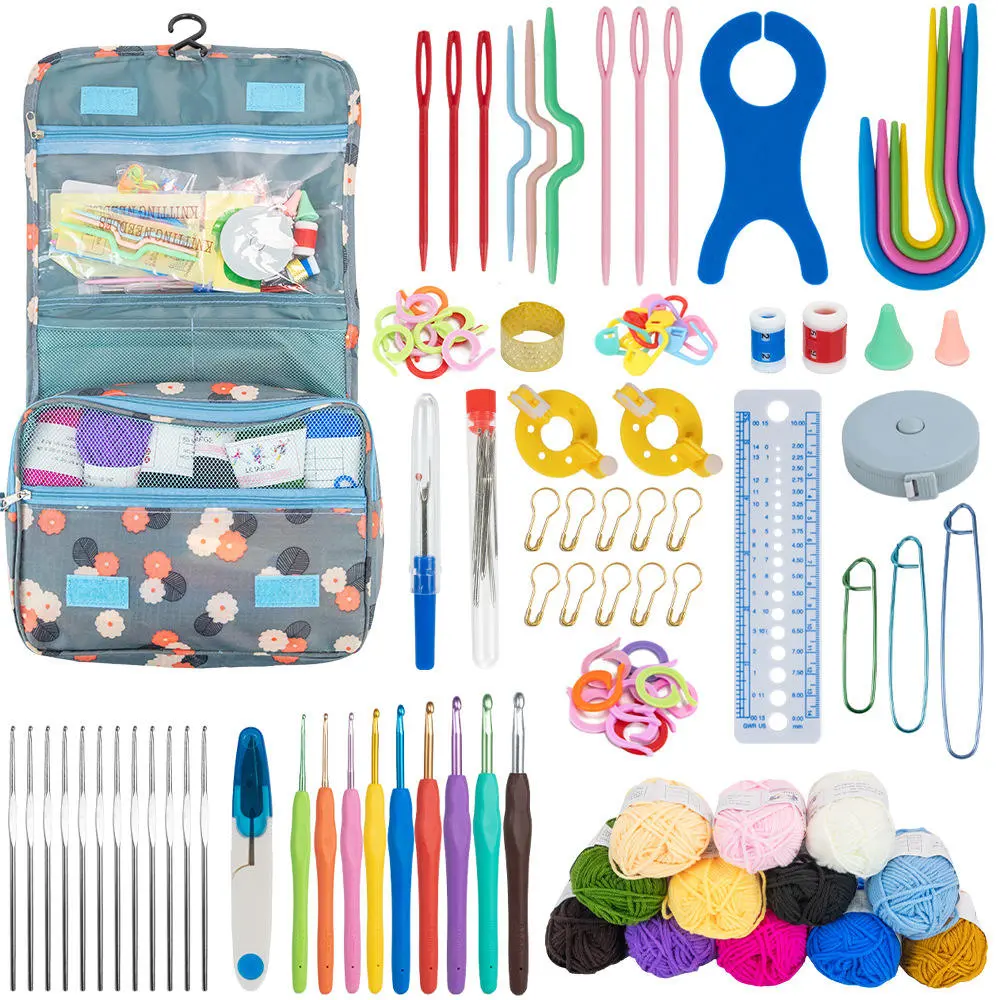
Request a line-by-line contents list with quantities, sizes, materials, colors, and acceptable substitutions. Confirm yarn, hook, needle, stuffing, stitch markers, accessories, instructions, and storage. Every tool mentioned in the instructions should be included or clearly disclosed on the package.
4. Which parts are standard and which can be customized?
Separate existing components from custom pattern work, yarn colors, hook colors, branded tools, packaging, inserts, labels, and finished-project design. This helps the buyer understand cost, sampling time, MOQ, and intellectual-property responsibilities before the design becomes complicated.
5. Can you explain one product you would not recommend for us?
This question tests judgment. A credible supplier may explain that a design is too difficult for beginners, too costly for the target channel, unsuitable for the proposed package, or dependent on an unrealistic MOQ. A supplier who recommends every option equally is not helping the buyer make a decision.
6. What information do you need before quoting?
A useful answer should include intended customer, finished project, size, materials, contents, packaging, quantity, destination market, quality expectations, and launch timing. If the supplier gives a firm price from one reference image, important assumptions are probably hidden.
Conversation 2: Can the team turn an idea into a repeatable sample?
7. Who develops the pattern and instructions?
Confirm whether development is completed by an internal designer, a partner, or the buyer. Ask what the fee includes, which language versions are available, how diagrams are produced, how revisions are counted, and who owns the approved pattern and artwork.
8. What will the first sample prove?
Define the purpose before paying a sample charge. A design sample may prove silhouette and appearance but use temporary yarn. A functional kit sample should test the real contents and instructions. A packaging prototype may focus on fit and presentation. One sample rarely answers every question at once.
9. How are comments recorded and approved?
Strong teams use one numbered comments document, labeled photos, version names, and an approval record. Scattered chat messages make it easy for an old instruction, color, or dimension to return. Ask the supplier to explain its revision-control method.
10. Can someone near the target skill level test the kit?
The designer already knows how the project works. A beginner test reveals unclear abbreviations, missing steps, difficult finishing, material shortages, and tools the customer is expected to own. Ask whether the supplier can support a blind-use test and how observations will be incorporated.
11. What becomes the production reference?
Confirm whether the approved standard includes a sealed physical sample, final specification, bill of materials, color references, artwork, instructions, and packaging sample. Production needs a controlled reference, not a collection of remembered decisions.
12. Which changes could reopen the sample?
A new yarn supplier, color substitution, hook change, package resize, translation, accessory change, or revised age positioning may require another check. Ask how changes are disclosed and who has authority to approve them.
For a deeper view of this stage, see Onehourcrafts’ custom crochet product sampling process.
Conversation 3: What are we actually buying?
13. What drives the MOQ?
The finished kit, yarn color, printed box, instruction booklet, branded label, molded tool, and accessory may each have a different minimum. Ask for the component that creates the practical MOQ and which parts can be shared across SKUs. This is more useful than asking only for the lowest possible order.
14. What exactly is included in the unit price?
Use the same checklist for every quotation: contents, assembly, packaging, printing, inserts, development, testing, inspection, labeling, cartons, trade term, and exclusions. A cheaper quote may describe a different kit.
15. How will complete-kit accuracy be inspected?
A correct component inventory does not prove that every retail pack contains every part. Ask about counting methods, weight checks, assembly instructions, in-process inspection, finished-goods sampling, defect definitions, and what happens when an omission is found.
16. How are yarn and color changes controlled?
Request color references, lot-control methods, substitution rules, and notification requirements. Confirm whether mixed lots can appear in one order and how the team handles a material that becomes unavailable after approval.
17. What timeline starts after final approval?
Separate material preparation, printing, production, kit assembly, inspection, and shipment readiness. Ask which milestone starts the quoted lead time and which buyer actions can move it. “Thirty days” is ambiguous if packaging approval is still open.
18. What problem from a recent order changed your process?
A useful supplier should be able to discuss a real lesson without exposing confidential customer information. The answer may involve instructions, color control, kit completeness, packaging fit, or launch planning. A specific prevention step is a stronger trust signal than a claim that problems never occur.
How to score the answers
A practical worksheet on what to ask a crochet kit supplier should leave space for the answer, supporting evidence, unresolved assumption, owner and next action. This turns a call into a usable approval record.
| Answer type | What it sounds like | Buyer response |
|---|---|---|
| Evidence-based | Explains a method, document, example, owner and limitation | Record the evidence and continue validation |
| Conditional | Explains what is possible if quantity, timing or design changes | Compare the tradeoff with the product goal |
| Generic | “No problem,” “best quality,” or “everything is customizable” | Ask for a concrete example and written scope |
| Contradictory | Sample, quote and specification describe different assumptions | Stop and reconcile before approval |
The goal is not to reward the longest answer. It is to reduce uncertainty about the customer experience, production reference, price, risk, and next decision.
Convert the interview into a one-page supplier record
After the call, summarize the proposed product, fixed requirements, open alternatives, development scope, MOQ drivers, quotation exclusions, sample stages, quality evidence and launch risks on one page. Send it to the supplier for correction. This catches misunderstandings while they are still inexpensive.
Link the record to the current sample version and quotation. If the product changes, update the document rather than relying on the original interview. Onehourcrafts’ crochet kit MOQ guide can help separate finished-kit minimums from component and packaging minimums, while the company and cooperation page provides context for development and manufacturing discussions.
A supplier record is also useful when comparing candidates. It makes missing evidence visible and prevents a confident presentation from outweighing a stronger but more conditional technical answer.
Where Onehourcrafts fits
Onehourcrafts supports B2B wholesale and OEM/ODM development for crochet DIY kits, tools, finished crochet products, packaging and brand inserts. Its product range can help buyers compare standard components with more customized project development.
A productive first enquiry includes the target customer, sales channel, finished project, expected contents, quantity, destination market, packaging direction and launch date. That gives the supplier enough context to challenge weak assumptions instead of simply confirming them.
Frequently asked questions
Should I request a catalogue before sending a brief?
Use both. The catalogue shows available capability and standard components; the brief explains which options matter for your customer and channel.
How many suppliers should I interview?
Enough to compare capability and assumptions without creating an unmanageable sample project. A small, relevant shortlist is more useful than collecting many generic quotations.
Should every answer be provided in writing?
Important scope, price, specification, approval and responsibility decisions should be written. Calls are useful for discussion, but the final reference should not depend on memory.
What is the biggest warning sign in a first supplier call?
A firm promise without questions about the customer, contents, quantity, packaging or market. It suggests the supplier is agreeing before understanding the product.
When should I place the first production order?
After the final product, instructions, packaging, quality standard, commercial terms and production plan are aligned. A visually attractive sample alone is not enough.
Use questions to make the offer visible
Knowing what to ask a crochet kit supplier is less about creating a longer questionnaire and more about sequencing decisions. Start with the user, examine how the supplier controls sampling, then make the commercial offer comparable and inspectable.
Contact Onehourcrafts with your project idea and use these questions to discuss a custom crochet kit, sample plan or retail range.