Product Overview: Reliable Core Trims for Apparel Manufacturing
Garment manufacturers and textile converters frequently battle premature tension loss, waistband rollover, and structural curling during high-speed assembly. When sourcing fundamental notions, choosing a dependable Braided Elastic for Waistbands & Underwear (The "Workhorse") provides the mechanical resilience needed to keep garments securely anchored without digging into the wearer. Whether an apparel program calls for a traditional braided structure built for tight internal casings or a flat knitted variant for softer profiles, the underlying elastic must maintain consistent crosswise stiffness. Utilizing the right narrow fabric architecture prevents customer returns caused by sagging waistlines, puckered seams, and collapsed gathers.
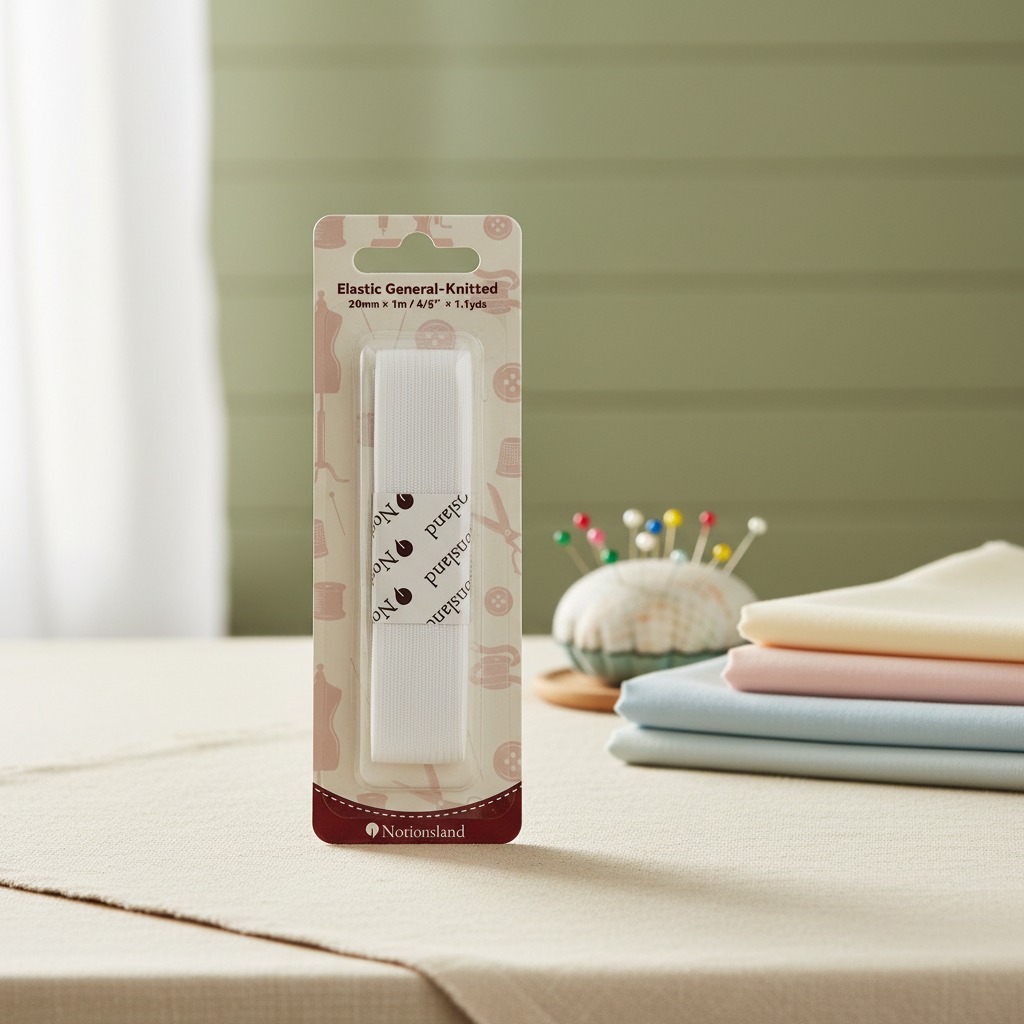
Form Factor and Available Packaging Configurations
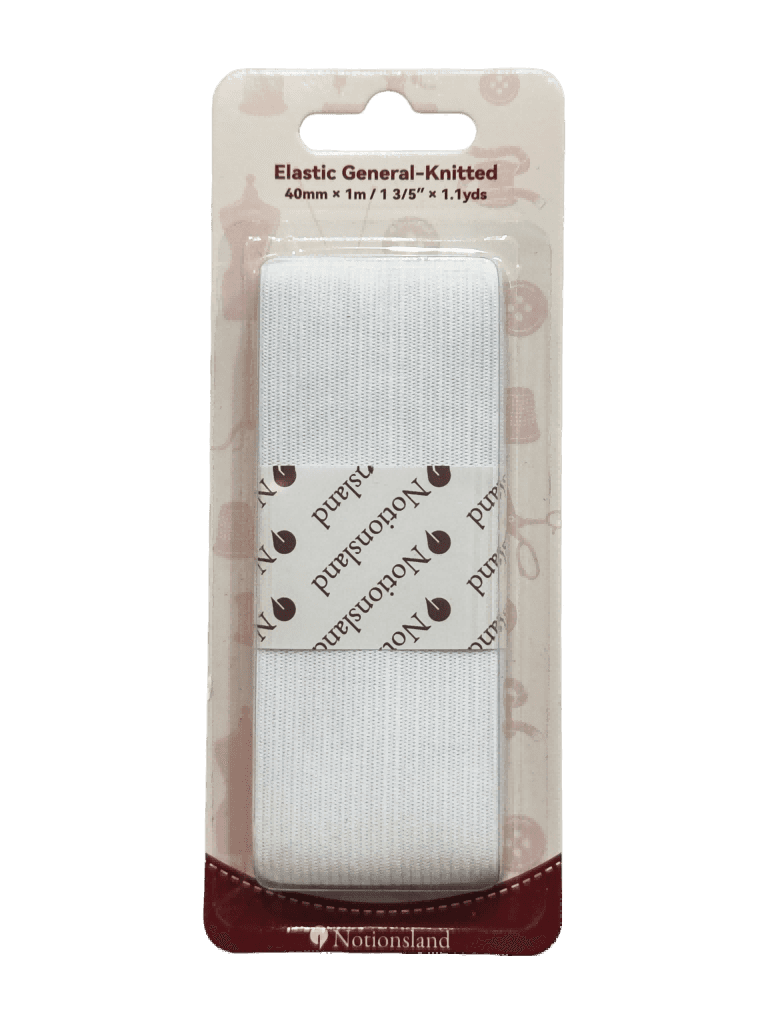
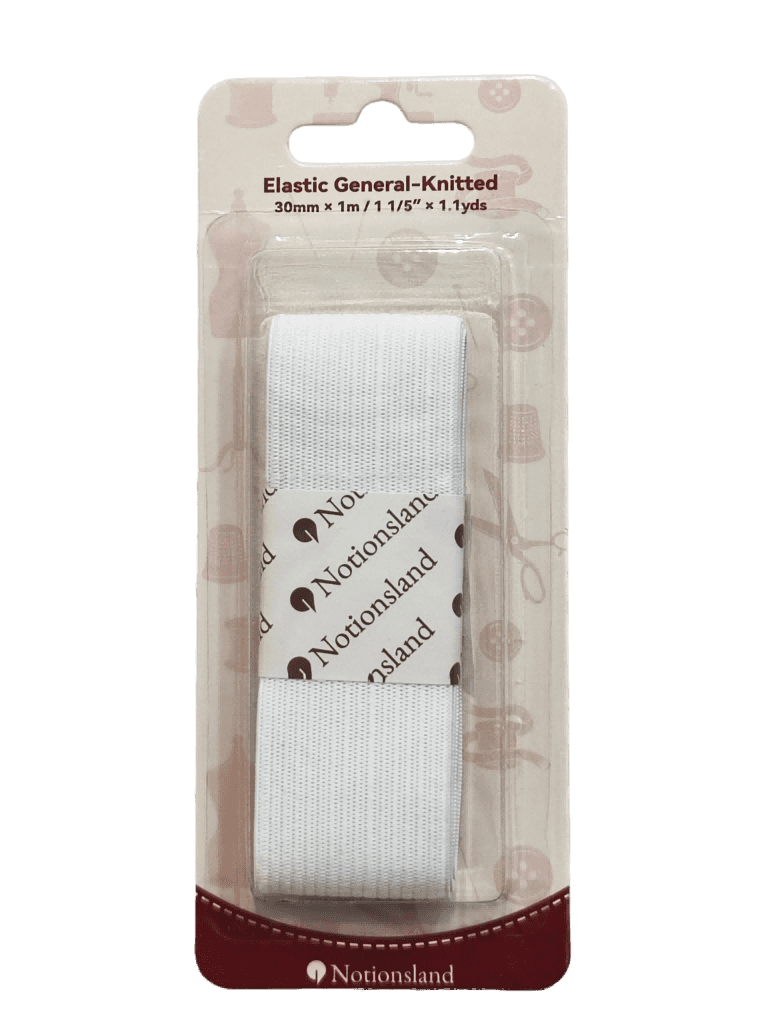
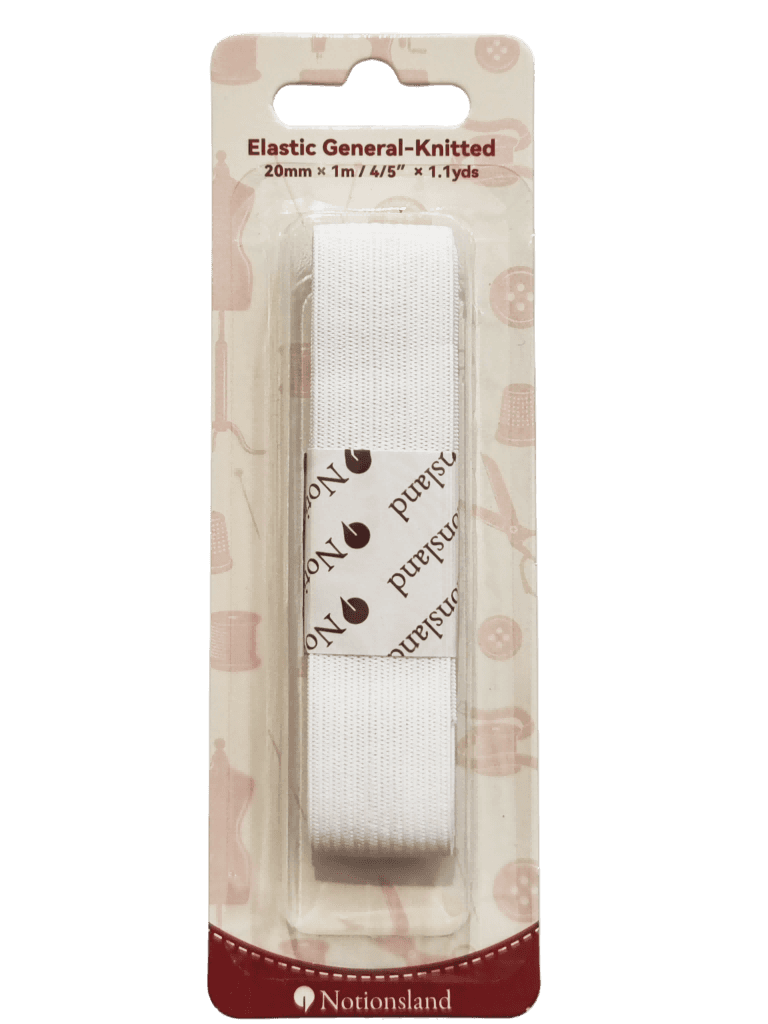
For operations balancing commercial production with retail-ready notions programs, packaging versatility determines operational efficiency. Physical samples in this category often feature pre-cut, blister-carded retail formats—such as a 20 mm (approximately 4/5 in) wide by 1 m (approx. 1.1 yd) length securely mounted on hanging retail cards. This compact presentation suits consumer repair and craft sectors. For volume cutting tables and contract sewists, standard supply shifts from individual hanging packs to continuous flanged spools, festooned boxes, or industrial rolls designed for high-feed automatic tensioners.
Material Characteristics and Technical Considerations
Narrow elastics rely on an engineered combination of flexible core elastomeric filaments wrapped or intertwined with protective outer synthetic yarns. In general apparel applications, braided constructions narrow under longitudinal stretch, making them the classic choice to snake effortlessly through narrow fabric tunnels. In contrast, flat knitted elastics preserve their width when elongated, maintaining a smooth plane directly against lightweight base fabrics.
While specific elastomer formulations, precise stretch-and-recovery curves, and laboratory wash-fastness metrics must be validated per production lot, structural integrity remains non-negotiable. Sourcing teams distinguishing between standard strip elastics and Knit-In Elastic Yarn for Socks & Cuffs (Specialty Fiber) recognize that while specialized fine yarns feed circular knitting equipment directly, flat band elastics deliver the defined clamping force necessary for structural waistbands, internal boxer briefs, and heavy fleece sweatpants.
Target Application Scenarios
Narrow stretch bands function as the structural backbone across diverse apparel categories:
- Undergarments and Base Layers: Serving as enclosed waistbands in woven boxers, knit briefs, and thermal leggings where cyclic expansion and contraction occur constantly.
- Casual and Loungewear Bottoms: Providing casing support in sweatpants, track bottoms, and pull-on shorts where uniform tension across the hip is paramount.
- Cuffs and Outerwear Hemlines: Gathering sleeve openings, storm cuffs, and jacket hems against ambient drafts.
- Accessory Anchoring: Acting alongside rigid components like an Adjustable Hat Sweatband & Visor Insert (Functional Hardware) in multi-category production runs that require coordinated elastic trim components.
Quality Control Benchmarks for Sourcing Managers
Procuring production-ready trims requires methodical batch-to-batch verification. Textile buyers must establish incoming inspection criteria before releasing lots to the sewing floor:
- Modulus Consistency: Measuring the pull force required to reach target elongation to ensure consistent waist sizing across production bundles.
- Creep and Elastic Hysteresis: Testing elastic recovery to verify that repeated laundering cycles do not cause irreversible extension.
- Needle Strike Resistance: Ensuring internal core filaments do not sever or break when penetrated by industrial sergers and chain-stitch needles.
- Linear Dimension Stability: Validating that width tolerances—such as standard 20 mm designations—do not fluctuate past acceptable sewing guide allowances.
Customization and Procurement Decision Factors
Commercial procurement goes beyond selecting off-the-shelf catalog widths. Factory buyers should evaluate total yield, compatibility with puller feeds, and packaging preferences. While retail blister packaging remains an option for aftermarket kit distributors, production houses typically specify large-put-up spools to reduce splicing downtime. When requesting samples, establish whether your production requires braided, knitted, or woven structures, as each reacts differently to direct stitching versus enclosed channel insertion. By matching elongation performance to specific garment load profiles, manufacturers guarantee functional durability from the first stitch to extended end-user wear.
Connect with Our Trim Specialists
Upgrade your garment reliability with elastic trims engineered for continuous sewing performance. Contact our technical team today to request structural swatches, verify production reel put-ups, and align specifications for your next manufacturing run.