
Engineered Reliability for Apparel Foundations
Securing consistent dimensional recovery in production apparel begins at the structural seam, where choosing the right narrow fabric dictates whether a garment retains its silhouette or fails after repeated laundering. Sourcing managers and garment technicians frequently rely on dependable foundational elastics to eliminate waistband curling, uneven channel bunching, and seam degradation. While specialized knitted options provide low-modulus softness for direct-to-skin touch, standardizing on a robust narrow elastic like Braided Elastic for Waistbands & Underwear (The "Workhorse") delivers the firm tension and edge stability demanded by high-wear casings. Selecting the proper elastic construction transforms an ordinary casing into a resilient, shape-retaining foundation that safeguards brand quality across large production runs.

Product Overview and Visual Specifications
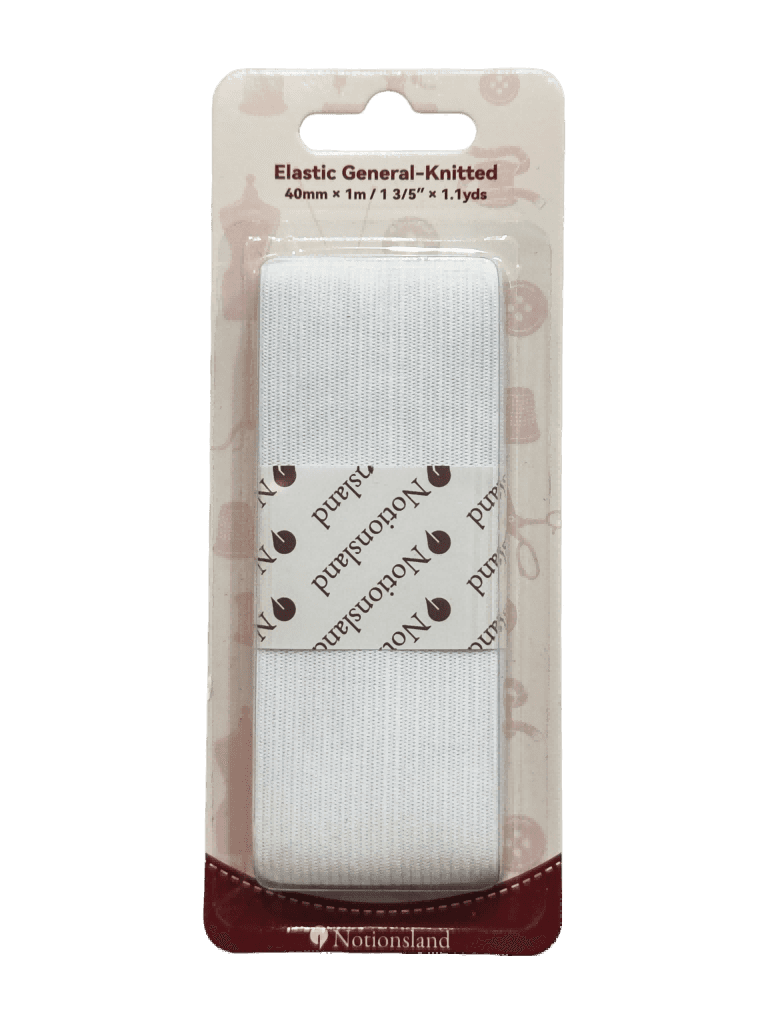
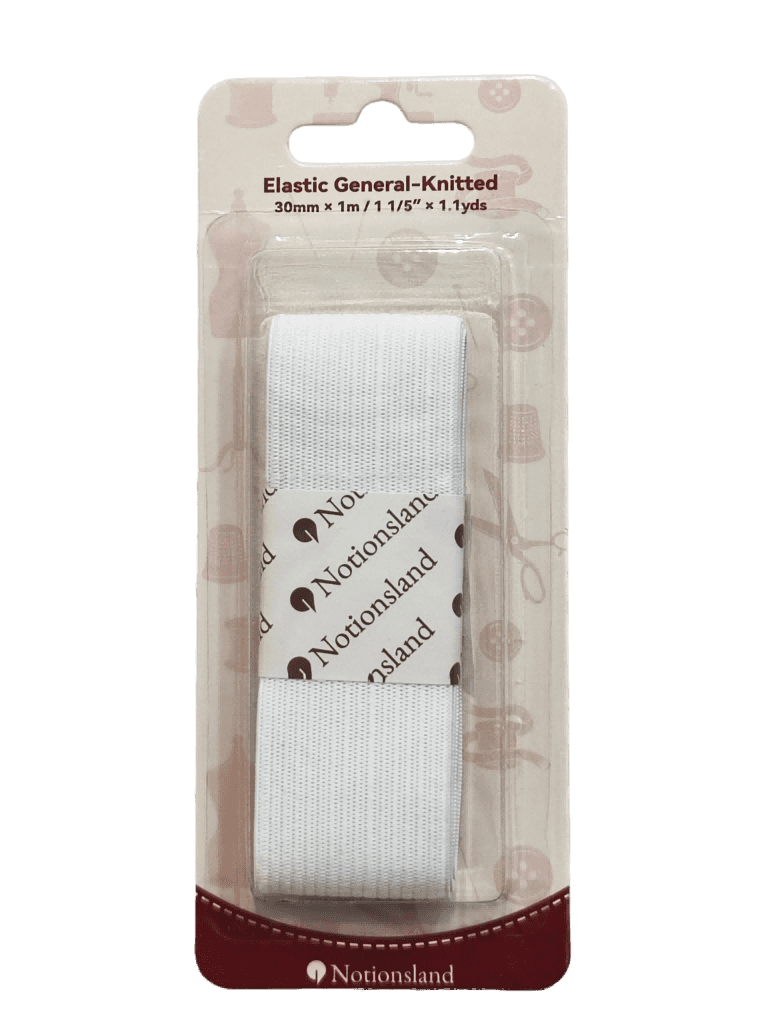
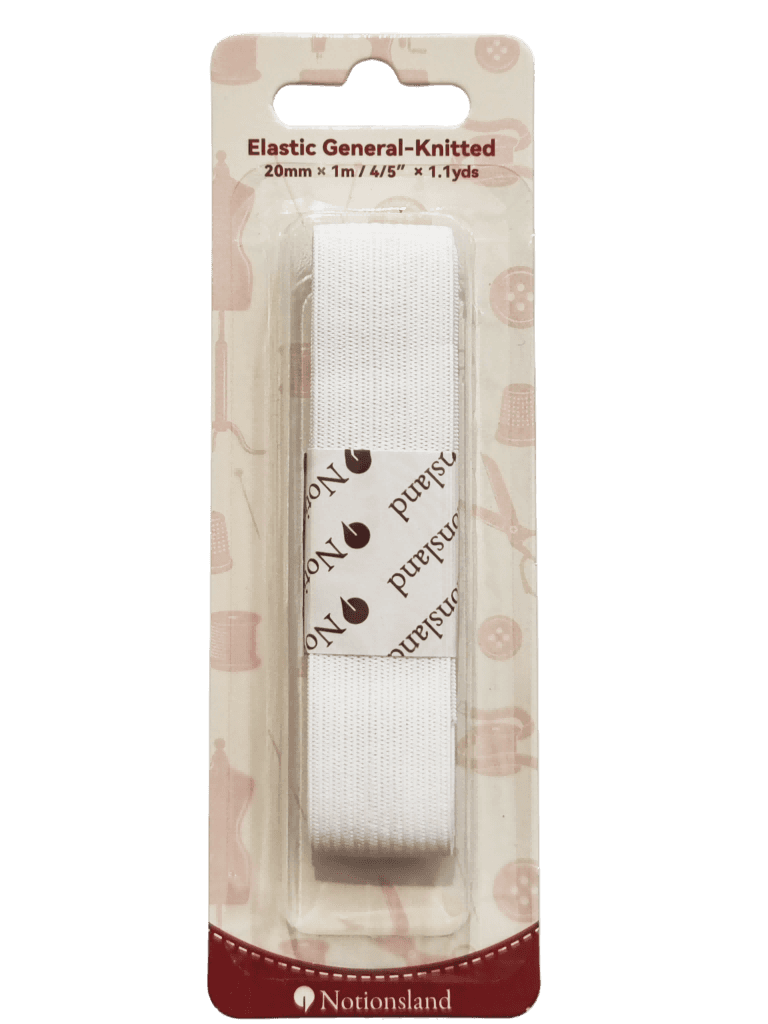
Narrow elastic components serve as the mechanical backbone for both automated industrial production and precision tailoring. Visible evaluation of packaged retail samples—such as general-purpose knitted bands packed in blister hanging cards measuring 20 mm in width by 1 meter in length (roughly 4/5 inch by 1.1 yards)—reveals a clean, regular knit surface engineered for uniform longitudinal stretch. The physical construction features longitudinal warp threads integrated with fine transverse loops holding the elastic core.
Unlike loose, open weaves that distort under needle penetration, a compact narrow band maintains structural consistency when handled, cut, and inserted into fabric channels. While retail-ready formats are typically banded with paper sleeves and encapsulated in protective plastic blister packaging, industrial apparel applications require these same structural attributes supplied on continuous rolls or spools to feed high-speed feed-up-the-arm sewing workstations.
Material Properties and Structural Options
Apparel lines require distinct elastic technologies depending on how the tension is applied to the human body. Garment developers must carefully balance knit, braided, and woven configurations to match fabric weights:
- Knitted Elastic: Features a loop structure that does not narrow significantly when stretched. It remains soft against the skin, making it well suited for lightweight sleepwear, casual waistlines, and projects where stitching directly through the elastic is required.
- Braided Elastic: Characterized by parallel ribs that narrow under tension, Braided Elastic for Waistbands & Underwear (The "Workhorse") provides heavy-duty snapback and high recovery inside enclosed fabric casings. Its dense construction resists rolling within tubular channels.
- Integrated Yarns: For seamless knitwear or high-gauge hosiery, heavy pre-woven bands are often replaced entirely by Knit-In Elastic Yarn for Socks & Cuffs (Specialty Fiber), which embeds elastomeric control directly into the circular knit machine feed rather than through cut-and-sew operations.
- Hardware & Sweatband Inserts: Specialized headwear and performance garments shift retention mechanics to composite trims, such as an Adjustable Hat Sweatband & Visor Insert (Functional Hardware), isolating elastic recovery to targeted fit zones rather than full circumference channels.
Application Scenarios Across Commercial Apparel
High-yield garment production demands predictability. Knitted and braided narrow fabrics dominate high-volume clothing categories because their mechanical behavior can be tuned through width selection and tensioning feeds:
In mid-weight loungewear, children's bottoms, and active shorts, a 20 mm profile creates a balanced contact area that distributes pressure evenly over the hip without pinching. In standard underwear casings, braided structures remain the primary choice because their structural firmness prevents the edge from twisting over itself during consumer use. Conversely, when designing athletic headwear or structured accessories, apparel engineers alternate between casing-fed bands and rigid-to-stretch assemblies, pairing foundational elastics with components like an Adjustable Hat Sweatband & Visor Insert (Functional Hardware) to balance sweat absorption with micro-adjustability.
Procurement Criteria: Evaluating Quality and Fit
When qualifying an elastic supplier for mass production, purchasing teams should resist the urge to evaluate solely on initial unit cost. Premature slackening or needle breakage on the factory floor quickly offsets minimal upfront savings. Strategic buyers evaluate three critical performance criteria during prototype sampling:
1. Needle Resistance and Run Resistance
High-speed multi-needle sewing machines punch through elastic bands at thousands of cycles per minute. Knitted elastics handle needle puncture without running along the length of the band, whereas braided structures must be properly contained within casings to prevent core elastomeric filaments from snapping when severed by ballpoint or sharp needles.
2. Modulus and Tension Profile
The modulus—the force required to extend the elastic to a predetermined percentage—must match the garment shell fabric. If the elastic modulus is too high, lightweight fabrics will pucker excessively; if too low, the garment slips down under its own weight. Seamless hosiery and cuffs navigate this balance by calibrating Knit-In Elastic Yarn for Socks & Cuffs (Specialty Fiber) directly on knitting machines, while cut-and-sew apparel relies strictly on accurate cut lengths of calibrated braided or knitted tape.
3. Laundering and Environmental Durability
Because fiber compositions, rubber chemistry, thermal limits, and specific stretch recovery percentages vary depending on the chemical blend used by different mills, procurement specifications must mandate accelerated wash-and-dry cycling tests. Verifying that the internal elastomer does not crack, become brittle, or degrade under typical laundering heat preserves long-term customer satisfaction.
Streamline Your Trim Supply Chain
Do not allow inconsistent narrow fabrics to undermine your brand's reputation for fit and durability. Whether you require standard 20 mm general-purpose knit bands, high-tenacity braided casing elastics, or specialized functional trims, standardizing your technical specifications across production facilities ensures uniform garment performance. Contact our technical sourcing team today to request structural material swatches, compare modulus profiles, and secure dependable narrow fabric inventory tailored to your production schedules.