
Knitted Elastic for Everyday Sewing, Repair, and Textile Finishing
A knitted elastic is a practical answer when a garment or textile project needs gentle stretch, secure hold, and a clean fitted edge. This general-purpose elastic tape helps solve common sewing problems such as waistbands that need to stay comfortable, cuffs that need structure, and DIY repairs that need quick reinforcement without adding bulk. For home sewing, alterations, and craft work, a knitted elastic can be a simple material choice that keeps projects wearable and neat.
Product Overview
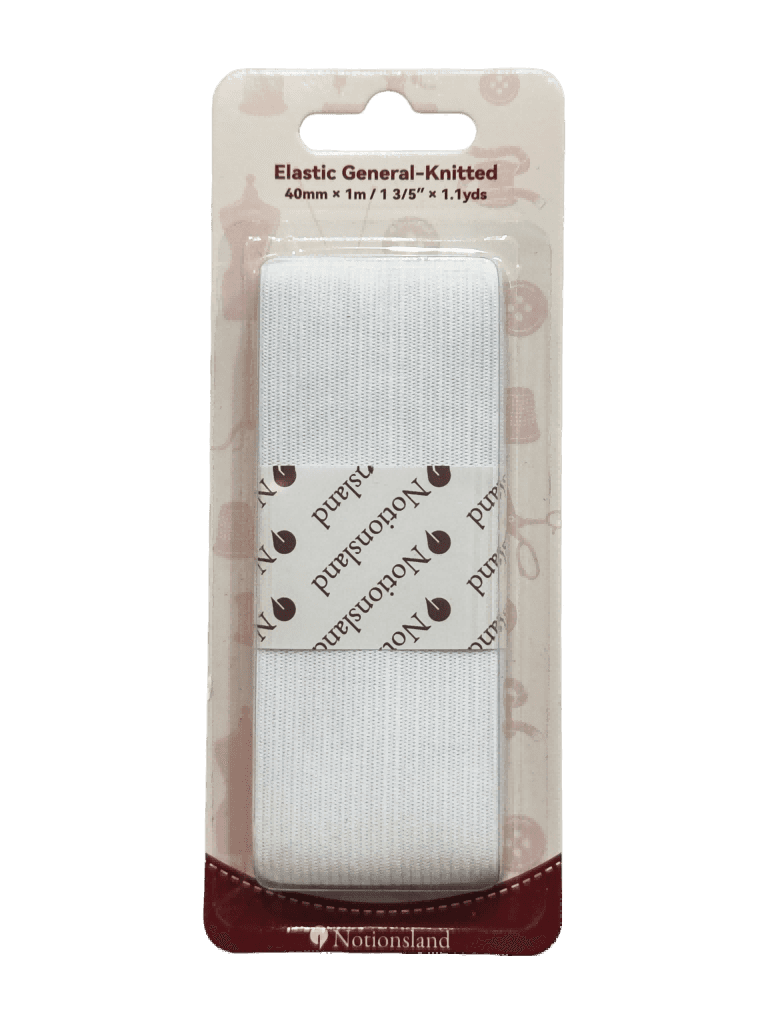
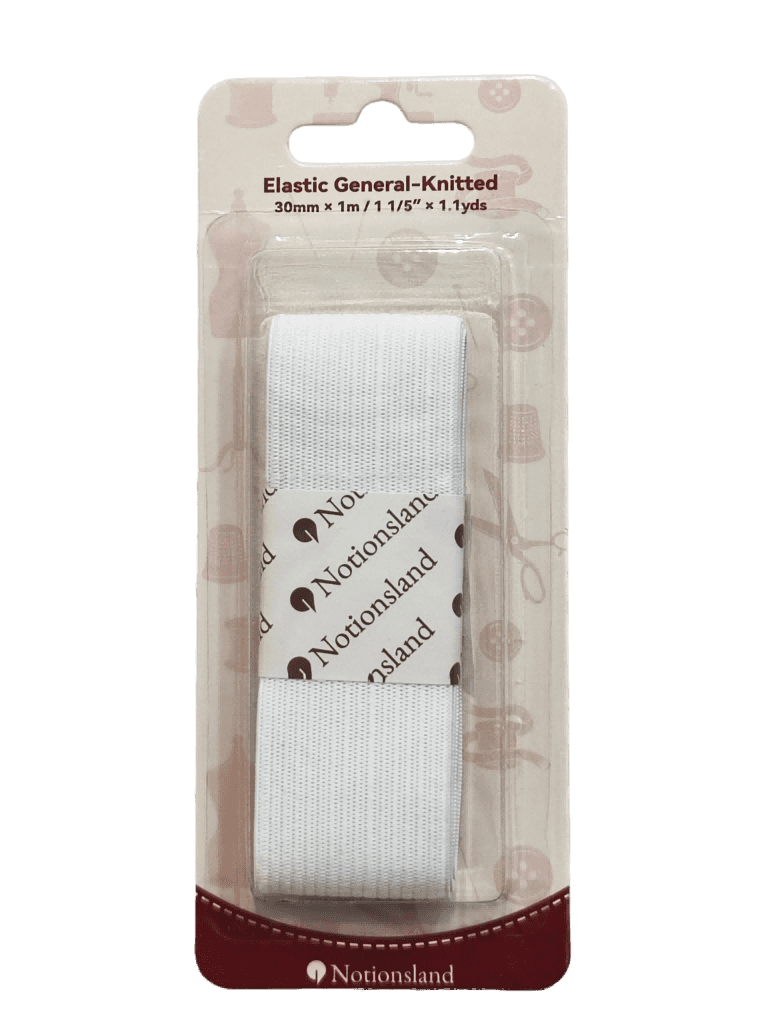
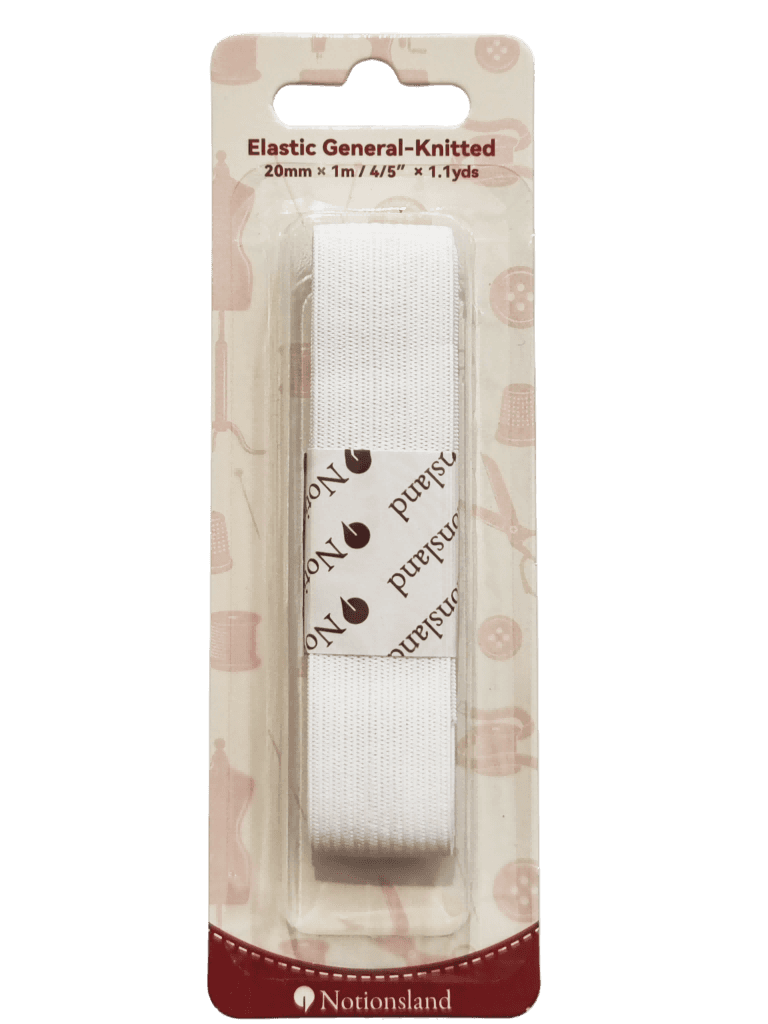
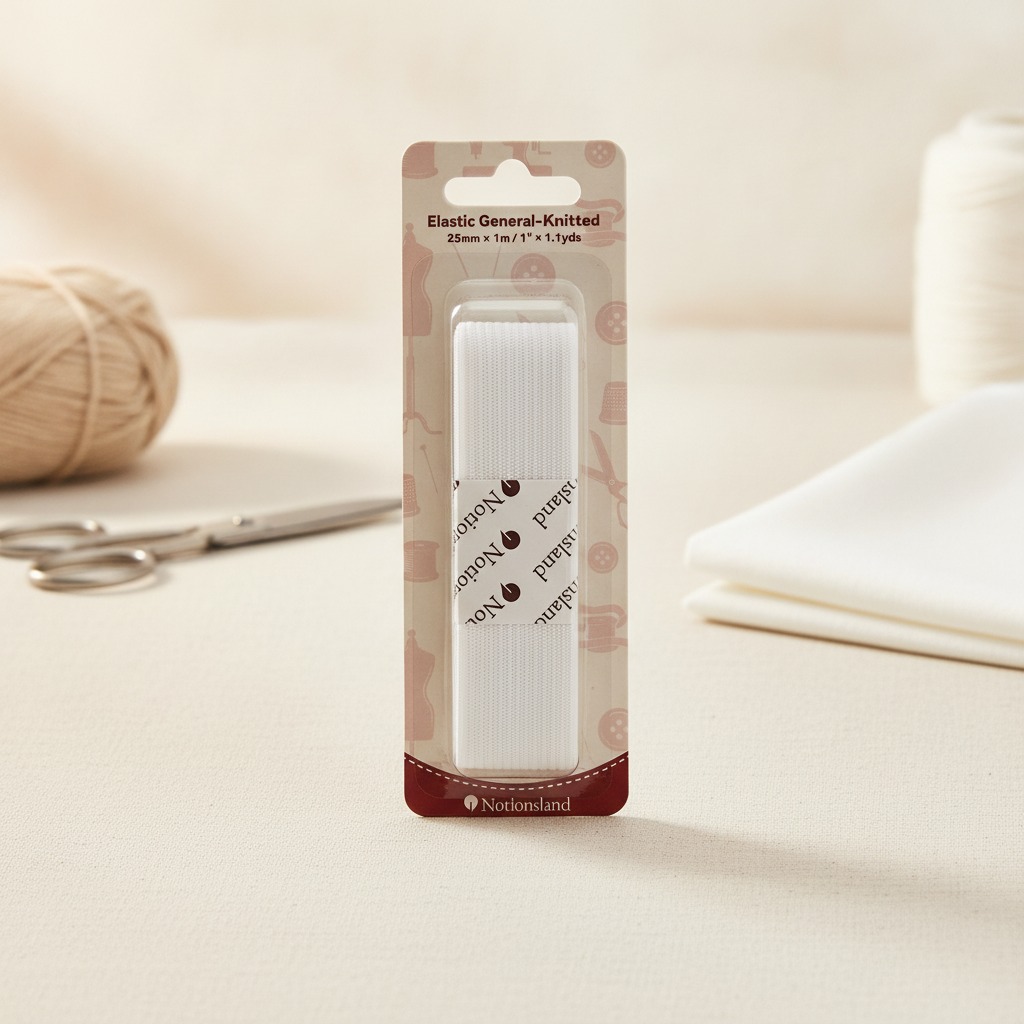
This white knitted elastic is a packaged general-purpose elastic tape designed for light-to-medium textile fastening tasks. The visible product information shows a 25 mm width and a 1 m length, with the packaging also marked as 1" x 1.1 yds. It is presented as a flat, ribbed or mesh-textured elastic webbing, folded on a retail card and sealed in a clear blister pack. The label reads “Elastic General-Knitted,” which fits the product’s broad everyday use profile.
Because it is a general use elastic, it works well as a flexible component rather than a specialized industrial part. Buyers looking for a straightforward sewing supply will appreciate the simple format, visible width, and ready-to-use packaging.
Key Specifications and Visible Capabilities
What can be verified from the pack
The main visible specifications are the white color, knitted construction, 25 mm width, and 1 m length. The elastic appears flat and easy to handle for cutting, stitching, and inserting into garments or textile accessories. Its knitted structure suggests a flexible, textile-based product that can be integrated into sewing projects without the stiffness of some heavier elastic types.
Practical handling benefits
For buyers, the most useful point is simplicity. A pre-packed length is convenient for small jobs, repairs, and sample work. It is also a sensible format for makers who need a modest amount of material instead of a large bulk roll. The white finish is versatile and can blend into many fabric colors or be concealed inside seams.
Materials and Finish Options
The exact fiber content is not visible, so it should be treated as a knitted elastic textile made from synthetic or blended fibers, without assuming a specific composition. The surface has a fine ribbed, mesh-like look typical of knitted elastic construction. No coating, print, or decorative finish is shown, which makes it suitable for hidden applications inside garments as well as visible craft uses where a plain look is preferred.
For sourcing teams comparing general use elastic products, plain white knitted elastic is often the most adaptable option because it can be used across multiple project types without color conflict or added surface texture.
Manufacturing and Construction
Knitted elastic is produced through a textile knitting process that forms stretchable loops and a flexible web structure. Compared with rigid tapes, this construction helps the material move with fabric and support gathered or fitted edges. The visible fold and coil packaging indicate a narrow tape format that is easy to measure, cut, and sew into place.
In practical sewing work, this type of construction is commonly chosen when the goal is balance: enough elasticity to assist fit, but still a manageable textile component for basic garment assembly and repair.
Common Application Scenarios
This product suits waistbands, cuffs, face masks, costume repair, hemming support, and DIY sewing projects. It is also useful for craft work where a secure stretch element is needed for bags, soft accessories, and textile finishing. As a general use elastic, it can support small runs, sample development, classroom sewing, and home mending.
For projects that need a plain white knitted elastic, the product offers a direct and uncomplicated solution. It is especially practical when the elastic will be hidden inside seams or used in light-duty fastening applications.
Quality Control and Buyer Decision Factors
When selecting knitted elastic, buyers should evaluate width, length, texture, and intended end use. A 25 mm width is suitable for many garment and repair tasks, while the 1 m length makes sense for smaller projects or testing before larger sourcing decisions. Buyers should also confirm how the elastic will be stitched into the fabric, since seam method and fabric weight can influence finished results.
Important quality points to verify in any procurement process include consistency of width, clean edge formation, and stable packaging that keeps the elastic tidy before use. Since exact stretch recovery, tensile strength, and wash performance are not provided here, those factors should be confirmed separately if the project depends on them.
Customization and Sourcing Guidance
If you are sourcing for repeated production, you may want to specify color, width, length, and packing style early in the purchasing process. This white knitted elastic is a straightforward base material, so it can be suitable for OEM sewing kits, retail haberdashery assortments, and small-batch repair supplies. For buyers comparing general use elastic options, the simplest choice is often the one that integrates cleanly across multiple product lines.
Why Choose This Knitted Elastic
For everyday textile work, knitted elastic offers a dependable combination of flexibility, ease of use, and broad application. It is not a specialty component with hidden claims; instead, it is a practical sewing supply that solves a common need: adding controlled stretch and secure retention to fabric assemblies. If your project calls for white knitted elastic in a compact, ready-to-use format, this product is a sensible fit.
Request Supply or Place an Inquiry
For purchasing, quotation, or project matching, contact your supplier with the required width, length, color, and packing format. If you need general use elastic for garment repair, crafting, or light textile manufacturing, this product is ready to be evaluated for your next order.