
Elastic General Knitted Wholesale for Sewing, Garment Making, and Repairs
When buyers search for elastic general knitted wholesale, they usually need one thing: a dependable stretch component that is easy to sew, comfortable in use, and suitable for everyday garment production or repair work. This type of knitted elastic band helps solve common problems in waistbands, cuffs, hems, masks, and DIY textile projects where fabric needs controlled give without losing shape. For factories, tailors, and sourcing teams, the value is not just stretch, but consistent handling on the sewing line and a format that can be stocked, cut, and applied efficiently.
Product Overview
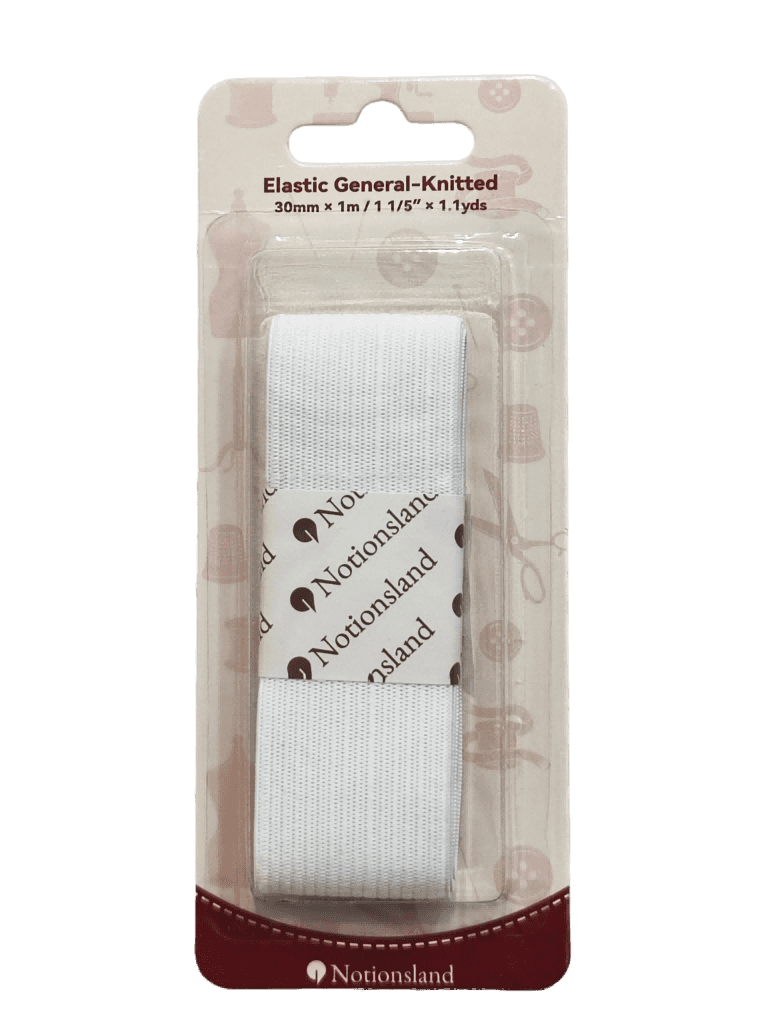
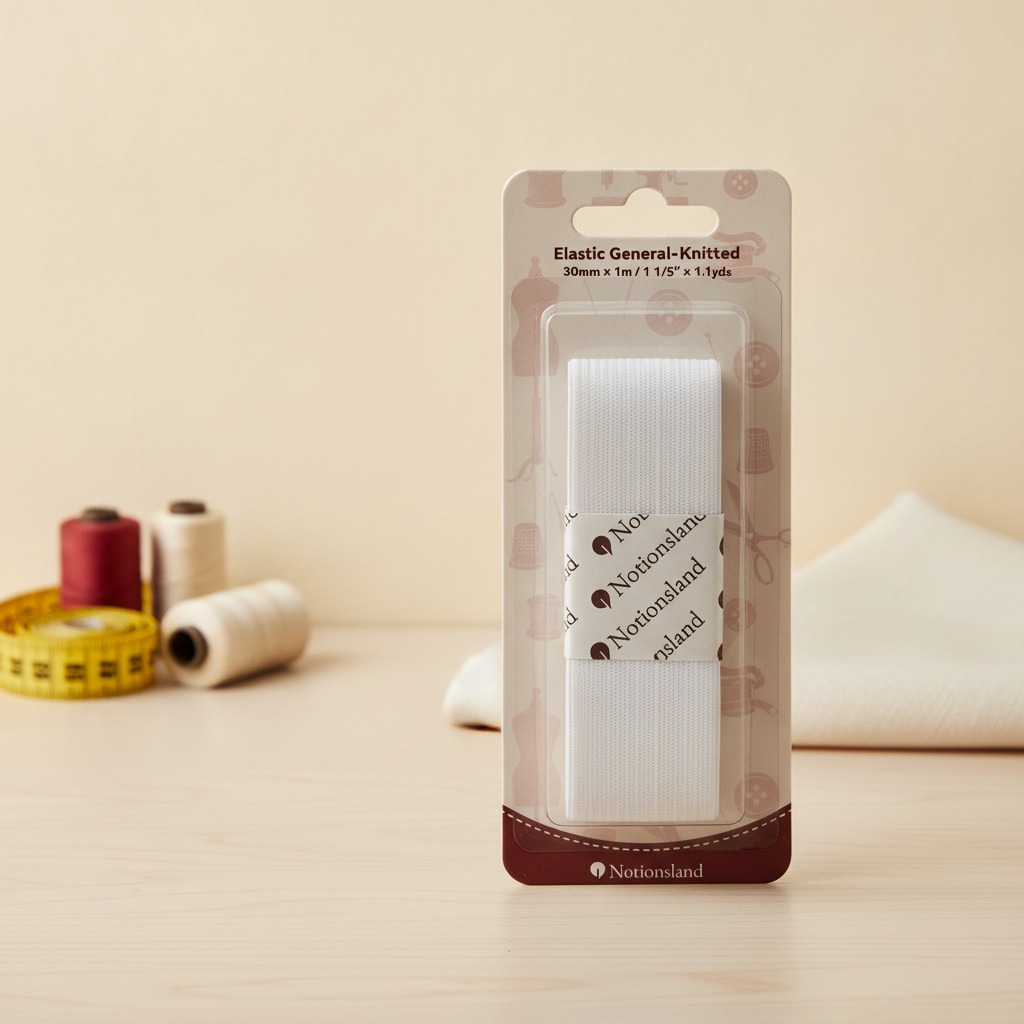
This product is a packaged knitted elastic trim for sewing and garment making. It appears as a white, flat elastic band with a fine ribbed or mesh-like knitted structure. The visible width on the package is 30 mm, and the retail pack shown contains 1 m of material. The strip form makes it practical for sewn-in applications, while the compact roll packaging keeps the product easy to store and distribute.
As a knitted elastic band wholesale item, this category is especially relevant for apparel production, repair departments, craft retailers, and sourcing buyers who want a general-purpose elastic solution rather than a highly specialized industrial component.
Key Specifications and Visible Features
What can be confirmed from the product information
Several details are visible and reliable: the elastic is white, knitted, flat, and 30 mm wide. The package lists a length of 1 m, which is useful for small projects, sample making, and replacement work. The surface looks smooth with a structured knit pattern, which typically supports flexibility and sewing performance in garment assembly.
What buyers should verify for bulk use
For wholesale purchasing, teams should confirm the exact fiber blend, stretch recovery, thickness, and wash behavior before committing to large production runs. Those factors are not visible from the packaging image and should be requested from the supplier when the application is sensitive, such as children’s wear, frequent-laundering products, or regulated textile programs.
Material and Construction
The visible construction suggests a knitted elastic webbing made from elastic yarns on a knitting machine. That type of structure is common because it gives the band a flexible feel, a softer edge than some woven elastics, and easy integration into sewn seams. The rectangular strip shape also supports straightforward cutting, stitching, and insertion into garment channels.
Because the exact fiber composition is not provided, it is best to treat this as a general sewing elastic rather than assuming a specific polymer content or compliance profile. Buyers who need latex-free material, special skin-contact properties, or industrial testing should ask for written confirmation.
Typical Manufacturing and Handling Benefits
Knitted elastic is generally produced through a controlled knitting process that forms interlooped yarn structures. For users, that translates into a product that can be easier to manipulate during sewing compared with bulkier or stiffer elastic types. The flat profile helps with edge alignment, and the narrow enough-to-medium width of 30 mm gives enough holding area for waist applications without creating excessive bulk.
In production settings, this matters because operators need elastic that feeds evenly, sits flat under the presser foot, and integrates cleanly into garment seams. That is one reason buyers looking for elastic general knitted wholesale supply often prioritize stable strip geometry and practical packaging.
Application Scenarios
This product suits a broad range of textile uses. Common applications include replacement waist elastic in trousers and skirts, cuffs on casual wear, hems that need gentle tension, mask construction, fabric accessories, and general tailoring repairs. It also works well for DIY items where stretch retention and neat appearance matter more than heavy-duty load performance.
For small workshops and sample rooms, the 1 m pack is convenient. For larger production, the same product type can be sourced in bulk to support repeat use across multiple styles. Buyers searching for a reliable sewing elastic supplier often want exactly this kind of everyday versatility.
Quality Control and Buying Considerations
Before selecting a source, review width tolerance, color consistency, roll length accuracy, and packaging condition. For garment programs, it is also wise to test stitching behavior, seam comfort, and recovery after repeated use. If the elastic will be exposed to washing, sunlight, or frequent stretch cycles, ask the supplier for relevant performance data rather than relying on appearance alone.
Procurement teams should also clarify whether the elastic is intended for direct-to-consumer retail packaging or factory bulk supply. That affects carton packing, labeling, and inventory handling.
Customization Guidance for Bulk Buyers
When requesting custom supply, buyers may ask about width options, cut lengths, packaging style, branding, and color matching. For brands and distributors, private-label packaging can help align the product with retail assortments. For manufacturers, coil format or larger rolls may be more efficient than small packs. If your line requires a specific hand feel or stretch level, describe the end use in detail so the supplier can match the suitable knitted construction.
Why This Product Makes Sense for Sourcing Teams
If you need a practical, general-purpose elastic that can move from repairs to garment assembly without complication, this category is a sensible choice. It offers a familiar format, visible 30 mm width, and easy sewing use. For buyers comparing options across the knitted elastic band wholesale market, the key advantage is balance: enough structure for everyday apparel work, but enough flexibility for broad textile applications.
Request Supply Information
If you are evaluating bulk purchasing, ask for material details, sample availability, packing options, and production-format recommendations based on your application. A good sewing elastic supplier should be able to help you choose the right width, package size, and order structure for your project. Contact the supplier with your target use, and confirm the technical details before placing volume orders.