
An amigurumi stuffing density test should compare controlled fill levels in production-equivalent crochet shells, then measure shape, firmness, weight, seam stress and recovery. “Firm” or “soft” is not a complete specification. Buyers need an approved filling range and a repeatable method that produces the intended character without distorting stitches or overloading attachments.
Define what the stuffed form must achieve
List the product's critical shape and feel requirements before adding filling. A display figure may need a stable upright pose and crisp silhouette. A soft gift item may need comfortable compression. A head must support facial alignment, while a narrow limb may need enough filling to avoid collapse without becoming rigid. Different zones can require different density targets.
Mark visual landmarks on the approved sample: overall height and width, head roundness, muzzle projection, body depth, limb diameter and base stability. Record how the product should respond to a gentle squeeze. Avoid vague language that allows each operator to interpret the character differently.
- Target dimensions and silhouette.
- Critical facial and attachment alignment.
- Required softness or resistance by zone.
- Standing, sitting or hanging behavior.
- Recovery after normal packing and handling.
Freeze the crochet shell and filling material
Stuffing results depend on the shell. Yarn thickness, stitch density, hook size, pattern dimensions and seam construction determine how filling pressure appears at the surface. Use shells made to the approved specification and measure them before filling. A looser shell may expand farther or reveal filling through stitch gaps.
Use the proposed production fill. Fiber type, crimp, staple structure, recycled content, moisture and storage compression can change loft and resilience. Condition samples consistently and break apart compressed clumps using a defined method. If a supplier proposes another filling, treat it as a material change rather than matching only the nominal weight.
Create a stuffing ladder by zone
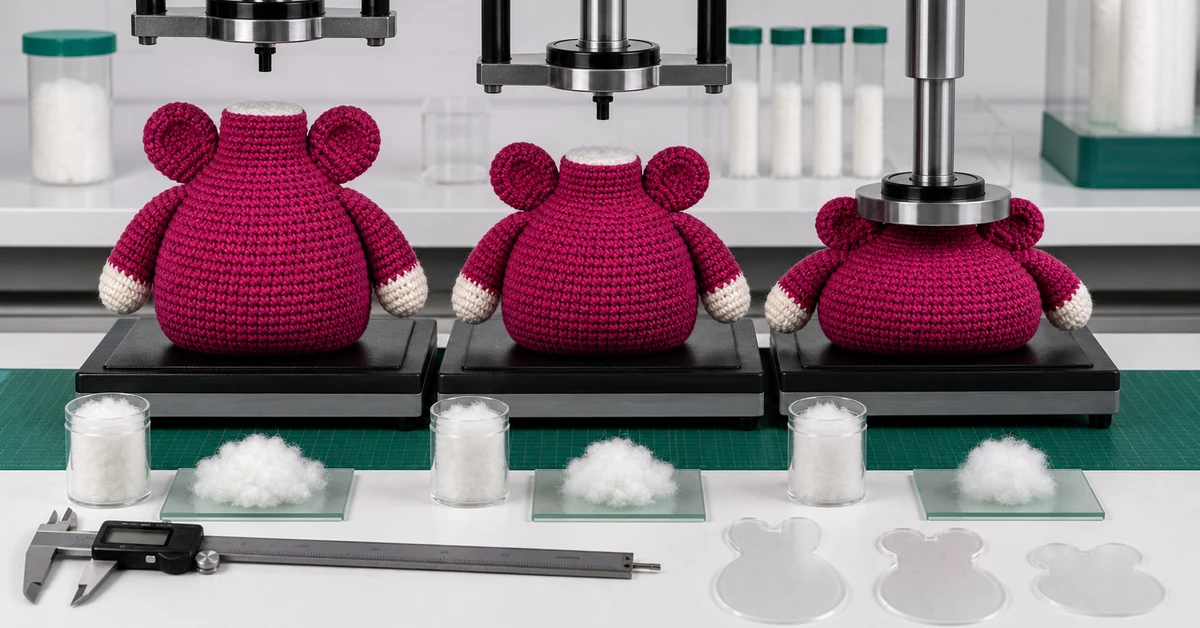
Prepare at least three fill levels around the current estimate: low, target and high. Weigh material before insertion and record the net amount placed in each zone. Do not repeatedly remove and add filling to the same shell when that process can stretch stitches or change fiber distribution. Comparable separate samples give cleaner evidence.
Use a defined insertion sequence. Small portions distributed gradually behave differently from one dense plug. Record whether operators tear, roll or layer the fill and which tool is used to reach narrow areas. The ladder should change one main variable at a time so the team can connect the result to fill amount.
| Ladder level | Expected question | Evidence to capture |
|---|---|---|
| Low fill | Where does shape collapse first? | Wrinkles, pose and dimensions |
| Target estimate | Does the form match the approved sample? | Landmarks, feel and weight |
| High fill | Where does pressure create defects? | Stitch gaps, seam stress and distortion |
| Zone variation | Do head and body need different ranges? | Local firmness and alignment |
Measure dimensions without reshaping the sample
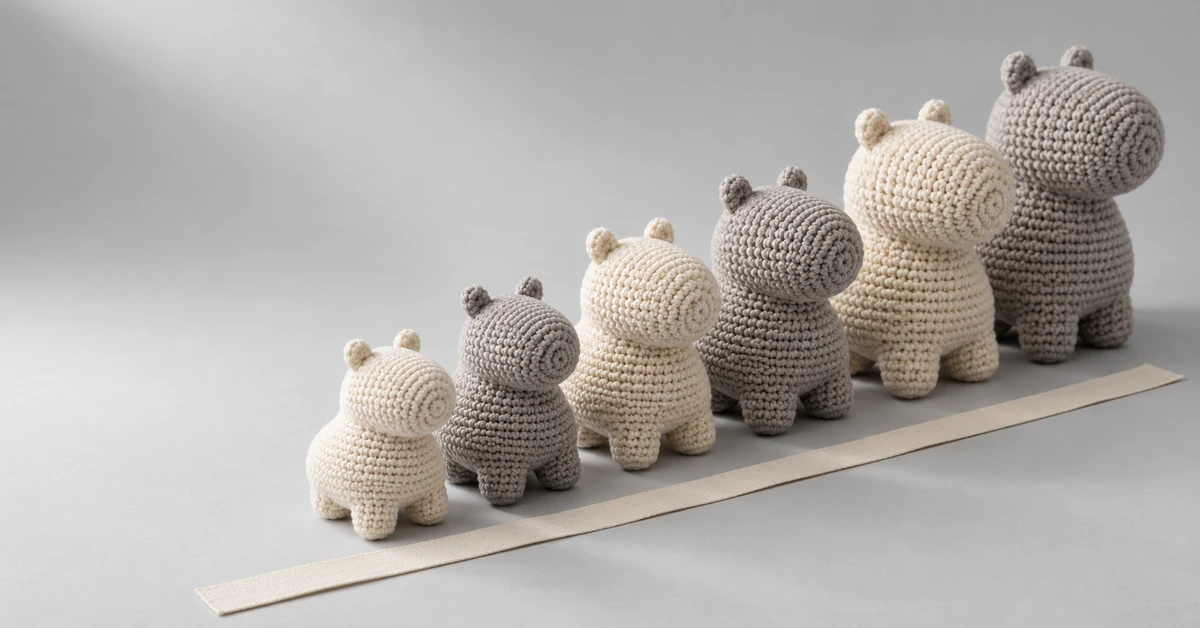
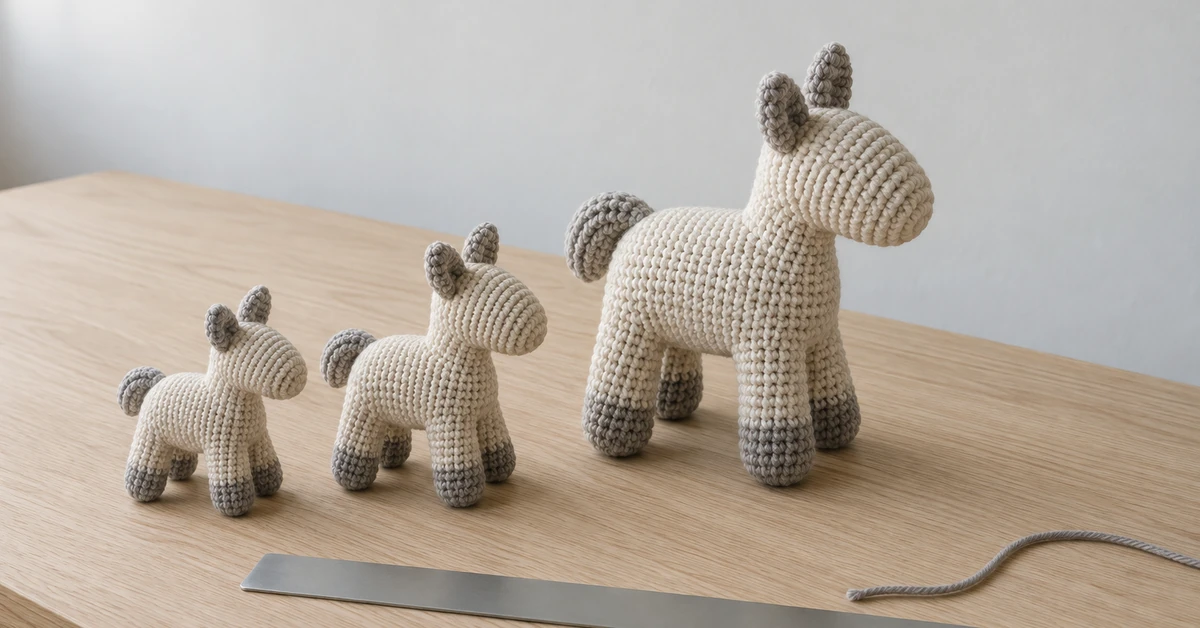
Let filled samples rest for a defined time, then measure the same landmarks using one orientation and light contact. Avoid squeezing the product into the desired size before recording. Photograph front, side, rear and top views against a simple reference grid or silhouette.
Compare dimensions with shape quality. Two samples can share the same height while one has a flattened side or shifted muzzle. Use ratios or landmark distances for important proportions. When handmade variation is expected, define an acceptable range rather than forcing false precision.
- Condition filled samples for the same period.
- Place them in the approved natural pose.
- Measure named landmarks with light contact.
- Photograph all required views.
- Compare proportion, symmetry and surface appearance.
Build a practical firmness curve
Firmness can be compared with a controlled compression method. Apply the same platen size, displacement or load at a defined landmark and record the response. If specialized equipment is unavailable, use a simple fixture with controlled travel and repeatable placement. Hand squeezing alone is useful for user feedback but weak for production comparison.
Plot fill mass against compression response. The useful range may show a stable shape without a sharp rise in stiffness. Beyond that point, added fill can increase seam pressure more than it improves appearance. Record recovery after the load is removed; slow or incomplete return may signal uneven distribution or unsuitable filling.
| Observation | Underfilled signal | Overfilled signal |
|---|---|---|
| Surface | Wrinkles and hollow areas | Stretched gaps and visible fill |
| Shape | Collapsed profile | Distorted proportions |
| Feel | Uneven or empty pockets | Hard, springy or lumpy zones |
| Recovery | Form folds and stays low | Pressure shifts fill abruptly |
| Construction | Attachments lack support | Seams and stitches are overloaded |
Inspect seams, stitches and attachments
Review the shell under normal and slightly stressed poses. Look for widened stitch openings, filling migration, seam distortion and concentrated pressure behind eyes, noses, frames or internal supports. A smooth outer silhouette does not prove that internal loads are acceptable.
Check how filling is retained at closures and narrow joins. If a limb is attached after stuffing, the amount and distribution can affect assembly access. Confirm that safety-relevant components and market requirements are addressed through the appropriate product testing; a density study does not replace required safety assessment.
- Stitch gaps at maximum curvature.
- Closure and assembly seam loading.
- Pressure behind eyes, noses and accessories.
- Filling movement into limbs or joints.
- Surface abrasion caused by internal hard parts.
Test handling and packaging recovery
Drop, rest, squeeze and pack the approved candidates in the way customers and logistics partners will handle them. A low-density sample may feel pleasant but lose its pose after packing. A high-density sample may recover quickly but transmit pressure to seams or deform the carton. Evaluate the full product and package system.
Measure shape immediately after unpacking and at defined intervals. Do not massage samples before the first observation. If a light customer reshaping step is acceptable, test it separately and include clear instructions. The filling range should support the desired unboxing condition, not only a factory inspection table.
Run a blinded touch comparison
Ask target users or product reviewers to handle coded samples without knowing their fill weights. Capture perceived softness, quality, stability and comfort separately. Avoid asking which is best without defining the product purpose. A firmer sample may feel more premium for a structured figure and less suitable for a cuddle-oriented item.
Combine subjective results with measurements. If reviewers prefer a sample that creates stitch gaps, the team must change the shell, material or product target rather than accept a hidden construction risk. Document tradeoffs and choose the range that satisfies the complete specification.
| Review dimension | Question | Why it matters |
|---|---|---|
| First touch | Does the product feel intentional? | Reveals lumps and empty zones |
| Pose | Does it stand or sit as promised? | Connects feel to function |
| Shape | Are landmarks balanced? | Protects character identity |
| Recovery | Does it regain form after handling? | Supports retail presentation |
Turn the result into a production fill standard
This is where the amigurumi stuffing density test becomes a manufacturing control. Specify net fill mass or range by zone, filling method, distribution sequence, sample photographs, critical dimensions and a practical firmness check. A total product weight alone can hide incorrect distribution between head, body and limbs.
Define scale resolution, sampling frequency and response to an out-of-range result. Retain approved physical samples under suitable storage. If operators use judgment to finish the form, train them against the reference and confirm repeatability across shifts. A narrow numerical target is not useful if the process cannot distribute fill consistently.
- Approved filling identity and condition.
- Net amount or range for each zone.
- Insertion and distribution method.
- Dimension, appearance and firmness checks.
- Substitution and reapproval triggers.
Challenge the standard with variation
Test shells at the allowed size and stitch-density limits. The same fill weight may overstretch a smaller shell and leave a larger one soft. Compare filling lots with different loft and recovery. Evaluate first pieces, mid-run samples and products after realistic storage of compressed bulk filling.
Reapprove after changes to yarn, hook, pattern, shell size, filling, attachments, seams, packaging or target feel. Small changes can interact. A stronger yarn may allow more pressure but alter surface appearance; a larger eye component may create a local hard point.
Where Onehourcrafts fits
The Onehourcrafts amigurumi manufacturing page describes custom yarns, sizes, accessories and packaging. Buyers can provide an amigurumi stuffing density test plan with target landmarks and coded firmness samples rather than approving shape from photographs alone.
Connect the filling study with the amigurumi size specification guide, quality scorecard, packaging compression test and crochet sampling process. Send the design, approved shell, desired feel, package concept and order assumptions through the contact page. Final product safety and market requirements need separate written confirmation.
Frequently asked questions
Is stuffing weight enough to control firmness?
No. Shell size, filling loft and distribution affect the result. Control material, amount, zone placement, dimensions and a repeatable firmness or recovery check.
Should the head and body use the same density?
Not necessarily. The head may need facial support while the body may need a softer feel or stable base. Approve zone-specific ranges when the product function requires them.
How many fill levels should be prototyped?
Use at least a low, target and high ladder around the current estimate. Add zone variations when different parts have distinct shape or handling requirements.
Can hand squeezing be used for quality control?
It can support trained comparison with retained samples, but a controlled compression or dimensional check improves repeatability and helps resolve disagreements.
What changes require density reapproval?
Recheck after changes to the shell, yarn, hook, pattern, filling material, attachments, seam construction, packaging or intended product feel.