
A camping sewing repair kit should be specified from credible field failures rather than an attractive count of tiny tools. A torn pocket, separating bag seam, and split clothing hem demand different access, needle, thread, grip, and time. Test the kit in those situations, with cold or tired hands and limited light, while keeping a firm boundary around damage that requires professional repair or replacement.
Start with the failure, not the component list
Write down what the kit is intended to restore: containment, modest warmth, comfort, or temporary function. Then state what is outside scope. A compact sewing set is not evidence that a customer can safely repair climbing equipment, personal protective equipment, load-bearing systems, inflatable safety devices, or other critical gear.
For each approved scenario, record material thickness, seam access, expected stress, weather, available time, and whether the result is temporary or durable. This turns vague "outdoor use" language into a testable brief.
| Field failure | Immediate goal | Do not imply |
|---|---|---|
| Torn clothing hem | Stop unraveling and restore coverage | Original waterproof performance |
| Open pocket seam | Contain light personal items | Load-bearing strength |
| Small gear-bag seam split | Prevent contents from escaping | Suitability for safety-critical loads |
| Damaged critical equipment | Isolate and follow maker guidance | Field sewing as a safe repair |
Incident one: a pocket seam opens
Imagine a jacket pocket opening along an accessible seam while carrying keys or snacks. The user needs to find a needle, choose a visible thread, anchor it, close a short gap, and secure the end without emptying the entire kit into dirt. This scenario tests access and basic control more than maximum material strength.
- Open the kit while wearing the intended hand protection.
- Identify a suitable needle and thread without a color chart.
- Thread, knot, and close a measured opening.
- Apply a modest contents load appropriate to the pocket.
- Store the used needle and remaining thread safely.
Incident two: a utility bag seam separates
A bag creates thicker layers and less convenient access. Use a non-critical utility pouch or gear organizer as the test article, not protective or life-support equipment. Check whether the needle can penetrate the layers under hand force, whether the eye accepts the stronger thread, and whether the supplied grip aid controls the needle without slipping.
Record the maximum sample construction that the kit can reasonably address. "Heavy duty" is too broad unless defined. A tool that handles two layers of woven nylon may not handle webbing, coated composites, foam-backed seams, or structurally loaded attachments.
Incident three: a clothing tear keeps spreading
A tear away from an original seam tests stabilization. Use scrap garments or controlled panels and define whether the method is a simple edge closure, a patch, or a temporary tack. Observe fabric puckering, new puncture damage, thread pull-through, and the size of the result.
If patches are included, specify the fabrics, surface preparation, temperature range, cure time, and limits supported by the patch provider. Sewing and adhesive repair are separate systems; one should not be presented as proof for the other.
Put a visible stop sign around critical gear
Instructions should tell users to follow the original equipment manufacturer's inspection, repair, retirement, and replacement guidance for safety-critical products. Do not suggest that a few stitches restore certified performance, rated strength, fire resistance, waterproofness, or protective function.
- Do not field-repair climbing ropes, harnesses, or load-bearing attachments with a general sewing kit.
- Do not claim restoration of protective clothing or equipment ratings without appropriate evidence.
- Do not sew an inflated item or work near stored pressure.
- Isolate damaged critical equipment and consult its manufacturer or a qualified service provider.
Build a needle-to-material matrix
More needle sizes can create choice without guidance. Give each included needle a job and test it on the maximum intended layer stack. Note length, eye clearance, point type, shaft strength, corrosion protection, and the grip needed to pull it through.
| Needle role | Representative task | Test observation |
|---|---|---|
| Fine repair | Light woven clothing seam | Hole size and fabric damage |
| General repair | Medium garment or pocket | Thread fit and hand control |
| Robust utility | Approved bag material stack | Penetration and permanent bend |
| Blunt accessory | Loose knit or yarn work | Ability to pass without splitting |
The pre-threaded needle teardown shows how eye finish, thread length, retention, and pack order affect seemingly simple tools. Apply the same level of scrutiny to each field needle.
Match thread to the repair promise
Test thread for handling, knot security, abrasion in the target fabric, color transfer where relevant, and storage aging. Stronger is not automatically better: a very strong thread can cut into a lighter fabric or move failure to the surrounding material. State fiber content and performance claims accurately.
The FTC provides official information on the Textile Fiber Products Identification Act and the related Textile Fiber Rule. Their applicability depends on the product and claims; seek qualified guidance for labeling and destination requirements.
Make small tools usable in poor conditions
Compact scissors, a threader, pins, buttons, safety pins, and grip aids can be useful only if users can locate and operate them. Test with low but safe lighting, dry gloves appropriate to the use case, and a table that is not perfectly level. Never ask testers to handle sharps while walking, in unsafe weather, or without stable visibility.
- Use high-contrast tool positions or labels.
- Retain sharp items individually.
- Provide a clear temporary place for a threaded needle.
- Make the threader replaceable if it is a likely wear item.
- Avoid accessories included only to inflate piece count.
Time the repair from closed pack to repacked kit
A stopwatch can reveal navigation problems, but speed is not the only outcome. Divide the trial into locate, open, choose, thread, repair, secure, and repack stages. Record dropped pieces, unsafe handling, instruction lookups, and whether anything no longer fits after use.
For bulk travel sewing kits, repeat the timed trial across multiple units and production positions. A presentation sample may be arranged perfectly while ordinary packs vary in thread lengths, tool location, or compartment tension.
Design storage for moisture and motion
Outdoor packing exposes the kit to vibration, pressure, temperature changes, and possible moisture. Specify a closure that does not open inside luggage and retain needles so they cannot migrate. Materials described as corrosion resistant still need realistic storage checks.
Condition packed samples in relevant environments, return them to normal conditions, then inspect metal finish, thread odor or discoloration, adhesives, plastic deformation, labels, and tool function. The craft kit storage stability test offers a record structure for comparing fresh and conditioned samples.
Balance size against retrieval
A smaller case can disappear into a pack pocket, but excessive density makes tools hard to remove and encourages the user to dump everything out. Measure closed dimensions and weight, then test removal of the smallest item with ordinary hands and gloves.
| Design choice | Space benefit | Retrieval risk |
|---|---|---|
| Stacked needles | Very compact | Unclear size and exposed points |
| Tight elastic loops | Secure in motion | Difficult removal with cold hands |
| Loose notions pocket | Flexible packing | Mixing and dropped parts |
| Folded thread cards | Thin profile | Tangling after first use |
Write instructions as triage
Begin with the decision: stop using critical damaged gear, move to a stable place, identify the material and load, and choose only an in-scope temporary or ordinary repair. Then show threading, a few appropriate stitches, knotting, patch use if supplied, and safe tool storage.
A pocket-sized decision table can outperform a dense technique booklet. Link each scenario to a needle and thread position in the case. Use diagrams tested at final print size and keep warnings adjacent to the actions they qualify.
Inspect the kit as a controlled inventory
Define each tool and consumable by code, dimensions, material, count, position, and acceptable variation. Verify sharp retention, scissors function, thread lengths, button and pin counts, closure, labels, and finished weight. The missing-parts prevention guide provides methods for pack-out controls and reconciliation.
A sewing repair kit supplier should also show how counts are controlled during assembly and how a missing or incorrect sharp component is contained, investigated, and prevented from reaching later packs.
- Count incoming components before kitting.
- Use fixtures or visual standards for every pack position.
- Control leftovers and shortages at the assembly station.
- Inspect sealed units from across the run.
- Retain an approved kit and traceable lot records.
Keep emergency language proportional
When evaluating an emergency sewing kit manufacturer, ask what emergency means in the marketing context. A sewing set can help with inconvenience and some non-critical fabric failures, but it is not a medical device, rescue system, or substitute for proper equipment maintenance.
The CPSC's art and craft safety guide is an official starting point for tool and material considerations. Product classification, warnings, claims, age grading, and market requirements still need review for the actual finished item.
How Onehourcrafts builds a field-scenario brief
Onehourcrafts can map approved repair scenarios to needles, threads, small tools, storage positions, pack checks, and instruction decisions. A useful camping sewing repair kit inquiry states the intended user, in-scope materials, explicit exclusions, target case size, markets, quantity, branding, trial conditions, inspection needs, and claims that require support.
Frequently asked questions
What repairs should an outdoor sewing kit handle?
Define ordinary non-critical scenarios such as selected clothing, pocket, or utility-bag seams. Validate each material stack and state the limits clearly.
Can it repair a tent?
Tents use varied coated fabrics, seam systems, structures, and waterproofing. Follow the tent manufacturer's guidance and do not promise restored performance from a generic sewing set.
Should heavy thread always be included?
Only when it matches an approved needle and material scenario. Thread that is too heavy can be difficult to handle or damage lighter fabric.
Are pre-threaded needles useful outdoors?
They can reduce setup time, but storage, tangling, color choice, thread aging, needle retention, and safe access still require testing.
How can metal tools be protected from moisture?
Use suitable materials, finishes, packaging, and storage guidance, then verify with relevant conditioning and functional inspection. Avoid unsupported rustproof claims.
Why include a thimble or grip aid?
It may improve controlled force on thicker approved materials, but fit and usability vary. Test the actual aid with representative users and layers.
What is the best case shape?
The best shape fits the intended carry location, stays closed in motion, exposes tools in a stable order, and accepts used materials without forcing.
How should sharp items be counted?
Give each one a defined retention position, inspect before sealing, recount samples after transport testing, and provide a safe return location for the user.
Can a repair be called permanent?
Only with evidence for the stated material, method, stress, environment, and use. Temporary or field repair is often the more accurate description.
What should buyers request before ordering?
Request a complete production-equivalent sample, bill of materials, dimensions, claims evidence, labeling review, inspection criteria, case pack, lead time, and field-trial record.
Approve the scenarios the kit can honestly solve
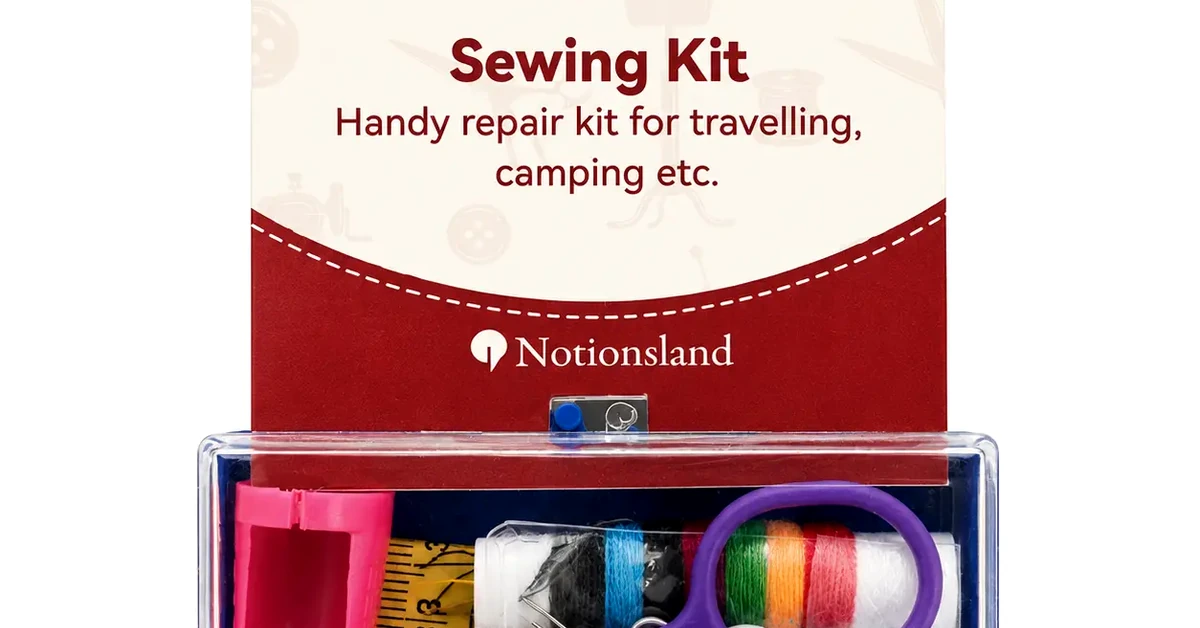
Choose a camping sewing repair kit when defined non-critical failures can be addressed with the supplied system, small tools remain secure and retrievable, conditioned samples still function, instructions state firm limits, and the pack can be used and closed again without losing control of its contents.