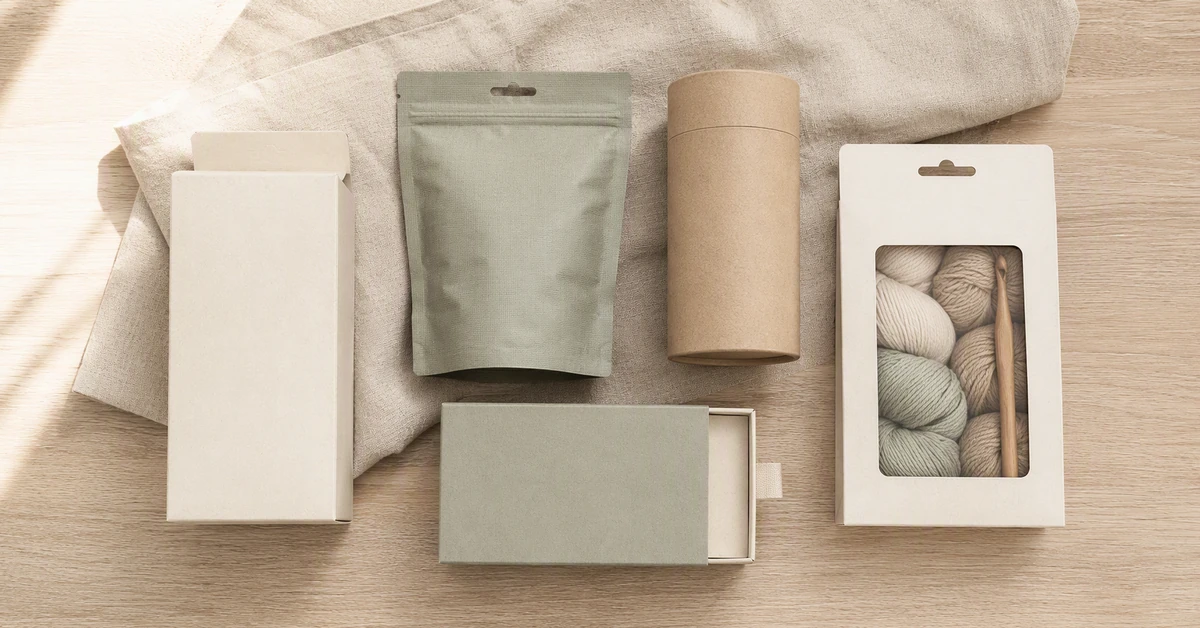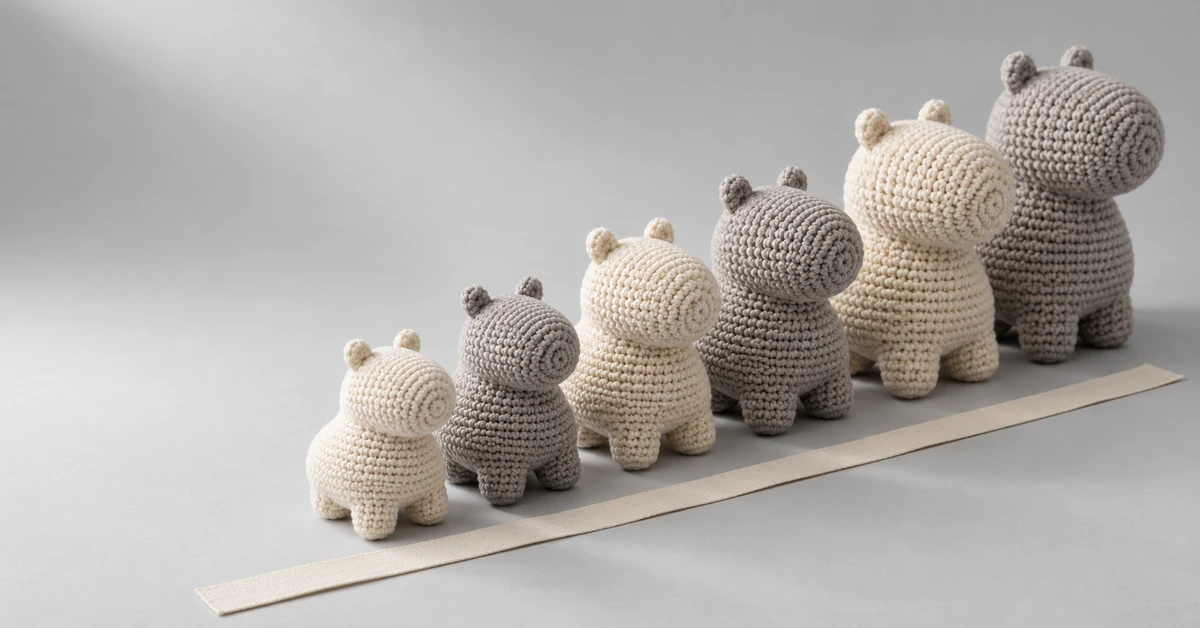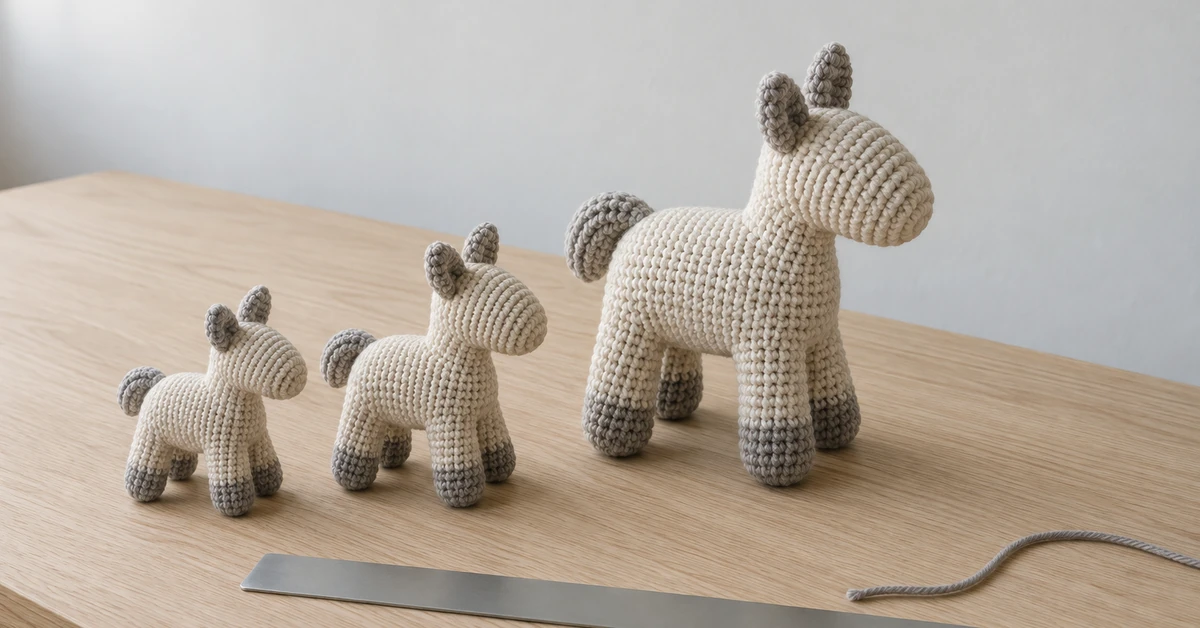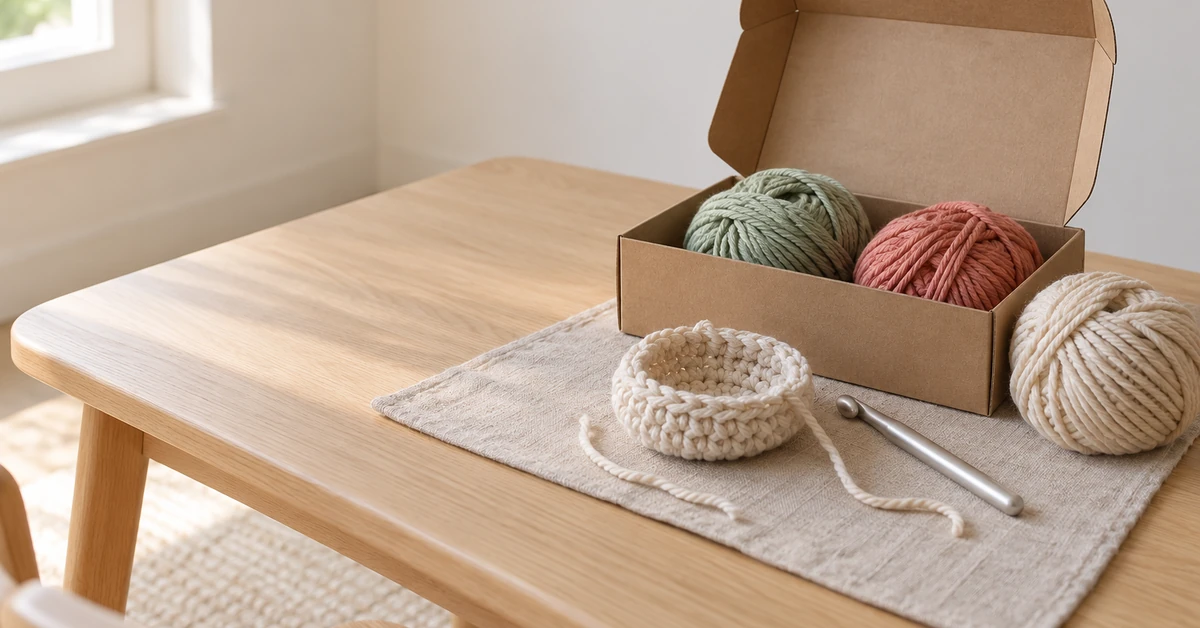

Evaluate a complete crochet kit manufacturer with a zero-borrow trial. Seal away the tester's personal hooks, scissors, markers, storage and familiar reference materials, then ask the production-intent kit to deliver its stated project milestone. Onehourcrafts uses every attempted borrowing moment as evidence about contents, instructions, packaging and claim boundaries rather than treating completeness as a long component list.
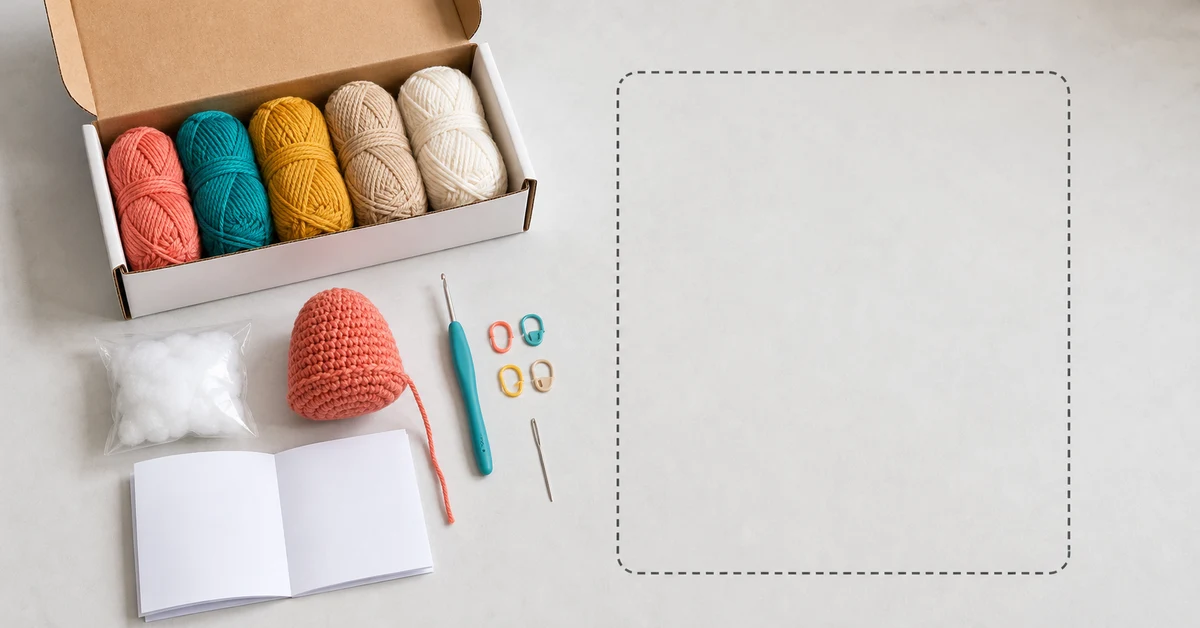
Define complete as a finished promise, not a full box
Write the result the customer should reach and the point where the kit's responsibility ends. A first wearable sample, finished character or learned technique creates different completeness requirements.
Separate included, optional and customer-supplied items before sampling. A box can look generous while omitting the one tool or finishing input needed at the promised endpoint.
Lock away the expert's invisible toolkit
Experienced testers often supply tension control, vocabulary, repair knowledge and storage without noticing. Use a novice observer and record every moment when someone asks for help or reaches beyond the pack.
The test does not prove every maker will succeed independently. It reveals where the commercial promise depends on unlisted knowledge, equipment or intervention.
Give each borrowing moment a cause
Classify the request as missing component, weak quantity, inaccessible item, unclear instruction, error recovery or finishing boundary. The cause determines whether to add an object, revise communication or narrow the claim.
| Borrowing moment | Question | Possible response |
|---|---|---|
| Before first stitch | Is setup self-contained? | Add, expose or explain the needed item |
| At first error | Can the maker recover? | Add a recovery cue, not another decorative extra |
| During pause | Can live work remain controlled? | Provide or state storage assumptions |
| At finishing | Does the promised object require more? | Include the input or clarify the boundary |
Test the first cut and the last closure
Completeness often fails at the edges of the project. Confirm whether yarn preparation, cutting, stuffing, joining, weaving ends and final closure need tools or materials not visible on the front panel.
Use only the approved instruction path. Factory staff may know a shortcut that the customer never receives; that private knowledge cannot close the retail promise.
Measure useful quantity instead of visual abundance
Yarn, stuffing and small components should support the approved design and reasonable process variation defined for the project. A visually full bag does not prove usable allocation.
Keep weighed or counted references linked to the physical sample. Avoid promising identical leftovers for every maker because technique and tension vary.
Make included tools reachable in working order
A supplied hook, needle, marker or cutter must be identifiable, accessible and suitable for its assigned step. Inspect finish, size, retention and relationship to the materials in production-intent packs.
The first-learning-loop guide examines early use in more detail. The zero borrow crochet kit test extends the observation through pause and finishing.
Give the first mistake a contained route
A kit is not complete only when the maker follows the ideal path. Show how to identify and recover from the most likely early errors without requiring a second hook, private video or live expert.
Keep recovery concise and tied to the same terminology as the main instructions. The goal is not to document every possible mistake, but to protect the promised beginner path.
Pause the project and clear the table
Ask the tester to stop at an inconvenient but plausible point, contain the hook, yarn, parts and instructions, then return later. Record lost identity, tangling and missing next-action cues.
If storage is not included, state the expectation honestly. A complete making experience can have a declared household-storage boundary, but it should not appear only after purchase.
- Secure active hook or needle
- Retain current yarn identity
- Contain loose components
- Preserve the next action
Separate digital support from digital dependency
Video or QR support may improve learning, but decide which essential information remains available if a device, account, sound or connection is unavailable. Keep digital content tied to the released pattern revision.
Use the video-tutorial kit guide for the media handoff. A completeness claim should identify whether digital access is optional support or required operation.
Run the finishing table with only declared additions
Place every included and explicitly customer-supplied finishing item on one surface. Complete assembly, shaping and presentation without a hidden factory tool.
Photograph the final working table as evidence. It shows the buyer exactly which additions remain outside the unit and whether pack copy describes them clearly.
Inspect the sealed pack against the working truth
Identification, contents and claims should match the released configuration. The GS1 barcode standards overview can frame identity questions without defining implementation for a specific market.
Open sampled units and reconcile visible statements with actual contents, instruction revision and finishing boundary. The acceptance plan belongs to the order and risk.
Use a completeness delta for every variant
Color changes may be simple, while a new shape, accessory or finish can introduce tools, quantities and steps. Record which requirements stay common and which must be retested.
For complete crochet kit contents, do not assume a shared carton or price point creates a shared making path. Approve each meaningful delta with physical evidence.
Write the RFQ as a no-borrow challenge
State audience, project milestone, included and customer-supplied items, tool boundary, digital support, pause method, packaging, quantity scenarios and evidence. Use the buying-guide library for broader sourcing decisions.
Ask for a sealed production-intent sample and a crochet kit completeness audit, not only a component spreadsheet.
- Freeze the milestone
- Seal away personal aids
- Record borrowing attempts
- Classify the cause
- Revise claim or configuration
Let customer support attempt the missing-step diagnosis
Give the borrowing log, released instructions and sealed reference kit to someone who did not observe the original trial. Ask that reviewer to identify the stalled step, the missing or inaccessible input, and the customer-facing response without receiving private factory guidance.
This handoff tests whether the evidence is usable after the sampling meeting ends. A support team may need a contents image, a named part, a pattern revision and a bounded recovery route before it can distinguish a packing issue from an instruction issue or a customer-supplied boundary.
When an included cutter, needle or another item changes the product configuration, use the CPSC business education resources to frame relevant US questions and obtain appropriate product-specific review. The resource does not approve the kit or define requirements for every destination.
A complete crochet kit manufacturer should be able to connect the support diagnosis to the released sample and the corresponding inspection record. If the answer depends on an undocumented workaround, completeness has not yet become repeatable evidence.
Close the review by writing the exact response the buyer would permit: replace a verified missing part, clarify a declared household input, correct a synchronized instruction revision or investigate the sampled unit. Naming the route prevents every support contact from becoming an improvised exception.
How Onehourcrafts closes the empty-tool-zone test
Onehourcrafts can align the project promise, component identities, quantity evidence, instructions, pause state and finishing table in one approval file. Missing support becomes visible before the range scales.
Before approving a complete crochet kit manufacturer, run the project beside an empty personal-tool zone. A buyer should be able to explain every declared addition, every recovery aid and the exact point where the kit has fulfilled its promise.
- Released milestone
- Sealed working kit
- Borrowing log
- Completed reference
Frequently asked questions
What does complete mean for a crochet kit?
It means the kit contains or clearly declares what is needed to reach a specific promised milestone. The boundary depends on the project and customer.
Why use a zero-borrow trial?
It exposes hidden reliance on personal tools, expert knowledge, storage, digital access and finishing materials that a component list may miss.
Should scissors always be included?
Not automatically. Include them or state the customer-supplied requirement clearly, based on audience, product design, safety review and channel.
How should yarn quantity be approved?
Use controlled sample-making, physical references and agreed project-specific allowances without promising identical leftovers for every maker.
Can video make an incomplete kit complete?
Only if required digital access is clearly part of the promise and remains synchronized with the product. Essential dependencies should not be hidden.
What should happen at the first mistake?
Provide a concise recovery path for likely errors or state the intended support model. Test it with the released instructions.
Does a kit need reusable storage?
Not always, but buyers should test pause and pack-down and clearly state any storage the customer is expected to provide.
How are variants retested?
Use a delta sheet to identify changes in shape, quantities, tools, steps and finishing, then repeat affected parts of the trial.
What should incoming inspection confirm?
Confirm identity, component completeness, quantities where agreed, tool condition, instruction revision, packaging and risk-based function.
What belongs in the first manufacturer inquiry?
Share audience, milestone, design, materials, included tools, added items, support, packaging, quantities, sampling and evidence expectations.