
This craft kit skill level guide uses a simple principle: label difficulty by the decisions and recovery burden inside the project, not by how small, colorful or attractive the finished item looks. Score the project, test the score with representative users and publish the prerequisites that explain the label.
A tiny amigurumi figure can be harder than a larger scarf. A project with only a few materials can still require precise tension, invisible assembly or frequent counting. Words such as beginner, easy and advanced are useful only when the product team can explain what they mean.
Separate difficulty, safety and audience fit
Three labels are often mixed together:
- Skill difficulty: the techniques, dexterity and decisions required to finish the project.
- Safety suitability: whether components, hazards, warnings and intended use are appropriate under applicable rules.
- Audience fit: whether the theme, pace, format and finished result appeal to the target buyer.
A beginner project is not automatically a children's product. A product intended for children is not automatically easy. The U.S. Consumer Product Safety Commission's small-parts guidance illustrates why safety classification must be handled separately from a general difficulty label. Review destination-market requirements and the product's intended use with qualified specialists.
Score six factors from 0 to 3
Use the same scoring questions across a product range. The following model has a maximum of 18 points. It is a merchandising and development tool, not a regulatory standard.
| Factor | 0 points | 1 point | 2 points | 3 points |
|---|---|---|---|---|
| Technique novelty | One familiar action | One new action with direct support | Several techniques or one non-obvious technique | Multiple advanced techniques must be combined |
| Step dependency | Steps are independent or easily repeated | Short sequence with clear checkpoints | Earlier decisions affect later construction | Long dependency chain with little room for drift |
| Dexterity | Large movements and forgiving materials | Moderate hand control | Small parts or precise placement | Fine, sustained or two-handed precision |
| Recovery difficulty | Error is visible and easily reversed | Simple correction is explained | Correction requires partial undoing or diagnosis | Error may appear late or require substantial rebuilding |
| Reading and counting load | Visual repetition with minimal tracking | Short counts or simple symbols | Frequent counts, abbreviations or chart reading | Dense pattern logic, simultaneous counts or complex notation |
| Endurance | Short project with quick visible progress | Moderate session length | Several sessions or repetitive precision | Long project with sustained attention and finishing work |
Keep notes beside every score. The explanation matters more than the total because it tells the instruction team what support to add.
Convert the score into transparent bands
A starting set of bands is:
- 0-5: Starter. Few techniques, strong visual progress, forgiving correction and low tracking load.
- 6-10: Beginner Plus. Some prior familiarity helps, or the kit teaches one meaningful new technique.
- 11-14: Intermediate. Several techniques, dependencies or recovery decisions must be managed.
- 15-18: Advanced. The project combines technical precision, long dependency chains or difficult finishing.
These cutoffs should be calibrated against the brand's audience and instruction quality. A strong tutorial can reduce reading burden and recovery difficulty, but it does not erase the physical technique required.
Work three examples before labeling the range
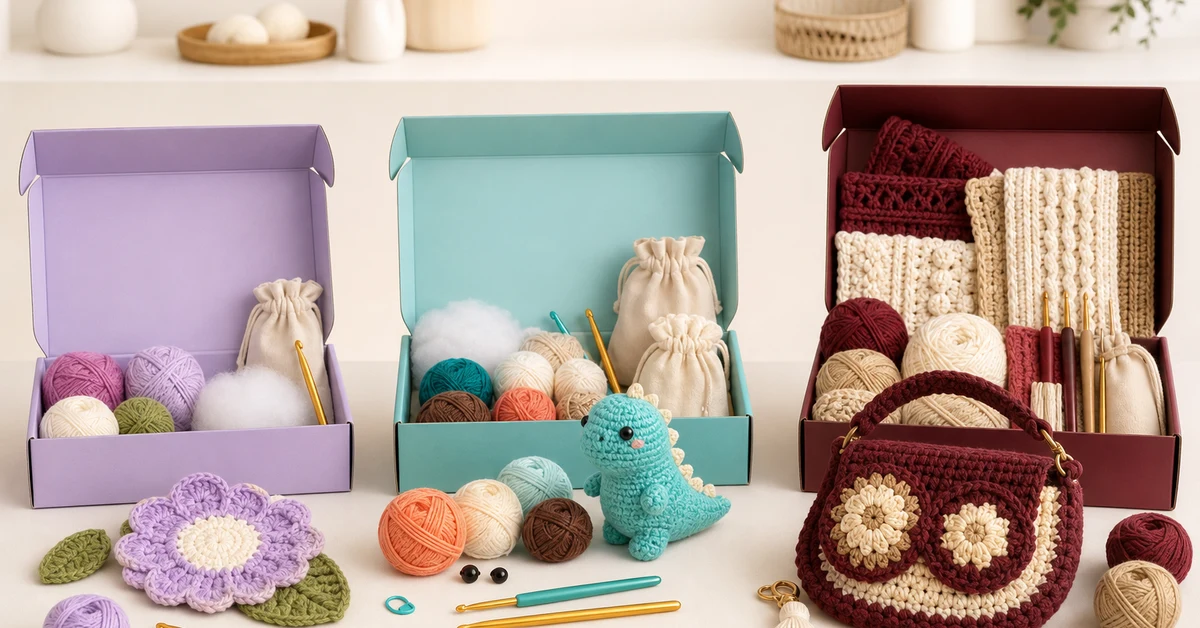
Example A: simple flower coaster
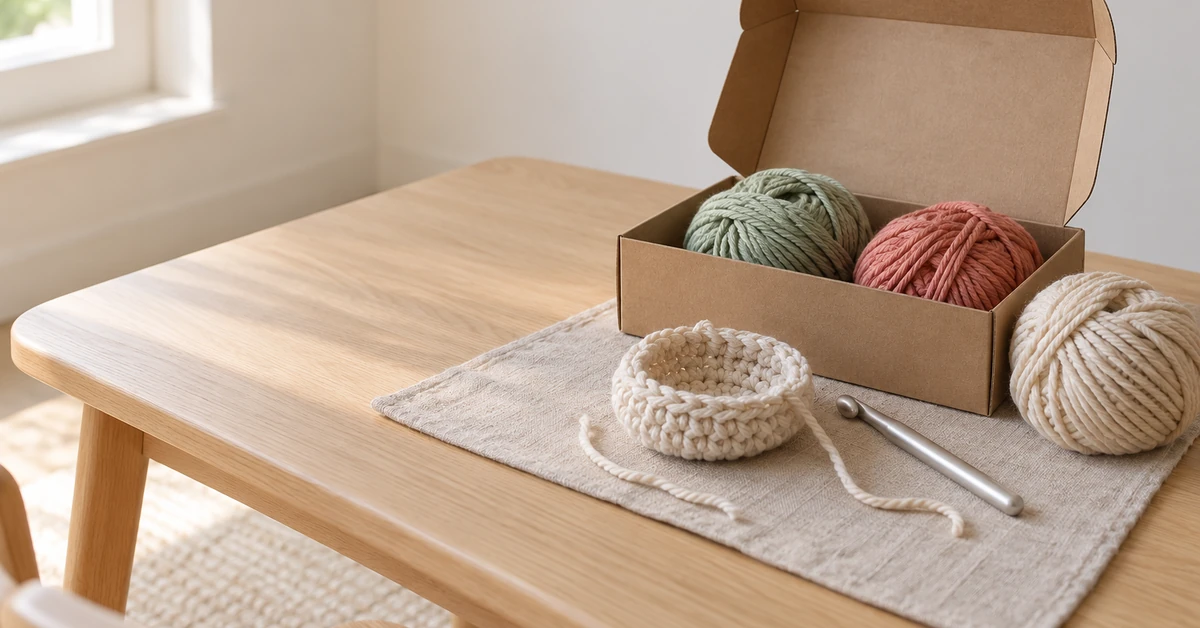
The project uses one or two repeated stitches, visible rounds and a short finish. Errors are noticeable quickly and can be undone without disturbing much work. It may score low on dependency and endurance, making it appropriate for a starter band when the manual teaches the basic action clearly.
Example B: small amigurumi figure
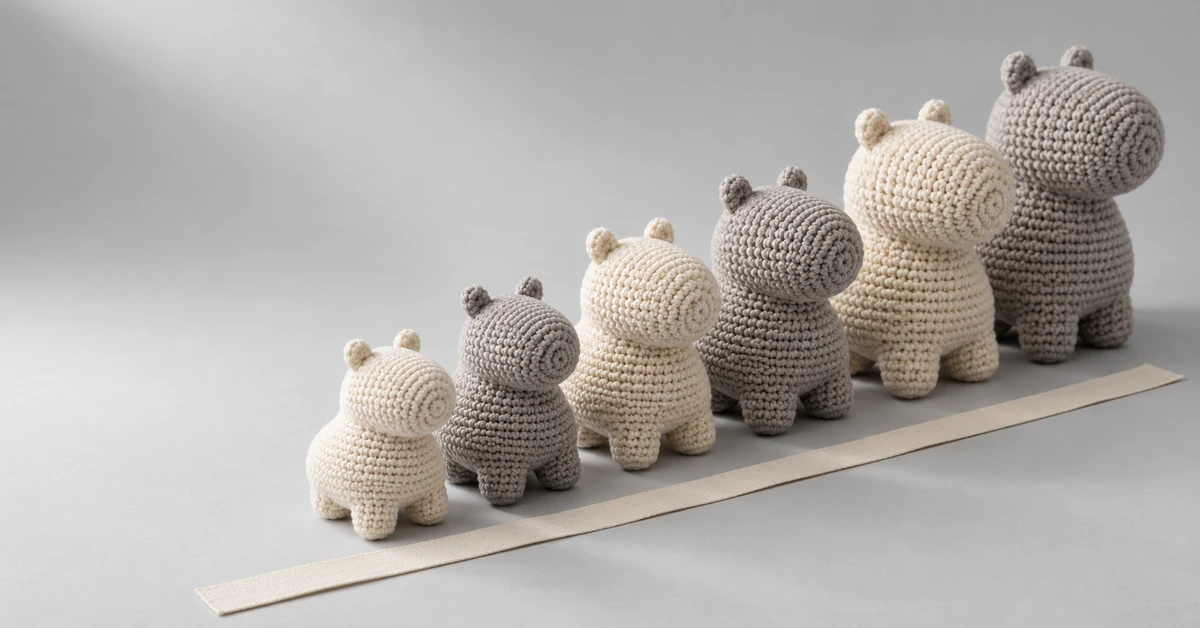
The product may look small and friendly, but shaping can require continuous counting, controlled tension, color changes and assembly. A missed increase may not become obvious until later. Recovery and reading load can push the project above entry level even when the number of components is modest.
Example C: textured crochet bag
A larger bag may use repeatable sections but require multiple techniques, gauge control, structural finishing, handles and lining or assembly. Endurance and dependency can be high. The label should explain prerequisites instead of relying on the word advanced alone.
Test the label against actual behavior
Recruit users who match the intended skill band. Do not teach the project during the test. Observe where they stop, misread, seek outside help, fail to notice an error or abandon the task.
Compare behavior with the factor scores:
- If users understand the technique but cannot maintain counts, raise the reading and counting score or add stronger checkpoints.
- If errors are common but easily repaired, improve recovery support before changing the overall band.
- If users need a skill the package never names, add it to the prerequisite statement.
- If completion time varies widely, publish a tested range and explain what is included.
Repeat after meaningful changes to materials, component size, instructions or construction. Difficulty belongs to the complete product system, not only the pattern.
Put useful prerequisites on the package
The front of the package may use a short band, but the side or back should make the decision easier. Consider stating:
- Techniques the user should already know.
- Techniques taught inside the kit.
- Whether counting, chart reading or assembly is required.
- Approximate active work time based on user testing.
- Finished size and key project checkpoints.
- Format of instruction support, such as diagrams or video.
Do not claim "no experience needed" when the user must infer tension, stitch anatomy or recovery steps. A precise statement such as "first crochet project; basic stitch taught with diagrams" sets a more credible expectation.
Use difficulty to build a better assortment
A range can serve different customer journeys:
- Entry project: creates a fast, attractive first success.
- Skill-builder: introduces one new technique while reusing familiar actions.
- Confidence project: combines several skills into a practical or giftable result.
- Challenge project: offers depth, detail and a reason to return to the brand.
This progression can guide merchandising, workshops and cross-selling. It also helps prevent a collection from being visually varied but functionally identical.
Use score changes as product-design feedback
The score is not only a label. It shows how a project can be redesigned for a target band. If recovery difficulty is high, add earlier checkpoints or change the construction order. If dexterity is the barrier, review component size, material grip or assembly method. If reading load is high, separate technique teaching from the working sequence.
Document the original score, design change and tested result. This turns the craft kit skill level guide into a development record rather than a marketing opinion. A team can decide to preserve a challenging technique because it creates the desired result, but the package should then name that prerequisite clearly.
Do not simplify every project toward the lowest band. A healthy range gives experienced customers meaningful progression. The goal is accurate expectation: the customer should understand the challenge, the support available and the type of finished result the effort can produce.
Common labeling failures
Judging by project size
Small projects may contain more shaping and finishing decisions per centimeter than large repetitive projects.
Using time as the only measure
A long repetitive project can be easy, while a short project can demand advanced precision. Treat endurance as one factor, not the whole score.
Letting packaging language outrun evidence
Words such as easy, quick and beginner-friendly should be supported by user testing and clear prerequisites.
Using skill level as a safety claim
Difficulty labels do not replace age grading, warnings, testing or compliance decisions. See the craft product compliance guide for a separate decision framework.
Where Onehourcrafts fits
Onehourcrafts develops OEM/ODM crochet kits with configurable yarn, hooks, accessories, storage, instructions and retail packaging. Buyers can define a product ladder during sampling and test how materials and instruction choices change the real difficulty.
The craft kit instruction guide, amigurumi quality scorecard, sampling process and private-label collection ideas can support assortment development.
Final takeaway
A useful craft kit skill level guide turns a vague marketing label into a repeatable product decision. Score the techniques, dependencies, dexterity, recovery, reading load and endurance; test the complete kit with intended users; then publish the prerequisites that make the label honest.
Frequently asked questions
What makes a craft kit beginner-friendly?
It uses limited techniques, gives fast visible progress, has forgiving materials, provides clear checkpoints and explains how to recover from common mistakes.
Is a small craft project always easier?
No. Small components can require fine dexterity, precise tension, frequent counting and difficult assembly. Score the actual work rather than finished size.
Should estimated completion time determine difficulty?
No. Time is one factor. Technique novelty, dependency, correction difficulty, reading load and physical precision can matter more.
Can better instructions lower a skill rating?
They can reduce interpretation and recovery burden, but they cannot remove every physical or technical requirement. Re-test the full kit after instruction improvements.
Is skill level the same as an age recommendation?
No. Skill level describes project difficulty. Age or safety suitability requires a separate assessment of components, hazards, intended users and applicable market rules.