
Latch hook supplies wholesale planning becomes clearer when buyers record what runs out during real projects. Onehourcrafts recommends an empty-slot ledger that follows yarn colors, canvas areas, tools and refill packs after a workshop or home-use trial. The empty spaces reveal demand more precisely than a supplier's standard component list.
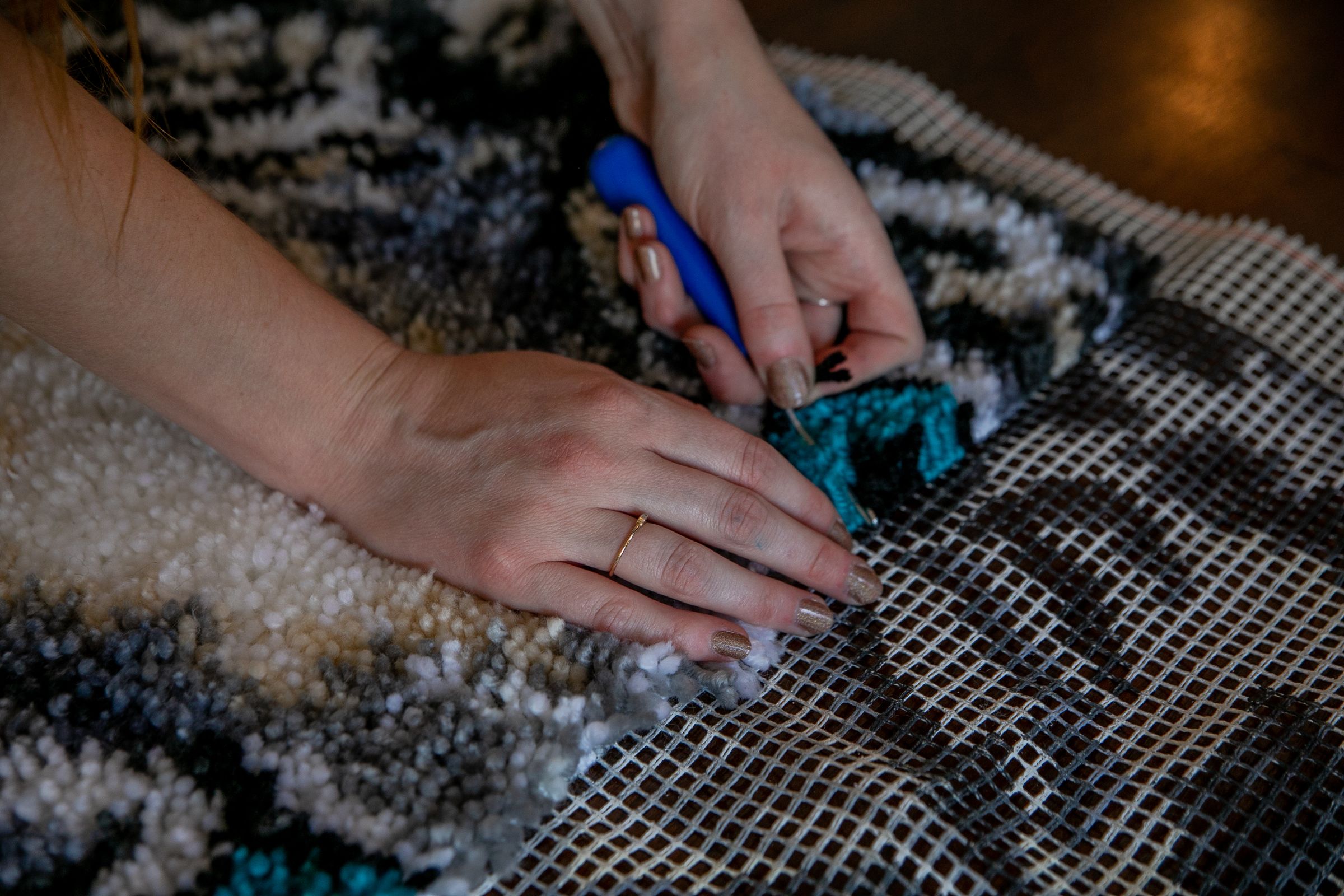
Photograph every empty slot before refilling
At the end of a session, stop before anyone tidies the materials. Photograph the table, open packs, canvas and waste. Note which color bins are empty, which bundles remain unopened and where loose pieces have migrated. The scene is an inventory record, not a lifestyle image.
Use a fixed overhead angle and an ID card for project, participant and elapsed time. Consistent photographs make different trials comparable. A single attractive sample cannot show whether the supplied balance survives normal variation in technique.
Create one ledger line for each material state
A color is not simply available or missing. It may be sealed, in active use, dropped, tangled, cut too short or attached incorrectly. The ledger should distinguish these states because only some indicate true under-supply. Counting every loose piece as waste can exaggerate the refill need.
| State | Count or weight | Decision use |
|---|---|---|
| Unopened | Full bundles remaining | Possible over-allocation |
| Usable loose | Pieces above minimum length | Organizer or handling issue |
| Unusable waste | Short, damaged or tangled pieces | Allowance and instruction review |
| Missing need | Canvas positions without material | True shortage or color error |
Latch hook supplies wholesale need a depletion signature
Every design produces a pattern of material use. Call that pattern the depletion signature. Dense background colors may empty early, highlight colors may remain almost full, and one frequently handled shade may create more waste. Compare the expected signature from the artwork file with the observed signature from several makers.
A mismatch can come from counting, color substitution, yarn length or technique. Do not automatically add a flat percentage to every color. Correct the specific cause and preserve evidence from the trial.
Measure canvas demand by zone
Divide the canvas into practical zones such as center motif, border, background and edge finish. Record completion and shortages within each zone. This reveals whether the order of work affects depletion. A participant who starts with the background may expose a shortage earlier than someone who begins with the motif.
- Mark zones on a copy of the pattern, not on the production canvas.
- Record the start and stop zone for each session.
- Count remaining yarn when a zone closes.
- Compare the result with the bill of materials and packed allowance.
Treat the hook as a controlled consumable risk
The hook is durable, but loss, damage or poor fit can halt the entire project. Record grip comfort, latch movement, handle rotation and how the tool returns to storage. A spare hook may be justified for group workshops, while a stronger holder may be better for individual retail packs.
The project geometry described in the latch hook rug kit guide should inform handle clearance and canvas access. Tool choice cannot be separated from mesh size and working position.
Set the minimum usable yarn length
Define the shortest piece that can be handled and knotted consistently. Pieces below that threshold become waste even when their total weight looks substantial. Measure cut-length variation from several production packs, then compare it with observed waste. Averages can hide a long tail of pieces that are too short.
- Sample multiple bundles and lots.
- Measure cut pieces without stretching them.
- Separate tool-related damage from supplied length variation.
- Record the threshold used in inspection.
Design refill packs around real shortage units
A refill should replace the unit that actually fails. It might be a single high-use color, a coordinated background group, a hook or a mixed repair envelope. Large universal refill packs create leftover stock and unclear pricing. Use the ledger to rank shortages by frequency and consequence.
For latch hook kits for craft stores, small labeled refill envelopes can support workshops and customer service. The store needs a simple way to match project code, dye lot or approved color family and quantity.
Translate the ledger into retail facings
The selling display should make high-use supplies easy to see and restock. If refills are part of the range, place them near the related project without confusing them with complete kits. Distinguish replacement yarn, tools and full projects through package form as well as color.
| Ledger signal | Retail response | Control |
|---|---|---|
| Repeated color shortage | Add project-coded refill | Lot and shade reference |
| Tool loss | Offer replacement hook | Compatibility label |
| High loose-piece waste | Improve organizer | Pack-use trial |
| Uneven project demand | Adjust facing depth | Store-level sell-through |
Make retail ready latch hook kits auditable
Retail ready latch hook kits should carry a project code that joins artwork, component list, refill reference and lot record. The store and customer service team need to identify a shortage without interpreting a photograph alone. Place the code where it remains readable after opening.
Use a packed-content check similar to the approach in the latch hook pillow kit guide. A visible component map can help users return materials to the correct compartment between sessions.
Write reorder signals before the first sale
A reorder point should reflect lead time, workshop dates, facing capacity and shortage consequence. Do not wait for every bin to empty. Define a trigger in units or weeks of cover and assign responsibility for reviewing it. For low-volume specialist colors, a shared reserve may be more efficient than deep stock at every store.
- Opening quantity by SKU and store type
- Minimum facing and reserve quantity
- Review frequency during workshops or promotions
- Escalation when one project creates unusual refill demand
Qualify a custom latch hook kit supplier with variance
A custom latch hook kit supplier should explain how artwork quantities become cut-yarn counts, how allowance is set and how color or length variation is inspected. Ask for records from more than one packed sample. One perfect set does not demonstrate repeatability.
Buyers should also define color-approval conditions and acceptable substitution rules. The broader yarn compatibility principles in the yarn selection guide provide useful questions, although latch hook construction requires its own validation.
What Onehourcrafts needs with the ledger
Send the artwork file, canvas specification, cut-yarn length, packed counts by color, target user, expected project time, sales channel and photographs from representative trials. The development team can compare the planned bill of materials with the observed depletion signature and discuss changes before production approval.
Add the packing sequence and inner-carton quantities as well. A correct total count can still create workshop delays when colors are mixed across bags or the project code is difficult to find. Ask the sample reviewer to simulate opening several kits, sorting their materials and returning unused refills to stock. This exposes labeling and allocation problems before the first wholesale shipment. Keep that sequence in the final packing work instruction.
Keep records in a structured format that supports item identification. GS1 provides general background on barcode standards; the buyer should define the exact identification and traceability system required by its operation.
Frequently asked questions
What is an empty-slot ledger?
It is a record of depleted, misplaced, damaged and remaining materials after real use. It connects shortages to a project, time and cause.
How many trials are enough?
Use several makers with different experience levels and work orders. Stop when the major depletion pattern becomes stable and unexplained variation is addressed.
Should every color receive the same allowance?
No. Base allowance on count uncertainty, cut-length variation, handling waste and the consequence of shortage for that specific color.
Can materials be measured by weight?
Weight is useful for aggregate checks, but piece count and usable length may explain shortages better. Use the measurement that matches the failure.
When is a refill pack justified?
Create one when a repeated shortage is predictable, identifiable and cheaper to solve with a small replacement unit than a full kit.
How should dye-lot variation be handled?
Define approved shade tolerances, lot identification and substitution rules before production. Refill plans should consider visible variation in the finished piece.
What should stores record?
Record sales, refill requests, damaged packs, missing tools and workshop consumption. Those signals improve the next order.
Is a spare hook necessary in every kit?
Not automatically. Compare loss and damage risk with cost, pack size and the availability of compatible replacement tools.
How should leftover yarn be stored?
Use project and color identifiers in a reusable compartment or envelope. Loose leftovers without identity rarely support reliable recovery.
What closes the approval process?
Close approval when the bill of materials, use trials, ledger results, refill logic, packaging and production inspection all agree.
Buy the evidence behind every empty space
Reliable latch hook supplies wholesale orders come from observed depletion, not a generous-looking pile of yarn. Give Onehourcrafts the ledger and project specification, then approve counts, refills and reorder signals against several real-use records. Empty slots become valuable when their causes are named.