
OEM craft products manufacturer selection should begin with the approval system, not the sample-room appearance. A capable partner can translate a commercial brief into a costed specification, expose unresolved choices, produce evidence at defined gates and prevent silent substitutions after approval. The eight-gate model below gives buyers a practical way to control development from the first idea to repeat production.
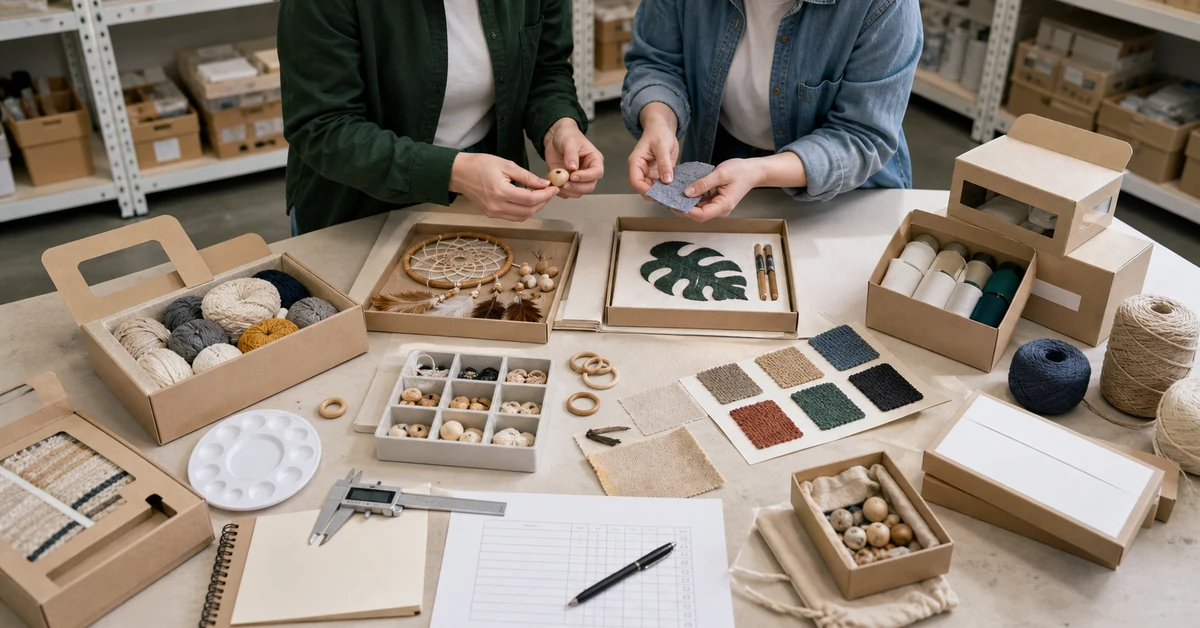
Gate 0: Convert the idea into a decision-ready brief
The first deliverable is not a quotation. It is a brief that separates fixed requirements from open choices. State the product purpose, intended user, destination markets, sales channel, target retail position, expected annual volume, launch date and reference products. Mark which elements are mandatory, preferred or available for supplier recommendation.
A useful brief also defines what success looks like. For a beginner craft kit, that may include a target completion time, maximum number of techniques, pack size, perceived value and acceptable support rate. For a finished craft accessory, it may focus on dimensions, durability, color consistency and display format.
| Brief field | Buyer decides | Supplier clarifies | Evidence at the gate |
|---|---|---|---|
| User and use case | Age, skill, channel and occasion | Feasibility risks and test users | Approved user statement |
| Commercial target | Retail band and forecast | Cost drivers and economic quantities | Cost target range |
| Market route | Countries and claims | Likely documentation path | Compliance responsibility list |
| Brand system | Artwork ownership and identity | Print limits and file requirements | Artwork responsibility map |
Gate 1: Run feasibility before visual design
Feasibility asks whether the proposed product can be made, packed, tested and repeated within the commercial constraints. It should happen before hours are spent polishing artwork. Review material availability, minimum order quantities, tooling, color processes, assembly complexity, component security, packaging volume and likely testing.
The output should be a short decision log: proceed as proposed, proceed with named changes, or pause for missing information. A professional team identifies conflicting requirements explicitly. It does not hide them inside a vague note that “final cost depends on the sample.”
Gate 2: Build a costed bill of materials
A quotation becomes meaningful only when it is connected to a bill of materials. Each line should name the material, measurable specification, quantity, process, finish, supplier source or approved alternative, packaging position and inspection point. The same document should connect to the artwork and sample revision.
Ask for cost drivers rather than one unexplained unit price. Printed fabric, custom-matched yarn, molded tools, rigid boxes and multi-language leaflets have different minimums. Buyers can then simplify the elements that do not improve the user experience instead of demanding an unsupported discount across the whole product.
An ODM craft products supplier may propose more of the concept and component architecture, but the final bill still needs buyer approval and controlled revision status.
Gate 3: Use the appearance sample to settle the promise
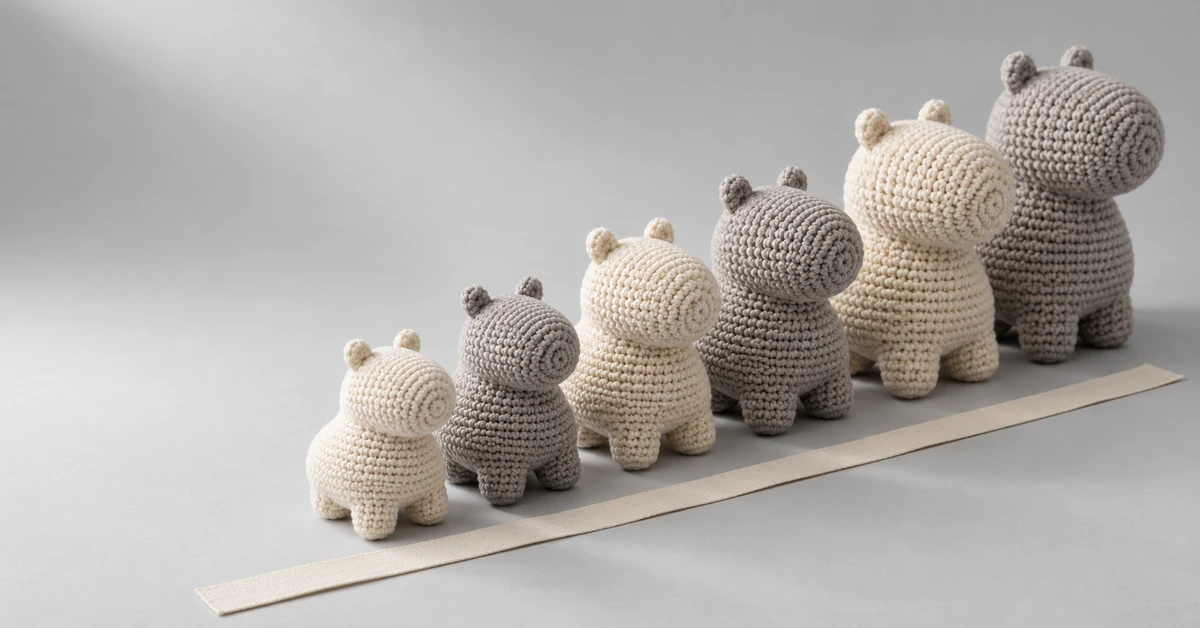
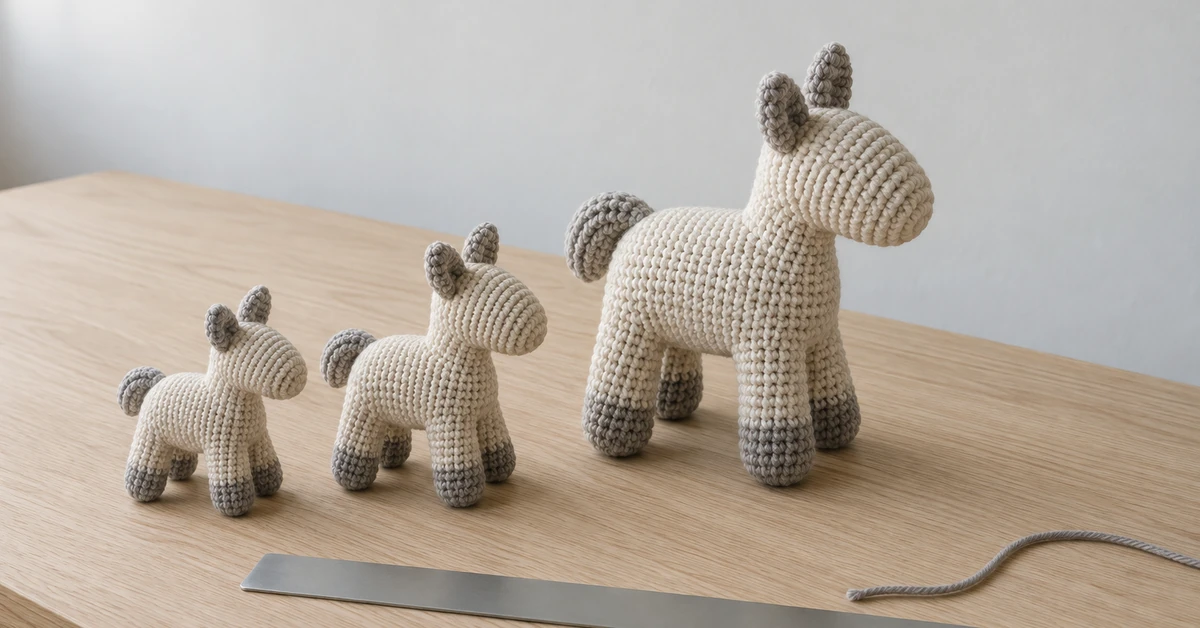
The appearance sample answers what the customer believes they are buying. It should settle scale, color direction, visual hierarchy, included project, pack image and opening sequence. It does not prove that the construction, instructions or production process are ready.
- Photograph the sample under agreed lighting and keep color references.
- Record which components are temporary stand-ins.
- Mark artwork files with version and approval date.
- Compare the finished result with the front-of-pack image.
- List every visible deviation that must be corrected at the next gate.
This gate prevents a common argument: the buyer approves the look, while the factory later treats that approval as permission to produce unverified construction.
Gate 4: Make the technical sample survive real use
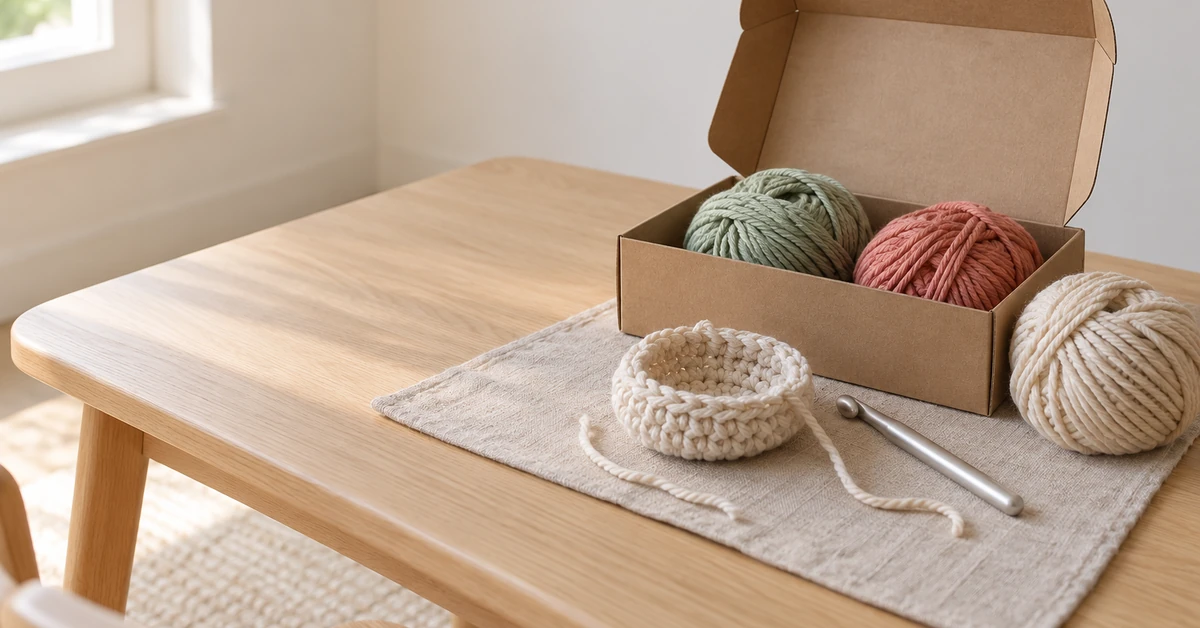
The technical sample uses production-intent materials and construction. Test it as a user would, including opening, sorting, following instructions, handling tools, completing the project and storing unfinished materials. Record completion time, help requests, shortages, breakages and confusing steps.
For kits, use the workflow in the craft kit instruction testing guide. For component consistency, link measurements and revisions to the batch traceability checklist. The objective is not a beautiful master sample made by an expert; it is a repeatable product that a target user can understand.
Gate 5: Approve packaging as part of the product
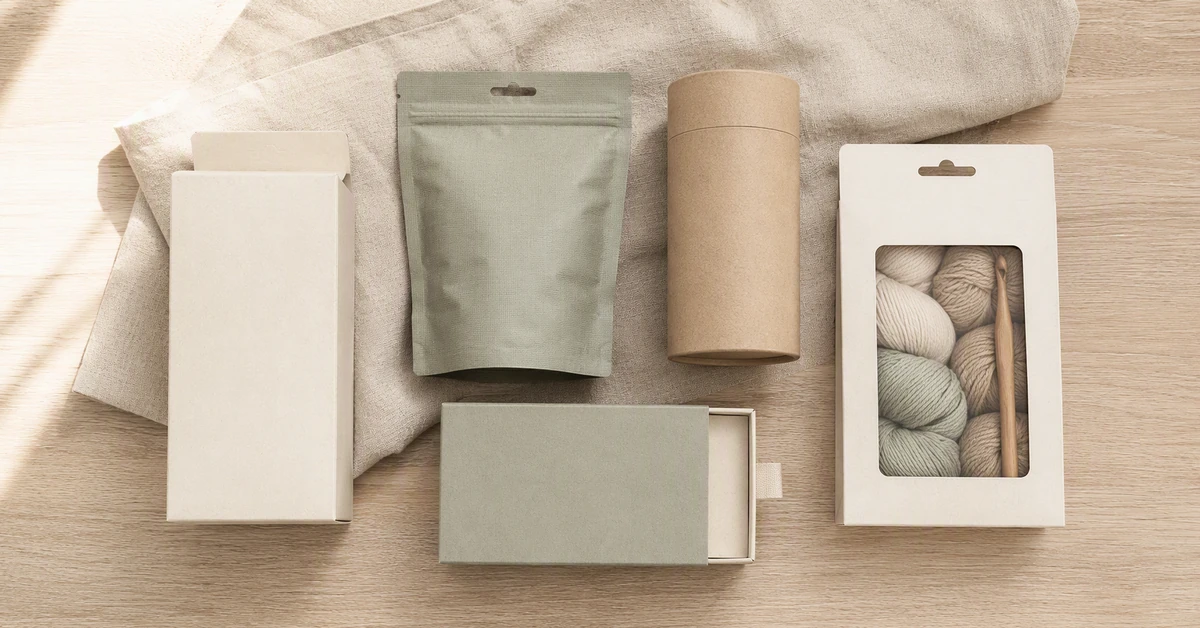
Packaging controls product protection, first-use clarity, shelf communication and logistics cost. Approve the insert, component restraint, opening method, barcode area, legal text, carton quantity and master-carton arrangement together. A box that looks efficient on a screen can create loose components, crushed projects or excessive freight volume.
Use physical mockups at this gate. The retail packaging format guide helps compare boxes, pouches, hanging packs and reusable cases. For parcel distribution, the International Safe Transit Association describes Test Procedure 3A as a general simulation test for packaged products moving through parcel delivery systems. The exact test plan should match the product, route and risk rather than being copied automatically.
Gate 6: Freeze the compliance and claim file
Classification depends on the product, intended user, claims, materials and destination. The U.S. Consumer Product Safety Commission publishes an Art and Craft Safety Guide, while the European Commission explains the responsibilities created by the General Product Safety Regulation. These references help frame questions, but qualified review must determine the actual route for a specific SKU.
Freeze warnings, material declarations, test reports, traceability marks, responsible-party information and approved claims before production artwork is released. If a material or intended age changes, reopen the affected decision rather than assuming the old file remains valid.
Gate 7: Approve the pre-production sample and line controls
The pre-production sample should represent the materials, artwork, construction and packing that the line will use. Approve it against a signed specification, not memory. The production plan should define incoming checks, first-piece approval, in-process counts, defect categories, final sampling and carton verification.
| Control point | Question | Record | Stop condition |
|---|---|---|---|
| Incoming material | Does it match the approved source and specification? | Lot and inspection record | Wrong material, color or dimension |
| First assembled unit | Are order, orientation and quantities correct? | Signed first-piece sample | Missing or misplaced component |
| In-process check | Is the line remaining within the approved method? | Timed inspection sheet | Repeated major defect |
| Final lot | Does the shipment meet acceptance rules? | Inspection and carton report | Critical defect or failed sampling rule |
Gate 8: Release production with change control
Production release is a controlled package: approved sample, bill of materials, drawings, artwork, instructions, inspection criteria, packaging standard, test evidence and shipment requirements. Name the owner of each file and the authority required to change it.
After release, substitutions should follow a written request that explains reason, affected SKUs, cost, appearance, performance, compliance and timing. A changed adhesive, yarn source or insert thickness can influence more than unit cost. Change control protects repeat orders from gradual drift.
Price the risk of skipping a gate
Skipping development work does not remove its cost; it moves the cost to rework, delays, returns or lost confidence. Buyers should evaluate the expected loss, not only the immediate sample fee.
| Skipped decision | Apparent saving | Likely downstream cost |
|---|---|---|
| User trial | Faster sample approval | Confusing instructions and support demand |
| Packaging mockup | No structural sample | Transit damage or poor shelf fit |
| Material freeze | Flexible sourcing | Color, performance or documentation drift |
| Pre-production sample | Earlier line start | Bulk output built from unresolved details |
Assign owners before deadlines become urgent
A development calendar needs named owners and response times. The buyer normally owns brand claims, market choice, forecast and final commercial approval. The supplier owns manufacturing feasibility, process controls and accurate disclosure of material or timing risks. Testing laboratories and compliance advisers own only the scope they are contracted to assess.
For private label craft supplies, define who controls source artwork, translations, photography, barcode data, warnings and production files. Shared assumptions create late approvals; named owners create decisions.
Where Onehourcrafts fits in the eight-gate system
Onehourcrafts can support buyers evaluating an OEM craft products manufacturer by connecting product design, materials, sampling, private-label packaging, production preparation and quality records. A productive inquiry should include the intended market, user, target cost, forecast, launch date, reference concept and the decisions that remain open.
A retail ready craft products supplier should also understand barcode space, fixture orientation, pack communication, carton efficiency and assortment control. Onehourcrafts states manufacturing experience since 1988, BSCI certification and OEM/ODM support; every project still requires product-specific evidence and buyer approval at the relevant gates.
Frequently asked questions
How many samples are normally needed?
The number depends on complexity. Appearance, technical, packaging and pre-production samples solve different questions, so one sample should not be expected to prove every requirement.
Should buyers give the factory a target price?
Yes, when the target is connected to channel, retail position, forecast and must-have features. It helps the team allocate cost instead of guessing what to remove.
What belongs in a bill of materials?
Include material, measurable specification, color, quantity, process, finish, approved source or alternative, packaging location and inspection requirement.
When should artwork be finalized?
Finalize technical copy and dielines after structure is stable. Release print-ready artwork only after required claims, warnings, barcode data and translations are approved.
What is the difference between OEM and ODM?
In a practical sourcing context, OEM commonly begins with more buyer-defined design input, while ODM may use more supplier-developed concepts. Responsibilities must still be written for each project.
Can an approved sample be changed for bulk production?
Only through documented change control. The buyer should see the reason, specification difference and effect on cost, timing, performance and compliance before approval.
How should defects be classified?
Define critical, major and minor examples for the actual product. Generic labels without examples leave inspectors to make commercial judgments too late.
What should be included in an RFQ?
Include use case, market, materials, dimensions, kit contents, packaging, forecast, target timing, testing needs, reference images and requested commercial terms.
Who owns compliance decisions?
The responsible business must ensure the product meets applicable requirements. Suppliers, laboratories and advisers provide evidence within their stated scope, not a universal approval.
How can buyers reduce lead time safely?
Provide complete inputs, approve against a clear calendar, reduce unnecessary custom parts and run independent workstreams only where changes cannot affect each other.
Make every approval reduce uncertainty
A reliable OEM craft products manufacturer process makes uncertainty visible and closes it with evidence. Use the eight gates to separate concept, engineering, packaging, compliance and production release. The result is a better quotation, a clearer sample trail and a product that can be repeated without relying on memory.