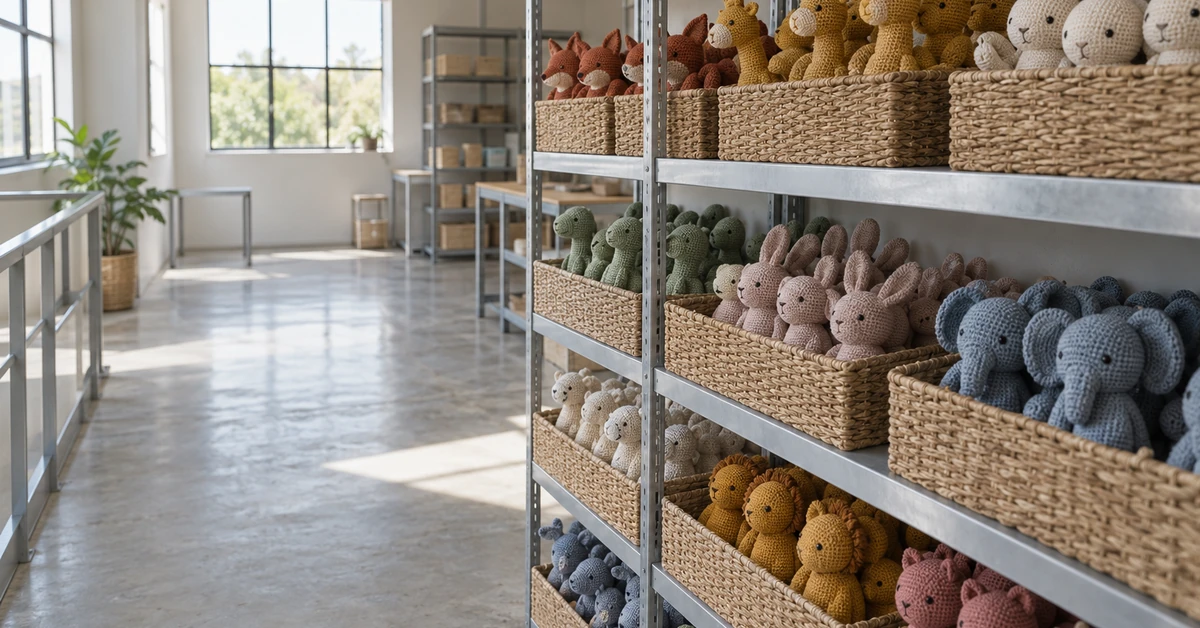

Retail ready amigurumi toys can lose control long after the final stitch. A maker approves the face, but the stockroom mixes sizes; a display compresses ears; a missing label breaks traceability; checkout uses the wrong SKU; a return arrives without its identity. Follow one finished item through every retail custody change and require a clean handoff at each point.
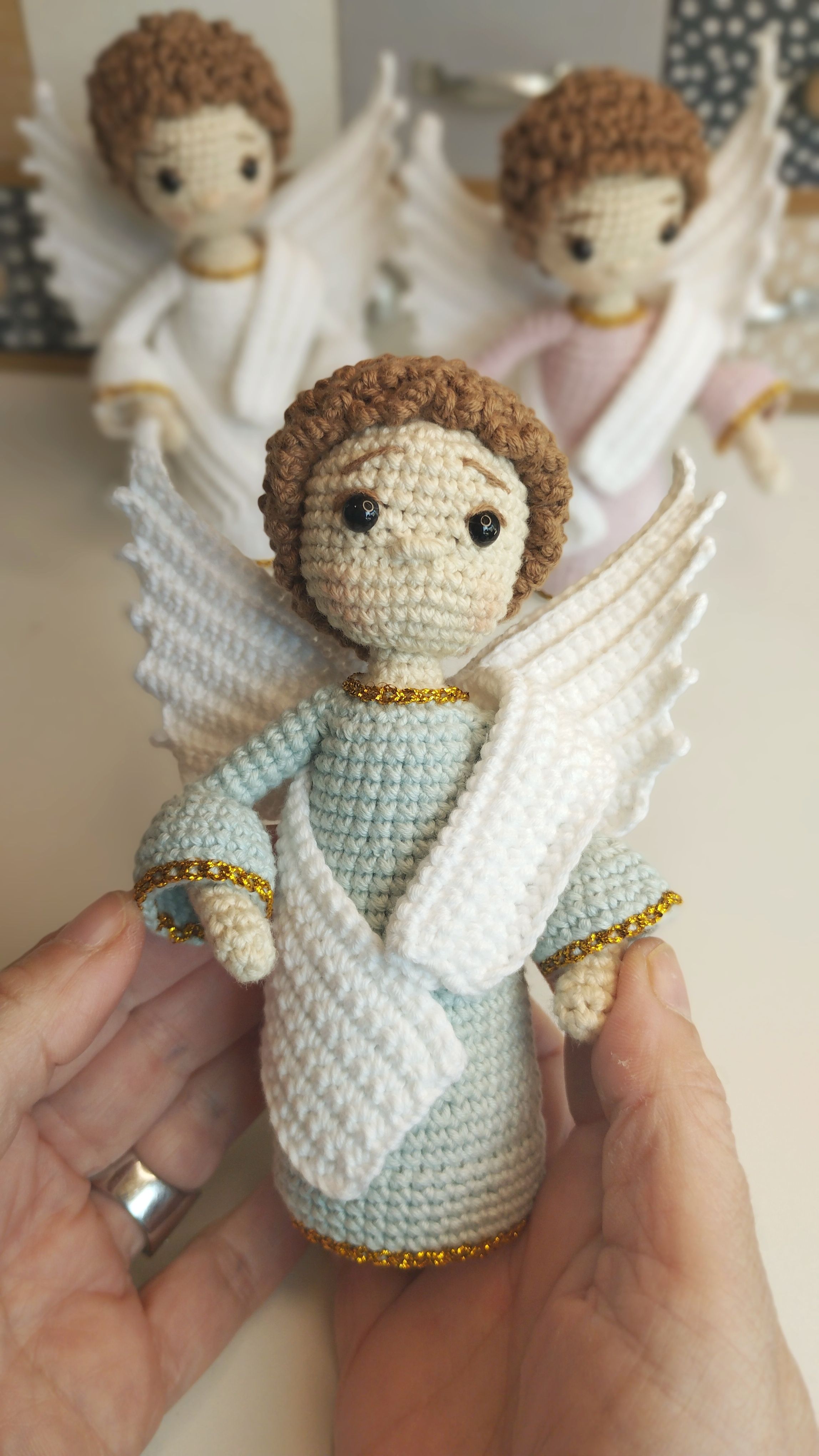
Mark the SKU before it leaves the maker's table
Assign the product code when design, materials, dimensions, features, intended market, and artwork revision are approved. Do not wait until carton packing. Similar characters and colorways become difficult to separate once tags are detached from production records.
The approved reference should show front, back, sides, base, face, attachment points, label position, and packaging. Add measurable tolerances for overall height, key proportions, weight where useful, and features that affect display or customer expectation.
| Identity layer | What it controls | Handoff evidence |
|---|---|---|
| Finished-goods code | Character, size and colorway | Product tag and carton record |
| Revision | Pattern, materials and artwork | Approved sample date |
| Lot or batch | Production traceability | Unit, inner or shipment linkage |
| Barcode | Retail transaction identity | Scan test and item master |
Handoff one is pattern to production
Translate the master sample into a pattern, stitch and assembly specification that another trained maker can follow. Mark yarn codes, hook or gauge reference, stitch counts, stuffing targets, feature placement coordinates, joining method, finishing, and inspection points.
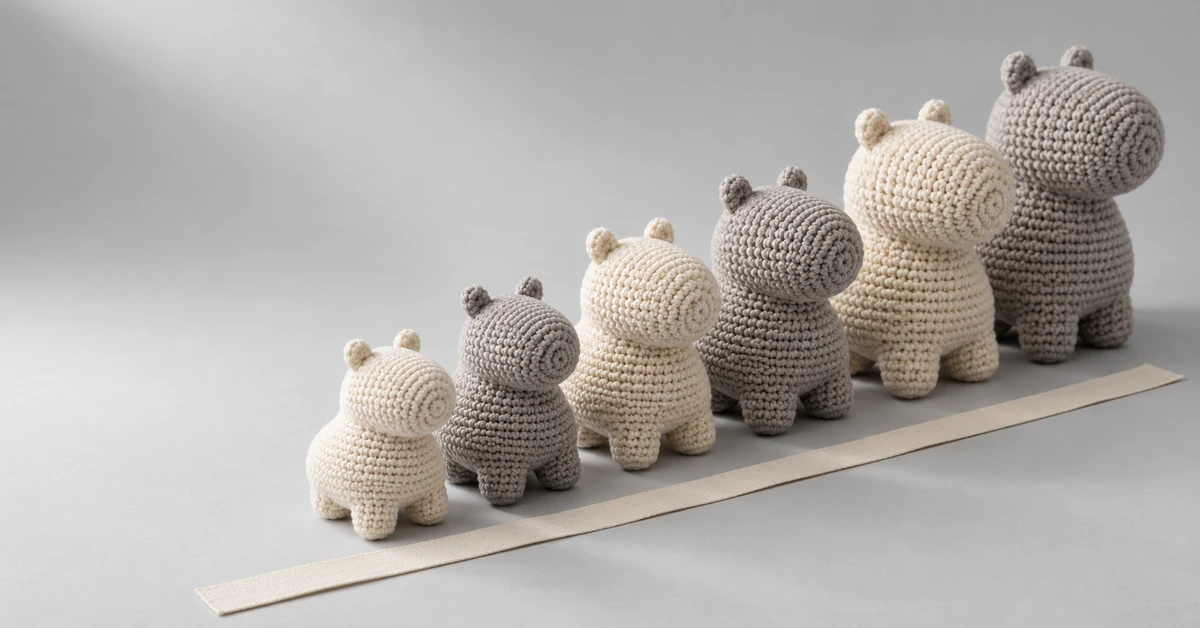
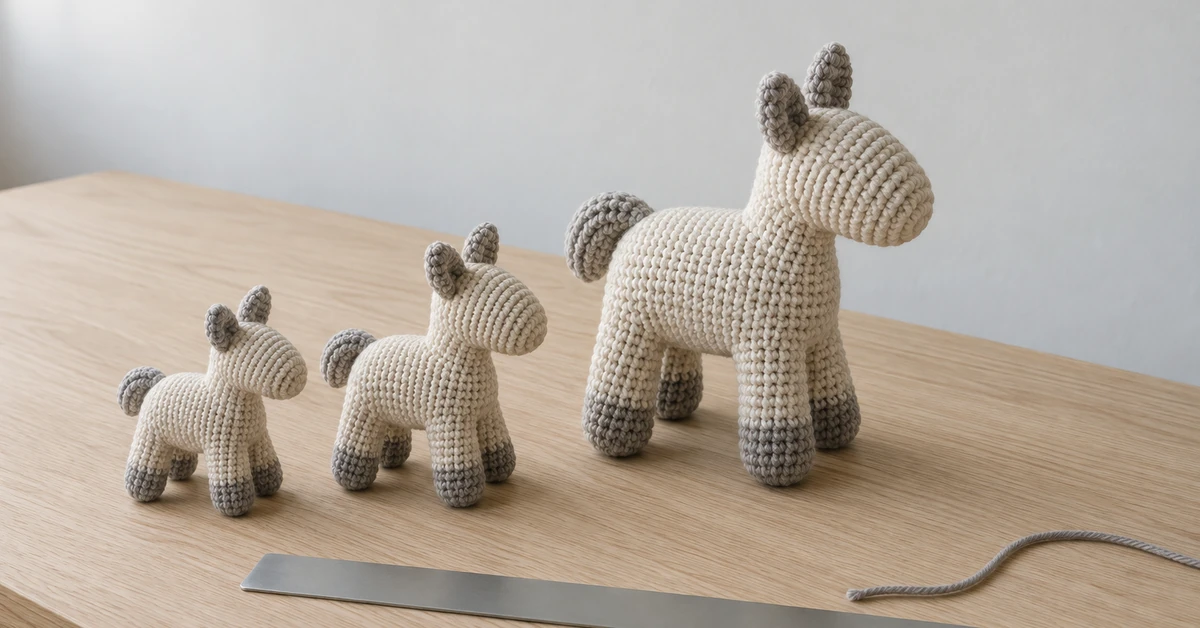
Handmade variation is expected; uncontrolled interpretation is not. Define which differences add character and which change identity, durability, or customer expectation. The amigurumi size specification guide shows how landmarks can make soft shapes measurable.
Handoff two is maker to inspector
The inspector needs defect examples, not instructions to make each piece "look nice." Separate critical concerns requiring escalation from major functional or identity defects and minor cosmetic variation. Rotate the item, feel attachments, compare the face, and verify labels and components.
- Correct character, colorway, size and revision
- Stable features and seams under the approved method
- Consistent stuffing distribution and base shape
- No loose unintended material or production residue
- Correct labels, barcode and traceability information
Handoff three is inspection to packaging
Soft products can be distorted to fit a smaller pack. Run a compression and recovery trial using production-equivalent packaging and realistic storage time. Photograph the item immediately after removal and after a defined recovery period. Check ears, limbs, wings, hair, clothing, facial pieces, and base stability.
The amigurumi packaging compression test provides a useful conditioning sequence. Packaging approval should include the smallest allowable item and the largest allowable item because fit changes across tolerances.
Handoff four is unit pack to master carton
Carton pressure, orientation, humidity, and movement can affect the product and its presentation. Specify units per layer, protective separation, allowable compression, carton dimensions, markings, and stacking assumptions. Inspect units from corners and center after transport simulation.
| Carton observation | Possible cause | Response |
|---|---|---|
| Flattened outer units | Side pressure or weak case | Change orientation, separation or carton |
| Mixed colorways | Pack-out identity failure | Add scanning or fixture control |
| Scuffed tags | Movement against product or board | Change retention and surface contact |
| Odor after opening | Materials, moisture or packaging | Quarantine and investigate source |
Handoff five is shipment to stockroom
Receiving should reconcile purchase order, carton count, finished code, quantity, visible condition, and required documentation. Do not rely on a character name alone. Similar-looking variants need scannable, human-readable identifiers.
Define how opened cartons are protected. Loose pieces in an overfilled bin can lose tags or deform before reaching the sales floor. Keep each item connected to its unit identity throughout stockroom handling.
Handoff six is stockroom to display
Test the actual shelf, basket, peg, or freestanding arrangement. The product should remain identifiable without hiding required information or compressing delicate features. If the item is unboxed, decide how the label remains attached without becoming an awkward visual or handling hazard.
- Load the planned facing count.
- Remove the center and edge units as a customer would.
- Return one unit without staff rearrangement.
- Inspect feature shape and label visibility.
- Repeat after a full day of representative handling.
Handoff seven is display to customer hands
Customers squeeze, rotate, compare, and sometimes pull features. Simulate reasonable retail handling before approval. Observe whether clothing shifts, tags detach, surface fibers change, or limbs remain displaced. This is not a substitute for product-specific safety and performance testing; it reveals channel wear.
The amigurumi seam strength test explains how to separate construction evidence from vague claims. Agree on methods suitable for the actual item, materials, intended use, and market.
Handoff eight is customer choice to checkout
Scan each variant against the retailer's item master. Confirm description, price, tax and inventory mapping, and receipt text where relevant. A shared barcode across visibly different stock can hide which style sold and complicate returns.
For amigurumi wholesale assortments, decide whether variants are individual SKUs or a mixed design sold under one program. The choice affects forecasting, carton packing, shelf labels, reorder precision, and customer promises.
Handoff nine is checkout to the new environment
The customer may carry the item loose, gift it, place it in a nursery, use it as decor, or treat it as a toy. Marketing, packaging, age presentation, and product construction should align. Do not use lifestyle photography that implies unsupported uses.
Provide care information supported by the materials and construction. Test the proposed method on production-equivalent samples, then assess dimensional change, shape, color transfer, surface, attachments, labels, and drying.
Handoff ten is customer care to traceable action
Support teams need the finished code, batch clue, photograph angles, purchase channel, and issue type. Build an intake form that captures those facts without asking customers to identify internal yarn codes.
| Issue type | Useful evidence | Internal owner |
|---|---|---|
| Wrong variant | Tag, receipt and full product photo | Inventory and fulfillment |
| Detached feature | Close-up, batch and use context | Quality and compliance |
| Shape distortion | Pack condition and recovery time | Packaging and quality |
| Care outcome | Method used and before/after photos | Product and labeling |
Handoff eleven is return to quarantine
Returned goods should not flow back to sellable stock by appearance alone. Create a quarantine decision for hygiene, identity, labeling, damage, missing pieces, and traceability. Record the reason code so recurring product and channel issues can be separated from one-off damage.
- Do not retag an unidentified item from memory.
- Do not mix returned and new stock during inspection.
- Escalate safety-related complaints through the defined process.
- Retain evidence needed for supplier corrective action.
- Dispose, rework, or release only under approved criteria.
Handoff twelve is sales data back to production
Reorders should use sell-through by SKU, returns, damage, stockouts, and lead-time reality. Avoid increasing production of the easiest variant when the data shows a different customer preference. Feed complaint patterns into sample approval and work instructions.
A custom amigurumi manufacturer should receive controlled revision requests, not scattered comments. State the affected SKU, feature, current result, target result, evidence, effective lot, and whether artwork or labeling changes too.
Keep retail identity visible without harming the item
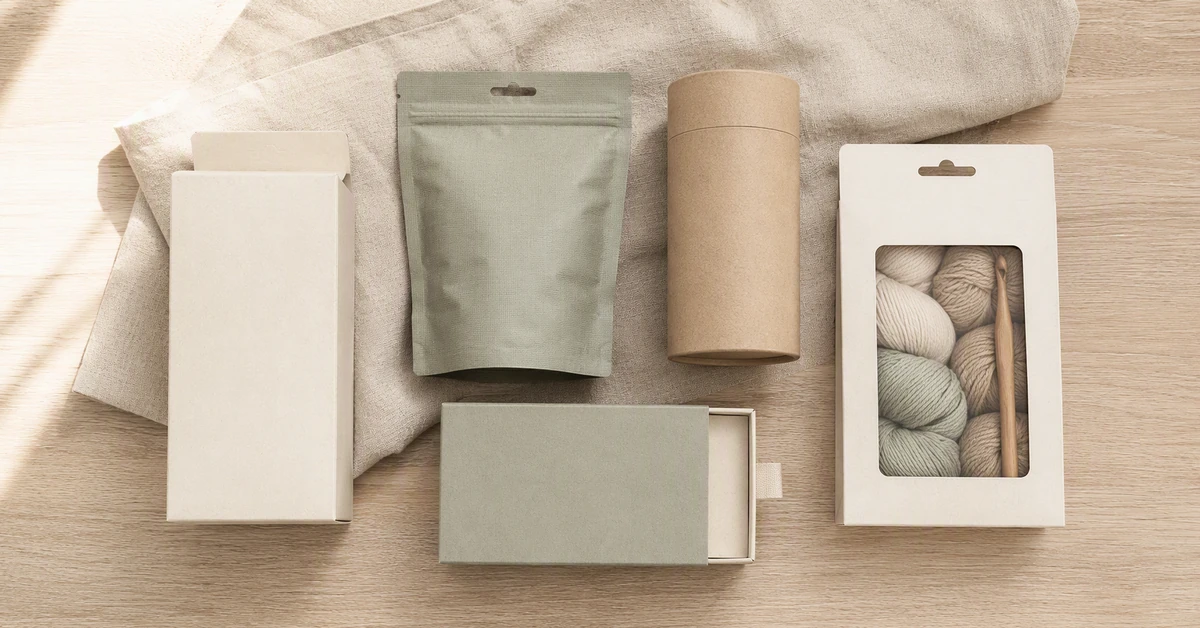
Hangtags, sewn labels, belly bands, boxes, and cards have different effects on appearance, handling and traceability. Test attachment, removal, readability, abrasion, and how the unit looks after purchase. Do not place a tag where it hides the defining feature.
When working with a crochet plush toys manufacturer, confirm terminology and product classification for the actual item and market. Soft appearance does not determine regulatory status by itself.
Review safety and labeling for the actual market
The item's intended use, age presentation, materials, components, construction, and destination determine the review path. The CPSC provides official information about children's products and small parts for toys and children's products. The EU also provides a summary of the General Product Safety Regulation.
Use qualified laboratories and specialists to determine applicable requirements. Do not infer compliance from yarn composition, handmade construction, a supplier statement, or an adult-themed photograph. Keep reports linked to the exact SKU and production controls.
How Onehourcrafts maps custody to evidence
Onehourcrafts can connect the master sample, production specification, inspection, labels, pack-out, carton, retail presentation, and reorder records. A useful retail ready amigurumi toys brief includes item roles, dimensions, materials, intended market, display format, labels, quantities, assortment logic, testing expectations, traceability, and revision process.
Frequently asked questions
What makes an amigurumi item retail ready?
It needs controlled identity, production evidence, suitable labeling and packaging, reliable handling, scannable retail data, and a review appropriate to intended use and destination.
How much handmade variation is acceptable?
Define measurable and visual tolerances by feature. Variation cannot change identity, intended function, safety, labeling, or the customer promise.
Should every colorway have a separate barcode?
It depends on inventory and retail strategy. Separate codes improve variant-level forecasting and returns; a mixed code can simplify assortment selling but reduces precision.
How should a golden sample be stored?
Protect it from deformation, light, dust and handling. Attach revision, approval date, measurements, photos, materials and signatures.
Can soft toys be compressed for shipping?
Only after a controlled trial shows acceptable recovery, presentation and function across size tolerances and realistic storage conditions.
What should receiving teams check?
Check carton markings, finished codes, counts, visible condition, barcode, variant mix, documentation and a defined sample of unit quality.
How should customer complaints be coded?
Use categories that point to ownership: identity, construction, packaging, transport, display, care, fulfillment, labeling or possible safety concern.
Can an adult collectible skip children's product review?
Do not assume. Classification depends on the actual product, presentation, intended use and applicable market rules; obtain qualified advice.
What belongs in a production specification?
Include pattern revision, materials, colors, gauge, dimensions, stuffing, feature placement, joining, finishing, labels, packaging and inspection criteria.
When should a variant receive a new SKU?
Create a rule based on customer-visible change, inventory need, price, materials, compliance records, artwork, and the retailer's item-master requirements.
Approve every custody change
Approve retail ready amigurumi toys when identity and condition survive all twelve handoffs: production can repeat the design, packaging protects it, retail can count and sell it correctly, customers receive an honest item, and returns or feedback trace back to actionable records.