
A tiny crocheted frog sits beside a card that says, “You've got this.” It is not expensive, large, or technically complicated. Still, a shopper can picture exactly who should receive it.
That moment explains much of the opportunity in amigurumi wholesale. Retailers are not merely choosing small yarn animals. They are choosing the joke, message, occasion, scale, and expression that make one character feel perfect for somebody.
“Cute” is useful, but it is only the beginning. A strong product gives the customer another sentence: this belongs on my desk; my sister collects frogs; this would cheer up a friend; I want to make the matching one myself.
The pocket character with something to say
Small encouragement gifts work because the character and message finish each other's thought. A sleepy bear might say “Rest is productive.” A bee can offer “You've got this.” A frog has an almost unfair advantage in pun-based cards.
The message should not feel pasted onto a random toy. Match the face, pose, colors, type, and wording. If the card is the main reason to buy, give it enough space and print quality to feel like part of the product rather than a shipping insert.
A shop can carry these throughout the year. Exams, new jobs, recovery, friendship, moving house, and ordinary difficult weeks do not depend on one holiday calendar.
A keychain that still looks like the character
Shrinking a standard doll does not automatically create a good bag charm. At keychain scale, a long ear bends, a loose scarf catches, and a complicated face disappears in a product photograph.
Begin with the silhouette. A round bird, mushroom, whale, fruit, or compact animal may keep its identity better than a detailed figure. Reinforce the attachment point and decide whether the item is meant for keys, a backpack, or a handbag. Those uses place different stress on the loop and hardware.
Keychains also make a collection easier to try. The customer can buy a favorite character at a lower price before moving to a larger desk or gift version.
The desk companion that is allowed to have a mood
Not every character needs a wide smile. A grumpy cloud, tired cat, worried dinosaur, or serious little vegetable can be more memorable because it feels specific.
Desk products should sit well without constant adjustment. A weighted or flatter base, balanced head, and pose that reads from the front matter more than unseen detail on the back. Keep the scale small enough for a monitor shelf, bedside table, or bookcase.
This is where naming becomes useful. “Mina the Monday Mushroom” is easier to remember than “crochet mushroom, assorted color.” A short personality line can continue onto packaging and social content without forcing a long fictional story.
Seasonal pieces people may keep after the season
A crocheted pumpkin or snowman can be an ornament, table decoration, gift topper, or small collectible. That gives it a life beyond the few seconds in which a normal novelty item is opened.
The difficulty is timing. Sampling, photography, production, and delivery must finish before the selling window begins. A sensible first seasonal family uses shared yarn colors and construction so three or four designs look like a display rather than separate experiments.
Leave room for a character to return. A winter bear might wear a scarf this year and hold a tiny gift next year. Customers gain something new, while the retailer keeps a familiar face.
Why an animal family is stronger than eight unrelated animals
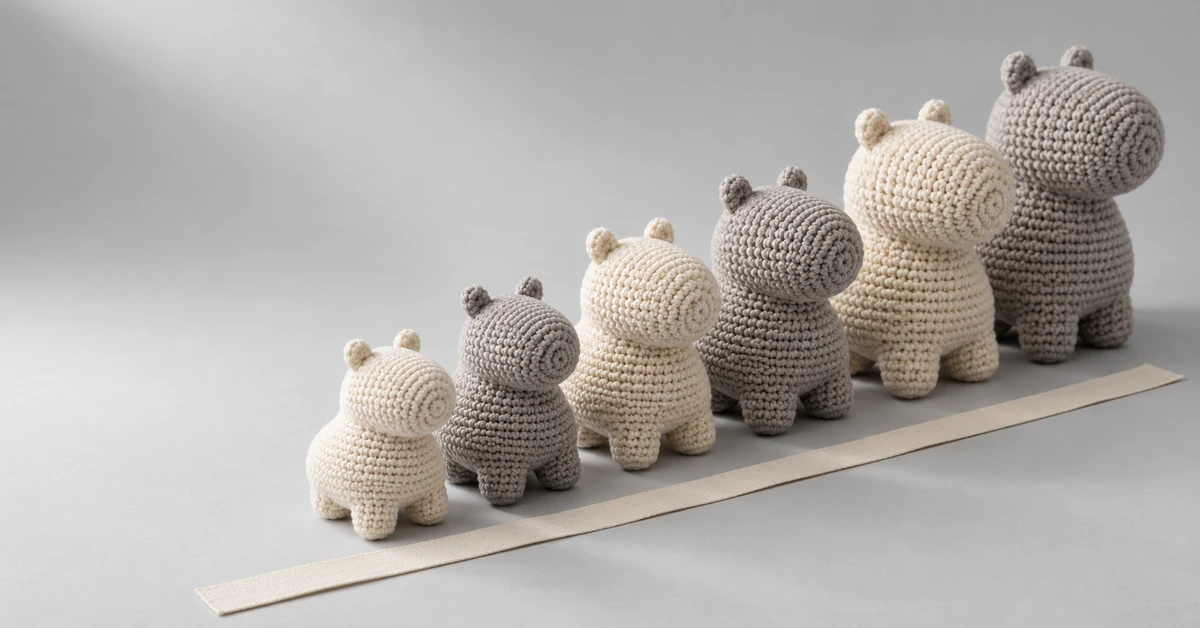
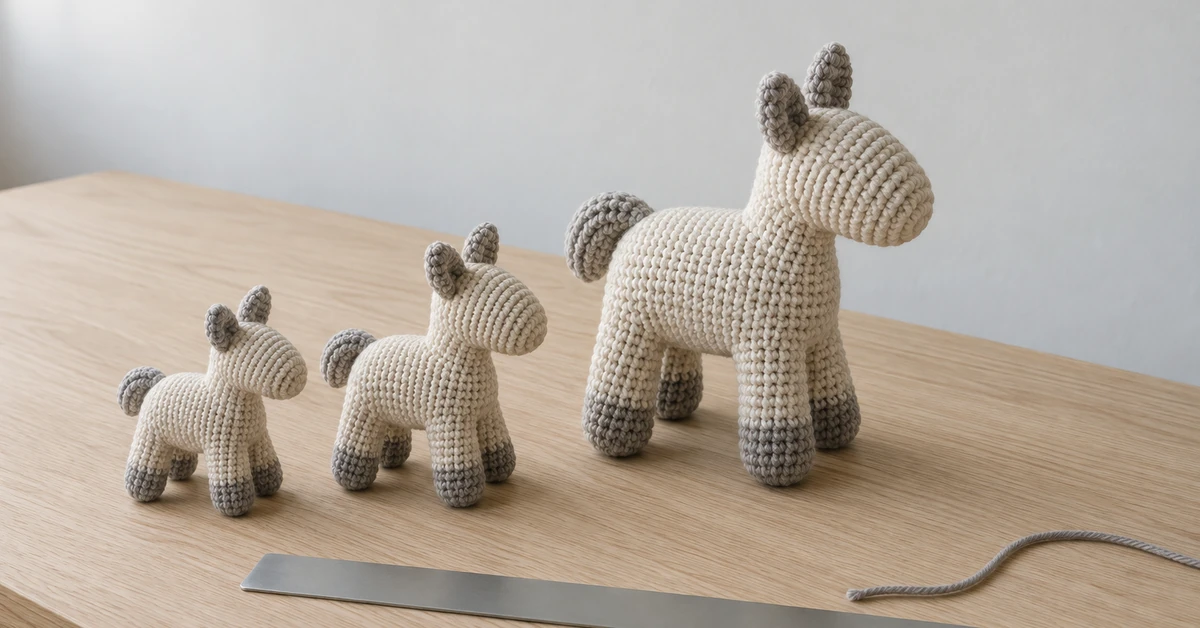
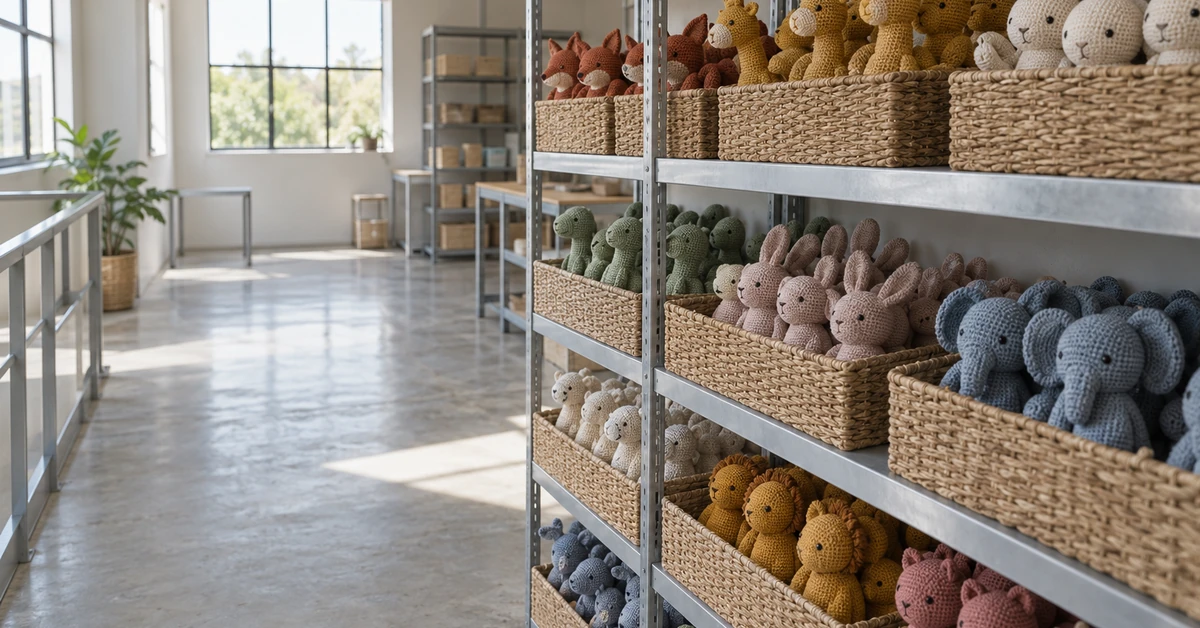
A rabbit, fox, bear, and frog can share the same eye style, body proportion, striped accessory, or quiet color palette. That single rule makes group photography easier and helps the customer recognize the collection from across the shelf.
The family does not need a complicated universe. One sentence about each character is enough. What matters is a visible relationship and a reason to choose a favorite. The range can then grow without starting over whenever a new animal is added.
For a first order, combine several very small pieces with two or three standard-size characters. This creates different prices without asking the design language to do two completely different jobs.
Flowers for customers who are not shopping for another toy
Crochet flowers widen the audience. A single stem can sit in a small gift sleeve; three stems become a bouquet; a flower and character can share one message card. Nothing wilts on the way home.
Color direction changes the mood. Bright daisies feel playful, muted wildflowers can suit home and wedding gifting, and a sunflower clipped to a bag becomes an accessory. Photograph flowers in use: beside a book, on a tote, in a bud vase, or wrapped as a small present.
The construction should survive handling. Stems, leaves, and attachments need enough support to stay intentional rather than collapsing into the package.
An original mascot needs more than a front-view drawing
Brands, museums, events, and hospitality businesses often begin with a flat illustration. Crochet has thickness, seams, yarn direction, and practical limits that the drawing does not show.
Useful references include front, side, and back views; color values; intended size; important accessories; expression; and the features that must not change. Decide where the mascot will live. A shelf gift, keychain, photo prop, and giveaway version may need different construction even when the face stays the same.
Start with the recognizable features, not every printed detail. A distinctive hat, color block, or ear shape may carry the identity more successfully than several tiny marks that disappear in yarn.
The finished character can invite the customer to make one
A character that already attracts attention can become a DIY kit, but the pattern should not be treated as a manufacturing by-product. The customer needs a project they can actually complete.
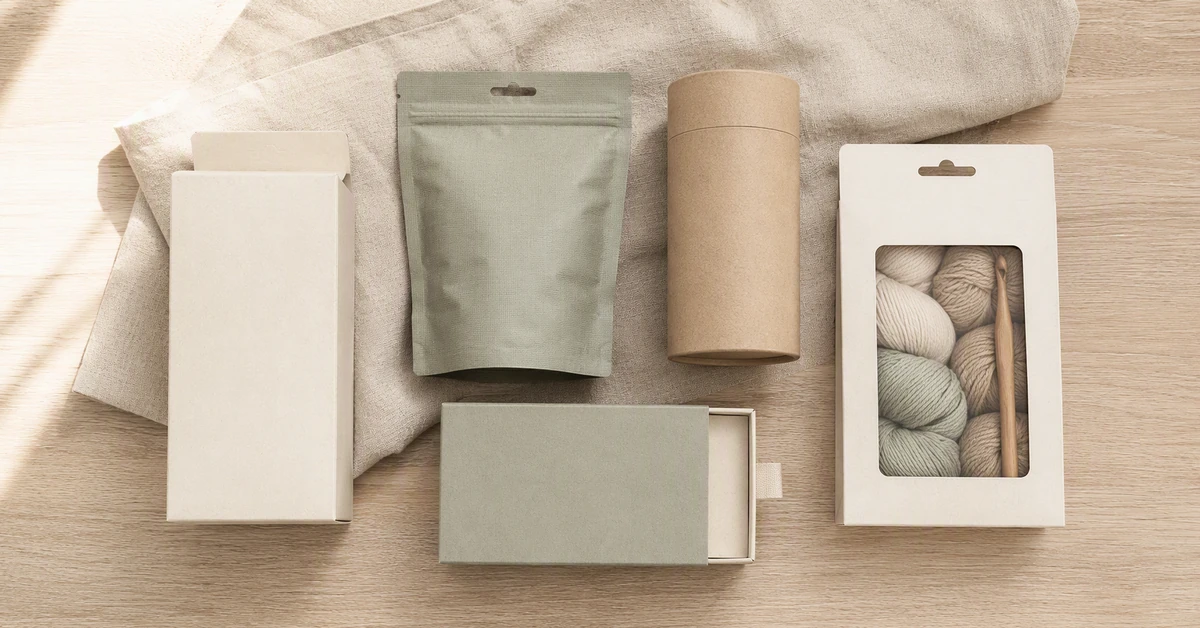
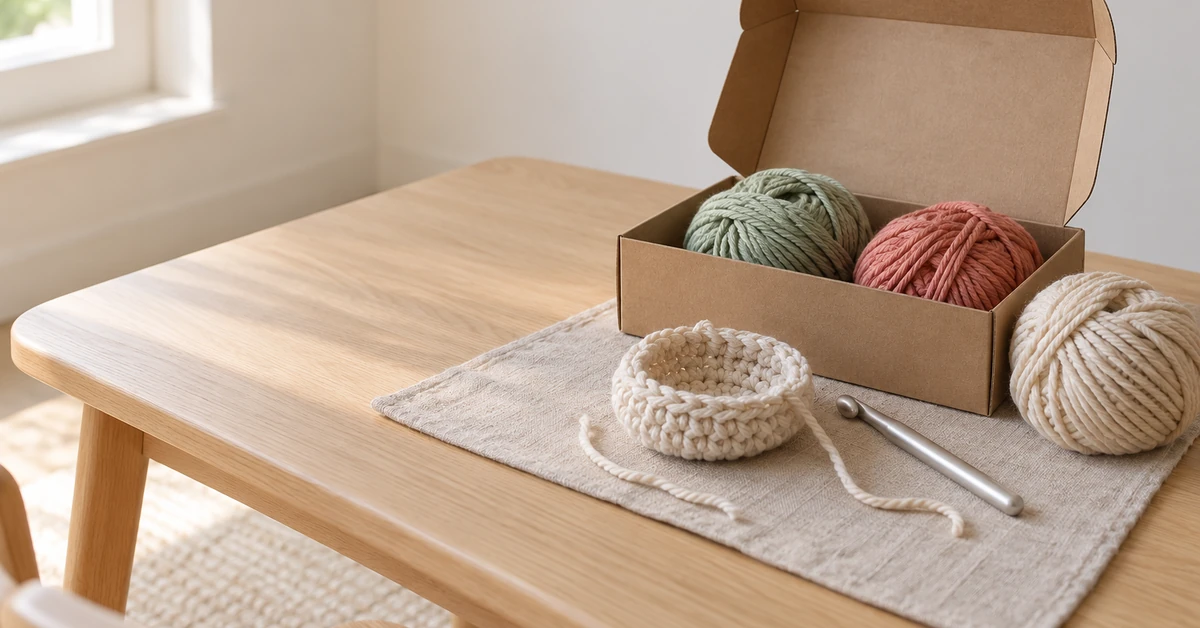
Simplify awkward joins and tiny details where necessary. Portion the yarn, include enough filling, match the hook to the material, and test the instructions with someone close to the stated skill level. The box should show the finished result clearly and admit honestly whether it is a first, second, or more advanced project.
A finished figure beside its make-your-own version gives the retailer two shopping moments: “I want this character” and “I want to make this character.”
A compact launch can still feel like a real collection
When comparing amigurumi wholesale ideas, a first range of eight to twelve items is enough. Four pocket or card characters can cover small gifts. Two keychains add everyday use. Two standard-size figures anchor the display. One seasonal piece and one DIY kit give the range something new to talk about.
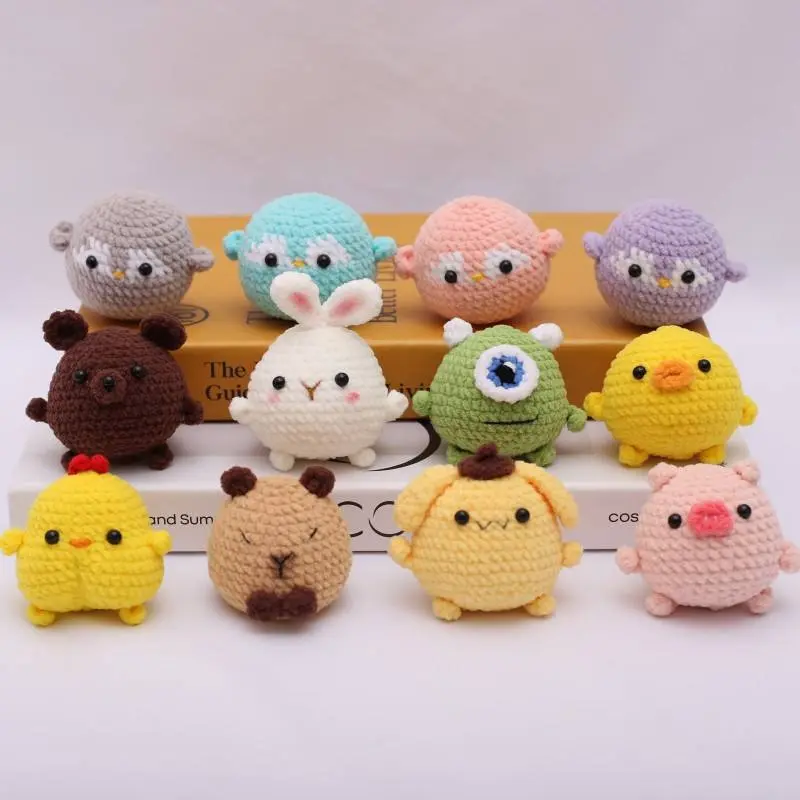
Choose one family resemblance. It might be embroidered eyes, warm muted yarns, striped scarves, rounded feet, or illustrated cards with the same border. Keep the rule visible but light. The characters should feel related, not cloned.
Look at the face in a thumbnail
Online, the first encounter may be an image the size of a postage stamp. Check whether the face, silhouette, and main accessory are still clear. Oversized tags and busy backgrounds can hide the very detail that makes the character appealing.
Photograph the front, side, scale in hand, and intended setting. Add a group image to explain the collection. Compare several production pieces together so natural handmade variation does not quietly change the approved expression or proportion.
Where Onehourcrafts fits
Onehourcrafts develops custom crocheted products and OEM amigurumi, including animal dolls, character gifts, message-card pieces, keychain pouches, DIY kits, and private-label packaging.
A useful first enquiry includes the customer, product format, artwork or reference direction, intended size, main colors, sales market, packaging idea, quantity, and launch timing. Those details give sampling a real target.
Questions that come up before sampling
Which amigurumi products suit gift shops?
Message-card characters, bag charms, desk companions, seasonal ornaments, flower gifts, and small animal families give shoppers clear reasons to buy. The right mix depends on the shop's customer and price range.
Can a supplier work from original character artwork?
Yes. Front, side, and back references, colors, size, expression, accessories, and intended use help translate a flat drawing into a crochet sample.
Can the same character be sold finished and as a kit?
Yes, although the DIY version may need simplified construction, different material allowances, and instructions tested for the advertised skill level.
How many designs should a first collection include?
Eight to twelve coordinated items can cover several prices and uses without making the first range difficult to manage. Reorders and customer response can guide the next characters.
Give the shopper a sentence after “cute”
A successful amigurumi wholesale range lets a customer say more than “that's nice.” It gives them a friend who needs encouragement, a bag that needs a charm, a desk that needs a tiny Monday mushroom, or a character they would like to make themselves.
Contact Onehourcrafts with the character or collection idea, customer, quantity, packaging direction, and launch timing to discuss finished crochet gifts, custom mascots, and DIY kits.