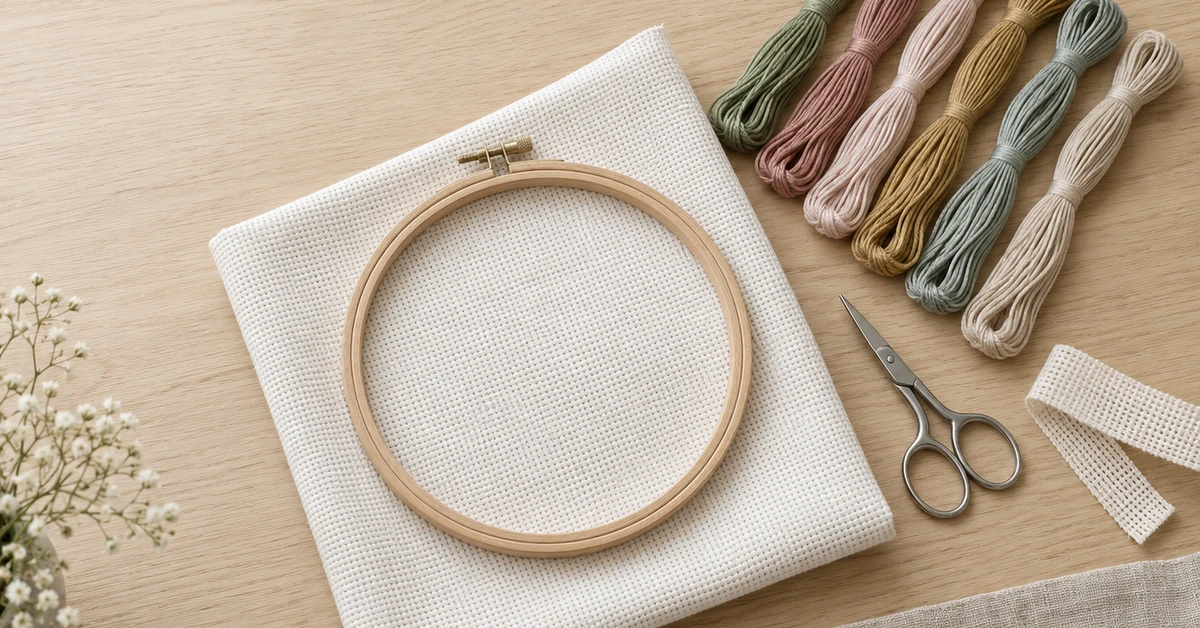

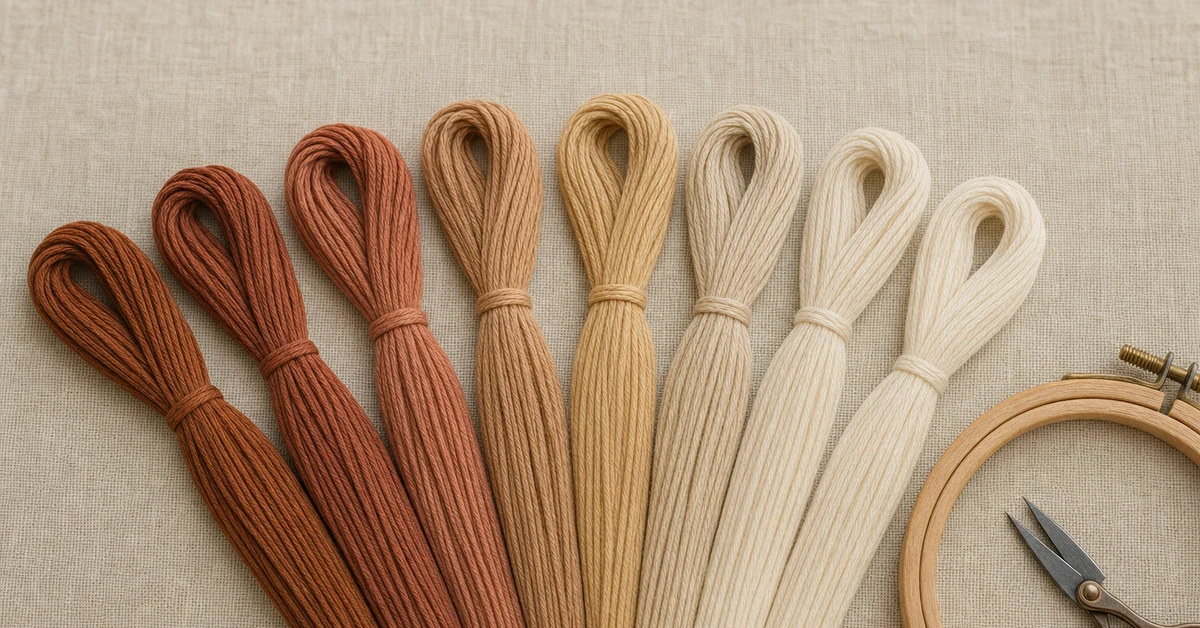
A shopper who runs out of one shade halfway through a chart has a problem no replacement can solve, because the next skein will not match the first one on the same fabric. That single fact shapes everything worth knowing about a cross stitch kit manufacturer: the product being sold is not a bundle of materials, it is a colour promise that has to hold from the dye bath all the way to the last stitch.
Most kit problems that reach a retailer's inbox are described as missing threads or wrong charts. A good share of them are continuity failures instead, where every individual component was correct and the combination was not. Understanding the chain that produces continuity is how a buyer avoids becoming the person who explains it to customers.
A kit is a promise about colour, not a bag of thread
Cross stitch is unusually unforgiving about shade because the work is slow and the surface is flat. A knitter can hide a slight difference in texture or in a seam; a stitcher building an even field of stitches can see the join from across the room. The tighter the design, the more visible the seam.
That is why the meaningful specification for a kit is not the number of skeins but the guarantee that every skein of a given shade in that pack came from one continuous batch, and that the same guarantee will hold if the design is reordered next year.
Follow the colour from the dye bath to the kit bag
Continuity is created and destroyed at specific points. Mapping those points turns a vague worry into a checklist that a supplier can answer item by item.
| Stage | What it fixes | How continuity breaks |
|---|---|---|
| Fibre and spinning | How the thread takes dye | A mill change alters the lustre of the finished floss |
| Dye batch | The shade itself | Two batches fill one order and the seam appears mid-chart |
| Floss finishing | Sheen and hand | A different finishing line changes how the stitch sits |
| Skein and card winding | Strand length and grouping | Shorter strands leave a chart unfinished |
| Kit assembly | The colours that travel together | A substitute shade is inserted without the chart being updated |
| Retail storage | What the shopper finally sees | A faded card at the front of a display misrepresents the pack |
A supplier that can walk through all six stages without hesitating is usually a supplier whose kit runs are stable. The hesitation itself is informative.
What a dye lot really is
A dye lot is one batch of fibre coloured in one vessel under one set of conditions. Within a lot the shade is effectively identical. Between lots it is close, and close is not the same as identical, because water, temperature, dwell time and the fibre's own history all move the result.
In garment manufacturing this is handled by cutting all the pieces of one order from one lot. In cross stitch the equivalent discipline is to build each kit from a single lot per shade and to hold a reference skein from that lot as the approved standard for anything that follows.
Lab dips, cards and the approval that has to stick
Approval usually happens on a lab dip, a small sample of dyed fibre shown on a card or a swatch. A lab dip is a promise about direction, not a photograph of the final product, and the two are frequently confused in email threads that later become disputes.
The fix is to separate the two decisions. Approve the dip for shade direction, then approve a physical skein from the first production lot as the standard that governs everything else. If the buyer only ever approves a dip, the supplier is free to interpret the interval between the dip and the run.
Colour also has to be communicated in a way that survives being written down, which is why referenced systems exist. A measured standard such as those offered through X-Rite gives both sides a number instead of an adjective.
Counted, stamped and printed: three different colour risks
The three common kit formats put the colour risk in different places, so a single quality clause cannot cover all of them.
- Counted kits live or die on floss continuity, because the stitcher counts every stitch and the fabric is only a background.
- Stamped kits shift the risk to the printed outline, which must stay legible after washing and must sit where the chart says it does.
- Printed or pre-stitched formats move the risk to the print itself, where registration and ink fastness replace shade consistency as the main worry.
A buyer who imports two formats under one purchase order and one specification sheet has written a specification that cannot be met. Split the requirements by format and the conversation becomes specific.
Strand length, skein counts and the kit that runs short
Running short is arithmetic long before it is quality. The chart fixes the stitch count, the fabric count fixes how many stitches fit in a centimetre, and the two together fix the thread consumed. Strand length per skein then determines how many skeins the design needs.
Kits run short for three ordinary reasons: the calculation assumed a longer strand than the winding line actually produced, the design was scaled up after the material list was frozen, or the margin was removed to hit a price point. All three are invisible until a customer is halfway through, which is the worst possible moment to discover them.
Ask for the consumption calculation and the margin as separate numbers. A supplier who cannot separate them is quoting a habit rather than a plan.
Storage, light and the fade nobody tests
Floss degrades slowly in daylight, and shop displays are bright. A kit that sits in a window for a season can look correct in the warehouse and tired on the shelf. Light fastness is a real specification, and it is one of the few that a kit buyer can test cheaply by leaving two packs on a windowsill for a month and comparing them.
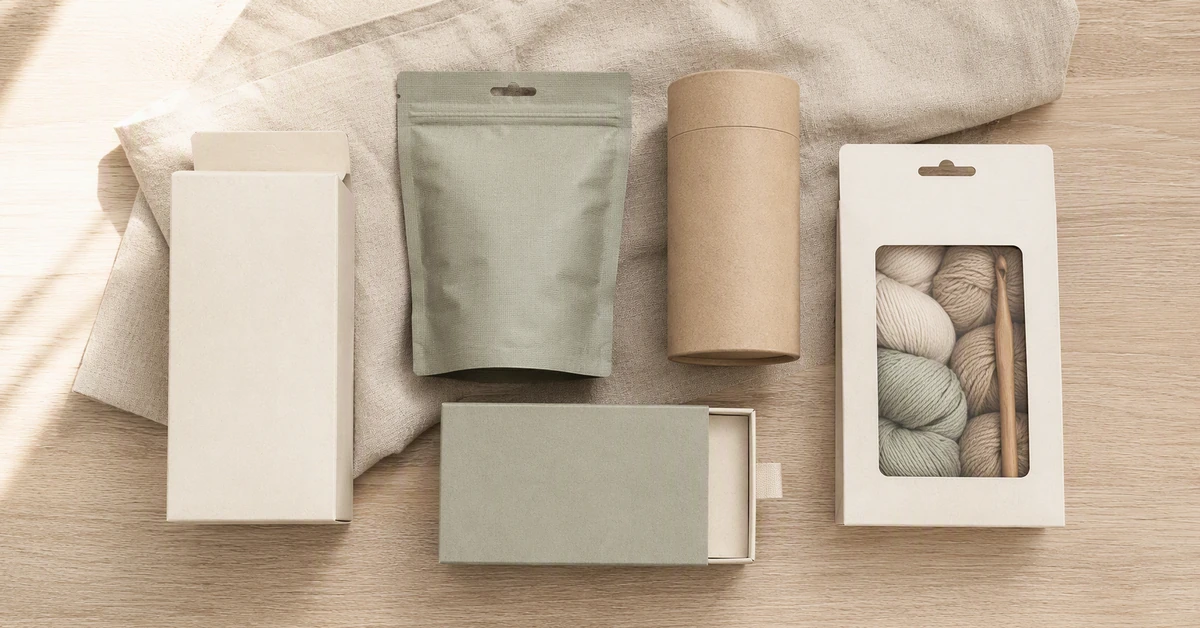
Packaging choices interact with this. A closed card with a printed window reduces exposure; an open display with loose skeins looks generous and fades fastest. Retail ready cross stitch kits usually need the closed format, and that decision belongs to the buyer rather than the printer.
Fabric count changes everything downstream
The fabric count, normally given as stitches per inch, sets the finished size of the design and therefore the amount of thread each shade consumes. Move a design from fourteen count to sixteen count and the picture shrinks while the stitch count stays the same, so the thread requirement does not fall with it in the way a buyer might assume.
For this reason a fabric change is a different product rather than a variant of the same one. It needs its own material calculation, its own sample and its own approval, even when the chart is untouched.
Writing a colour continuity clause
Traded packs and made packs are not the same order
Two titles are used interchangeably for the same work, and the difference is worth ten minutes of thought before an order is placed. A cross stitch kit supplier may trade in finished packs without controlling the floss inside them, which is harmless until a shade has to be reproduced. A cross stitch kit manufacturer controls the winding, the material list and the approval record, and can therefore answer the only question that matters: which lot went into this pack.
The gap appears at the point of reorder. Cross stitch kits wholesale programmes assembled from traded packs inherit whatever lots the trader was able to buy, so a second delivery may be built from a completely different source. The manufacturing route keeps a standard on file and checks against it, which is the difference between a range and a series of unrelated purchases.
Format complicates the same question. Counted cross stitch kits wholesale orders carry the strictest continuity requirement, because the stitcher counts every stitch on plain fabric and any batch break becomes a visible band. A stamped cross stitch kits supplier has the opposite problem, since the printed outline guides the work and must survive washing without shifting. Custom packaging cross stitch kits add a third variable, because a printed shade strip or a printed window introduces a colour reference that shoppers will compare with the floss, even when the two were never meant to match.
- Ask who winds the skeins, because winding tension changes how the floss handles.
- Ask whose name appears on the material list, since that party owns the standard.
- Ask what happens to the reference sample when a design is retired.
- Ask how a printed shade strip is colour-managed against the floss it represents.
Independent textile testing, such as the screening described by OEKO-TEX, answers a different question about the same materials. It does not establish shade continuity, and a certificate should never be read as one.
Writing a colour continuity clause
- Name the reference standard: which physical skein, approved on which date, by whom.
- Name the tolerance in a measurable form rather than as a phrase such as as close as possible.
- State that every pack in a single order will be built from one lot per shade.
- Require advance notice and a fresh approval if a shade is discontinued or reformulated.
- Require the reference skein to be retained for the life of the design, not just the order.
A clause of this kind costs nothing to write and removes most of the ambiguity that turns a quality complaint into a negotiation. Suppliers rarely object to it, because it protects the careful ones from being undercut by the careless.
What to check when a repeat order arrives
Open the carton in daylight, take one skein of the busiest shade from each inner pack, and lay them side by side on the fabric rather than on the card. Compare against the retained reference before the goods are put away, because once they are distributed the evidence is gone.
Then check the two things that only reveal themselves over time: whether the strand length matches the first order, and whether the winding tension produces the same hand. A repeat that looks right and handles differently will generate returns, just later and more expensively. Retaining the reference is also the clearest test of whether a cross stitch kit manufacturer owns the standard or merely refers to it.
When an exact match is genuinely impossible
Some shades cannot be reproduced exactly, particularly hand-dyed and variegated floss where variation is the point. The professional response is to say so in advance and to design around it, either by using the shade in a blended area where variation reads as intent, or by holding a finished stock of the original lot for replacements.
The unprofessional response is to sell the shade as stable and then explain a difference as normal variation. Buyers should treat any claim of exact reproduction across years with caution and ask instead what happens when it cannot be reproduced. A supplier that answers that question early is easier to plan a range with than one that promises perfection.
How Onehourcrafts keeps a shade stable across reorders
Onehourcrafts retains an approved physical skein for every shade used in a cross stitch design and references it at each new build, so a reorder is measured against a standard rather than against memory. Materials for one pack are drawn from one lot per shade, and any planned change is raised for approval before production rather than after.
The kit range is listed on the cross stitch product page, and the sourcing standards behind it are set out in the buying guide.
What a colour brief needs before sampling
Send the design or chart, the fabric count and type, the finished size, the shade references you are working from, the quantity, and the market where the kit will be sold. Add the pack format, because counted and stamped kits need different evidence.
With those items a supplier can produce a material list, a thread calculation and a sample kit that reflects the real product. Send the brief and the reply will include the shade standard, not just the price. Further notes for buyers appear on the blog.
Frequently asked questions
Why do two skeins of the same shade look different?
They were probably dyed in different batches. Shade within a lot is effectively identical, while shade between lots varies slightly with water, temperature and dwell time.
How many times should a shade appear in a kit before continuity matters?
Twice is enough. If one shade is used above and below a break in the chart, a batch change creates a visible horizontal band that no amount of careful stitching can hide.
Is a lab dip the same as an approved production shade?
No. A lab dip shows the direction of the colour. The physical skein from the first production lot is the standard that should govern later orders.
What is the difference between counted and stamped kits?
Counted kits rely on the stitcher following a chart on plain fabric, so floss continuity dominates. Stamped kits carry a printed outline, so print registration and ink fastness dominate.
Why does a kit run out of thread before the chart is finished?
Usually because the strand length produced on the winding line was shorter than the length assumed in the calculation, or because the design was scaled up after the material list was frozen.
Does changing the fabric count affect how much thread is needed?
Yes, and not in an obvious direction. The finished picture gets smaller at a higher count, but the stitch count is unchanged, so the thread requirement needs recalculating rather than adjusting by eye.
What should a colour continuity clause contain?
The reference standard, the tolerance in measurable terms, one lot per shade within an order, advance notice of a discontinued shade, and retention of the reference skein for the life of the design.
How should a repeat order be checked on arrival?
Open one inner pack per carton in daylight, lay a skein of the busiest shade on the fabric and compare it with the retained reference sample before the goods are stored or distributed.
Can cross stitch floss fade on a shop shelf?
Yes. Daylight and bright displays change floss over months, which is why closed packaging is often the better choice for retail ready cross stitch kits.
What happens if a shade is discontinued mid-season?
The supplier should raise it for approval before production and offer either a held stock of the original lot or a documented replacement with an updated chart.