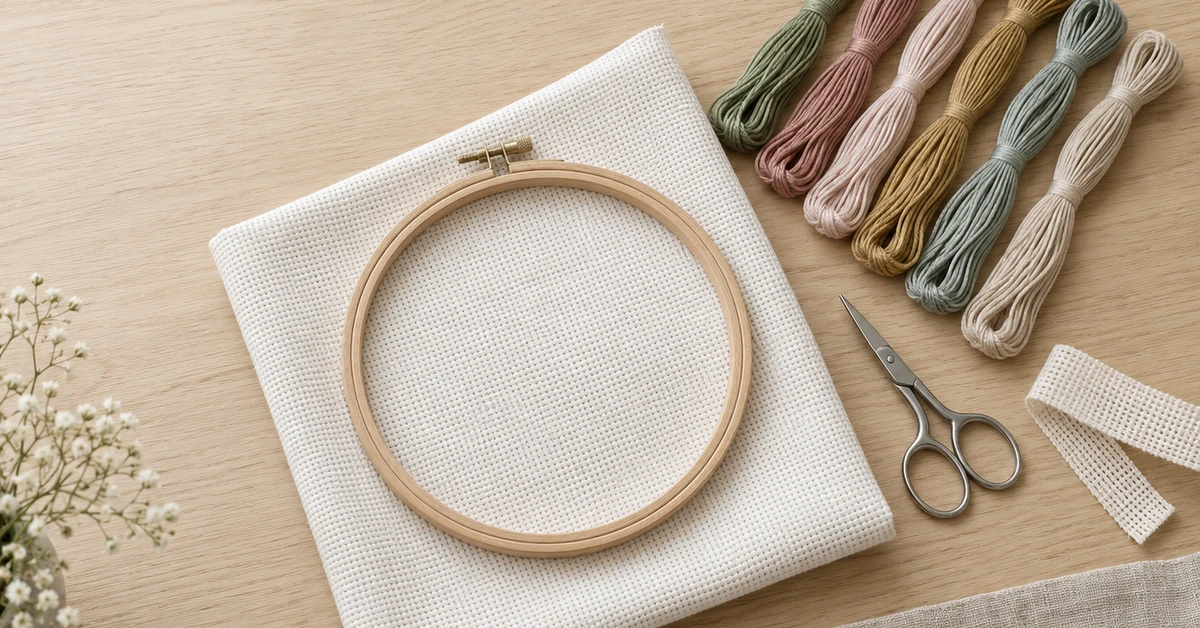

A custom embroidery kit supplier should make revision safer, not slower. Onehourcrafts treats the brief as a controlled document with room for creative exploration, then freezes the evidence that turns a preferred sample into a released product. The method connects artwork, stitch map, thread card, instructions, pack files and approval ownership so a late change does not quietly create a different kit.
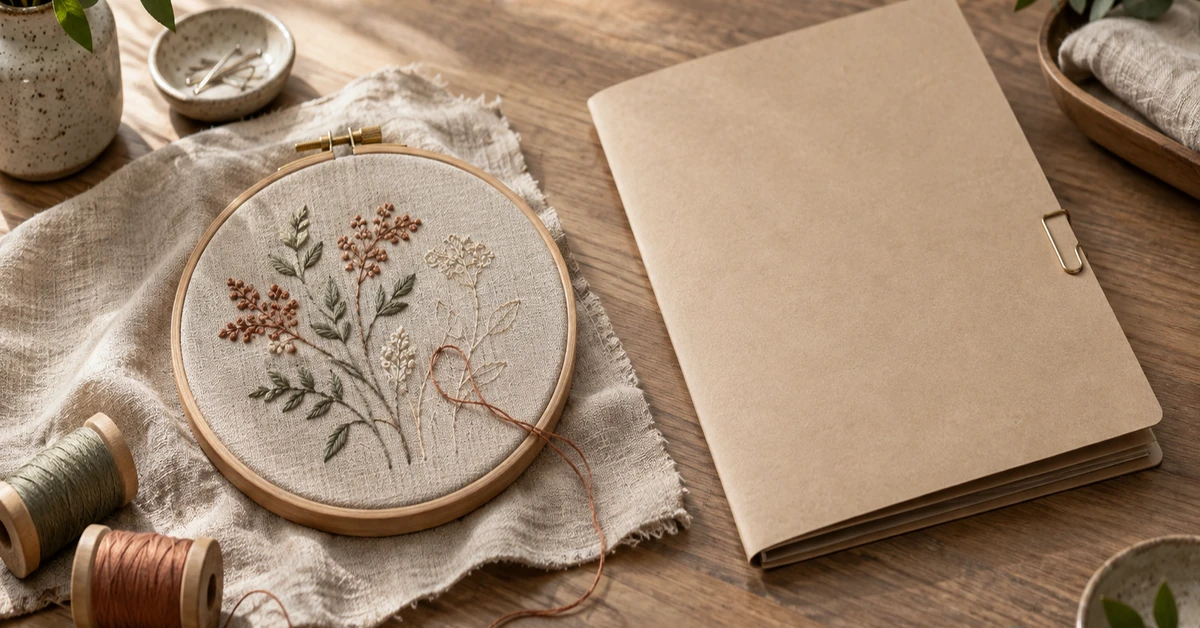
Write the promise before the motif
Start with the customer outcome: a wall piece, a first finished motif, a giftable project or a guided learning experience. The motif is important, but the promise determines fabric size, stitch vocabulary, thread quantity, instruction depth and packaging.
Put the promise in one sentence and list what it does not promise. A beginner-friendly kit, for example, may need a limited stitch set and a clear finishing boundary. A decorative sampler may allow more variation but need a stronger design explanation.
| Brief field | Decision | Evidence |
|---|---|---|
| Outcome | What is made | Finished reference |
| Skill | Who can begin | Trial observation |
| Boundary | What is supplied | Contents map |
| Channel | Where it sells | Pack review |
Separate living files from frozen files
Keep an exploration board for sketches, color tests and alternate motifs. Keep a separate release folder for the approved artwork, stitch map, thread references, fabric, instruction revision and pack artwork. The separation lets the creative team continue without confusing a draft with a production instruction.
Give every file a simple revision label and a date. A supplier should be able to tell which file was used for the physical sample and which changes are still exploratory. Do not rely on a filename that says final without a controlled record.
- Exploration board
- Sample brief
- Approved art
- Released pack
- Change log
Use the stitch map as a contract
A stitch map translates visual intent into a physical action. Mark stitch type, direction, count, color reference and any intentional irregularity. The map should be understandable beside the production-intent fabric, not only on a designer's screen.
When the supplier proposes a different stitch or thread because of production constraints, show the change on the map and the sample. A similar visual result is not automatically the same customer experience; the buyer decides which differences are acceptable.
| Map field | Why it matters | Check |
|---|---|---|
| Stitch | Learning path | First attempt |
| Count | Scale | Fabric grid |
| Color | Recognition | Thread card |
| Direction | Texture | Close view |
Approve thread and fabric together
Thread color can look right on a loose card and wrong on the selected fabric. Approve the pair under the intended light, then place the first stitches beside the swatches. Record the fabric count, hand and any change in opacity or texture.
For custom embroidery kits, a replacement thread or fabric should trigger a focused review of the motif, instruction image, color names and finished appearance. Keep the decision proportional; not every packaging edit requires a full redesign, but each affected claim needs an owner.
- Pair the references
- Stitch the sample
- View under store light
- Record the accepted boundary
Let the first stitch expose the brief
Give the production-intent kit to a reviewer who did not write the instructions. Watch the first stitch, thread start, needle handling and chart lookup. The goal is to identify where the released promise depends on private knowledge or an unstated shortcut.
Use the observation to refine the right file. A confusing start may require an instruction change, a thread label, a fabric mark or a narrower claim. Do not add decorative explanation when a physical cue would answer the question more directly.
- Thread start
- Needle path
- Chart lookup
- First correction
Make artwork changes answerable
When someone requests a motif change, write the reason and the affected evidence before asking for a new sample. A larger flower may change stitch count, thread quantity, chart density, pack image and the time needed to finish.
The change note should state what stays frozen. This keeps a creative discussion from reopening unrelated decisions and gives the supplier a clear response surface. If the change is not worth the evidence work, the team can consciously defer it.
| Change | Likely impact | Frozen item |
|---|---|---|
| Motif size | Count and pack | Customer outcome |
| Color | Thread and image | Fabric |
| Stitch | Learning path | SKU promise |
| Text | Instruction and pack | Physical sample |
Synchronize the pack and instruction
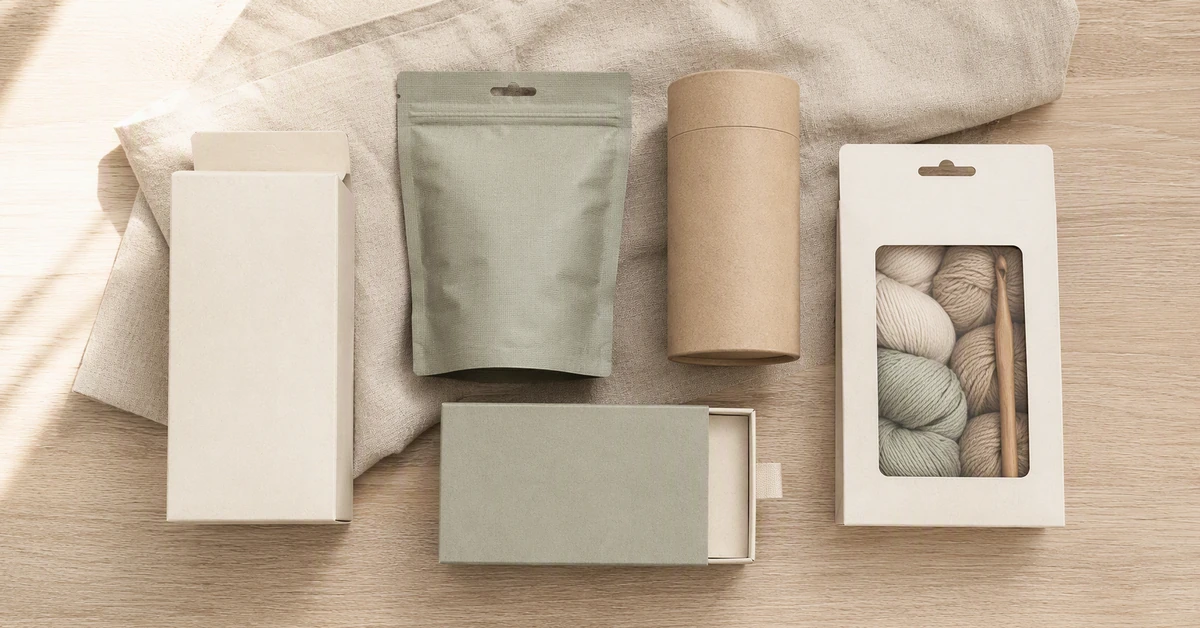
Place the released pack front, contents image, instruction revision and finished reference on one review table. Ask whether the customer sees the same motif, colors, stitch names and included items in every surface. A beautiful front panel cannot rescue a mismatched instruction.
Mark digital support as optional or required and keep its version connected to the physical release. The embroidery collection can anchor the product context while the project-specific files carry the exact customer promise.
- Front panel
- Contents image
- Instruction
- Finished reference
- Digital support
Use revision control with named owners
A revision is easier to close when one person owns the decision and another checks the physical consequence. Build a table for artwork, materials, instructions, pack, commercial copy and destination-specific questions. The supplier can propose, but the buyer should know who releases each field.
Avoid using a general approval label for a specific decision. A signed artwork file does not prove that thread quantity, fabric count or pack contents were approved. Tie each field to the evidence that makes it meaningful.
A custom embroidery kit supplier should be able to return a compact release packet: the file name, physical sample ID, affected instruction pages, pack status and named approver. This does not remove creative judgment; it keeps that judgment attached to the evidence a later buyer can inspect.
Use a short review meeting only after the evidence is assembled. If the question is still about taste, label it as a creative decision. If it changes the user's first stitch, contents or care boundary, move it into the controlled release table and test the consequence.
| Field | Decision owner | Proof |
|---|---|---|
| Artwork | Brand | Released file |
| Material | Product | Sample pair |
| Instruction | Content | First-stitch test |
| Pack | Operations | Packed unit |
Test the late-change scenario
Choose one late but plausible request, such as a color adjustment after the first sample. Run it through the change note, evidence impact, new sample and release check. This embroidery kit sampling exercise reveals whether the team can move quickly without losing the original decision history.
Keep the old sample visible and mark it superseded rather than deleting it. A supplier conversation is easier when the team can compare the reason for change with the new physical result. This also protects the next reorder from a silent return to an earlier version.
- State the request
- List affected evidence
- Approve the new sample
- Mark the old version
- Release the set
Pass the release to an uninvolved buyer
Give the release packet and sealed kit to a buyer who missed the sampling meetings. Ask that person to identify the approved motif, materials, instruction version, pack and the most recent change. Any gap shows where the record still depends on memory.
Compare the handoff with the custom sampling guide. The GS1 barcode standards overview can orient identity questions when pack levels or variants change. Keep the product-specific decision with the responsible organization.
- Release packet
- Sealed kit
- Latest change
- Buyer read-back
Write the inquiry as a living brief
State the customer outcome, motif, fabric, stitch map, thread references, quantity scenarios, sample rounds, pack files, instruction language, change rules and acceptance evidence. Ask the supplier to quote the cost of a revision as a visible stage, not a vague exception.
The buying-guide library can frame wider sourcing questions. For process ownership, the ISO quality management principles are a useful orientation, not a certification claim about a particular supplier.
| Inquiry block | Supplier response | Release evidence |
|---|---|---|
| Creative | Motif and map | Approved art |
| Material | Thread and fabric | Paired sample |
| Change | Stage and cost | Change log |
| Pack | Files and unit | Packed reference |
How Onehourcrafts keeps revisions useful
Onehourcrafts can keep the exploration board open while tying the released artwork, stitched sample, thread card, instructions, pack and owner table to one approved version. Creative flexibility becomes easier to price and safer to repeat.
Before approving a custom embroidery kit supplier, run one late-change scenario and ask which files, samples and claims move with it. Keep the superseded sample and the release note attached to the quotation so the next order begins from the correct version.
- Living brief
- Paired sample
- Owner table
- Late-change test
Frequently asked questions
What should a custom embroidery kit brief contain?
Include the customer outcome, motif, skill boundary, fabric, stitch map, thread references, instructions, packaging, quantities, revisions and evidence.
Why separate exploration and release files?
It lets creative work continue without allowing a draft sketch or old sample to become an accidental production instruction.
What is a stitch map?
It translates the visual motif into stitch type, direction, count and color references that can be checked on fabric.
When should a material change reopen the sample?
When it can affect appearance, learning, quantity, care, pack copy or another released customer promise.
Who should approve a revision?
Assign an owner to each field and require physical evidence where the decision changes the kit experience.
Can a late color change be handled quickly?
Yes, when the change note identifies affected evidence and the old and new samples remain traceable.
Should digital support be part of the release?
Mark it optional or required, synchronize its revision and test the stated access boundary.
How can a supplier quote revisions?
Ask for visible sample stages, affected files, approval points and any version-specific cost.
What should the first supplier inquiry ask for?
Request a production-intent sample, paired material references, revision rules, pack files and acceptance evidence.
Why keep a superseded sample?
It preserves the reason for the change and prevents a later reorder from quietly returning to an obsolete version.