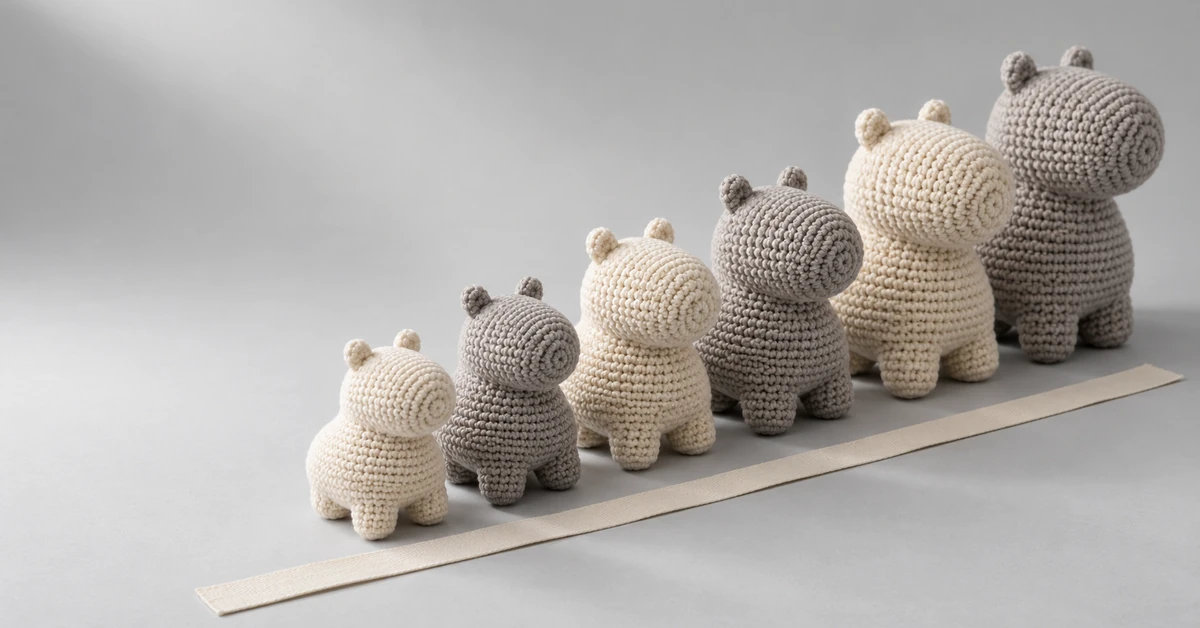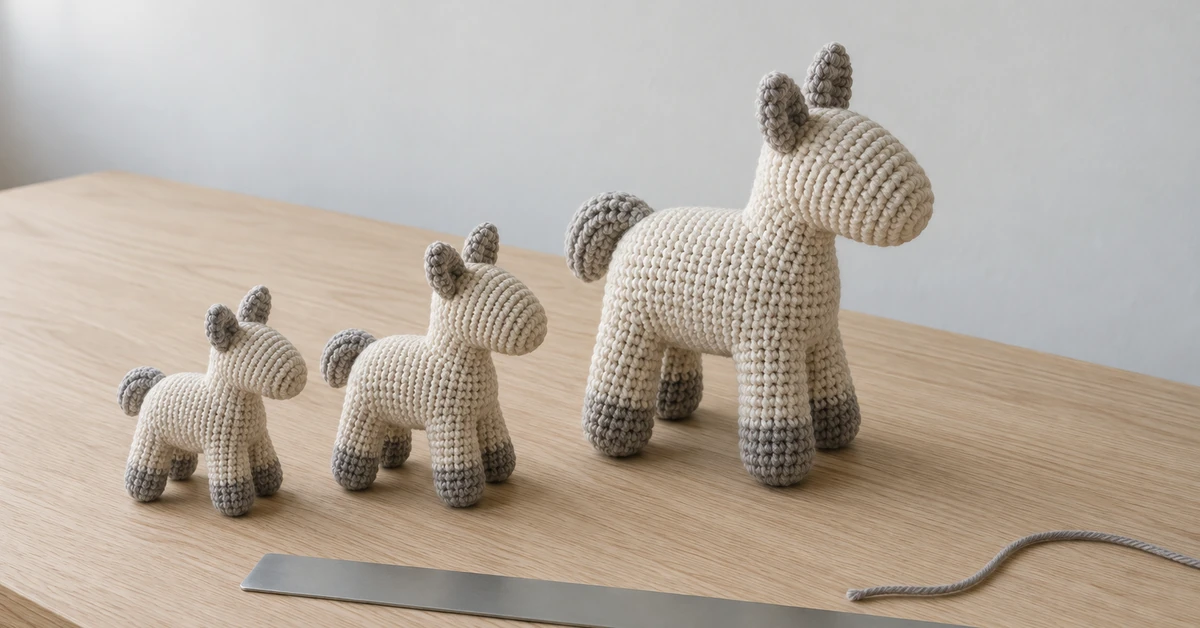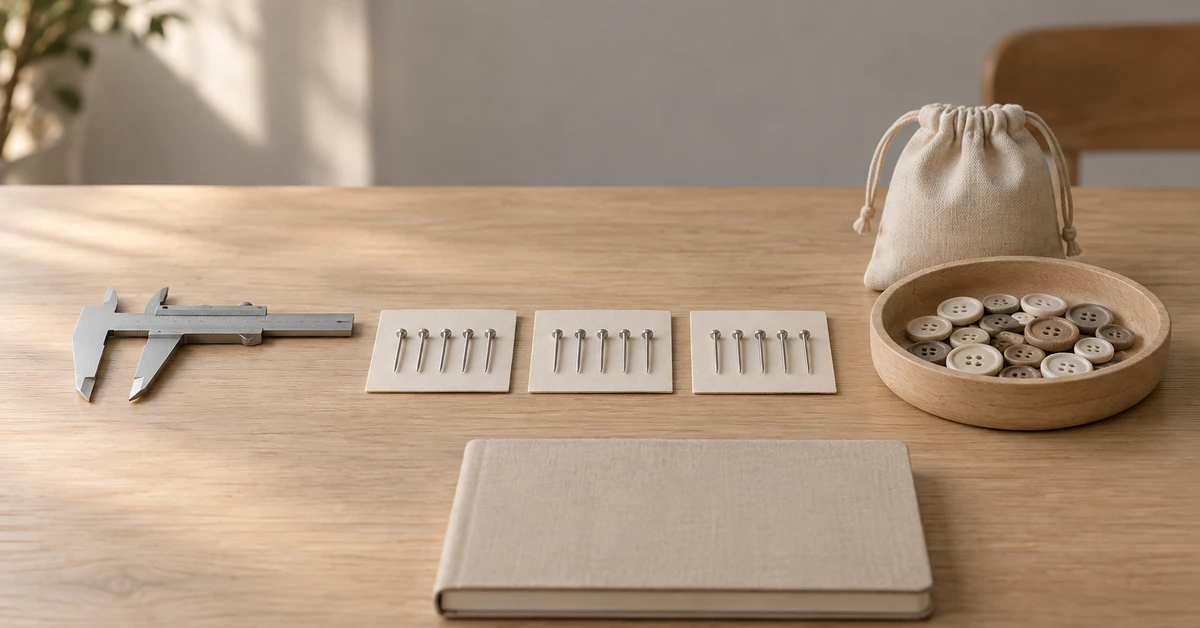
A custom sewing notions manufacturer is judged on the batch, and the batch is never quite the sample. The sample was made slowly, inspected by three people and probably photographed. The batch was made on a Tuesday afternoon by whichever line was free. Bridging that gap is the entire job of an inspection plan, and it takes about two pages to write.
Most buyers who complain about quality are not complaining about the average. They are complaining about the tail: the one carton in twenty where the pins are short, the card print is pale or the thread count is off. An inspection plan is how a tail is measured before it reaches a customer.
The sample you approved is not the batch you will receive
A sample is evidence of capability, not a promise about a production run. Production adds pressure: more operators, longer shifts, sharper cost targets and materials drawn from more than one delivery.
None of that is misconduct. It is the ordinary shape of manufacturing, and it is precisely why a buyer needs an inspection stage that samples the batch rather than the promise.
A custom sewing notions manufacturer that inspects only at the end is measuring a decision that has already been made. The point of planning the stages is to be able to change the outcome while changing it is still cheap.
Sort the faults before you count them
Inspection fails when every fault weighs the same. A missing safety pin inside a sealed retail card and a slightly crooked label are not the same problem, and treating them as one produces a report nobody can act on.
| Class | What it covers | Normal handling | Who decides |
|---|---|---|---|
| Critical | Anything that makes the product unsafe or unusable | Reject the affected units and re-inspect the batch | Buyer, notified the same day |
| Major | Function failing, wrong count, wrong shade against the approved standard | Sorted and replaced before packing | Buyer, with photographs |
| Minor | Cosmetic variation inside the agreed tolerance | Accepted to a stated limit | Factory, recorded in the report |
| Packaging | Print, glue, barcode scannability, carton marks | Corrected before the cartons close | Factory, with artwork reference |
Once the classes are agreed, the argument moves from whether the goods are good to how many units fall in which class, which is a conversation that can be settled with arithmetic.
Sample size: how many units a verdict needs
The purpose of sampling is to make a decision about a batch using a fraction of its units. That requires a stated sample size and a stated accept or reject threshold, otherwise the result is an opinion with numbers attached.
Statistical sampling plans are the standard tool for this. They are described in general terms by bodies such as ISO, and most factories already work to one internally even when nobody has written it down. The buyer's job is to know the plan and to agree it before production rather than after a complaint.
Three gates, and what each one catches
The three inspection stages catch different faults, and the cost of finding a fault multiplies as the goods move downstream. That is the whole argument for spending more attention earlier rather than more people at the end.
| Gate | What is examined | Fault it usually catches | Cost at this stage |
|---|---|---|---|
| Incoming | Yarn, components and printed packaging | Wrong shade, wrong part, weak print or a barcode that will not scan | A replacement delivery |
| In-process | The filling, sealing and counting stations | Short fill, weak seal, miscounted card | Rework on part of the run |
| Pre-shipment | Packed cartons and retail units as the customer meets them | Mixed cartons, damaged packs, label placement | Opening and repacking cartons |
| Arrival | The shipment at the buyer's dock | Transit damage and anything the earlier gates missed | Sorting, claims and lost selling time |
A craft supplies manufacturer that runs all three gates usually shows a cleaner defect pattern than one that inspects once, because the report describes where the fault entered rather than only how it looks. For a retail ready craft products supplier the last gate matters most: print, glue and barcode scannability stay invisible until somebody tries to sell the item.
Incoming inspection: yarn, components and packaging
The cheapest faults to catch are the ones caught before anything is assembled. Incoming checks cover the yarn against the approved shade and count, the components against the approved part, and the printed packaging against the approved artwork.
For notions specifically, three incoming items cause most downstream trouble: the shade of thread against the card, the measurement of pins and needles against the declared size, and the print density of the label, which decides whether a barcode scans at the till.
Textile screening claims belong in the same stage. Where a supplier works to published standards such as those described by OEKO-TEX, the certificate should be matched to the material it covers rather than to the range as a whole.
In-process inspection: the line is the fastest place to correct
In-process checks are cheap because a correction is still possible. On a notions line the useful checkpoints are the filling station, the carding or sealing step and the counting step, because each of those can be wrong in a way that is invisible once the retail unit is closed.
The practical version is not a quality department walking the floor. It is a written checkpoint at each station with a frequency and a signature, which turns a habit into a record.
Pre-shipment inspection: the last honest look
The final inspection happens once the goods are packed and before they are loaded. Its value is in the phrase once packed: this is the last moment at which the goods are cheap to change, and the first moment at which a carton can be evaluated as the customer will meet it.
A pre-shipment pass should record the cartons sampled, the units examined, the defect classes found and the resulting counts. Anything less cannot support a claim later, and a report that cannot support a claim is a formality rather than a control.
Who inspects, and whose signature counts
Three models are common. The factory inspects its own output, a third-party inspector attends, or the buyer inspects on arrival and claims afterwards. Each shifts cost and risk in a different direction.
Factory inspection is fastest and cheapest but has an obvious conflict. Third-party inspection is independent and slower. Arrival inspection is the most expensive because the goods are already at the buyer's dock, but it is also the only model that sees what the shipment actually endured in transit.
On an OEM sewing notions order the buyer's artwork and card are part of the specification, so a packaging fault is a specification fault rather than a cosmetic one and belongs in the inspection report from the start.
Recording faults so the fix is possible
- Photograph the defect against a scale, not in isolation.
- Name the carton, the batch and the station the unit came from.
- Count the units affected rather than describing the problem as occasional.
- Separate the defect from the cause, because a cause named too early usually names the wrong department.
- Record the correction, so the same fault is not rediscovered on the next order.
A record like this converts a complaint into a work instruction. That is the whole difference between a buyer who is listened to and a buyer who is politely handled.
A sewing haberdashery wholesale range mixes pins, needles, tape, thread and packaging in one order, and each of those has its own fault classes. A craft store wholesale supplier usually hears about the tail from the shop floor long before a report reaches the buying office, which is another argument for measuring it at the factory.
When to accept a lot with a fault in it
Rejecting a whole batch is sometimes the right call and usually not the cheapest one. Where the faults are sorted, the practical options are to sort at the factory, to accept the batch with a price adjustment agreed in advance, or to accept and repair at the buyer's end where the cost of repair is lower than the cost of delay.
The decision is only available if the accept or reject threshold was agreed beforehand. Once the goods are on the water, the buyer has one instrument left, which is persuasion.
Long runs and the drift nobody notices
On a custom sewing kit manufacturer order that repeats for a year, the interesting question is not whether the first shipment passed, but whether the twelfth looks like the first. Drift usually arrives through substitutions: a yarn from a second supplier, a card from a different press run, an eye from a cheaper part.
Two habits hold the line. Keep a physical approved sample with the batch record, and require written approval for any substitution before production rather than after delivery.
How Onehourcrafts runs its inspection stages
Onehourcrafts runs incoming, in-process and pre-shipment checks as three separate gates, with the defect classes and the accept thresholds agreed with the buyer before the first run. The approved sample stays with the batch record so a repeat can be measured against something physical rather than against a photograph.
The haberdashery range this covers sits on the sewing notions page, and the wider sourcing notes are collected in the buying guide.
What to write into an inspection clause
- The defect classes, with one example of each so nobody has to interpret an adjective.
- The sample size and the accept or reject threshold for each class.
- Who inspects, at which stages, and what evidence each report must contain.
- The substitution rule, including who approves a change and how quickly.
- The remedy for each outcome, agreed before anybody needs to use it.
Five lines of clause prevent most of the arguments that would otherwise be conducted by email while a container sits in a terminal. A custom sewing notions manufacturer can quote against that clause, because every item in it is measurable. Send the specification and the reply will state the inspection stages that apply to your product, not just the price. Related notes on retail expectations are on the blog.
Frequently asked questions
How many units should a pre-shipment inspection check?
Enough to support a decision about the batch, which means a stated sample size and a stated threshold. Checking a handful of units produces an impression rather than a result.
Is a critical defect the same as a major defect?
No. A critical defect makes the product unsafe or unusable and normally requires re-inspection. A major defect affects function or specification and is normally sorted and replaced before packing.
Who should pay for third-party inspection?
It is negotiable and usually falls to the buyer, because the report protects the buyer's decision. On a first order the cost is small against the value of discovering a fault before the container sails.
What is the point of inspecting incoming yarn?
Because yarn is the input that decides shade and hand, and a substitution discovered after assembly can only be corrected by reworking finished goods.
How do I handle a batch that is slightly outside the approved shade?
Measure the difference against the retained physical standard first, then decide whether the variation is inside the agreed tolerance. Deciding by eye in a warehouse is how the same difference is judged two different ways.
Do I need an inspection clause on a repeat order?
Yes, and it matters more than on the first order. Repeats are where substitutions and drift appear, precisely because everyone assumes the product is already proven.
Can an inspection report be used as the basis for a claim?
Only if it names the cartons, the sample size, the defect classes and the counts. A report written as an opinion cannot support a claim, however sincere it is.
What should happen if a defect is found after packing but before loading?
The cartons affected are identified and opened, the fault is corrected or sorted, and the batch is re-inspected against the same threshold. This is the cheapest possible moment to do it.
Should the buyer keep the approved sample?
Yes. One physical sample stays with the buyer and one with the factory. A photograph is a useful record but a poor reference standard for shade, hand or print density.
How often should a long-running order be re-inspected?
At every shipment, with a fuller review whenever a material, a component or a supplier changes. The review is the moment to decide whether earlier evidence still applies.