A guest who opens a hotel drawer is looking for a quick rescue, not a craft lesson. Sewing kits for hotels wholesale should therefore be designed around the room, the repair and the housekeeping route. Onehourcrafts uses a drawer-fit audit to connect pack footprint, needle handling, thread length, language, privacy and replenishment. It gives hospitality buyers a specification they can test in a real room instead of a generic amenity list.
Map the guest's first reach
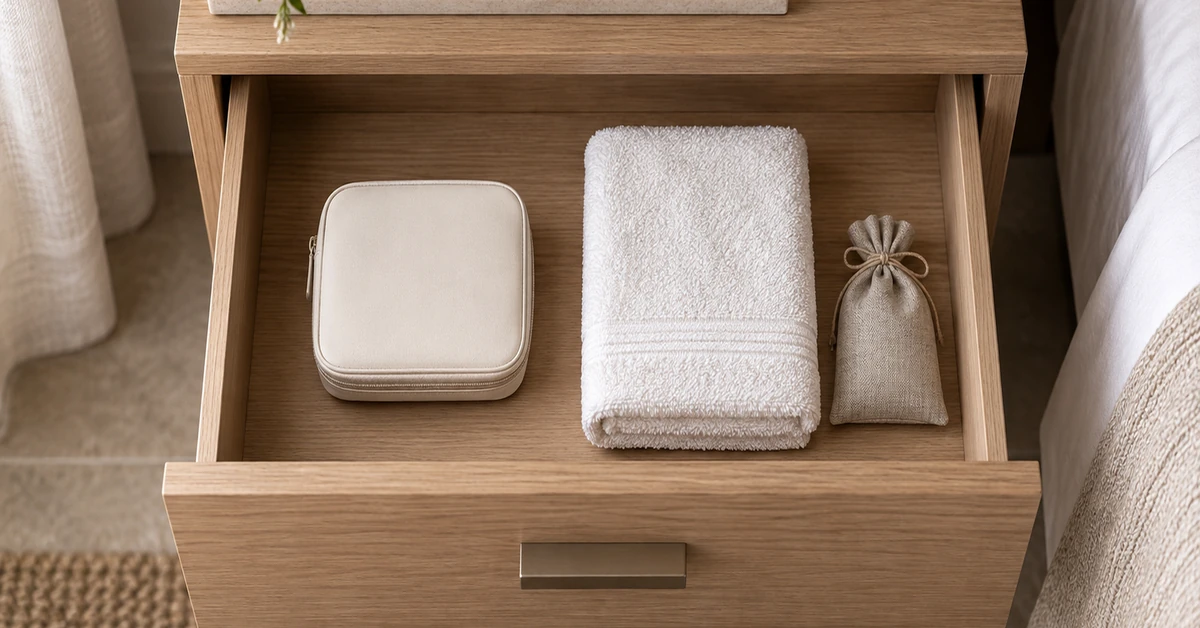
Place the proposed kit in three real locations: the bedside drawer, the wardrobe shelf and the bathroom cabinet if that is part of the property standard. Ask a reviewer who has not seen the brief to locate it using only the room's normal cues.
A kit that is easy for housekeeping to store may be invisible to a guest. Record the reach, light, drawer resistance and neighboring objects. The room context decides whether a bright card, a compact tin or a soft pouch is the right starting point.
| Location | Check | Decision |
|---|---|---|
| Bedside | Reach in low light | Label or relocate |
| Wardrobe | Space beside hangers | Change footprint |
| Bathroom | Humidity and privacy | Review material |
Define the repair in one minute
List the repairs the property actually sees: a loose button, a small hem, a separated seam or a missing fastener. Do not fill the pack with every possible notion if it makes the intended rescue harder to identify.
A compact repair kit can still be generous when each component has a named job. Use a simple card or pictogram, but check translated wording with the hotel's market team. The guest should know what the kit can help with and when a tailor or front desk is the better route.
- Button reattach
- Small hem
- Loose seam
- Escalation to staff
Keep needles controlled
Needle quantity, point protection and disposal deserve their own acceptance check. Open the pack with one hand, remove one needle, return it and close the unit while standing beside the room drawer. Inspect whether a loose point can escape into bedding or housekeeping waste.
The right boundary depends on the property policy and destination market. Ask the supplier to show the needle holder, the closure and the packed unit after handling. Do not use a vague safety word as a substitute for a physical check.
| Part | Evidence | Owner |
|---|---|---|
| Needle | Secure retention | Quality |
| Holder | No loose point | Product |
| Closure | After opening | Housekeeping |
| Disposal | Clear route | Hotel policy |
Choose thread by rescue, not rainbow
A guest usually needs a neutral or near-match thread quickly. Build the color selection around the uniforms, linens and common garments the property serves. A small, legible range can beat a crowded rainbow that takes longer to search.
Record thread length by the repair scenario and keep replacement rules visible. If a color is property-specific, use a stable code rather than a poetic name. The hospitality amenity supplier should be able to explain how the same range will be replenished across locations.
- List common fabrics
- Select rescue colors
- Test thread length
- Assign replenishment codes
Make the language room-ready
Read the pack front while standing at the drawer. The product name, contents, use boundary and disposal note should survive a quick glance. Add translations only after the primary message is stable; too many lines can hide the action.
A hotel guest is not the same audience as a sewing hobbyist. Avoid technical names when a plain instruction is safer. Ask a non-specialist to point to the first step without opening the pack, then revise the hierarchy if they hesitate.
| Message | Question answered | Keep visible |
|---|---|---|
| Contents | What is inside? | Front |
| Use | What can I fix? | Front/back |
| Boundary | When to ask staff? | Back |
| Disposal | What next? | Back |
Run the room turn
Test the complete route: housekeeping places the kit, a guest finds and opens it, the used unit is removed, and the next room receives a replacement. Time each handoff without coaching. The slowest step usually reveals where the specification is incomplete.
Do not infer hotel-wide performance from one room. Repeat in a standard room, a suite and a serviced apartment if those channels matter. Keep the room type, drawer and pack code in the record so a change can be traced.
- Place
- Find
- Use
- Remove
- Replace
Fit the amenity economics
The cost conversation includes room count, occupancy pattern, housekeeping touches, shrinkage and the choice between a single-use and reusable pack. Compare the complete guest rescue with the cost of a front-desk request, without claiming that every hotel will see the same result.
A small pilot should separate unopened replacements from used or missing units. That distinction tells the buyer whether the issue is demand, visibility or room handling. It also prevents an attractive unit price from hiding a difficult replenishment route.
| Measure | Record | Use |
|---|---|---|
| Placed | Room and date | Coverage |
| Used | Repair type | Fit |
| Missing | Room route | Shrinkage |
| Replaced | Staff minutes | Operations |
Protect the kit through laundry life
Hotel rooms are busy environments. Place the packed unit beside linens, in a housekeeping cart and in a supply case, then inspect the card, thread and needle holder. The pack should remain recognizable after normal movement rather than only on a clean studio table.
Ask the supplier for the packed dimensions, inner count and carton orientation. If a tin or pouch changes, rerun the drawer-fit test because a few millimeters can affect the chosen room location.
- Cart test
- Supply case
- Drawer return
- Visual check
Give each property a replenishment code
A hotel group may use the same amenity in several room types or brands. Print a stable code that identifies the kit, language set, thread family and pack count. Keep the guest-facing name short, while the operations file carries the full specification.
When a property changes its uniform or linen palette, create a controlled revision rather than swapping thread informally. The room team should know which old units can remain in stock and which require a new code.
| Code layer | Example | Why |
|---|---|---|
| Kit | Repair-03 | Base item |
| Language | EN-FR | Room set |
| Color | Neutral-2 | Rescue range |
| Revision | R2 | Change control |
Write the hospitality RFQ
Include room location, repair list, needle holder, thread colors, languages, packed dimensions, inner count, carton route and the room-turn test. Ask for samples packed as they will arrive, not loose components on a desk.
Link the request to the sewing-notions collection for related sewing items and the buying-guide library for buying context. Use the GS1 barcode guidance to discuss pack identifiers and the ISO quality principles to assign revision ownership. These links frame questions; they do not replace the hotel's own policy review.
| RFQ block | Evidence | Approval |
|---|---|---|
| Room | Drawer photo | Hotel |
| Repair | Open-use sample | Housekeeping |
| Safety | Holder and closure | Quality |
| Supply | Carton map | Operations |
Onehourcrafts keeps the rescue simple
Onehourcrafts can align the actual room, repair boundary, needle control, thread family, language set and replenishment code in one file. That makes a small amenity easier to approve across properties and easier for housekeeping to replace.
Before approving sewing kits for hotels wholesale, run the room turn with a real drawer and a non-specialist guest reviewer. A kit is ready when it can be found, understood, used safely and replenished without a private explanation.
- Room fit
- Repair boundary
- Needle control
- Replacement code
Audit the quiet failure
A hotel kit can be present and still fail when its card is too dim, its needle return is unclear or its thread colors do not match the repairs guests attempt. Review those quiet failures separately from usage volume. This keeps a low-use amenity from being labeled successful simply because it was not reported.
| Quiet failure | Evidence | Response |
|---|---|---|
| Not found | Room observation | Move or relabel |
| Not understood | Guest question | Rewrite |
| Not returned | Housekeeping note | Change holder |
The final sewing kits for hotels wholesale brief should connect hotel guest sewing kits, a hospitality amenity supplier route and compact repair kits to the same room-turn evidence. Keep the buyer's approval file linked to the company home so the commercial context remains visible without adding a new claim.
Frequently asked questions
What belongs in a hotel sewing kit?
Only the components needed for the property's common guest repairs, with a clear boundary for when staff or a tailor should help.
Where should a hotel place the kit?
Test the real bedside drawer, wardrobe shelf or approved amenity location and choose the place guests can find without coaching.
How should needles be controlled?
Use a holder and closure that are checked after opening, return and room handling; document disposal within the property's policy.
How many thread colors are needed?
Start with fabrics and uniforms the property actually sees, then use a compact rescue range with stable codes.
Should the pack be single-use?
That is a property decision. Compare guest convenience, hygiene policy, replenishment labor and the complete room cost.
What should the front of the pack say?
State contents and the first repair action in plain language; put limits and disposal guidance where a guest can see them.
How do you test a hospitality kit?
Run the full room turn from housekeeping placement to guest use, removal and replacement in more than one room type.
What should a hotel RFQ include?
Include room location, repair list, safety evidence, languages, dimensions, counts, carton route and the room-turn acceptance test.
How can a group manage revisions?
Use a stable kit code plus language, color and revision fields so old and new units remain traceable.
Why test the actual drawer?
A few millimeters, low light or neighboring items can decide whether a guest ever finds the amenity.