
An amigurumi toys manufacturer needs more than a front-view illustration to reproduce a character consistently. Onehourcrafts recommends building a character bible that controls silhouette, proportions, stitch language, facial coordinates, materials, assembly, packaging views and permitted revisions. The document turns a creative direction into testable production decisions without pretending that every handmade-looking detail can be managed by a single photograph.
Describe the character before measuring it
Write a short identity statement covering the character's age impression, posture, emotional tone, visual weight and most recognizable feature. This is not advertising copy. It is a design filter used when two technically possible choices create different personalities. If the wide head and low-set eyes make the character recognizable, those traits should guide sampling before minor accessories receive attention.
Choose one master pose for comparison
Select a neutral, repeatable pose and camera angle for all approval photos. Define how the toy is supported, where limbs rest and how flexible features are arranged. A dramatic styled pose can conceal proportion drift. The master pose becomes the fastest side-by-side check across prototype, golden sample and later production observations.
Draw the silhouette as a boundary
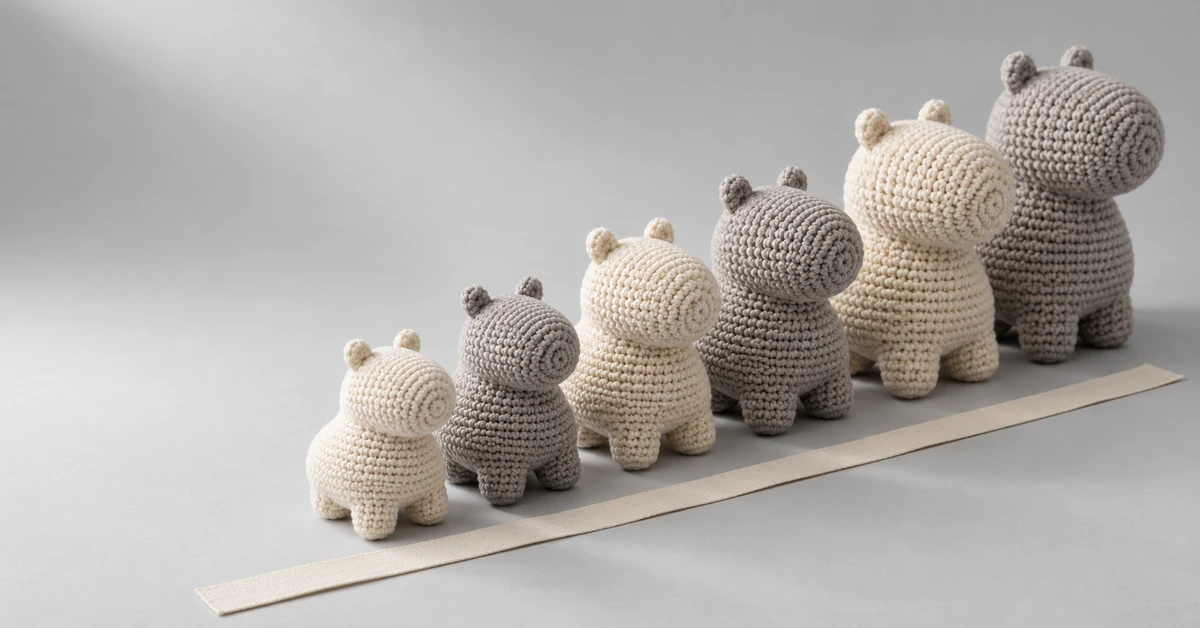
Trace the outer shape from front, side and back. Mark the widest points, visual center, head-to-body transition, limb lengths and accessory projections. The silhouette should remain recognizable without facial detail. For custom crocheted products, this boundary helps separate structural identity from styling choices that can change by collection.
Build an anatomy map from ratios
| Landmark | Reference method | Approval evidence |
|---|---|---|
| Overall height | Defined neutral pose | Scale photo and record |
| Head width | Ratio to total height | Front-view overlay |
| Eye line | Rows from crown reference | Coordinate sheet |
| Limb length | Attachment to endpoint | Paired measurement |
| Accessory position | Body landmarks | Multi-view photo |
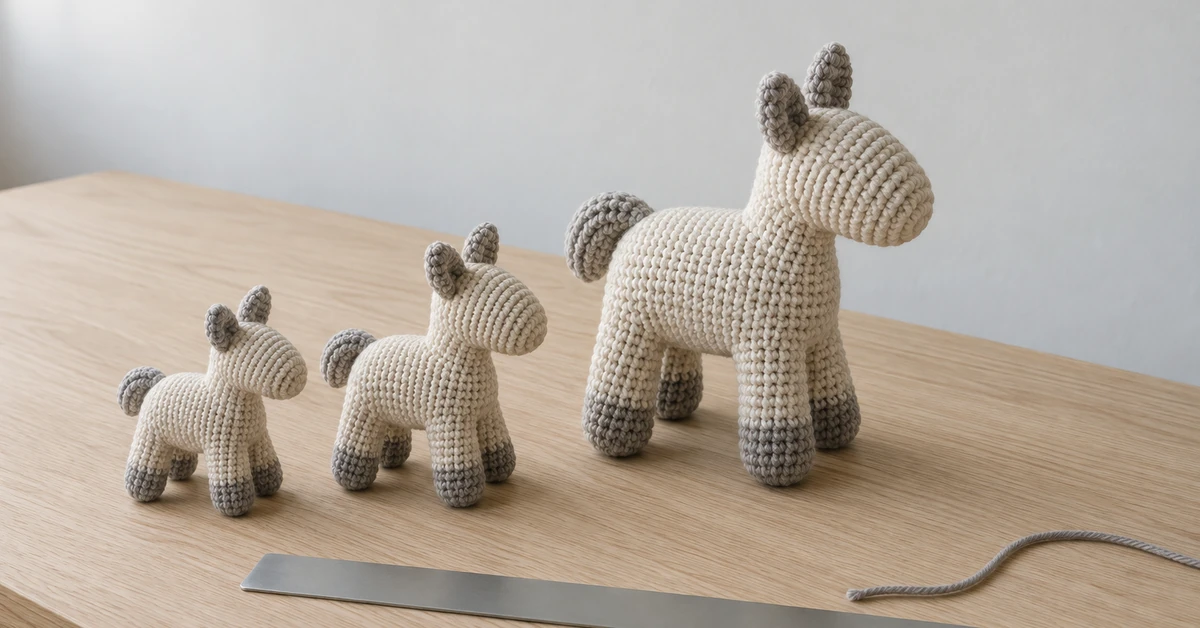
Ratios support character recognition when yarn behavior causes small overall size movement. They do not replace agreed tolerances or actual measurements.
Define stitch language by visible zone
Record stitch orientation, row direction, color transitions and intentionally visible construction features for the face, body, limbs, hair and garments. Do not ask the supplier to make the entire surface “neater” without defining what should change. A tighter or differently oriented stitch field can alter both texture and silhouette even when dimensions appear similar.
Place the face on coordinates, not intuition
Use row and stitch references where practical, supported by a face template or scaled photo. Define spacing, vertical level, angle and relationship to the nose, mouth, hairline or ears. Record how the face is checked before final closure. The amigurumi size specification guide provides a useful measurement framework for connecting landmarks.
Separate expression from component choice
The same eye component can create a different expression when spacing, angle, surrounding stitching or embroidery changes. Approve the assembled face rather than the eye alone. Where embroidered features are intended, define thread identity, line path, stitch count or visual boundary as relevant. Avoid unsupported claims about suitability; destination and use requirements need separate review.
Lock the material identity behind each color
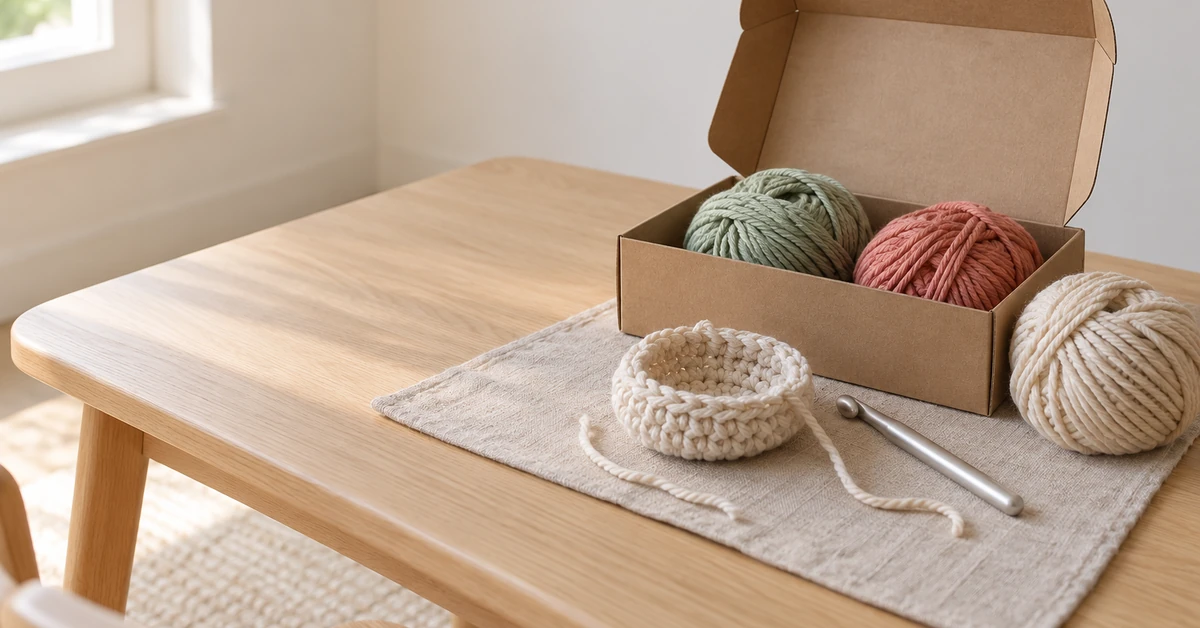
A color chip is not a complete material specification. Record yarn composition as declared, construction, supplier reference, shade reference and any approved finish. Link stuffing, embroidery thread, trims and attached components to their own identities. Custom amigurumi toys can look similar in photographs while behaving differently in hand because material or construction changed. A crochet toy supplier should show how each physical material record connects to the versioned bill of materials.
- Yarn identity and controlled shade reference.
- Stuffing identity and zone assignment.
- Face, trim and attachment component references.
- Approved alternative status and effective version.
Use a controlled stuffing map
Divide the character into zones and define the intended hand feel, shape function and inspection approach for each. A head may need to preserve facial geometry while a limb must support a specific pose. The stuffing density test explains how to compare repeatable specimens. Do not reduce stuffing to an unrecorded worker preference.
Record attachment logic from the inside out
Map where limbs, ears, hair, garments and embellishments connect and in what assembly sequence. Include inside views during sampling where they provide useful evidence. Exterior photographs alone may not reveal why an attachment rotates, distorts the body or shifts after handling. Set inspection and escalation rules appropriate to the product and intended market. The ISO quality management principles provide broad context for process and evidence, not approval of a specific toy.
- Identify the attachment and body landmark.
- Record the assembly stage and approved orientation.
- Define the observable inspection point.
- Preserve any required inside-view sample evidence.
Give asymmetry a name
Handmade-style characters may include deliberate asymmetry, but accidental drift should not hide behind that description. Mark which features are intentionally uneven and define their acceptable visual range. Compare paired elements such as ears, arms, feet and garment panels in the master pose. An approved irregularity becomes a design feature only when it is documented.
Photograph the full view cube
Capture front, back, both sides, top, base and selected detail views under stable lighting. Include a scale reference where appropriate and name files by version. The view cube reveals hair coverage, seam placement, garment closure, base shape and accessory position that a hero image omits. Use the same view list for sample approval and production evidence.
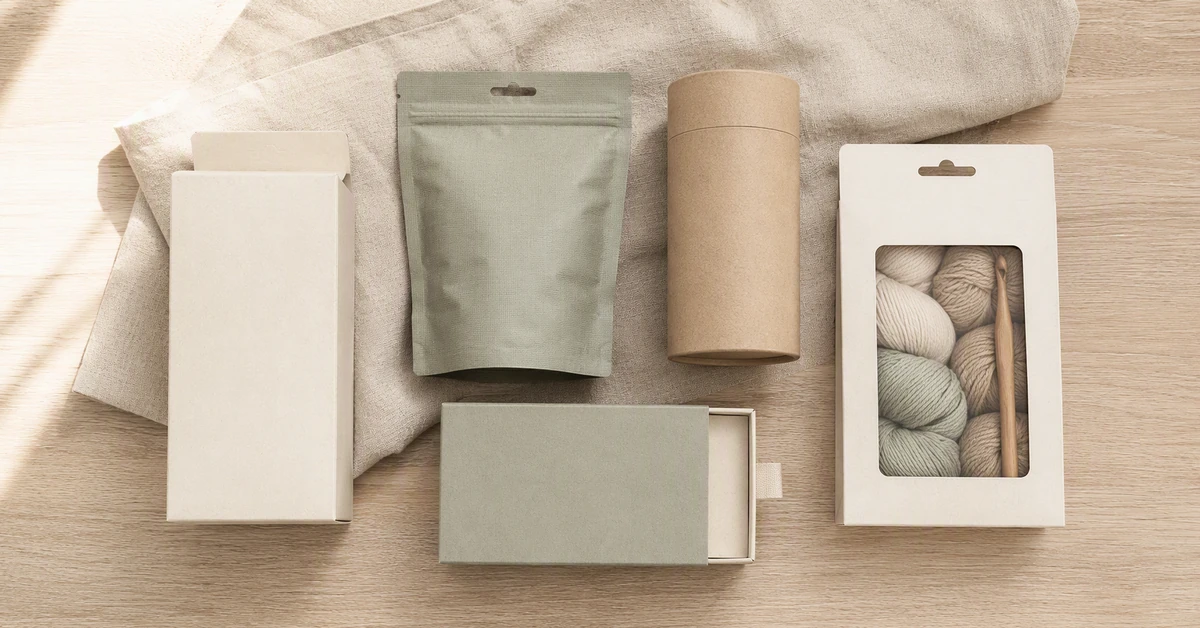
Make packaging preserve the approved character
Define how limbs, hair, garments and projections are arranged before closing the pack. Test whether ties, compression, movement or moisture exposure relevant to the route alter the approved presentation. The packaging compression test offers a method for observing before-and-after shape. Packaging photos should show actual restraints and contact points.
Control names, claims and artwork separately
Link model name, character name, colorway, barcode and pack artwork to the approved physical version. An OEM crochet toys program may share one body across several characters, but each sellable identity still needs controlled files. Ensure photography, copy and included contents match the version being supplied. Do not let an old render survive after the physical design changes. GS1's GTIN information can inform item identification, while version governance remains the buyer's responsibility.
Use a redline review for every prototype
Place new and approved views side by side, then mark each requested change with location, reason, owner and expected evidence. Avoid instructions such as “more cute” or “better shape” without a visible target. Close one revision round before opening the next. This keeps resolved details from drifting while attention moves to another part of the character.
Define the golden sample as a governed record
Record version, date, approved deviations, associated material list, packaging state and who controls the physical sample. A golden sample is not useful if it can be altered, displayed, compressed or separated from its documents without notice. Where multiple locations retain samples, reconcile their identity before production or inspection.
Send a character-bible RFQ
When approaching an amigurumi toys manufacturer, provide intended channel, destination, character brief, artwork ownership, size range, material expectations, required views, component boundaries, packaging, quantities and approval gates. Ask for prototype timing, production capability, record examples, change process and quotation assumptions. The RFQ should identify open decisions rather than disguising them as fixed specifications.
Release the character through six frames
- Identity frame: the creative statement and silhouette are agreed.
- Anatomy frame: landmarks, ratios and tolerances are recorded.
- Surface frame: stitch language, color and material identities are controlled.
- Assembly frame: face, attachments and stuffing preserve the intended form.
- Presentation frame: packaging and imagery show the approved version.
- Revision frame: changes are redlined, approved and linked to evidence.
How Onehourcrafts supports character continuity
Onehourcrafts can connect concept artwork, prototype records, material identities, view sets, pack trials and revisions around one controlled character bible. A capable amigurumi toys manufacturer should make differences visible and reviewable rather than relying on memory. The goal is not mechanical sameness; it is continuity in the features that make the character recognizable.
Frequently asked questions
What is an amigurumi character bible?
It is a controlled design record covering identity, silhouette, proportions, stitches, facial placement, materials, assembly, views, packaging and revisions.
Why is a front illustration not enough?
It does not define side and back shape, construction, materials, attachment logic, packaging arrangement or production evidence.
Should dimensions or ratios control the design?
Use both. Dimensions define actual size, while ratios help preserve recognizable relationships when material behavior creates limited movement.
How should facial placement be specified?
Use repeatable landmarks, row or stitch references where practical, spacing, angles, templates and approved assembled-face views.
Can intentional asymmetry be retained?
Yes, when its location and acceptable visual range are documented so deliberate character is not confused with uncontrolled drift.
What belongs in a material record?
Include declared composition, construction, supplier reference, shade identity, finish and approved alternatives for every relevant material and component.
How many sample views are useful?
Use enough views to expose the full form and critical details, normally including front, back, sides, top, base and selected close-ups.
What makes a golden sample reliable?
It needs controlled identity, condition, storage, linked documents, approved deviations and a process for reconciling multiple retained samples.
How should design changes be requested?
Redline the exact location, target, reason, owner and required evidence, then close the revision before starting another uncontrolled round.
Does a character bible replace destination review?
No. It controls design and production intent; applicable labeling, testing, safety and market obligations require appropriate separate review.