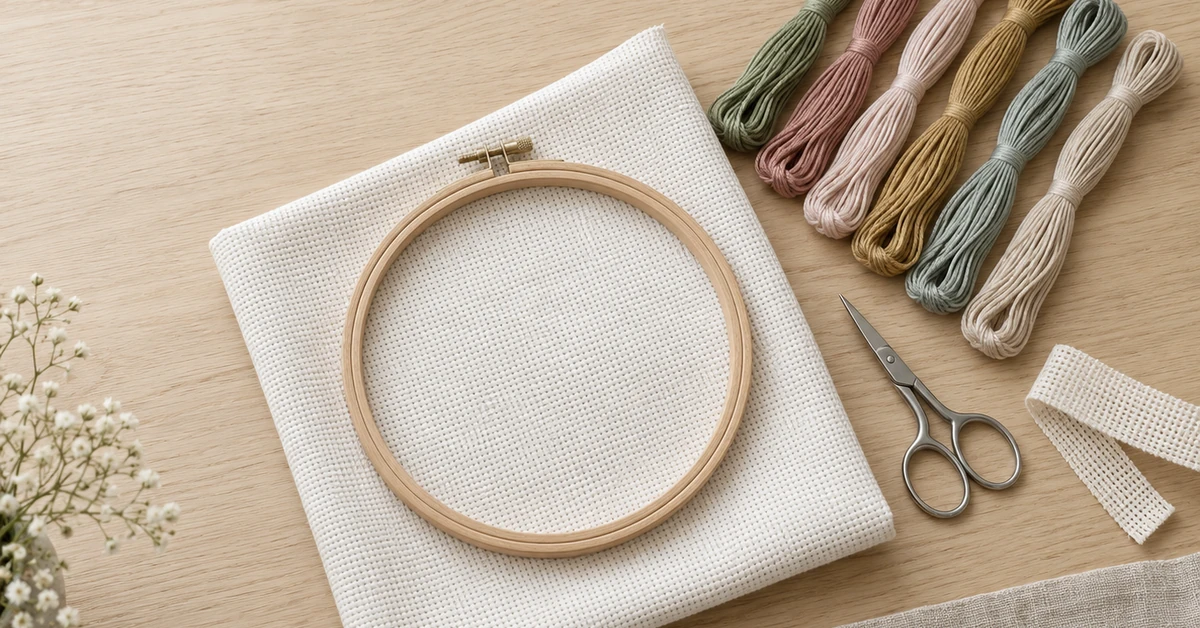

Counted cross stitch kits wholesale lose margin when a small specification gap becomes a customer problem at scale. One wrong floss allowance, ambiguous chart symbol or misleading difficulty claim can turn a low-cost component into support tickets, returns and markdowns. Buyers protect margin by tracing each commercial loss back to the design or production decision that created it.
Start with the return, then work backward
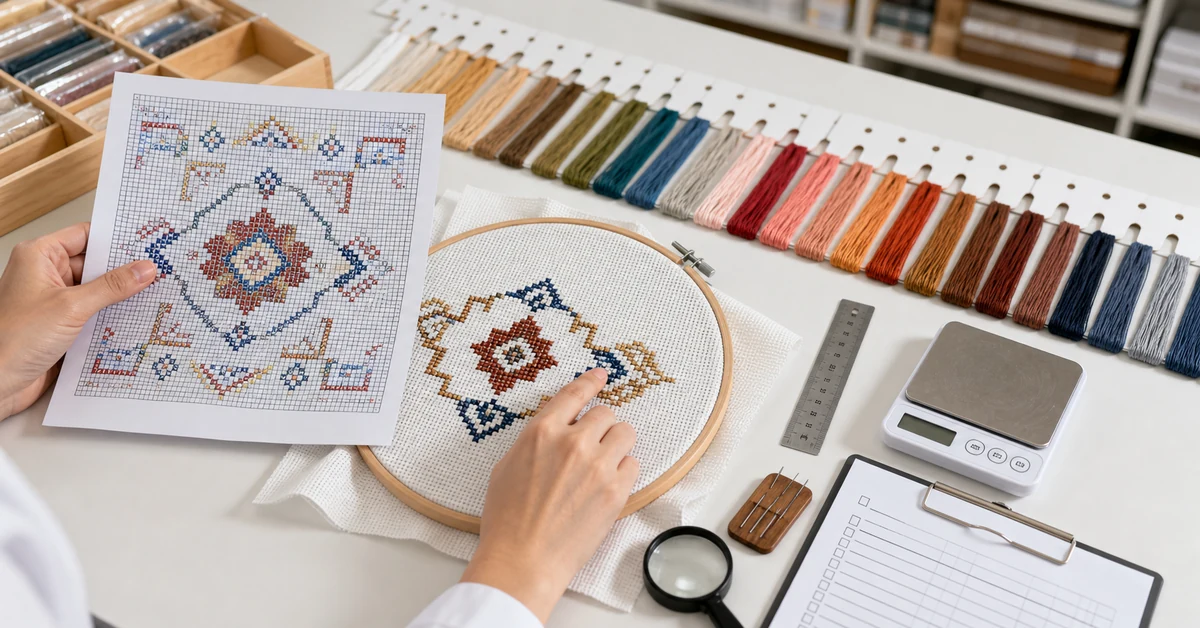
Review recent complaints and potential failure before comparing supplier prices. Group losses by customer outcome: cannot start, cannot read, runs out, finishes at the wrong size, receives the wrong color, damages the project or believes the pack promise was inaccurate. Each outcome points to a controllable specification.
| Customer outcome | Likely source | Hidden commercial cost | Prevention evidence |
|---|---|---|---|
| Cannot find the center | Chart and fabric setup | Support contact or abandonment | Beginner start trial |
| Symbol confusion | Chart design | Wrong stitches and poor result | Symbol readability test |
| Floss shortage | Consumption allowance | Replacement shipment and review damage | Completed-sample usage record |
| Finished size differs | Fabric count or instructions | Expectation failure and return | Measured calculation check |
| Colors do not match pack | Color standard and photography | Markdown or rejection | Approved physical color card |
Leak 1: The fabric count is treated as a label
Fabric count determines finished dimensions, stitch density, needle choice, visual detail and beginner handling. It must connect to the chart stitch dimensions, stated finished size and included hoop or frame. Review the fabric count selection guide before artwork is frozen.
Measure production-intent fabric in several directions and note finishing, stiffness, edge treatment and possible distortion from packing. A specification should identify fiber, count tolerance, dimensions, color, cut orientation and approved source. “White Aida” is not sufficient for a repeat order.
Leak 2: The chart is technically correct but visually hostile
A chart can contain the right stitch data and still be hard to use. Symbols need sufficient visual separation at printed size. Similar marks, dense backstitch lines, weak grid emphasis and unclear page overlaps increase error. A designer reading from a large monitor is not the same as a customer reading a folded leaflet.
Use the chart symbol design guide to test contrast, key order, grid hierarchy and multi-page continuity. Print the final-size version on production-intent paper and ask a new user to locate colors, center marks, page joins and backstitch instructions.
Leak 3: Thread allowance is guessed from the finished sample
One expert sample is not a safe consumption standard. The maker may use shorter tails, cleaner paths and more consistent tension than the intended customer. Record floss by color before and after several completed projects, then add allowance for starting, ending, mistakes, strand separation and reasonable variation.
Keep each color connected to a physical standard and component code. The floss color matching guide explains how to manage references, lighting and replacement decisions. If a dye lot or source changes, compare the stitched result, not only loose strands.
Leak 4: Organization creates a counting problem
Loose bundles can appear generous but transfer sorting work to the customer. Organizers should hold the intended lengths without snagging, releasing dye or mixing adjacent colors. Holes, labels and order must match the chart key.
For many-color designs, verify the complete pick-and-pack sequence. The thread organizer design guide provides controls for hole spacing, symbol mapping and assembly checks. Approve the organizer after actual packing, vibration and opening tests.
Leak 5: Needle and hoop choices are borrowed from another SKU
Needle size and point profile should suit the fabric count, strand count and intended user. A wrong eye can fray floss or make threading unnecessarily difficult. A hoop that barely fits the artwork can place important detail against the rim and increase repositioning.
Specify needle length, eye, point, finish, quantity and protective position. Define hoop diameter, material, closure and grip. Confirm that both remain secure through transit and that the user can remove them without releasing loose sharp items.
Leak 6: Difficulty is based on the picture
Small artwork is not automatically easy. Difficulty depends on stitch count, number of colors, isolated stitches, confetti, backstitch, fractional stitches, chart density, fabric count and finishing. A simple-looking motif can be frustrating when colors are scattered.
Beginner cross stitch kits wholesale should use a repeatable skill score and target-user trial. State what the buyer's “beginner” means: first-ever project, basic stitch knowledge or independent chart reading. Match the promise to observed completion, not the designer's familiarity.
Leak 7: Counted and stamped formats are compared only by cost
A stamped cross stitch kits supplier solves a different user problem. Printed placement can reduce chart interpretation, but it introduces print alignment, visibility and removal questions. Counted designs preserve a clean fabric surface but ask the user to establish position and maintain count.
| Decision factor | Counted format | Stamped format | Buyer test |
|---|---|---|---|
| Starting effort | Centering and chart reading | Follow visible marks | Time to first correct stitch |
| Production risk | Chart-pack mismatch | Print alignment and color visibility | Revision and alignment check |
| Finished appearance | Clean fabric from the start | Depends on stated print-removal method | Completed and treated sample |
| Skill development | Builds counting and chart skills | Reduces initial interpretation | Target-user outcome review |
Leak 8: The pack image promises an expert finish
The front image should represent the supplied project and realistic materials. If the sample was blocked, framed, retouched or stitched with a different floss, record that process and decide what the customer can reasonably reproduce. Show scale honestly and avoid cropping that hides unfinished edges.
Packaging must also explain included and non-included items. A decorative frame shown in photography can be interpreted as part of the kit. Clear contents reduce disappointment before the customer opens the box.
Leak 9: Quality inspection counts parts but ignores usability
Component count is necessary, not sufficient. Final inspection should compare fabric, chart, color key, organizer, needle protection, pack image and instruction revision as a connected system. Use defect examples that reflect customer impact.
- Critical: prohibited component, unsafe needle condition, missing required warning or wrong compliance file.
- Major: wrong chart, missing color, insufficient floss, unreadable key, wrong fabric or failed protective packing.
- Minor: limited cosmetic variation that does not affect use, safety or saleability.
Sampling rules should be defined before the shipment is ready. Inspection language without SKU-specific defect examples leaves the final decision open to negotiation.
Leak 10: Compliance assumptions follow the artwork theme
Requirements depend on intended age, claims, components and destination market, not whether the design looks playful or sophisticated. The U.S. Consumer Product Safety Commission's Art and Craft Safety Guide discusses material and labeling considerations. The European Commission explains obligations under the General Product Safety Regulation.
Use qualified product-specific review. Keep the technical file connected to actual material lots, warnings, traceability and approved packaging. A design intended for adults should not drift toward a children's claim through artwork or marketing without reopening the assessment.
Turn leakage into a supplier scorecard
Score evidence rather than confidence. Ask suppliers to submit a measured fabric sample, verified chart, completed-project consumption log, physical color card, organizer check, needle specification, packaging mockup and defect list. Weight the score by commercial impact.
| Score area | Suggested weight | Evidence |
|---|---|---|
| Chart and user clarity | 25% | Printed-size trial and revision record |
| Material consistency | 20% | Fabric, floss and needle standards |
| Quantity and allowance | 20% | Consumption and packing records |
| Packaging and protection | 15% | Mockup and transit review |
| Compliance and traceability | 20% | Market-specific file and lot controls |
How Onehourcrafts protects the approved margin
Onehourcrafts can support counted cross stitch kits wholesale by coordinating chart review, fabric and floss specifications, completed samples, component organization, private-label packaging and production controls. Buyers should provide target user, design files, finished size, channel, markets, forecast, price position and expected quality evidence.
For OEM cross stitch kits, freeze artwork rights, chart revision, color standards, translation ownership and permitted file use before printing or bulk material purchase. Onehourcrafts states manufacturing experience since 1988, BSCI certification and OEM/ODM support; each SKU still requires its own commercial and product approval.
Frequently asked questions
How is finished size calculated?
Divide stitch dimensions by the working fabric count, then account for orientation and any non-cross-stitch elements. Confirm the calculation with a measured sample.
How much extra floss should a kit contain?
Base allowance on several target-level completions, including tails, mistakes, tension variation and strand handling. One expert sample is not enough.
What makes a chart beginner friendly?
Clear symbols, readable print size, strong grid hierarchy, limited ambiguous colors, visible center marks and a project that avoids excessive isolated stitches.
Should floss be pre-sorted?
Pre-sorting usually reduces setup errors, but the organizer must match the chart key and survive packing and transit without releasing or mixing colors.
Can the pack use a digitally enhanced finished image?
Editing should not misrepresent color, scale, materials or achievable finish. Approve photography against the physical project and disclose non-included props clearly.
How should a needle be packed?
Use a defined holder or sealed position that protects the point, controls quantity and remains secure through distribution and opening.
What sample stages are useful?
Use chart proof, material sample, complete stitched sample, packaging sample and pre-production sample where their questions differ.
How should color substitutions be approved?
Compare physical standards and a stitched result under controlled lighting. Review chart key, photography and customer-visible change before release.
What should an RFQ include?
Include artwork, stitch dimensions, fabric count, floss requirements, accessories, packaging, markets, forecast, testing needs, target date and commercial terms.
Why do low-cost kits still create high return costs?
Replacement freight, customer service, reviews, markdowns and lost repeat business can exceed the saving from an under-specified component.
Protect contribution margin one specification at a time
Successful counted cross stitch kits wholesale programs connect chart, fabric, floss, tools, pack promise and inspection to the same approved design. Diagnose the losses buyers actually experience, demand evidence for the corresponding controls and compare suppliers on prevented failure rather than unit price alone.